


Smart AI Integration: Why It Matters for Your Business
As a marketing practitioner, you’re constantly looking for an edge, especially with limited resources. Integrating AI tools isn’t just about adopting the latest tech; it’s about making your existing marketing efforts more efficient and effective. This guide will help you cut through the noise, focusing on how to strategically weave AI into your workflows to streamline tasks, gain deeper insights, and ultimately boost campaign performance without overstretching your team or budget.
You’ll learn to identify high-impact integration opportunities, prioritize what to implement first, and understand the trade-offs involved. Our goal is to equip you with the judgment needed to build an AI-powered marketing stack that truly works for your small to mid-sized business, delivering tangible benefits today.
Prioritizing Your AI Integration Strategy
The sheer volume of AI tools can be overwhelming. For teams with limited bandwidth, a focused approach is critical. Start by identifying your most pressing operational bottlenecks or areas where manual effort is disproportionately high.
What to Do First: Address Core Pain Points
- Content Generation & Optimization: If content creation is a constant drain, consider an AI writing assistant for drafting blog posts, social media updates, or ad copy. Pair this with an AI-powered SEO tool to optimize for keywords and readability. This combination can significantly reduce initial drafting time and improve content visibility.
- Data Analysis & Reporting: Manual data aggregation and insight extraction are time-consuming. Integrate AI tools that can connect to your ad platforms, CRM, or analytics to automate report generation and highlight key trends or anomalies. This frees up your team for strategic thinking.
- Ad Campaign Management: Leverage AI features within platforms like Google Ads or social media ad managers for automated bidding, audience targeting, and creative optimization. These built-in tools often provide immediate, measurable improvements.
What to Delay or Deprioritize Today
Resist the urge to chase every new AI trend. For small to mid-sized teams, deprioritize complex, multi-tool ecosystems that require significant custom development or extensive data engineering. Avoid integrating AI solutions that address minor inconveniences rather than major bottlenecks, especially if they lack clear, measurable ROI or require a steep learning curve. For example, a highly specialized AI tool for niche market research might be interesting, but if your core problem is simply getting enough content out, that’s where your focus should be. Similarly, hold off on AI tools that promise full automation of strategic decision-making; human oversight remains crucial for nuanced marketing strategy.
What to Avoid: Common Pitfalls
- Tool Sprawl Without Purpose: Don’t acquire AI tools just because they’re popular. Each tool must serve a clear purpose and ideally integrate with your existing stack.
- Ignoring Data Privacy & Security: Understand how your data is used and stored by third-party AI tools. Ensure compliance with relevant regulations.
- Expecting Full Automation: AI excels at repetitive tasks and pattern recognition, but it’s an assistant, not a replacement for human creativity, empathy, and strategic judgment.
While AI content generation tools promise efficiency, a common pitfall is mistaking speed for quality. Without clear guidelines, a strong editorial process, and human refinement, the output can quickly become generic or inconsistent with your brand voice. The immediate gain in volume can lead to a downstream problem of content bloat, where quantity dilutes impact and creates more work for editors to sift through and correct, rather than less.
Another often-overlooked aspect is the human integration cost. Even seemingly straightforward AI tools require your team to adapt workflows, learn new prompts, and understand how to effectively review and refine AI output. This isn’t a ‘set it and forget it’ scenario. Underestimating the time and effort required for team training and workflow adjustments can lead to frustration, underutilization of the tool, and ultimately, a failure to realize the promised efficiencies.
Furthermore, while platform-native AI features (like automated bidding in ad platforms) offer immediate benefits, they can also create a false sense of security. These algorithms optimize for specific metrics, but they don’t inherently understand your broader business context, long-term strategic goals, or the nuances of your customer relationships. Over-reliance without continuous human oversight and strategic adjustments can lead to optimizing for the wrong outcomes or missing critical market shifts that the AI isn’t programmed to detect.
Practical Integration Scenarios and Trade-offs
Effective AI integration isn’t about replacing your team; it’s about augmenting their capabilities. Here are a few real-world scenarios:
Content Workflow Harmonization
Scenario: You need to produce more high-quality content faster.
- Integration: Use an AI writing assistant (e.g., Jasper, Copy.ai) to generate initial drafts for blog posts or social media captions. Feed these drafts into an SEO optimization tool (e.g., Semrush, Ahrefs) to refine for keywords, readability, and structure. Finally, publish through your CMS.
- Trade-off: Speed versus human refinement. While AI can draft quickly, human editors are essential for ensuring brand voice, factual accuracy, and nuanced messaging. The gain in drafting speed allows more time for strategic editing.
Ad Campaign Optimization & Lead Management
Scenario: Improve ad performance and streamline lead qualification.
- Integration: Leverage AI-driven features within your ad platforms (e.g., Google Ads’ Performance Max, Meta’s Advantage+ campaigns) for automated bidding and targeting. Connect your ad platform data to your CRM (e.g., HubSpot) to track lead sources and conversion paths. Use an AI-powered chatbot on your website to qualify leads before they enter the CRM.
- Trade-off: Automation versus granular control. Relying on platform AI can yield strong results but might reduce your ability to make micro-adjustments. The benefit is often a more efficient ad spend and better-qualified leads for your sales team. Performance Max best practices
Customer Engagement & Support
Scenario: Provide instant support and gather customer insights efficiently.
- Integration: Deploy an AI chatbot on your website or social media for instant responses to common queries. Integrate the chatbot with your CRM to log interactions and escalate complex issues to human agents. Use AI-powered sentiment analysis tools to review customer feedback from various channels.
- Trade-off: Instant response versus personalized human touch. While chatbots handle routine tasks, complex or sensitive issues still require human intervention. The gain is twenty-four-seven availability and reduced workload for your support team.
While these integration scenarios promise efficiency, the practical reality often introduces unseen costs or delayed consequences that teams must actively manage. It’s easy to focus on the immediate gains and overlook the subtle shifts in team dynamics, skill requirements, and customer perception.
For content workflows, the risk isn’t just about factual accuracy; it’s the gradual erosion of a distinct brand voice. Over-reliance on AI for initial drafts can lead to a homogenization of your content, making it sound generic and indistinguishable from competitors. The true skill then shifts from pure writing to prompt engineering – a nuanced art of guiding the AI to reflect your unique tone and strategic intent. This isn’t a trivial skill; it demands practice and a deep understanding of your brand’s communication style, often requiring more upfront effort than anticipated.
In ad campaign optimization, the “black box” nature of advanced platform AI can be a double-edged sword. While it delivers efficiency, it can also limit your team’s ability to understand the underlying drivers of performance. When you don’t fully grasp why a campaign succeeded or failed, it hinders your capacity to extract actionable insights or adapt strategically outside the platform’s immediate suggestions. This can lead to a long-term dependency without building internal expertise, making it harder to pivot when market conditions or platform algorithms inevitably change.
Finally, with customer engagement, the immediate relief of a chatbot handling routine queries can mask a more profound issue: escalation fatigue. When a chatbot consistently fails to resolve complex issues, customers are forced to repeat their problem to a human agent, leading to significant frustration. This isn’t just a minor inconvenience; it can actively sour the customer’s perception of your brand. Furthermore, your human support team is then left exclusively with the most difficult, emotionally charged, or unique problems. Without adequate training, support, and recognition for handling these high-stakes interactions, this can lead to burnout and a decline in the quality of your most critical customer interactions, undermining the very goal of improved support.
Overcoming Integration Hurdles
Even with a clear strategy, challenges arise. Anticipate them:
- Data Silos: The biggest hurdle. Plan for data flow from day one. Utilize native integrations between tools, explore middleware like Zapier or Make, or leverage APIs if you have development resources. Your CRM is often the central hub for customer data, so ensure AI tools can feed into or pull from it.
- Skill Gaps: Your team doesn’t need to be AI engineers, but they do need basic proficiency. Invest in short training sessions or provide resources to help them understand how to effectively use and prompt AI tools.
- Budget Constraints: Start with free trials or freemium versions. Prioritize tools that offer the highest impact for the lowest cost. Sometimes, a single, well-integrated tool is more valuable than several disparate ones.
- Vendor Lock-in: Before committing, understand how easily you can export your data or switch to an alternative tool if a solution doesn’t meet your needs or becomes too expensive.
Measuring Success and Adapting
Integration isn’t a one-time setup; it’s an ongoing process. Define clear Key Performance Indicators (KPIs) before you integrate any AI tool. Are you aiming for a twenty percent reduction in content creation time? A ten percent increase in qualified leads? A five percent improvement in ad campaign ROAS?
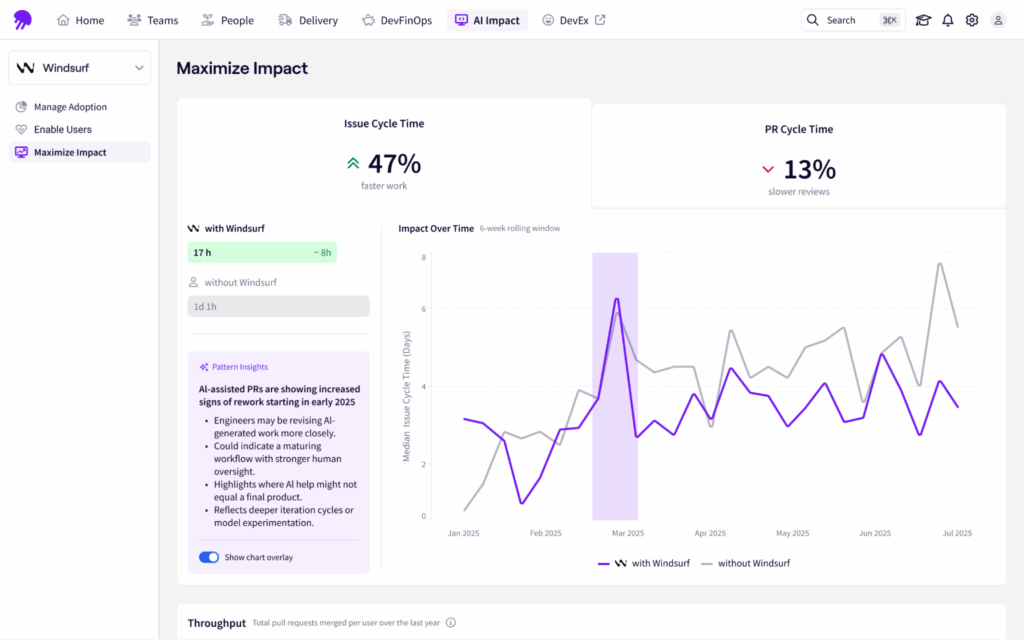
Regularly review the performance of your integrated systems. Use dashboards to visualize the impact of AI on your workflows and outcomes. Be prepared to iterate: if a tool isn’t delivering, don’t hesitate to adjust your workflow, reconfigure the integration, or even swap it out for a different solution. The AI landscape is dynamic, and your strategy should be too. AI marketing KPIs
Sustaining Your AI Advantage
Maintaining an advantage with AI means fostering a culture of continuous learning and experimentation within your team. Stay updated on new tools, features, and best practices. Encourage your team to explore how AI can solve new problems or improve existing processes. Remember, AI is a powerful amplifier for human intelligence and creativity, not a replacement. Your strategic oversight and understanding of your audience remain paramount.

Leave a Comment