

The Shifting Sands of Attention
The landscape of online attention is shifting. With AI chatbots increasingly serving as primary information gateways, your small to mid-sized business faces a new challenge: how to ensure your social media efforts still capture and hold audience interest. This article cuts through the noise, offering practical strategies to adapt your social media approach, maintain visibility, and drive meaningful engagement when direct social browsing is no longer the sole path to discovery.
We’ll focus on actionable steps you can implement today, prioritizing what genuinely works for lean teams, what to put on the back burner, and what to avoid entirely to make your limited resources count.
Prioritize Authentic Connection Over Generic Content
AI excels at summarizing facts. It cannot replicate genuine human connection, emotion, or real-time interaction. This is your SMB’s superpower, and it’s where your social media efforts must now focus to stand out.
- Niche Community Building: Focus on creating spaces where your audience feels heard and valued. Think private groups, interactive Q&As, or user-generated content campaigns that foster belonging and direct interaction.
- Live Engagement: Host live streams, workshops, or Ask Me Anything (AMA) sessions. These are inherently “unsummarizable” by AI and offer direct, real-time value and a sense of immediacy.
- Behind-the-Scenes & Personal Stories: Share the human element of your business. People connect with people, not algorithms. This builds trust, distinctiveness, and a deeper emotional bond that AI cannot replicate.
What often gets overlooked in the pursuit of authentic connection is the sheer, non-scalable time investment it demands. It’s not just about scheduling a live session; it’s about the preparation, the real-time interaction, and the follow-up. Community building isn’t a set-it-and-forget-it task; it requires consistent, active moderation and genuine participation. For lean SMB teams, this translates into significant operational overhead that doesn’t always show up neatly on a marketing budget line item. This often creates internal pressure, especially when leadership expects immediate, quantifiable returns, pushing teams to revert to more easily scalable, albeit generic, content strategies.
There’s also a subtle but critical failure mode: performative authenticity. When the drive for ‘personal stories’ or ‘behind-the-scenes’ becomes a forced directive rather than an organic expression, it quickly rings hollow. Audiences are discerning; they can sense when vulnerability is manufactured or when interaction is merely a tactic. This doesn’t just fail to build trust; it actively erodes it, leaving your brand feeling disingenuous. The theoretical ideal of ‘just be yourself’ becomes a practical challenge when ‘yourself’ needs to be curated for a marketing objective, creating a frustrating tightrope walk for the team member responsible.
Given these realities, a crucial judgment call for SMBs is to ruthlessly prioritize where this authentic connection is applied. Trying to implement niche community building, live engagement, and personal stories across every single platform or channel simultaneously is a recipe for burnout and diluted impact. It’s far more effective to select one or two channels where your audience is most engaged and your team can genuinely commit. Deprioritize or even skip platforms where you cannot sustain this level of true engagement today. A deeply connected presence in one space will always outperform a thinly spread, superficially authentic presence across many.
Crafting “Unsummarizable” Content
Your content strategy must evolve beyond easily digestible, factual summaries. If an AI chatbot can answer a user’s query with information from your post, the user might never visit your social channel. Focus on content that loses value when summarized.
- Opinionated Insights: Share your unique perspective, industry predictions, or well-reasoned takes on current trends. AI can summarize facts, but it struggles with nuanced, subjective judgment and original thought.
- Interactive Experiences: Design polls, quizzes, challenges, and user-driven content creation prompts. These require active participation that AI cannot replicate and foster direct engagement.
- Problem-Solving Narratives: Instead of just listing solutions, tell stories of how you solved specific, complex problems for clients. Show the journey, the trade-offs, and the human effort involved.
- Exclusive Value: Offer content or access that is only available through your social channels – early bird offers, exclusive tips, or member-only content that rewards direct engagement.
The theory of “unsummarizable” content is sound, but its practical execution often reveals hidden costs and operational friction. Consistently producing truly original insights, compelling narratives, or genuinely interactive experiences demands a significantly higher cognitive load and more dedicated resources than simply curating existing information. Small teams, already operating with limited bandwidth, frequently underestimate this sustained demand, leading to burnout, inconsistent output, or a gradual drift back to safer, more generic content that ultimately *is* summarizable.
Furthermore, the pressure to be genuinely opinionated or to share vulnerable problem-solving narratives can be paralyzing. Teams often struggle with the subjective nature of expressing strong viewpoints, fearing alienation or overstepping professional boundaries. This internal friction can lead to endless debates, delayed publication cycles, and ultimately, a retreat to content that, while well-intentioned, lacks the distinctiveness required to truly stand apart from AI-generated summaries. The content might *look* like it fits the criteria, but it still fails to compel direct human engagement.
A critical downstream effect is the impact on content velocity and measurement. Prioritizing depth and originality over sheer volume means producing fewer pieces of content. This can create internal pressure from stakeholders accustomed to high-volume metrics. More importantly, the return on investment for “unsummarizable” content is often a longer-term play, focused on building trust and deeper relationships rather than immediate, easily attributable conversions. This makes demonstrating short-term ROI challenging, requiring a shift in how success is defined and measured within the organization.
What to Deprioritize and Why
For small to mid-sized teams with limited bandwidth, making strategic cuts is as important as making additions. Not everything that worked last year will work effectively today.
Deprioritize generic, easily summarized informational content. This includes basic “how-to” guides that simply list steps, general industry news summaries, or common tips that an AI chatbot can easily pull from multiple sources and present directly to a user. Your resources are better spent creating unique, interactive, or deeply personal content that AI cannot replicate or summarize effectively. Chasing broad reach with content that lacks a distinct human or experiential element is a losing battle against AI’s efficiency and will yield diminishing returns for your effort.
Also, delay investing heavily in every new social platform trend unless you have clear, verifiable data showing your target audience is highly active and engaged there. Spreading your limited resources too thin across many platforms often leads to diluted effort and minimal impact. Focus on mastering one or two core platforms where you can build genuine depth and connection.
Leveraging AI for Your Own Efficiency
While AI chatbots change audience consumption, AI tools can significantly boost your team’s internal efficiency, freeing up time for the human-centric tasks that truly matter.
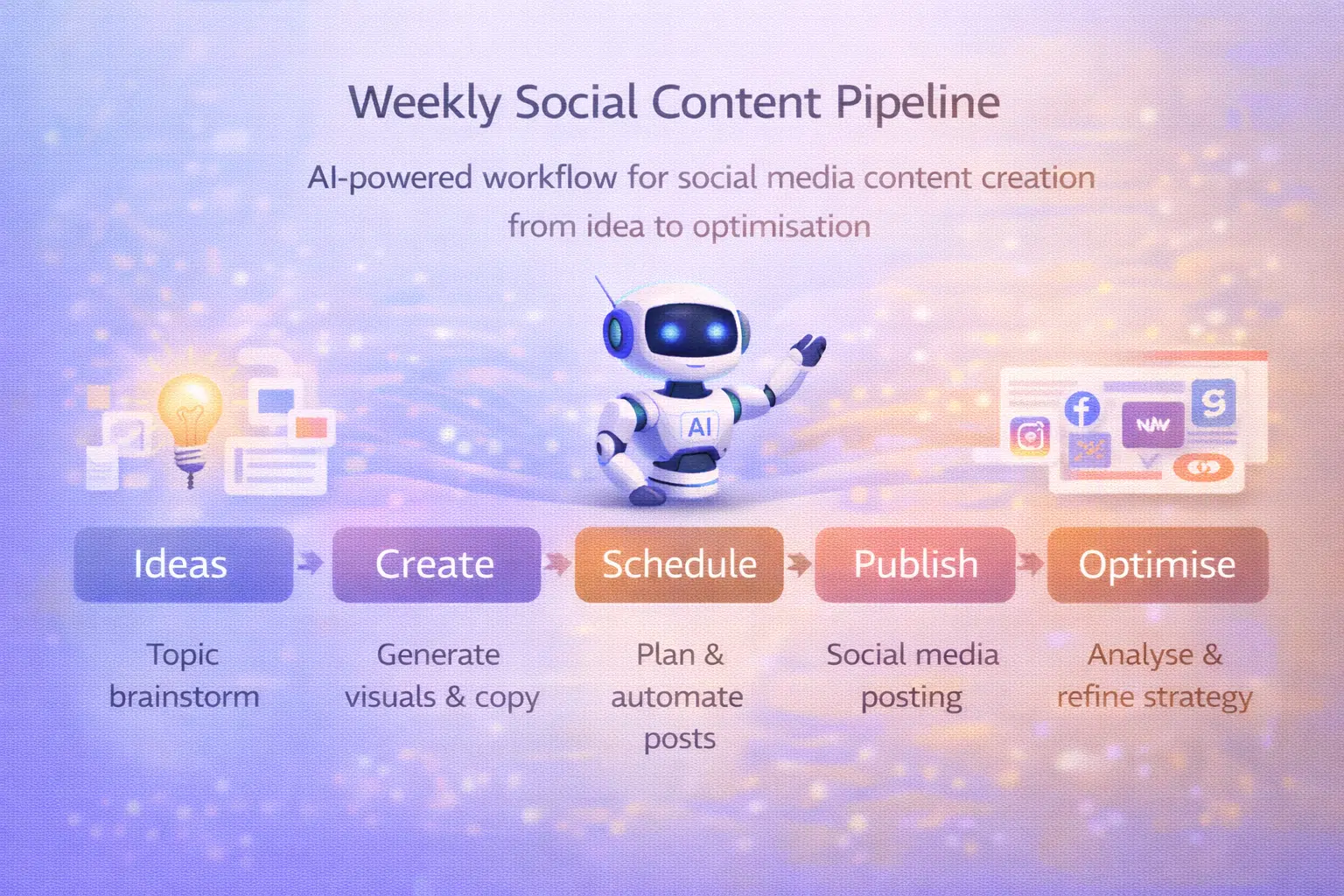
- Content Ideation & Research: Use AI to brainstorm topics, analyze trending keywords, and gather initial research points, freeing up your team for deeper creative work and unique insights.
- Drafting & Editing Support: AI can help generate initial drafts for social posts, suggest headlines, or proofread, allowing your team to focus on refining the message and adding the essential human touch.
- Audience Insights: AI-powered analytics tools can help identify optimal posting times, content types that resonate, and audience segments, informing your strategy with data-driven precision. AI tools for social media analytics
- Scheduling & Automation: Automate routine tasks like post scheduling and basic engagement responses to free up time for genuine, personalized interaction and community building.
Your Path Forward in a New Attention Economy
The shift in attention driven by AI chatbots isn’t a threat to social media, but an evolution. It demands a more intentional, human-centric approach from businesses. The era of simply broadcasting information is over; the era of building genuine, valuable connections is here.
Focus on building authentic relationships, delivering unique value that transcends simple information, and using AI as a tool for efficiency rather than a crutch for content creation. Your small business’s authenticity and ability to connect on a human level are your strongest assets in this new landscape.
By prioritizing depth over breadth, and connection over mere presence, you can ensure your social media efforts continue to drive growth and engagement, even as the digital world continues to transform.


Leave a Comment