


For small to mid-sized businesses, social media growth often feels like an uphill battle against limited time, budget, and headcount. This guide cuts through the hype to show you how AI, when applied strategically, can be a force multiplier for your social media efforts. We’ll focus on actionable steps that deliver real benefits, helping you make smart trade-offs and prioritize what truly moves the needle.
You’ll learn where to deploy AI for maximum impact today, what to delay until you have more resources, and what common pitfalls to avoid. The goal is to empower your team to achieve more with less, turning AI from a buzzword into a practical tool for tangible business growth.
Prioritizing AI for Content Creation Efficiency
The most immediate and impactful application of AI for SMB social media is in content creation. Your team likely spends significant time brainstorming, drafting, and refining posts. AI tools can drastically cut down this effort, allowing you to produce more consistent, high-quality content without expanding your team.
Start by using AI to generate initial drafts for social media posts, headlines, and ad copy. Feed it your core message, target audience, and desired tone, and it can quickly produce multiple variations. This isn’t about replacing your content writer; it’s about giving them a powerful first draft engine that overcomes writer’s block and speeds up the initial ideation phase. You can also leverage AI to repurpose existing long-form content, like blog posts or whitepapers, into bite-sized social updates.
The trade-off here is that AI-generated content will always need human review and refinement to ensure it aligns perfectly with your brand voice and specific campaign goals. However, the time saved on initial drafting frees up your team to focus on strategic messaging and creative polish.

Leveraging AI for Audience Insights and Engagement
Understanding your audience is fundamental to effective social media, but manually sifting through comments, mentions, and engagement data is time-consuming. AI offers a practical solution by helping you extract meaningful insights from this unstructured data.
Begin by using AI-powered tools to analyze sentiment in comments and mentions related to your brand or industry. This can quickly highlight common customer pain points, positive feedback, or emerging trends. Furthermore, AI can help identify optimal posting times and content themes by analyzing past engagement patterns. Many social media management platforms now integrate basic AI capabilities for this purpose, making it accessible even for smaller teams.
While AI can process vast amounts of data to spot patterns, it’s crucial to remember that nuanced emotional understanding and complex human interactions still require a human touch. Use AI to surface the data, but let your team interpret the deeper meaning and craft empathetic responses. Don’t rely solely on automated replies for sensitive customer service interactions.
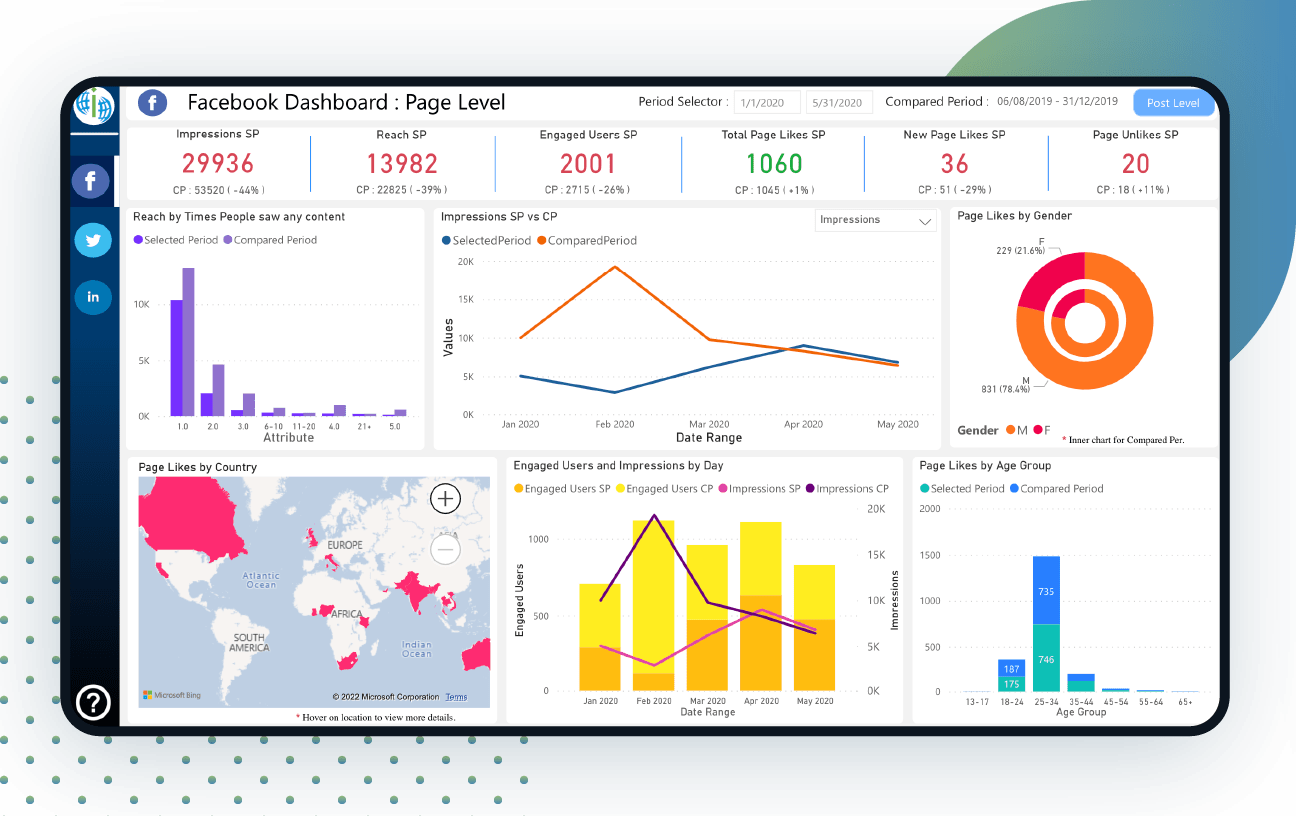
While the promise of AI-driven efficiency is compelling, it’s easy to overlook the hidden costs of over-reliance. For instance, optimizing solely for AI-identified “best” posting times or content types can inadvertently lead to a sterile, predictable content calendar. This approach, while efficient on paper, risks stripping away the spontaneity and genuine responsiveness that often define authentic brand engagement. Your audience isn’t just a collection of data points; they react to timely, human-driven interactions that AI, by its nature, struggles to replicate or even anticipate.
A more insidious pitfall lies in the quality of the data feeding these AI systems. Many teams assume the data is inherently clean and representative. However, if the input—comments, mentions, engagement logs—is incomplete, biased, or lacks crucial context, the AI’s insights will be fundamentally flawed. This “garbage in, garbage out” scenario means you could be making strategic decisions based on a distorted reality, leading to misallocated resources or campaigns that miss the mark entirely. The downstream effect is not just wasted effort, but a potential erosion of trust if your content consistently feels off-key.
Furthermore, the leap from AI-generated insight to actionable strategy is often underestimated, especially for lean teams. AI can tell you what topics are trending or which sentiment is prevalent, but it rarely provides the how—how to craft a compelling narrative, how to address a nuanced customer complaint with empathy, or how to integrate a new trend into your unique brand voice. This translation requires significant human judgment, creative thinking, and bandwidth, which are precisely the resources small businesses often lack. The pressure to act on every insight can lead to analysis paralysis or a dilution of effort across too many micro-initiatives, rather than focusing on high-impact strategic moves.
Optimizing Social Ad Campaigns with AI
For SMBs running paid social campaigns, AI is no longer an optional extra; it’s embedded in the platforms themselves. The most effective first step is to fully leverage the native AI capabilities offered by platforms like Meta (Facebook/Instagram) and Google Ads. These systems are designed to optimize targeting, bidding, and ad delivery based on vast amounts of data.
Focus on utilizing features like Meta’s Advantage+ suite or Google’s AI-driven optimization for audience targeting and automated bidding strategies. These tools can dynamically adjust your campaigns in real-time to reach the most relevant audiences and maximize your budget efficiency. They can also facilitate dynamic creative optimization, testing different ad variations to see which performs best.
The judgment call here is to trust the platform’s AI for the heavy lifting of optimization, but always maintain human oversight. Define clear campaign goals, set appropriate budget caps, and regularly review performance metrics. AI excels at execution within defined parameters, but your team must provide the strategic direction and interpret the results to refine future campaigns. Google Ads AI optimization
What’s often overlooked in the push to leverage AI is the quality of the inputs. The platform’s AI is a powerful engine, but it operates on the fuel you provide. If your ad creative is weak, your landing page experience is poor, or your conversion tracking is flawed, the AI will simply optimize for the best possible outcome within those suboptimal constraints. It won’t fix a fundamentally unappealing offer or a broken user journey; it will just find the most efficient way to show that broken experience to people. This means teams must still prioritize strong foundational elements – compelling creative, clear value propositions, and robust tracking – before expecting AI to work miracles.
A common second-order effect of over-reliance on native AI is the risk of hitting a “local maximum.” The AI is designed to find the most efficient path to your stated goals within its current data set. This often means it will aggressively optimize for the easiest conversions or the most responsive segments, potentially neglecting broader audience discovery or long-term brand building. While efficient in the short term, this can lead to campaign performance plateauing as the most obvious opportunities are exhausted, leaving teams without a clear strategic path for continued growth beyond the AI’s immediate scope.
This reliance also carries a hidden cost in terms of internal team development. As AI handles more of the day-to-day optimization, there’s a risk that practitioners become less adept at diagnosing complex performance issues or developing truly innovative, non-AI-driven strategies. The “black box” nature of some AI decisions can foster a sense of detachment, making it harder to articulate why a campaign performed a certain way or to justify strategic pivots when the AI’s automated adjustments aren’t sufficient. Maintaining a critical understanding of marketing fundamentals, even when AI is doing the heavy lifting, remains crucial for long-term strategic agility.
What to Deprioritize or Avoid Today
Given the resource constraints faced by most small to mid-sized businesses, it’s critical to distinguish between practical AI applications and those that are simply not a good fit for your current stage. Today, you should deprioritize investing in or developing highly custom, complex AI models for predictive analytics or advanced, fully autonomous chatbot systems.
The reason is simple: these advanced applications typically demand significant data volumes, specialized technical expertise, and substantial financial investment. The return on investment for an SMB is often too low to justify the upfront cost and ongoing maintenance. Instead of chasing every new AI trend, focus your limited resources on readily available, integrated AI features within existing platforms (like your social media management tool or ad platforms) or affordable, purpose-built SaaS solutions.
Furthermore, avoid over-automating customer service without robust human fallback. While AI chatbots are improving rapidly, complex customer queries, sensitive issues, or situations requiring empathy still benefit immensely from human intervention. A poorly handled automated interaction can damage brand reputation faster than the efficiency gains are worth. Prioritize a hybrid approach where AI handles routine inquiries, but human agents are always available for escalation.
Building an AI-Augmented Social Media Workflow
Integrating AI into your social media strategy isn’t about a single tool; it’s about augmenting your existing workflows. Start small and iterate. For instance, begin by using an AI writing assistant for your initial content drafts. Once comfortable, explore AI tools for basic image generation or video script outlines.
The key is to view AI as a co-pilot, not an autopilot. Your team’s expertise in your brand, audience, and market remains indispensable. AI should empower them to be more productive, creative, and data-driven. This means training your team on how to effectively prompt AI tools, how to critically evaluate AI-generated outputs, and how to integrate these tools seamlessly into their daily tasks.
A practical workflow might involve using AI to brainstorm content topics and generate initial post ideas, followed by a human editor refining the copy and adding brand-specific nuances. Then, use platform AI for ad targeting and optimization, with your marketing specialist monitoring performance and making strategic adjustments. This iterative approach ensures that AI enhances, rather than complicates, your social media efforts. AI tools for social media marketing
Moving Forward with Smart AI Adoption
The landscape of AI tools for social media is constantly evolving, but the core principles for SMBs remain consistent: prioritize practical applications that address immediate pain points, leverage integrated platform features, and always maintain human oversight. By focusing on efficiency in content creation, deeper audience insights, and smarter ad optimization, your business can harness AI to achieve meaningful social media growth without overstretching your limited resources. The goal is not to replace your team, but to equip them with powerful tools that enable them to do more, better.


Leave a Comment