

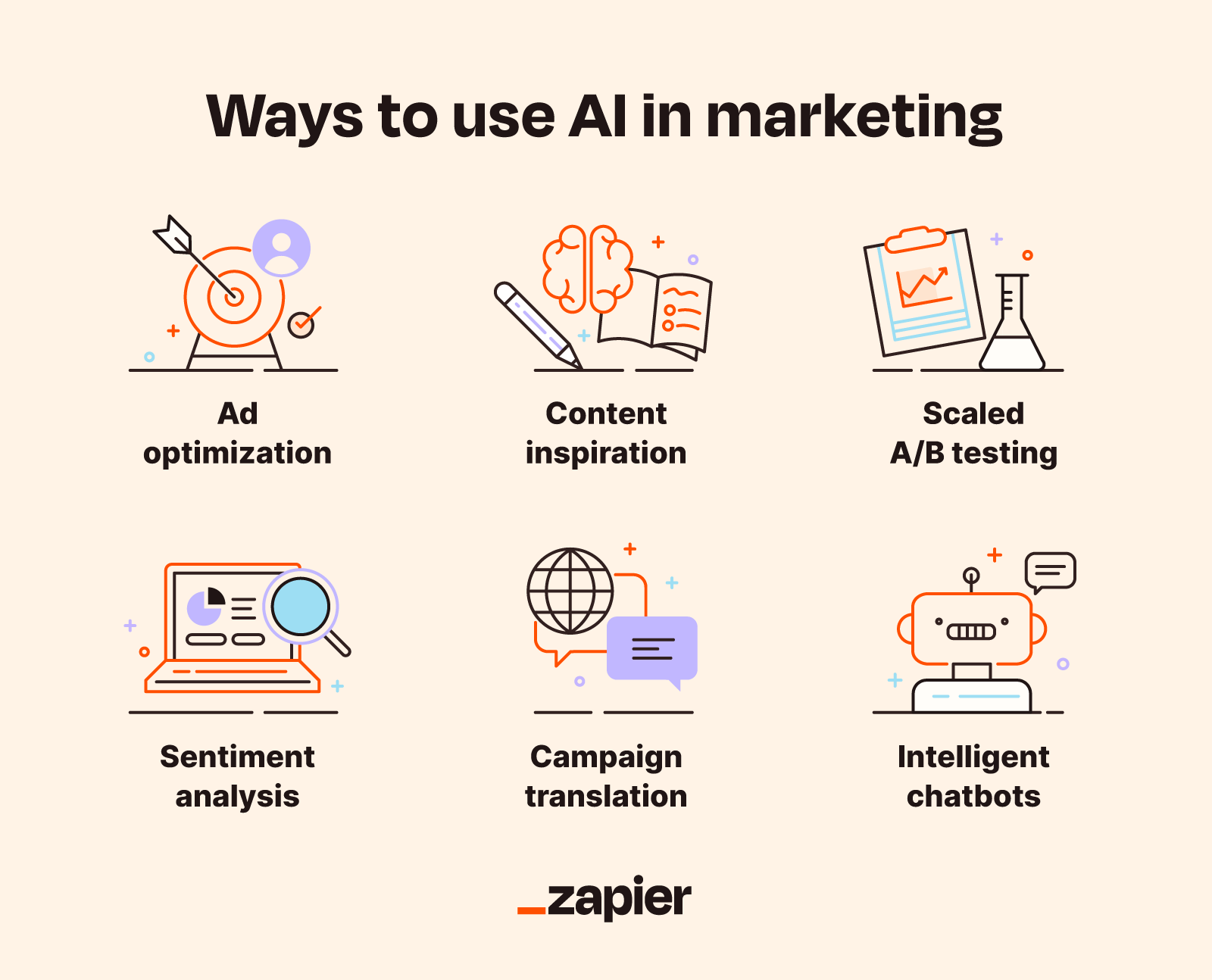
For small to mid-sized businesses, leveraging AI in strategic marketing isn’t about chasing buzzwords; it’s about making smarter decisions with limited resources. This article provides actionable strategies for using AI to optimize customer acquisition and drive sustainable growth. You’ll gain practical insights on where to focus your efforts today, what tools deliver real value, and how to avoid common pitfalls that drain budget and time.
Understanding AI’s Role in Strategic Marketing
AI isn’t a magic bullet, but a powerful amplifier for marketing teams operating under real-world constraints. For SMBs, its primary value lies in automating data analysis, personalizing customer interactions at scale, and predicting future trends. This translates directly into more efficient ad spend, higher conversion rates, and a clearer understanding of customer lifetime value. The goal isn’t to replace human strategists but to empower them with intelligence for better, faster decisions.
Prioritizing AI Applications for Acquisition
When resources are tight, focus AI efforts where they yield the most immediate impact on customer acquisition.
- Audience Segmentation and Targeting: Use AI to analyze customer data, identify high-value segments, and predict prospects most likely to convert. This refines ad targeting, reducing wasted impressions and improving campaign ROI.
- Ad Creative Optimization: AI analyzes past campaign performance to identify elements (headlines, visuals, CTAs) that resonate best. This provides data-backed recommendations to improve existing assets.
- Predictive Lead Scoring: Implement AI models to score leads based on conversion likelihood. This allows your team to prioritize high-potential leads, ensuring valuable time is spent on prospects most ready to buy – a critical efficiency gain.
Start with one or two of these areas. Over-investing in complex AI setups without a clear problem will only lead to frustration.
What often gets overlooked in the initial excitement is the underlying data infrastructure. AI models are only as good as the data they consume. Building and maintaining a clean, consistent, and comprehensive data pipeline isn’t a one-time task; it’s an ongoing operational cost. Without this foundational work, even the most sophisticated AI applications will struggle to deliver on their promise, leading to skewed insights or, worse, misdirected efforts. This data hygiene often becomes a hidden bottleneck, consuming valuable team resources that were initially earmarked for “AI implementation.”
Furthermore, the notion that AI is a “set it and forget it” solution is a common pitfall. Market dynamics, customer preferences, and even your own product offerings evolve. An AI model trained on past data will gradually degrade in performance if not continuously monitored, retrained, and adapted. This requires dedicated human oversight – someone to interpret results, identify drift, and initiate retraining cycles. Without this ongoing stewardship, what started as an efficiency gain can slowly turn into a black box generating increasingly irrelevant recommendations, eroding trust and wasting budget.
Finally, while AI excels at identifying patterns and optimizing for specific metrics, it lacks the nuanced understanding of brand voice, market context, or the qualitative aspects of customer relationships. Blindly following AI recommendations without applying practitioner judgment can lead to generic, uninspired, or even off-brand creative and messaging. The pressure to hit numbers based on AI “insights” can override human intuition, creating internal friction and ultimately diluting the brand’s unique appeal. It’s a tool to augment, not replace, strategic human decision-making.
Leveraging AI for Growth & Retention
Once acquisition is optimized, AI shifts to nurturing existing customers and fostering long-term growth.
- Personalized Customer Journeys: AI dynamically adapts content, offers, and communication based on individual behavior and preferences, boosting engagement and loyalty.
- Churn Prediction: AI models identify customers at risk of churning by analyzing usage patterns and engagement. This allows proactive intervention with targeted offers, significantly improving retention.
- Content Recommendation Engines: For businesses with extensive content, AI recommends relevant content to users, keeping them engaged and moving them further down the funnel. Effective for e-commerce and content sites.
These strategies build on acquisition data, creating a continuous feedback loop for improvement.
What often gets overlooked in the excitement of AI’s potential is the foundational data quality and the operational capacity required to truly leverage these capabilities. Personalized journeys and churn predictions are only as good as the clean, integrated data feeding them. For teams with limited resources, it’s often more pragmatic to deprioritize complex, multi-channel personalization until the core data infrastructure is robust. Attempting sophisticated AI-driven journeys on fragmented data will yield minimal returns and consume valuable time that could be better spent on fundamental improvements.
Furthermore, predicting churn is only half the battle. The real challenge for lean teams lies in having the bandwidth and a clear, actionable playbook to intervene effectively and consistently. If the AI flags at-risk customers but the team lacks the resources or processes to engage them meaningfully, the prediction becomes a data point without impact. A common second-order effect here is focusing solely on “save” offers without addressing the underlying product or service issues that caused the churn risk in the first place. This creates a cycle of reactive discounts that can devalue the offering and train customers to expect incentives rather than solving core problems, ultimately failing to improve long-term retention.
Even with content recommendation engines, the ongoing effort to curate and tag content, ensuring its relevance and quality, is substantial. An AI can only recommend what it’s given. If the content library is stale or poorly maintained, the recommendations will reflect that. Another subtle pitfall is the potential for these engines to create “filter bubbles,” inadvertently limiting a customer’s exposure to new products or categories by over-optimizing for past preferences. This can hinder broader discovery and long-term engagement, especially for businesses aiming to expand customer horizons, and requires careful monitoring to avoid.
What to Deprioritize or Avoid Today
Many SMBs get sidetracked by shiny new AI features that offer little practical value given their constraints. Today, deprioritize or completely avoid:
- Overly Complex Generative AI for Content Creation: While generative AI assists, relying solely on it for long-form, strategic content often results in generic, uninspired, or inaccurate output requiring heavy editing. Your brand voice is best crafted by humans, with AI as a brainstorming tool. Time saved is often negated by time spent fact-checking and rewriting.
- Building Custom AI Models from Scratch: Unless you have a dedicated data science team and a unique problem, avoid investing in custom model development. The cost, time, and expertise are prohibitive for most SMBs. Focus on integrating existing, proven AI-powered tools.
- AI for ‘Vanity Metrics’: Don’t implement AI just to track obscure metrics that don’t directly tie to revenue, acquisition, or retention. Every AI initiative must have a clear, measurable business objective.
Your limited budget and headcount are better spent on optimizing proven AI applications rather than experimenting with unproven projects.
Building Your AI Marketing Stack
You don’t need to be a data scientist to leverage AI. Focus on integrating AI-powered features within platforms you already use or purpose-built tools.
- CRM with AI Capabilities: Platforms like HubSpot AI marketing features embed AI for lead scoring, predictive analytics, and personalized outreach. This centralizes data and streamlines workflows.
- Ad Platforms with Optimization AI: Google Ads and Meta Ads use sophisticated AI for bidding, targeting, and creative optimization. Utilize their full potential.
- SEO Tools with AI Insights: Tools like Semrush or Ahrefs leverage AI to analyze competitor strategies, identify content gaps, and suggest keyword opportunities.
- Customer Service AI: Chatbots and AI-powered knowledge bases handle routine inquiries, freeing up human agents and improving satisfaction.
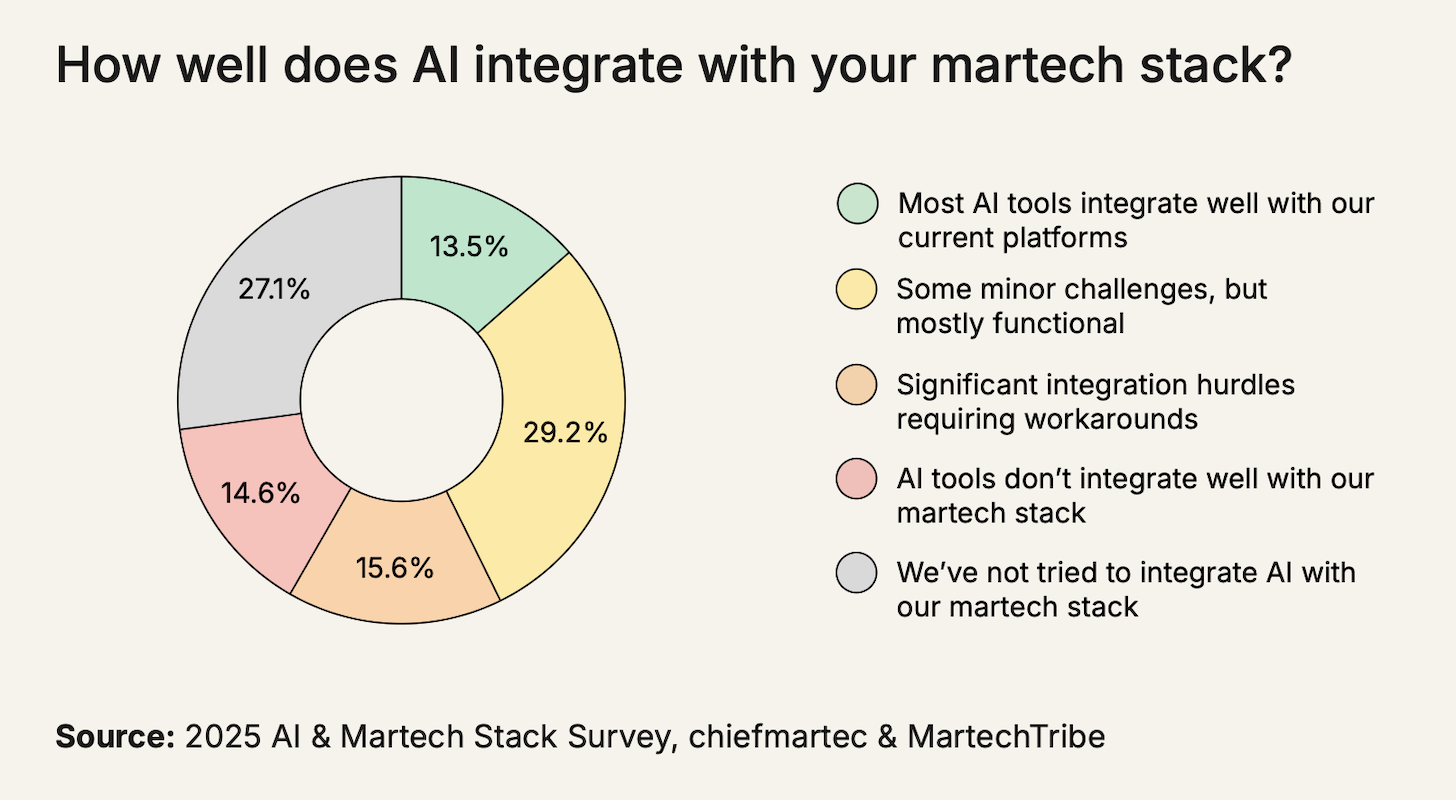
The key is integration. A disconnected set of AI tools creates more work than it solves. Prioritize platforms that talk to each other.
Measuring Impact and Iterating
Implementing AI is not a set-it-and-forget-it task. Continuous measurement and iteration are crucial.
- Define Clear KPIs: Before deploying any AI solution, establish specific Key Performance Indicators (KPIs) you aim to improve (e.g., conversion rate, CLV, ad spend efficiency, churn rate).
- A/B Testing: Where possible, A/B test AI-driven approaches against traditional methods to quantify impact. This provides concrete data to justify investments.
- Regular Performance Reviews: Schedule regular reviews of your AI tools’ performance. Are they delivering value? Are there new features? Is data input clean?
Remember, AI provides intelligence, but human judgment is still essential for interpreting results, making strategic adjustments, and ensuring alignment with business goals. This iterative process ensures your AI investments deliver tangible returns. For more practical advice, see AI marketing strategies for small businesses.

Leave a Comment