

For small to mid-sized marketing teams, every hour counts. You’re constantly juggling content creation, campaign management, SEO, and analytics, often with limited headcount and budget. This article cuts through the noise to show you how AI, when applied pragmatically, can free up your most valuable asset: time. We’ll focus on actionable strategies to shift your team from reactive task execution to proactive strategic impact, even under real-world constraints.
You’ll gain clear guidance on where to invest your AI efforts for immediate, tangible returns, and crucially, what to deprioritize to avoid wasting precious resources. Our goal is to help you leverage AI to elevate your marketing operations, allowing your team to focus on the high-level thinking that truly drives business growth.
Beyond Automation: The Strategic Shift AI Enables
Many marketers view AI primarily as a tool for automation – doing existing tasks faster. While true, this misses the bigger picture, especially for SMBs. The real power of AI isn’t just speed; it’s the liberation of cognitive load. When AI handles the first draft of an email, generates ad copy variations, or sifts through keyword data, it’s not just saving minutes; it’s freeing up your team’s mental energy for deeper analysis, creative problem-solving, and strategic planning. This shift from “doing” to “thinking” is where AI delivers its most significant value in resource-constrained environments.
Prioritizing AI: Where SMBs Get Real Value Now
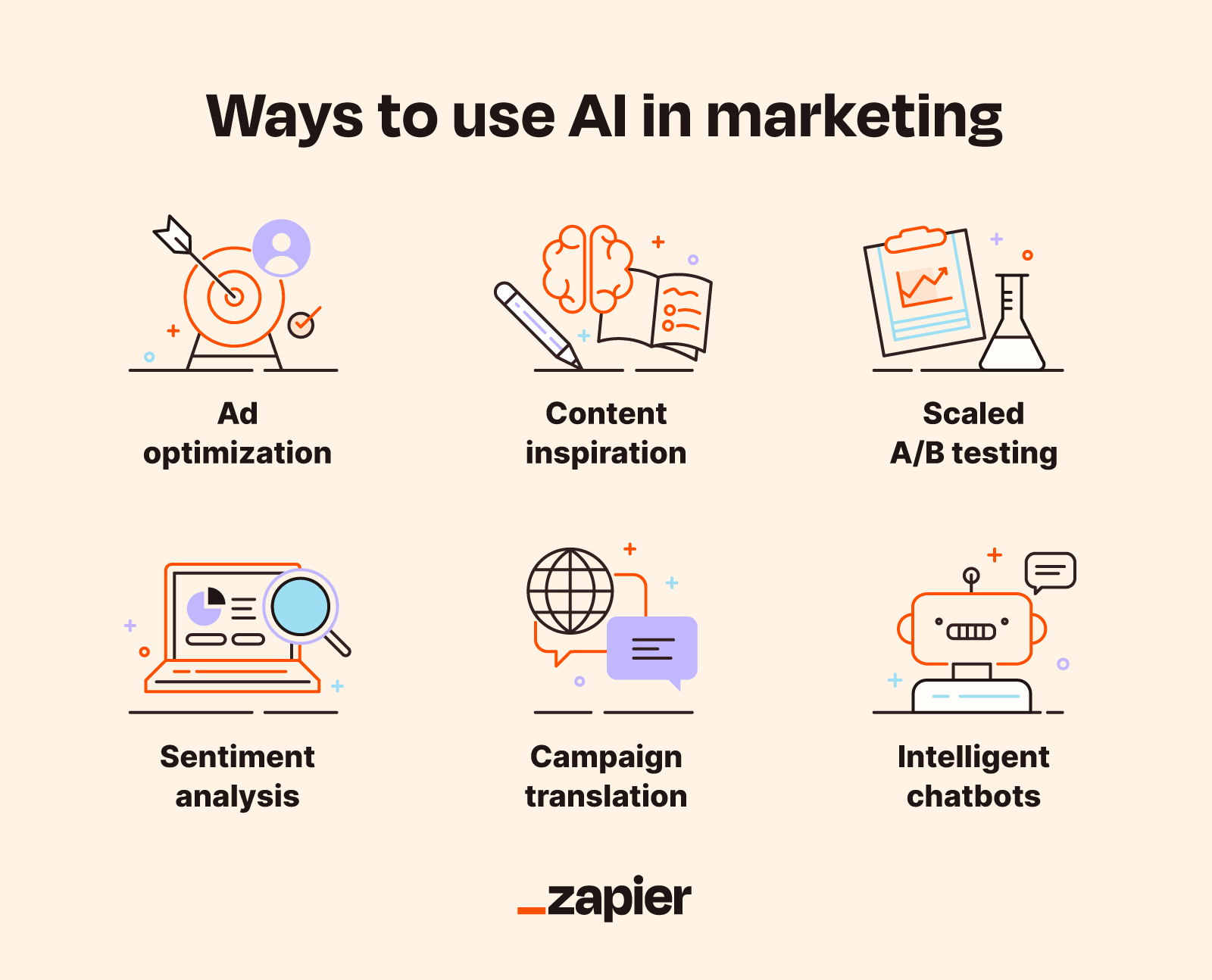
Given limited resources, you can’t chase every AI trend. Focus on areas where AI offers immediate, measurable leverage with minimal setup complexity. My advice is to start with content generation and basic data analysis. These are high-volume, often repetitive tasks that AI can significantly accelerate.
- Content Drafts and Outlines: Use AI to generate initial blog post outlines, social media captions, email body drafts, or even video scripts. This eliminates the blank page syndrome and provides a solid starting point for your team to refine and inject brand voice.
- Ad Copy and Variations: AI excels at generating multiple ad headlines and body copy options based on your product and target audience. This allows for rapid A/B testing and optimization without manual brainstorming fatigue.
- Email Subject Lines: Crafting compelling subject lines is crucial for open rates. AI can quickly generate a dozen options, often with different tones or angles, helping you test and find what resonates best.
- Basic SEO Analysis: Leverage AI for initial keyword research, content idea generation based on search trends, and competitive content gap analysis. It can quickly summarize large datasets, pointing you towards opportunities. AI SEO tools
These applications offer a low barrier to entry and provide clear, quantifiable time savings, directly impacting your output and allowing your team to focus on strategic oversight and refinement rather than initial production.
While AI accelerates initial content production, it’s easy to overlook the subsequent refinement phase. The time saved in drafting can quickly be consumed if your team isn’t adept at injecting brand voice, nuance, and strategic intent into AI-generated output. What often happens in practice is that the ‘blank page syndrome’ is replaced by a ‘generic draft syndrome,’ requiring significant human effort to elevate the content beyond mere competence. If this refinement isn’t prioritized, the perceived efficiency gain is superficial, leading to a slow but steady dilution of your brand’s unique voice and a potential drop in audience engagement over time.
Another common pitfall is underestimating the skill required for effective ‘prompt engineering.’ While the tools are accessible, getting truly valuable, on-brand output demands a nuanced understanding of how to instruct the AI. Teams often experience initial frustration when generic prompts yield generic results, leading to a perception that the AI isn’t powerful enough or isn’t a good fit. This learning curve, if not properly supported, can become a hidden cost in terms of lost time and team morale, potentially causing early abandonment of tools that could otherwise be highly beneficial.
The real shift isn’t just about faster content; it’s about changing the skill set required. Your team’s focus moves from pure creation to critical evaluation, strategic editing, and sophisticated prompting. The downstream effect of not adapting to this new workflow is a risk of producing a ‘sea of sameness’ – content that is technically correct but lacks distinctiveness. This isn’t just a minor issue; it can subtly erode your competitive differentiation, making it harder to stand out in a crowded market where many are leveraging similar AI capabilities. The initial time savings become a false economy if the output fails to resonate or differentiate.
What to Deprioritize: Avoiding AI’s Distractions
Just as important as knowing what to do is knowing what to avoid or delay. For small to mid-sized businesses, the biggest trap is investing in overly complex AI solutions that demand significant data infrastructure, specialized talent, or extensive custom development. Specifically, deprioritize:
- Building Custom AI Models: Unless you have a dedicated data science team and a unique, proprietary dataset, attempting to build your own AI models for predictive analytics or advanced personalization is a resource sink. The time and cost far outweigh the potential benefits compared to leveraging off-the-shelf tools.
- Fully Automated Campaign Management Without Oversight: While tempting, handing over entire campaign management to AI without human supervision can lead to costly mistakes. AI is a powerful assistant, but it lacks the nuanced understanding of brand, market shifts, and ethical considerations that a human marketer provides.
- Deep Predictive Analytics Requiring Massive Datasets: Many SMBs simply don’t have the volume or quality of historical data needed to feed sophisticated predictive AI models effectively. Focus on using AI to analyze existing data for actionable insights, rather than trying to forecast with high precision based on insufficient inputs.
These advanced applications often promise significant long-term gains but require a foundational maturity in data collection and technical expertise that most SMBs lack. Chasing them will divert precious budget and human capital from more immediate, impactful applications.
Just as important as knowing what to do is knowing what to avoid or delay. For small to mid-sized businesses, the biggest trap is investing in overly complex AI solutions that demand significant data infrastructure, specialized talent, or extensive custom development. Specifically, deprioritize:
- Building Custom AI Models: Unless you have a dedicated data science team and a unique, proprietary dataset, attempting to build your own AI models for predictive analytics or advanced personalization is a resource sink. The time and cost far outweigh the potential benefits compared to leveraging off-the-shelf tools.
- Fully Automated Campaign Management Without Oversight: While tempting, handing over entire campaign management to AI without human supervision can lead to costly mistakes. AI is a powerful assistant, but it lacks the nuanced understanding of brand, market shifts, and ethical considerations that a human marketer provides.
- Deep Predictive Analytics Requiring Massive Datasets: Many SMBs simply don’t have the volume or quality of historical data needed to feed sophisticated predictive AI models effectively. Focus on using AI to analyze existing data for actionable insights, rather than trying to forecast with high precision based on insufficient inputs.
These advanced applications often promise significant long-term gains but require a foundational maturity in data collection and technical expertise that most SMBs lack. Chasing them will divert precious budget and human capital from more immediate, impactful applications.
The allure of sophisticated AI can also mask significant hidden costs beyond direct investment. When teams are pressured to implement advanced solutions they’re not ready for, the immediate consequence is often a diversion of focus from more foundational marketing tasks. This isn’t just about budget; it’s about human capital. Valuable team members get pulled into complex data wrangling or model interpretation, tasks that are far removed from their core competencies and often yield little actionable insight. The opportunity cost of neglecting simpler, high-impact improvements in favor of an aspirational AI project is substantial and rarely accounted for upfront.
Furthermore, the practical reality of data readiness is frequently underestimated. While an SMB might possess a decent volume of data, its cleanliness, consistency, and integration across disparate systems are often insufficient for advanced AI applications. The effort required to standardize, deduplicate, and enrich data to a usable state for complex models can easily dwarf the cost of the AI solution itself. This leads to a common failure mode: investing in powerful algorithms only to feed them inconsistent or incomplete data, resulting in unreliable outputs that erode trust and justify skepticism about AI’s value.
This pursuit of advanced AI, especially when driven by external hype or internal pressure to ‘innovate,’ can also create significant internal friction. Teams become frustrated when projects stall due to data limitations or a lack of specialized skills. The initial enthusiasm wanes, replaced by a sense of being overwhelmed or under-resourced. This can lead to a ‘project graveyard’ of half-implemented AI initiatives, where the primary outcome is not improved efficiency or insights, but rather a diminished appetite for future, more practical technological adoption. It’s a classic case where the theory of what AI can do collides with the practical constraints of what a lean team can actually support.
Integrating AI into Your Workflow, Not Just Your Tool Stack
Adopting AI isn’t just about subscribing to a new tool; it’s about adapting your team’s processes. Start by identifying specific pain points in your current workflow where AI can act as a force multiplier. For example, if content ideation is a bottleneck, integrate an AI content assistant into your brainstorming sessions. If ad copy testing is slow, use AI to generate variations before your designers even start. The key is to integrate AI as a collaborative partner, not a standalone solution.
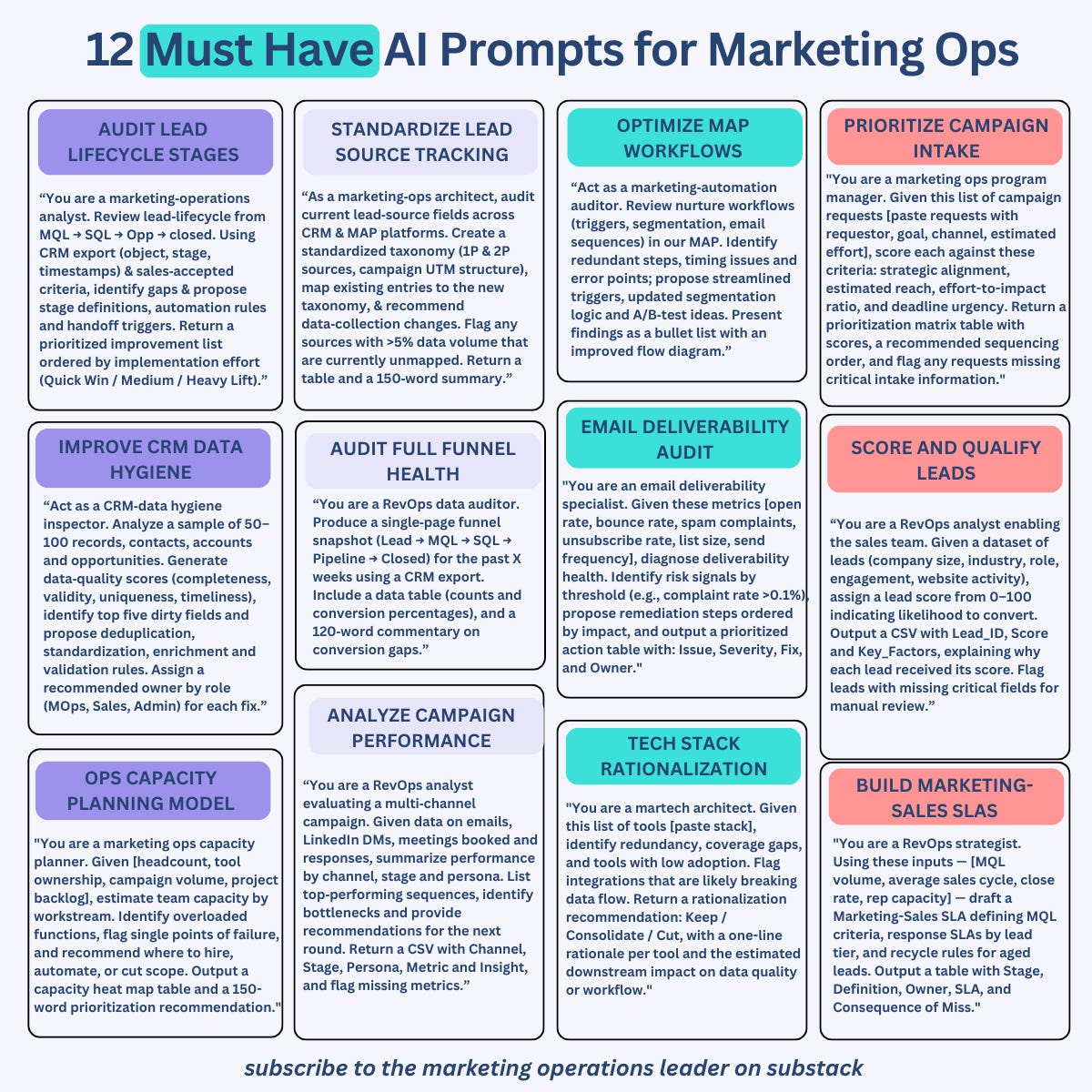
Train your team not just on how to use the tools, but on how to critically evaluate AI outputs. AI provides a strong first draft, but human judgment, brand voice, and strategic alignment are non-negotiable for the final product. Establish clear guidelines for when and how AI is used, ensuring it enhances, rather than replaces, human expertise.
Measuring the Impact: Beyond Vanity Metrics
To justify your AI investments, you need to measure real impact. Don’t just track “how many AI-generated pieces of content” you produced. Instead, focus on metrics that reflect the strategic shift:
- Time Savings: Quantify the hours saved on tasks like initial content drafting, ad copy generation, or data summarization. This directly translates to increased capacity for strategic work.
- Output Quality & Performance: Compare the engagement rates, conversion rates, or SEO rankings of AI-assisted content/campaigns versus purely human-generated ones. Look for improvements in efficiency and effectiveness.
- Strategic Project Completion: Track how many strategic initiatives (e.g., new market research, competitive analysis, long-term campaign planning) your team completes now that they have more time. This is the ultimate measure of AI’s strategic value.
Regularly review these metrics and be prepared to adjust your AI strategy. What works today might need refinement tomorrow as tools evolve and your team gains experience.
Building a More Strategic Marketing Team
Ultimately, AI’s role is to empower your marketing team to be more strategic. By offloading repetitive, time-consuming tasks, AI allows your marketers to dedicate their energy to higher-value activities: understanding customer psychology, identifying emerging market trends, refining brand messaging, and developing innovative campaign concepts. This isn’t about replacing marketers; it’s about elevating their role from task executors to strategic architects. Embrace AI as a catalyst for growth, enabling your small to mid-sized business to compete more effectively and drive sustainable revenue.

Leave a Comment