

Navigating Agentic Search for Real-World Growth
As search engines evolve, simply ranking for keywords isn’t enough. Today, and increasingly in the coming months, search is becoming more agentic—meaning it’s focused on helping users complete tasks and achieve goals, often through AI-powered summaries and direct answers. For small to mid-sized businesses with limited resources, this shift presents both challenges and clear opportunities. This article will guide you through practical, actionable strategies to optimize your online presence for this new reality, helping you prioritize efforts that genuinely drive task completion and revenue, not just traffic.
You’ll learn how to identify high-value user tasks, structure your content for maximum clarity, and make smart trade-offs to ensure your marketing budget and team bandwidth are spent on what truly works. Our focus is on tangible benefits: improving your visibility where it counts, reducing wasted effort, and positioning your business to thrive in a task-oriented search environment.
Understanding Agentic Search: Beyond Keywords
Agentic search, often powered by large language models and AI, aims to understand the user’s underlying intent and complete a task or provide a direct solution, rather than just a list of links. Think of it as a helpful assistant. When a user asks, “What’s the best CRM for a small business with five sales reps?” an agentic search experience won’t just show CRM vendor websites. It might summarize key features, compare top options, and even suggest next steps like a free trial, all within the search results page.
For SMBs, this means your content needs to be less about broad keyword stuffing and more about directly answering questions, solving problems, and guiding users through a specific journey. Your goal is to be the most helpful, authoritative, and structured source for a given task. This isn’t a future trend; it’s the current reality with features like Google’s Search Generative Experience (SGE) becoming more prevalent. Google Search Generative Experience
While the theory of “answering questions and solving problems” sounds straightforward, the practical execution for agentic search demands a level of content depth and structural rigor that often surprises small teams. It’s not enough to just write a good blog post. You need to anticipate the full spectrum of user queries related to a task, provide definitive answers, and present them in a way that an AI can easily parse and synthesize. This often means breaking down complex topics into atomic, interconnected pieces, which is a significant departure from traditional content calendars and requires a deeper investment in subject matter expertise and information architecture than many SMBs are prepared for.
A common pitfall is focusing solely on providing the “right answer” without considering the user’s subsequent steps or the ultimate business objective. An agentic summary might perfectly distill your content, but if that summary satisfies the user’s immediate need without prompting further engagement with your brand, you’ve effectively given away your expertise without earning a click or a lead. The challenge shifts from driving traffic to influencing the AI’s output in a way that still nudges the user towards your solution or next-step offering. This can lead to a frustrating decline in traditional organic traffic metrics, even as your content is being leveraged by the search engine, forcing a re-evaluation of what “success” truly means in this new landscape.
Furthermore, the dynamic nature of agentic search means content isn’t a “set it and forget it” asset. User intent evolves, competitive answers emerge, and the underlying AI models are constantly refined. This necessitates ongoing monitoring and iterative optimization of your content’s structure and clarity to maintain its influence. For lean teams, this continuous maintenance burden can be easily underestimated, leading to content decay where once-effective answers become outdated or less prominent, creating a perpetual treadmill of content refinement that strains already limited resources and adds significant decision pressure on what to prioritize.
Prioritizing Task-Oriented Content
The core of agentic search optimization is understanding the ‘jobs to be done’ by your audience. Instead of asking “What keywords do people search for?” ask “What tasks are people trying to accomplish when they search for something related to my business?”
Identify Core User Tasks: Brainstorm the primary problems your product or service solves. For a local plumber, tasks might include “fix a leaky faucet,” “install a new water heater,” or “prevent frozen pipes.” For an e-commerce store selling artisanal coffee, tasks could be “find unique coffee gifts,” “learn how to brew pour-over coffee,” or “compare dark roast vs. medium roast.”
Map Content to Tasks: Create dedicated content that directly addresses these tasks. This isn’t just blog posts; it could be interactive tools, step-by-step guides, comparison tables, or FAQs specifically designed to complete a user’s objective.
Structure for Clarity: Use clear headings, bullet points, and numbered lists. Break down complex information into digestible chunks. The easier it is for an AI to parse your content and extract key information, the better your chances of being featured in agentic summaries.
What’s easy to overlook in practice is the depth required for true task identification. It’s not enough to simply list obvious tasks like “fix a leaky faucet.” The real challenge lies in understanding the *context* surrounding that task: what led the user to that point, what information they need to make a decision, and what their next logical step might be. Superficial task mapping often leads to content that only addresses a fraction of the user’s need, leaving them to search elsewhere for the complete picture. This isn’t just inefficient; it’s a missed opportunity for your content to truly serve as an agent, and it can lead to a high bounce rate even on seemingly relevant pages.
Another common pitfall is underestimating the ongoing operational commitment. While the initial effort to map content to tasks is significant, the work doesn’t end there. User tasks, product features, and even the solutions themselves evolve. Content that was perfectly task-oriented six months ago can quickly become outdated, inaccurate, or less effective if not regularly reviewed and updated. Teams often feel the pressure to produce new content, but neglecting the maintenance of existing task-oriented assets creates a hidden cost: a growing library of decaying content that actively undermines agentic search performance and erodes user trust over time. Prioritizing new content over the continuous refinement of existing, high-value task-oriented pages is a decision that often leads to diminishing returns and internal frustration down the line.
Technical Foundations for Agentic Visibility
While content is king, its structure is the kingdom’s foundation. Agentic search relies heavily on understanding the semantic meaning and relationships within your content. This is where technical SEO for task orientation becomes critical.
Semantic HTML: Use HTML5 elements correctly. For example, use
<article>for standalone content,<nav>for navigation, and appropriate heading tags (<h1>,<h2>, etc.) to define content hierarchy. This helps search engines understand the purpose and structure of different parts of your page.Schema Markup for Entities and Actions: Implement structured data using Schema.org vocabulary. Focus on marking up entities (products, services, organizations, people) and actions (how-to steps, recipes, events). For a service business,
Service,LocalBusiness, andHowToschema are invaluable. For products,ProductandOfferare essential. This explicit tagging helps search engines understand the real-world objects and processes your content describes, making it easier for them to fulfill user tasks.Clear Site Architecture: Organize your website logically. A clear hierarchy with intuitive navigation helps both users and search engine agents find relevant information quickly. Think about how a user would navigate to complete a specific task on your site.
What to Deprioritize (and Why)
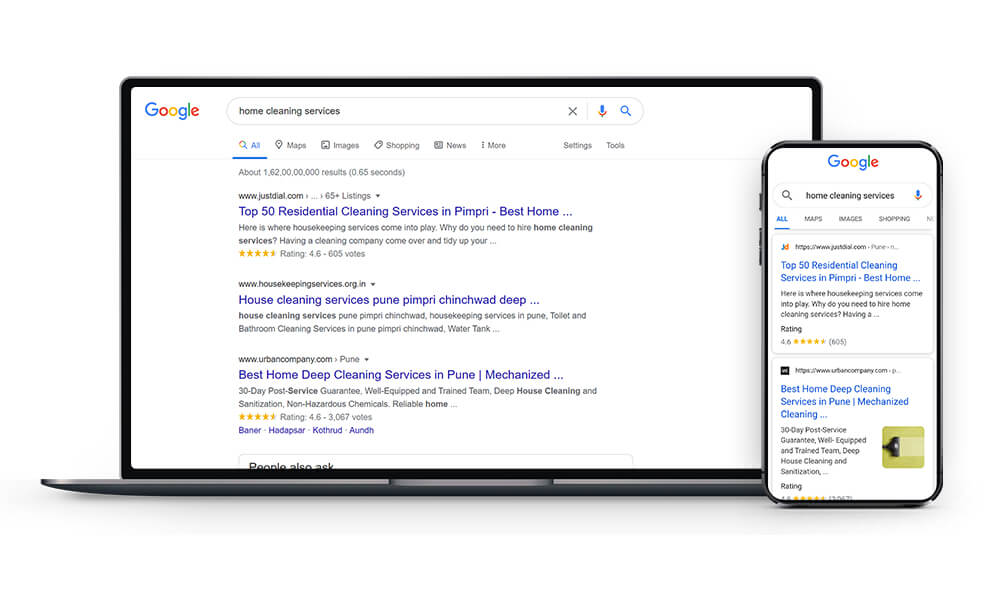
With limited budgets and headcount, SMBs must make tough choices. Currently, you should deprioritize chasing every new AI-driven content generation tool or focusing solely on vanity metrics like broad keyword rankings. Many AI content tools produce generic, unoriginal text that lacks the depth and unique perspective needed for agentic search. Instead of generating hundreds of mediocre articles, invest in fewer, highly focused pieces that genuinely solve a user’s task. Similarly, obsessing over a top-three ranking for a generic keyword like “marketing tips” is less valuable than being the definitive answer for “how to set up Google Ads for a local restaurant.” Focus on depth and utility over sheer volume or broad, untargeted visibility.
Measuring Success in an Agentic World
Traditional SEO metrics like keyword rankings and organic traffic still matter, but agentic search demands a deeper look at user behavior and task completion. Your analytics focus should shift to:
Task Completion Rates: Are users finding the answers they need and completing the desired action (e.g., filling out a form, making a purchase, downloading a guide)? Track conversion rates tied to specific task-oriented content.
Engagement Metrics: Look at time on page, bounce rate, and scroll depth for your task-oriented content. High engagement suggests your content is effectively serving the user’s intent.
Direct Answers & Featured Snippets: Monitor your appearance in AI-generated summaries, featured snippets, and “People Also Ask” sections. These are direct indicators of agentic visibility.
User Feedback: Pay attention to customer service inquiries and direct feedback. Are users still asking questions that your website should clearly answer? This indicates gaps in your task-oriented content.
Moving Forward with Task-Oriented SEO
Optimizing for agentic search is an ongoing process, not a one-time fix. Start by auditing your existing content through the lens of user tasks. Identify your top five to ten most critical user tasks and assess how well your current content addresses them. Prioritize creating or refining content for these key tasks, ensuring it’s comprehensive, clear, and technically structured with appropriate schema markup. Regularly review your analytics to understand how users are interacting with your task-oriented content and iterate based on real-world performance. This pragmatic, task-first approach will ensure your marketing efforts yield tangible results in the evolving search landscape.

Leave a Comment