


The search landscape is shifting rapidly with AI, and for small to mid-sized businesses, this means re-evaluating where to focus limited SEO resources. This article cuts through the noise, showing you exactly where to concentrate your efforts to ensure your website remains visible and effective in an AI-driven world.
You’ll learn what to prioritize today, what to put on the back burner, and what to avoid entirely to build a resilient online presence that continues to attract and convert your target audience.
The Core Shift: From Keywords to Context and Authority
AI models are fundamentally changing how search engines understand and rank content. The era of simply stuffing keywords is long gone. Today, AI prioritizes content that demonstrates deep understanding, relevance, and, critically, E-E-A-T: Experience, Expertise, Authoritativeness, and Trustworthiness. Your website needs to prove it’s a reliable source of information.
- **Showcase Author Expertise:** Clearly identify authors with relevant credentials or experience. Use author bios, link to professional profiles, and ensure your team’s expertise is visible.
- **Cite Sources:** Internally link to other relevant, authoritative content on your site. Externally, link to reputable sources when appropriate, demonstrating thorough research.
- **Regularly Update Content:** Stale content signals neglect. Regularly review and update your key pages to ensure accuracy, freshness, and continued relevance.
- **Build Brand Reputation:** Encourage reviews, testimonials, and mentions from other reputable sites. A strong brand signal reinforces your authority to AI.
Structured Data: Your AI Translator
Structured data, powered by Schema.org, is no longer an advanced tactic; it’s foundational for AI readiness. It provides explicit clues to search engines about the meaning and relationships within your content, helping AI understand context far more effectively than it could from raw text alone. This clarity is crucial for your content to be accurately interpreted and potentially featured in AI-generated summaries or rich results.
- **Prioritize Core Schema:** Implement Organization, Person (for authors), Article, Product, and LocalBusiness schema where applicable. These are universal and provide significant context.
- **Leverage Review Schema:** If you have products or services with reviews, use review structured data to highlight social proof and build trust.
- **Implement FAQ Schema:** For pages with clear question-and-answer sections, FAQ schema can help your content appear directly in AI-powered answer boxes.
Always validate your structured data using Google’s Rich Results Test to catch errors before deployment.
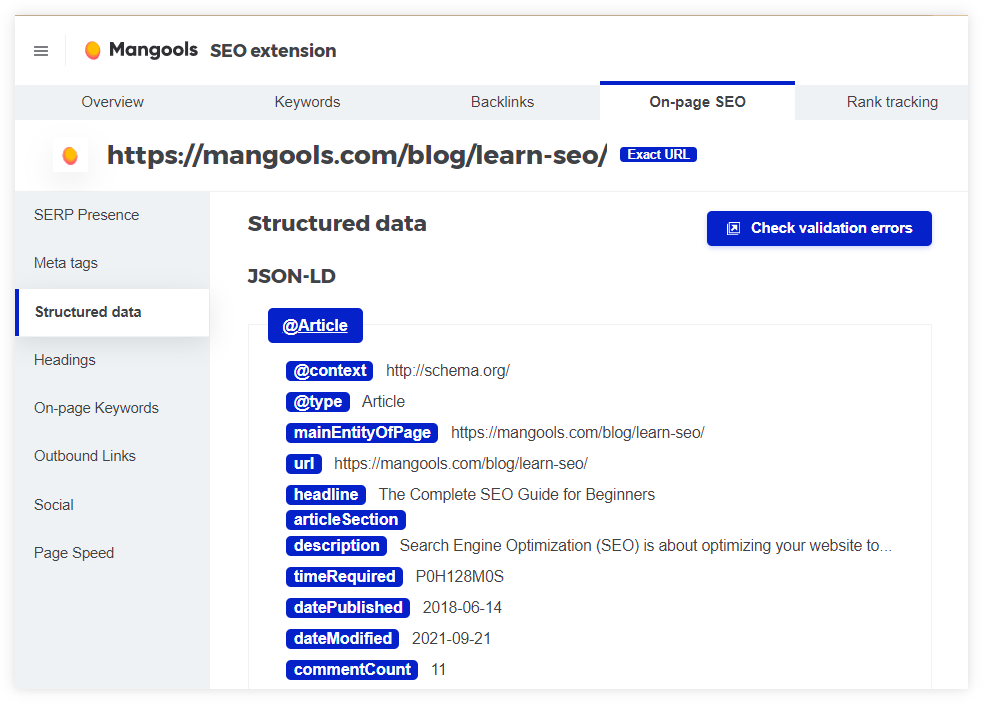
What’s often overlooked is that structured data isn’t a one-time implementation; it requires ongoing maintenance. As your content evolves, products change, or business models shift, your schema must be updated to reflect these realities. Failing to maintain accurate and current structured data can lead to stale or even misleading signals, which search engines are increasingly adept at identifying. This not only wastes the initial effort but can also cause your content to be deprioritized or misinterpreted by AI systems that rely on these explicit clues.
Another common pitfall is the temptation to over-optimize or misrepresent information through structured data. While the goal is to provide clarity, attempting to apply schema that doesn’t genuinely reflect the content on the page – for instance, adding review schema to a page without actual customer reviews – can backfire. Search engines are sophisticated enough to detect these discrepancies. Such practices can lead to your structured data being ignored, or in more severe cases, result in manual actions against your site, eroding trust and negating any potential benefits.
For teams with limited resources, it’s crucial to make pragmatic choices about schema implementation. While Schema.org offers a vast array of types, not all provide equal value or impact. It’s easy to get bogged down in the pursuit of highly specific or niche schema types that offer marginal gains for significant effort. Instead, prioritize the core schema types that directly support your primary business objectives and content strategy. Avoid chasing every available schema type, particularly those with low adoption or unclear benefits, as the operational overhead of meticulous implementation and ongoing validation often outweighs the potential return for resource-constrained small to mid-sized businesses.
Content Quality and Semantic Depth: Beyond Basic Keywords
AI rewards comprehensive, in-depth content that fully addresses user intent. This means moving beyond a narrow focus on single keywords and instead building out content that covers semantic clusters and related entities. Think about the broader topic your audience is interested in and provide a complete, nuanced answer.
- **Answer Related Questions:** Research common questions your audience asks around a topic and integrate answers naturally within your content.
- **Cover Topics Thoroughly:** Don’t just skim the surface. Provide enough detail and context to satisfy a user’s full information need.
- **Use Natural Language:** Write as you would speak, focusing on clarity and readability. AI is sophisticated enough to understand natural language patterns.
- **Avoid Keyword Stuffing:** This tactic is detrimental. Focus on natural language and semantic relevance, not keyword density percentages.
While keyword research remains foundational, deprioritize obsessive focus on exact keyword density or chasing every long-tail variation. AI’s understanding of intent means a well-researched, semantically rich piece covering a topic comprehensively will outperform multiple thin articles targeting slightly different keyword phrases. Your time is better spent on depth and quality than on micro-optimizing for specific keyword counts.
The pursuit of “comprehensive” content, while critical, often introduces a practical challenge for lean teams: scope creep. It’s easy to mistake adding more words or tangential sub-topics for genuine semantic depth. This approach often dilutes the core message, delays publication, and exhausts limited resources without delivering proportional value. True depth means fully satisfying a specific user intent with authority and nuance, not simply covering every remotely related concept.
A less obvious downstream effect of committing to truly in-depth content is the ongoing maintenance burden. Authoritative pieces require regular review and updates to remain accurate and relevant in evolving landscapes. Without a clear strategy for content upkeep, a library of comprehensive articles can quickly become a source of technical debt, diverting future resources from new initiatives to simply refreshing existing material. Prioritizing fewer, truly excellent and well-maintained pieces often yields better long-term results than a larger volume of content that quickly becomes stale.
Another common pitfall for teams under pressure to maintain a consistent publishing cadence is the temptation to produce content that *appears* comprehensive but lacks genuine insight or unique value. This often results in generic content that merely rehashes existing information, failing to differentiate your business or build true authority. The real trade-off isn’t just between quantity and quality, but between superficial breadth and meaningful depth that actually solves a user’s problem better than anyone else.
User Experience (UX) as an AI Ranking Factor
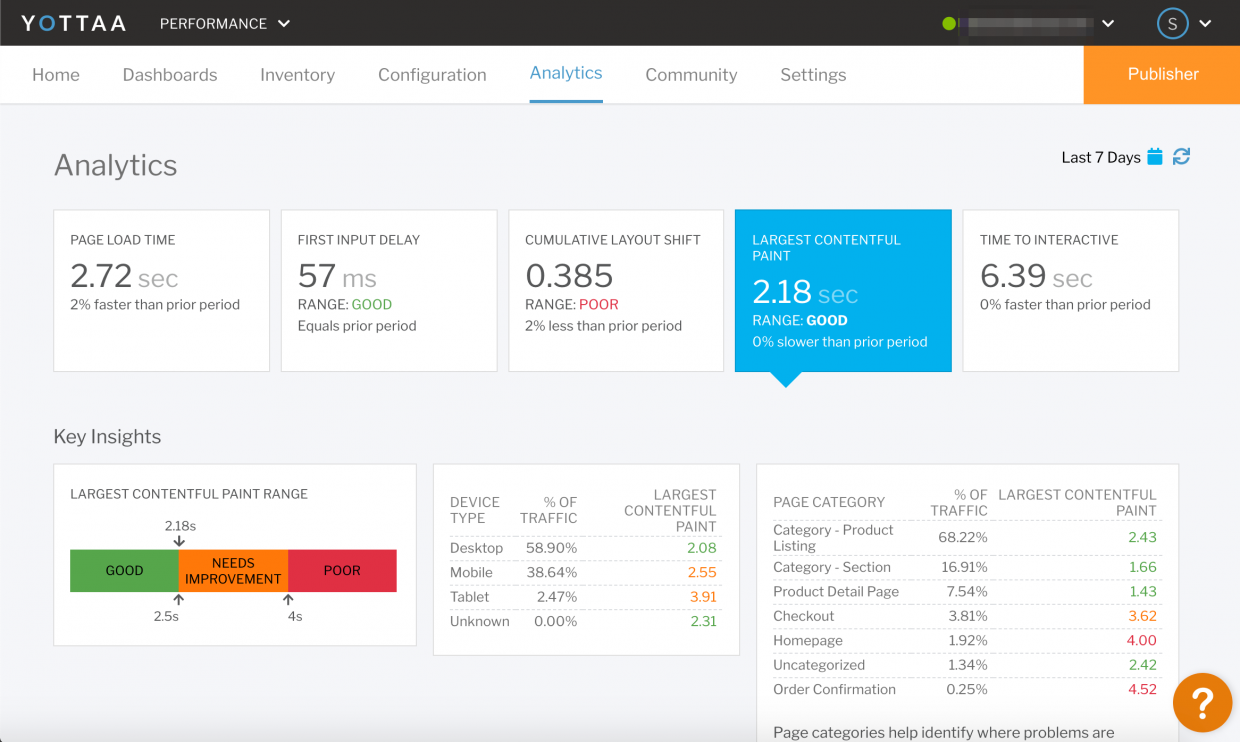
The user experience your website provides is a direct signal to AI about your site’s quality. Core Web Vitals (CWV) — Largest Contentful Paint, First Input Delay, and Cumulative Layout Shift — are explicit metrics, but overall site usability, mobile responsiveness, and intuitive navigation also play a significant role. AI models learn from user behavior, and a poor experience leads to higher bounce rates and lower engagement, signaling a less valuable resource.
- **Optimize Page Load Speed:** Fast-loading pages are critical. Compress images, leverage browser caching, and minimize render-blocking resources.
- **Ensure Mobile Responsiveness:** A seamless experience across all devices is non-negotiable. Test your site thoroughly on various screen sizes.
- **Prioritize Intuitive Navigation:** Users should easily find what they’re looking for. Use clear menus, internal linking, and a logical site structure.
- **Clear Calls to Action:** Guide users effectively through your site, whether it’s to read more, sign up, or make a purchase.
Technical SEO: The Unseen Foundation
Even with advanced AI, the fundamental principles of technical SEO remain paramount. If search engine crawlers and AI systems cannot access, crawl, and index your content efficiently, all other optimization efforts are moot. Technical SEO ensures your content is discoverable and understandable at a basic level.
- **Manage Robots.txt and Sitemaps:** Ensure your robots.txt file isn’t blocking important content and that your XML sitemap is up-to-date and submitted to Google Search Console.
- **Implement Canonical Tags:** Prevent duplicate content issues by using canonical tags to indicate the preferred version of a page.
- **Fix Broken Links:** Regularly audit and fix broken internal and external links to improve user experience and crawlability.
- **Ensure HTTPS:** Security is a ranking factor and builds user trust. Your entire site should be served over HTTPS.
Regularly monitor your site’s technical health using tools like Google Search Console Google Search Console documentation to identify and address issues promptly.
Adapting to AI-Powered Search Interfaces
Search Generative Experience (SGE) and other AI-driven interfaces are changing how users consume information, often providing direct answers or summaries at the top of search results. For your content to thrive in this environment, it needs to be easily digestible and summarizable by AI.
- **Create Summarizable Content:** Structure your content with clear headings, bullet points, and concise paragraphs that allow AI to quickly extract key information.
- **Provide Direct Answers:** If your content addresses common questions, ensure the answers are clear, direct, and appear early in the relevant section.
- **Use Clear Headings and Structure:** Logical HTML heading tags (H1, H2, H3) provide a hierarchical structure that AI can easily follow to understand your content’s organization.
This isn’t about gaming the system, but about making your valuable content easily digestible by both humans and AI, increasing its chances of being featured in these new search experiences.
Prioritizing Your AI-Ready SEO Roadmap
For small to mid-sized businesses, resources are tight, making prioritization essential. Here’s a practical order of operations to future-proof your SEO without overhauling everything at once:
- **First:** Conduct a thorough audit of your existing content for E-E-A-T signals. Update and improve your most important pages to demonstrate expertise and trustworthiness. Simultaneously, implement basic structured data (Organization, Product/Service, Article) on your core pages.
- **Next:** Address any critical Core Web Vitals and mobile UX issues. These are foundational for both user satisfaction and AI signals. Begin creating new, semantically rich content clusters that deeply cover topics rather than just targeting individual keywords.
- **Later:** Explore more advanced structured data implementations, deeper semantic analysis tools, and specific optimizations for conversational search if your core content and user experience are solid.
Avoid chasing every new AI SEO tool or trend without first solidifying these fundamentals. Many tools promise magic, but consistent, high-quality execution of the basics will yield far greater returns and build a more resilient online presence for your business.


Leave a Comment