

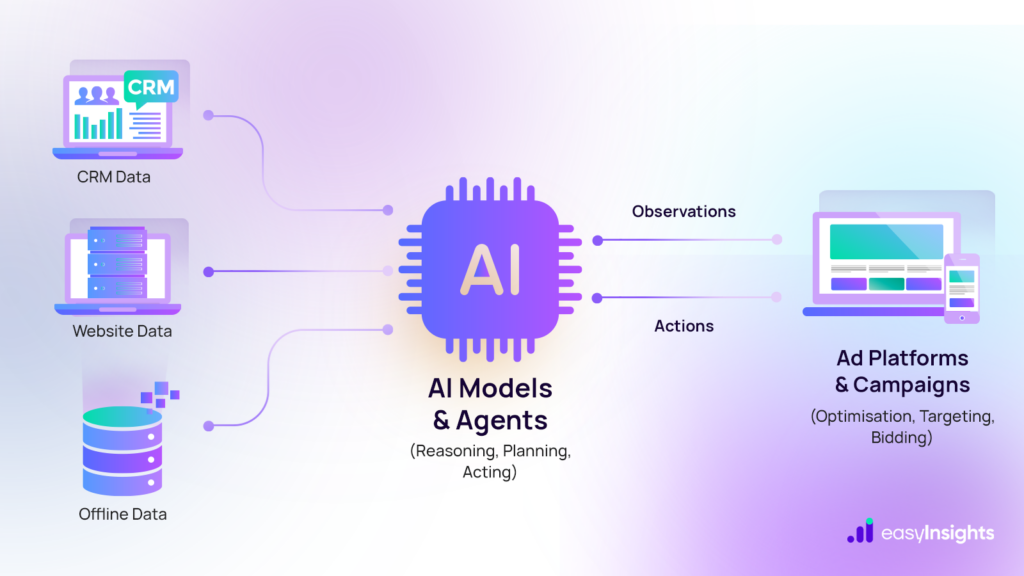
For small to mid-sized teams, integrating AI into daily operations isn’t about chasing futuristic tech; it’s about practical gains. This guide cuts through the noise to show you how to leverage AI tools today to streamline repetitive tasks, generate better content faster, and make more informed marketing decisions. You’ll gain clear insights into where to start, what to prioritize, and critically, what to avoid to ensure your limited resources deliver real, measurable impact.
You’ll walk away with a pragmatic framework for adopting AI that respects your budget and headcount constraints, allowing your team to focus on strategic thinking rather than getting bogged down in manual processes. This isn’t about a complete overhaul, but about smart, incremental improvements that yield significant returns.
Why AI Workflows Matter for SMBs Right Now
The landscape of marketing and operations is evolving rapidly, and AI is no longer a luxury for large enterprises. For SMBs, AI offers a tangible path to level the playing field, allowing smaller teams to achieve output and analytical depth previously requiring significantly more headcount. The core benefit isn’t just automation; it’s augmentation – empowering your existing team to focus on strategic thinking and creative problem-solving rather than getting bogged down in manual, time-consuming processes. This means faster content cycles, more precise audience targeting, and quicker insights from your data, all without needing to hire a data science team.
Prioritizing AI Integration: Where to Focus Your Efforts
When resources are tight, every investment needs to count. For AI, this means identifying high-impact areas that can deliver immediate, tangible returns with minimal setup friction.
- Content Generation & Repurposing: This is often the lowest-hanging fruit. AI writing assistants can draft blog post outlines, social media captions, email subject lines, and even initial article drafts. This frees up your content creators to refine, add unique insights, and focus on strategy.
- Basic Data Analysis & Reporting: Instead of manually pulling and summarizing data from various platforms, AI tools can help consolidate metrics, identify trends, and even flag anomalies in ad campaign performance or website traffic. This accelerates your weekly or monthly reporting cycles.
- Customer Service Augmentation: Implementing AI-powered chatbots for frequently asked questions (FAQs) can significantly reduce the load on your customer support team, allowing them to handle more complex inquiries. This improves response times and customer satisfaction.
- SEO Research & Optimization: AI can assist with keyword research, content gap analysis, and even suggest on-page optimization improvements, making your SEO efforts more efficient and data-driven. AI SEO tools
What to Deprioritize or Skip Today:
While the allure of advanced AI is strong, for most SMBs, complex predictive modeling, fully autonomous decision-making systems, or custom AI model development should be firmly on the back burner. These initiatives demand substantial data volume, specialized technical expertise, and significant budget – resources that are typically beyond the current capacity of small to mid-sized teams. Attempting these too early often leads to stalled projects, wasted investment, and frustration. Focus instead on leveraging off-the-shelf AI tools that integrate easily into your existing workflows and solve immediate, well-defined problems.
While the immediate gains from AI-driven content generation are clear, a hidden cost often emerges over time: the dilution of your unique brand voice. If not carefully managed, relying too heavily on AI for initial drafts can lead to content that is technically correct but lacks the distinct personality, tone, and strategic nuance that truly differentiates your business. The initial time savings can be offset by the need for extensive human editing to inject that missing character, or worse, a gradual erosion of content quality that goes unnoticed until engagement metrics begin to decline.
Even with off-the-shelf AI tools designed for easy integration, the real-world effort required for sustained value is frequently underestimated. The initial setup might be straightforward, but maintaining data quality, continuously training the AI on specific business contexts, and adapting internal workflows to effectively leverage its outputs demands ongoing human attention. Teams often expect a “set it and forget it” solution, only to find that the AI’s performance degrades without consistent oversight, or that the team struggles to incorporate its outputs into daily tasks. This leads to frustration, underutilization, and the perception that the tool “didn’t work,” when in reality, the human-AI interface and ongoing management weren’t adequately prioritized.
The decision to deprioritize advanced AI isn’t just about technical feasibility; it’s also about managing internal expectations and external pressures. Teams might feel a strong pull to experiment with cutting-edge solutions, seeing competitors or industry leaders touting their advanced AI initiatives. This can create internal friction or a sense of falling behind. What’s often overlooked is that these “advanced” applications frequently require a level of data maturity, clean data pipelines, and a culture of experimentation that most SMBs haven’t yet built. Skipping these foundational steps to chase complex AI is akin to building a roof before the walls are up – it looks impressive from a distance but lacks structural integrity and will inevitably lead to costly rework or collapse.
Building Your First AI-Powered Workflow: A Practical Blueprint
Don’t overcomplicate the start. A successful AI workflow begins with a clear problem and a simple solution.
- Identify a Bottleneck: Pinpoint a specific, repetitive task that consumes significant time or resources. Is it drafting social media posts? Summarizing weekly sales data? Responding to common customer queries?
- Research & Select the Right Tool: Look for user-friendly, affordable AI tools that integrate with your existing platforms (e.g., your CRM, email marketing software, or social media scheduler). Many marketing platforms now have integrated AI features. AI tools for marketing
- Define Inputs and Desired Outputs: Clearly articulate what information the AI needs to start (the input) and what specific result you expect (the output). For example, input: ‘blog post topic and three keywords’; output: ‘five hundred-word draft outline with headings’.
- Pilot and Iterate: Start small. Run a pilot with a single workflow and a small team. Gather feedback, refine your prompts, and adjust the process. AI tools are not set-and-forget; they require human guidance and iteration to deliver optimal results.

AI workflow iteration loop
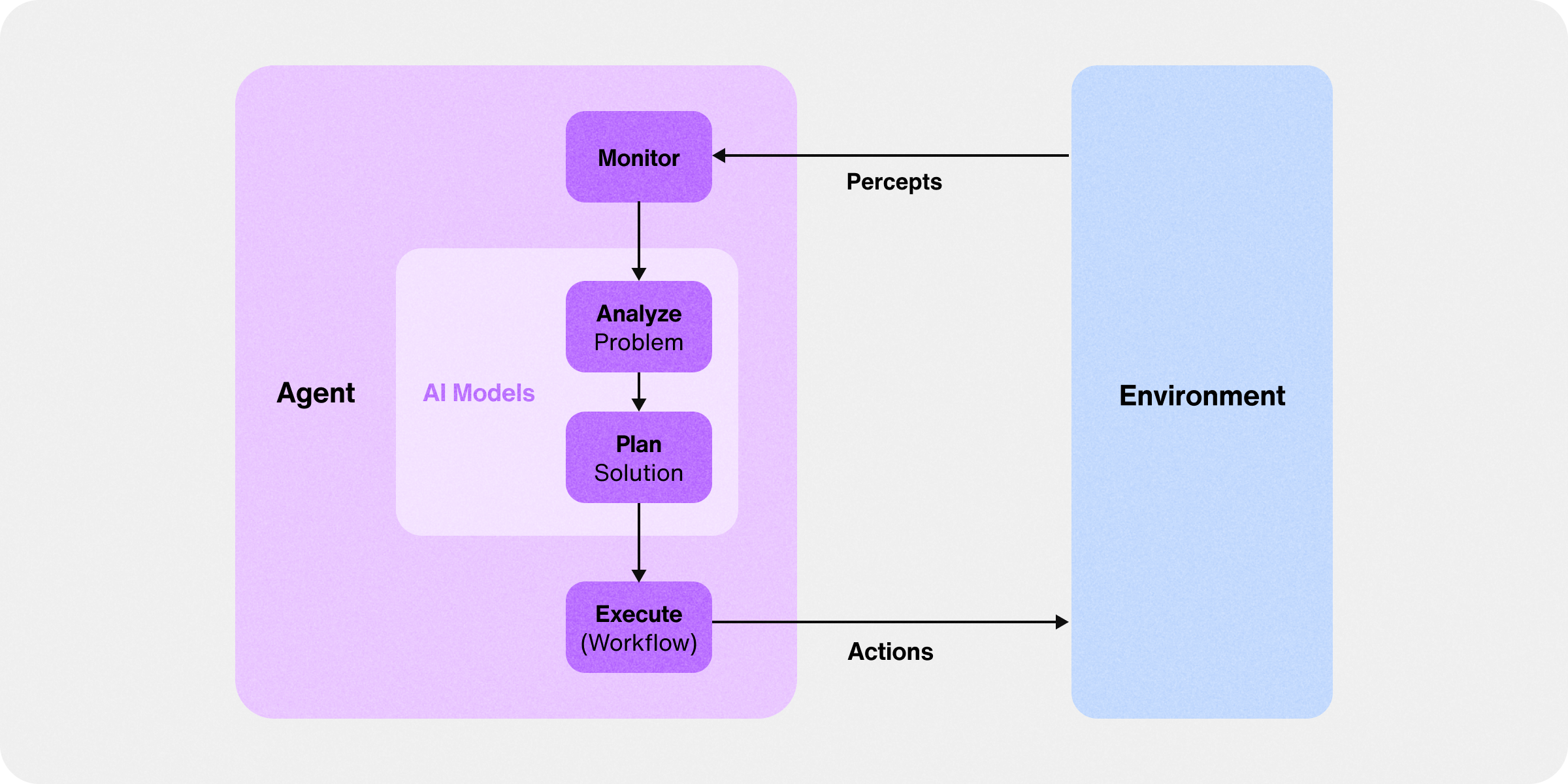
Remember, the goal is to augment, not automate entirely. Your team’s judgment and expertise remain crucial for reviewing, refining, and strategically deploying AI-generated outputs.
Initial pilots often reveal that the “iteration” part is harder than anticipated. It’s easy to assume the AI will just “get better” with more use, but without dedicated time for prompt refinement and output analysis, the workflow stagnates. This isn’t just about tweaking words; it’s about understanding why the AI isn’t meeting expectations and adjusting the entire input strategy. This becomes a hidden cost: the ongoing human labor required to maintain and improve the AI’s utility, which small teams often underestimate in their initial enthusiasm.
Another common pitfall, especially when scaling, is the subtle erosion of brand voice. While AI can generate content quickly, it often struggles with the nuanced, intangible elements that define a brand’s unique personality and tone. Relying too heavily on AI for “first drafts” across multiple content types without a robust human review process can lead to a homogenized, generic output that dilutes your distinct market presence. The immediate efficiency gain can mask a long-term strategic cost in brand differentiation.
Given these realities, it’s critical to manage expectations and avoid the trap of perfectionism. For most small to mid-sized teams, deprioritize the pursuit of a “fully automated” or “perfectly optimized” AI workflow in the early stages. The time and resources required to achieve that last 10-20% of perfection often far outweigh the marginal gains. Instead, focus on achieving a “good enough” workflow that consistently delivers 70-80% of the desired output quality, freeing up human capacity for the critical 20-30% of strategic refinement and oversight. This pragmatic approach prevents burnout and ensures the AI remains a valuable augmentative tool, not a source of endless frustration.
The Human Element: Guiding AI for Strategic Impact
AI is a powerful assistant, but it’s not a replacement for human intelligence, creativity, or strategic oversight. For SMBs, this means understanding that AI tools are best used to amplify your team’s capabilities, not to operate independently.
- Strategic Direction: Humans define the goals, set the parameters, and provide the context for AI. AI can generate content, but your team provides the brand voice, the unique insights, and the overarching marketing strategy.
- Quality Control & Refinement: AI-generated content or analysis always requires human review. Fact-checking, tone adjustment, and ensuring brand consistency are non-negotiable.
- Ethical Considerations: Your team is responsible for the ethical use of AI, ensuring data privacy, avoiding bias, and maintaining transparency with your audience.
- Creative Problem Solving: While AI can analyze data and suggest solutions, the ability to connect disparate ideas, innovate, and adapt to unforeseen challenges remains a uniquely human strength.
By embracing AI as a force multiplier, your small team can achieve disproportionately large results, focusing on the high-value tasks that truly drive business growth.



1 Comment