

Prioritize High-Impact, Low-Complexity AI Integrations
Integrating AI effectively isn’t about chasing every shiny new tool; it’s about strategic application that delivers tangible business value. This playbook cuts through the noise, offering a practitioner’s perspective on how small to mid-sized businesses can leverage AI to optimize operations, enhance customer experiences, and drive sustainable growth.
You’ll learn where to focus your limited resources for maximum impact, what common pitfalls to avoid, and how to build an AI strategy that truly works within your operational constraints, rather than adding complexity.
For SMBs, the initial focus must be on AI applications that solve immediate, high-value problems without demanding extensive custom development or specialized data science teams. Think about areas where AI can automate repetitive tasks, improve data analysis, or personalize customer interactions with existing tools.
- Content Generation and Optimization: Tools for drafting social media posts, blog outlines, email copy, or even refining existing content for SEO. This frees up marketing teams.
- Customer Support Automation: Chatbots for FAQs, basic inquiry routing, or lead qualification. This reduces load on customer service.
- Data Analysis and Reporting: AI-powered insights from existing CRM, sales, or web analytics data to spot trends or identify opportunities faster.
- Ad Campaign Optimization: AI features within platforms like Google Ads or Meta Ads that automate bidding, audience targeting, or creative variations.
Start with one or two clear use cases where you can see a direct, measurable benefit. This builds internal confidence and provides quick wins. AI benefits for small business marketing
What to Deprioritize and Why
It’s tempting to chase advanced AI projects, but for most SMBs, certain initiatives are resource sinks that yield little practical return. Deprioritize custom-built, large-scale AI models or complex predictive analytics projects that require significant data engineering or machine learning expertise. These often demand dedicated teams, clean, massive datasets, and a long development cycle – resources most SMBs simply don’t have.
Similarly, avoid integrating AI purely for novelty or “vanity” projects that don’t directly address a core business problem or improve a key metric. Examples include overly complex internal knowledge bases that no one uses, or AI-driven features on your website that add friction rather than value. Your budget and headcount are too precious to waste on unproven, high-risk ventures. Focus on off-the-shelf, proven solutions that integrate easily.
Even when opting for seemingly “off-the-shelf” AI solutions, the true cost often extends far beyond the license fee. What’s easy to overlook in practice is the significant, ongoing operational overhead. Integrating these tools with existing legacy systems, preparing and cleaning the data they consume, and then continuously monitoring and fine-tuning their performance demands dedicated time and attention from your team. This isn’t a one-time setup; it’s a persistent resource drain that can quickly negate the perceived “plug-and-play” simplicity, turning a promising solution into a maintenance burden.
A more insidious, second-order effect of chasing complex AI too early is the accumulation of “data debt.” Without robust, disciplined processes for data collection, storage, and governance already in place, any AI initiative—simple or complex—will struggle. Feeding messy, inconsistent, or incomplete data into an algorithm doesn’t magically produce insights; it amplifies existing flaws, leading to unreliable outputs and flawed decision-making. This not only wastes the initial investment but also erodes internal trust in the technology, making it exponentially harder to gain buy-in for future, more impactful AI projects.
Finally, the human element is a critical, often underestimated, failure point. When AI solutions are introduced without adequate training, clear use cases, or if they consistently produce questionable results, they become a source of profound team frustration. This leads to low adoption rates, workarounds, and a general cynicism towards new technology. The initial excitement quickly sours, and the team’s valuable time is spent battling the tool rather than leveraging it, creating a negative feedback loop that can derail even well-intentioned digital transformation efforts.
Integrate AI into Existing Workflows, Not as a Standalone Silo
The most effective AI integrations enhance current processes rather than creating entirely new ones. Think about how AI tools can plug into your existing CRM, email marketing platform, project management software, or e-commerce backend. The goal is to make your team more efficient, not to force them to learn an entirely new system.
For instance, if you use HubSpot, explore its AI features for email subject lines or content suggestions. If you’re on Shopify, look for apps that use AI for product recommendations or inventory forecasting. The less disruption to daily operations, the higher the adoption rate.
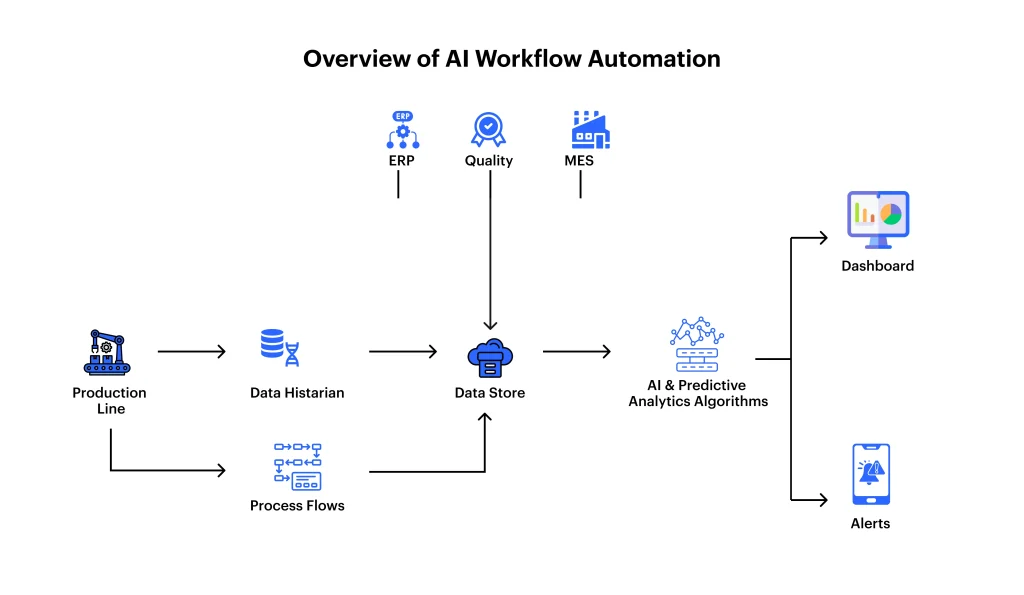
What often gets overlooked is that “integration” isn’t just about the software talking to each other; it’s about the data flow and the human effort required to bridge any gaps. A common pitfall is that while an AI feature might live within your CRM, its outputs aren’t always seamlessly integrated into subsequent steps of your sales or marketing process. This can lead to teams manually copying AI-generated content or insights into other tools, effectively creating a new, hidden manual step that negates much of the intended efficiency gain and introduces new opportunities for error.
Furthermore, the promise of “less disruption” can be misleading. Even when AI provides suggestions or drafts, a practitioner still needs to review, refine, and often heavily edit the output to ensure it aligns with brand voice, accuracy, and strategic goals. This adds a new layer of cognitive load and decision pressure. What was once a blank page to fill is now a draft to critique and correct, which can feel like more work, not less, if the AI isn’t highly tuned to your specific context. The initial excitement can quickly turn into frustration when the “time saved” is offset by the time spent validating and correcting.
For small to mid-sized teams, it’s crucial to be selective. Don’t chase every new AI feature offered by your existing platforms. Many are superficial additions that create more noise than signal. Prioritize integrations that genuinely automate a repetitive, low-value task or provide actionable insights that directly inform a critical decision point. Resist the urge to adopt features that merely offer “suggestions” if those suggestions still require significant human rework. The goal is to offload work, not just to generate more inputs for your team to process. Over time, relying too heavily on a single vendor’s AI features can also create a dependency that makes future platform migrations or strategic shifts far more complex and costly than initially anticipated.
Smart Tool Selection: Practicality Over Features
The market is flooded with AI tools. When selecting, prioritize practicality:
- Ease of Use: Can your existing team members learn and operate it quickly without extensive training?
- Integration Capabilities: Does it connect seamlessly with your current tech stack? APIs and native integrations are key.
- Cost-Effectiveness: Does the ROI justify the subscription fee? Start with free trials or freemium versions to test the waters.
- Scalability: Can it grow with your business without becoming prohibitively expensive or complex?
Don’t get bogged down by a tool’s full feature list. Focus on the twenty percent of features that will deliver eighty percent of the value for your specific use case. A simpler tool that gets used is far better than a feature-rich one that gathers dust.
Cultivate an AI-Ready Team Mindset
Successful AI integration isn’t just about technology; it’s about people. Your team needs to understand why AI is being introduced and how it will benefit them, not replace them.
- Communicate Clearly: Explain the strategic purpose of AI tools and how they automate mundane tasks, freeing up time for more creative or high-level work.
- Provide Training: Offer practical, hands-on training for new tools. Focus on specific use cases relevant to their roles.
- Encourage Experimentation: Create a safe space for team members to experiment with AI tools and share their findings.
- Lead by Example: Management should actively use and champion AI tools to demonstrate their value.
Resistance to change is natural. Address concerns proactively and highlight how AI can augment human capabilities, making roles more impactful and less repetitive.
Measure Impact and Iterate Strategically
AI integration isn’t a “set it and forget it” process. You need to define clear metrics for success before you even start. Are you aiming to reduce customer support response times by twenty percent? Increase content production by fifty percent? Improve ad campaign ROAS by ten percent?
Track these metrics rigorously. If an AI tool isn’t delivering the expected results, be prepared to pivot, adjust your approach, or even discontinue its use. The goal is sustainable growth, not just AI adoption. Regularly review performance and gather feedback from your team to refine your strategy. This iterative approach ensures your AI investments continue to deliver real value. AI ROI measurement for SMBs


Leave a Comment