


Why Strategic Foresight Matters for SMBs (and Why AI Helps)
For small to mid-sized businesses, operating with lean teams and tight budgets means every strategic decision carries significant weight. You can’t afford to be caught off guard by market shifts, new competitor offerings, or changing customer demands. Strategic foresight isn’t about predicting the future with perfect accuracy; it’s about anticipating plausible scenarios to make more informed decisions today.
This is where AI becomes a practical asset. Instead of dedicating countless hours to manual research and trend spotting, AI tools can process vast amounts of data, identify subtle patterns, and flag emerging signals far faster and more consistently than human analysts alone. For resource-constrained teams, AI acts as an force multiplier, helping you cut through the noise and focus on what truly matters for your business’s trajectory.
Prioritizing Data Sources for AI-Driven Foresight
Effective AI-driven foresight starts with the right data. For SMBs, the pragmatic approach is to leverage what you already have and then strategically expand. Don’t chase every data stream; prioritize sources that offer high signal-to-noise ratios and are readily accessible.
- Internal Data First: Start with your own operational data. This includes CRM records, sales figures, website analytics, customer support logs, and marketing campaign performance. This data provides a baseline of your current market interaction and customer behavior.
- Targeted External Data: Once internal data is integrated, look outwards. Focus on industry-specific news feeds, relevant social media trends, competitor announcements, and economic indicators pertinent to your niche. Tools like Google Alerts, industry newsletters, and basic social listening platforms can be invaluable here.
The judgment call here is to avoid data overload. Many SMBs get bogged down trying to integrate every possible data source. Instead, identify 3-5 critical internal and external data streams that directly impact your business model. Focus on quality over quantity; a few reliable, well-understood sources are far more valuable than a sprawling, unmanageable data lake.
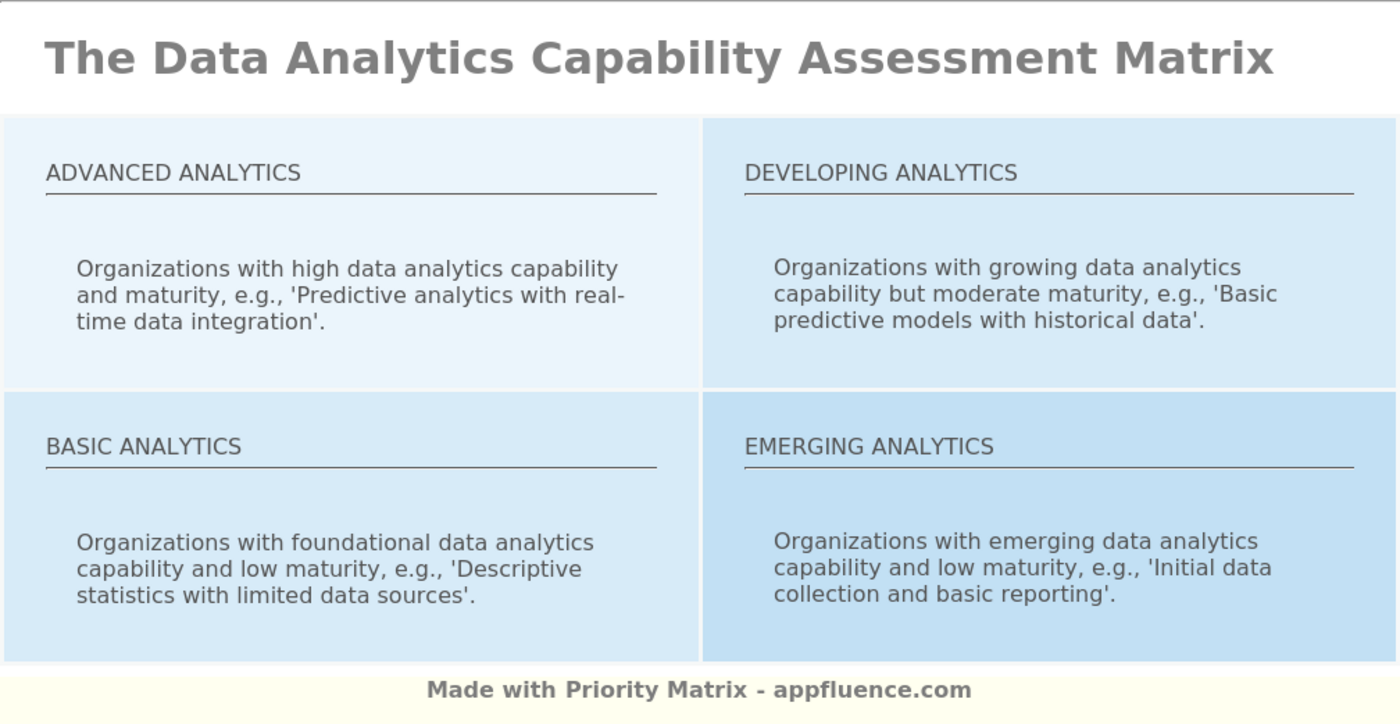
What often gets overlooked is that initial data integration is only the first hurdle. The real, ongoing cost comes from maintaining data quality and consistency over time. Data definitions shift, systems are updated, and human input errors accumulate. This isn’t a one-time fix; it’s an operational burden that, if neglected, leads to “data rot.” When the underlying data becomes unreliable, trust in any AI-driven insights quickly erodes, leading teams to question the system’s value or, worse, make decisions based on flawed information.
Another common pitfall is underestimating the effort required for data harmonization. Even with a limited number of sources, ensuring that a “customer ID” or “product category” means the exact same thing across your CRM, sales, and support logs is rarely straightforward. This often demands significant manual reconciliation or custom scripting, which consumes valuable team time and can delay the delivery of any meaningful foresight.
The pressure to “do AI” can also lead to the “just in case” data collection trap. Teams often feel compelled to gather every available data point, thinking it might be useful later. In practice, this creates immediate overhead in storage and processing, but more critically, it dilutes focus. A sprawling, poorly understood data set makes it harder to identify truly actionable signals, turning a potential asset into a liability.
For SMBs, the pragmatic judgment is to deprioritize complex data warehousing or advanced ETL (Extract, Transform, Load) tools in the early stages. Instead, focus on simple connectors and even manual processes for your initial 3-5 critical data streams. Only invest in more sophisticated infrastructure when you have clearly demonstrated the value and ROI from those initial, simpler insights. Resist the urge to collect data without a clear hypothesis or use case; it’s a fast track to a data swamp, not actionable foresight.
Practical AI Tools for Trend Identification
You don’t need a data science team or custom-built AI models to start. Many accessible, often existing, tools offer AI capabilities that can significantly enhance your foresight efforts.
- Natural Language Processing (NLP) for Text Analysis: Leverage NLP features in tools you might already use. Monitor news, industry publications, customer reviews, and social media for emerging themes, sentiment shifts, and keyword trends. Platforms like Google Alerts, social listening tools (e.g., Brandwatch, Mention), or even advanced search functions within news aggregators can highlight shifts in public discourse or industry focus.
- Predictive Analytics for Demand Forecasting: Many CRM, ERP, or e-commerce platforms now include basic predictive analytics features. Use these to forecast future sales, inventory needs, or service demand based on historical data. This helps you anticipate resource allocation and avoid stockouts or oversupply.
- Market Intelligence Platforms (Niche Specific): Depending on your industry, there might be specialized market intelligence platforms that use AI to track competitor activity, product launches, or regulatory changes. These are often more affordable than general-purpose enterprise solutions and provide highly relevant insights.
What should be deprioritized or skipped today? For most SMBs, investing in bespoke, complex AI model development or hiring a dedicated data scientist for foresight is an unnecessary expense. The cost, time, and expertise required to build and maintain such systems far outweigh the immediate benefits. Instead, focus on leveraging off-the-shelf AI features within existing software or affordable, specialized tools that provide actionable insights without extensive setup or ongoing maintenance. Your goal is practical advantage, not technological showmanship.
While these accessible tools significantly lower the barrier to entry, they introduce their own set of practical challenges that are easy to overlook. The most common pitfall isn’t the tool’s capability, but the quality and relevance of the data feeding it. An off-the-shelf NLP tool, for instance, is only as good as the news sources, customer reviews, or social feeds it processes. Teams often underestimate the ongoing effort required to curate relevant, clean, and unbiased input data. Without this foundational work, even sophisticated algorithms will generate noise, not insight, leading to wasted time and eroding internal trust in the system’s output.
Furthermore, the ease of generating ‘insights’ can sometimes mask a deeper, second-order problem: analysis paralysis. AI might flag a dozen emerging trends, but a small team with limited bandwidth still needs to prioritize which few to act upon. The real work shifts from data gathering to strategic interpretation and resource allocation, a human judgment call that no algorithm can make. Over-reliance on automated trend identification can also subtly diminish a team’s own qualitative foresight capabilities. If the AI is always pointing to the ‘next big thing,’ teams may stop actively scanning the horizon themselves, leaving them vulnerable when the AI’s models inevitably encounter novel, unpredicted shifts or biases in their training data.
Interpreting AI Insights and Making Decisions
AI provides signals, not definitive answers. The real value comes from your team’s ability to interpret these insights and translate them into actionable decisions. This requires a blend of data literacy and seasoned business judgment.
- Validate Signals: Never take an AI output at face value. Cross-reference AI-identified trends with other data points, expert opinions, and your own market understanding. Does the AI signal align with what you’re seeing on the ground?
- Simplified Scenario Planning: Based on validated AI signals, develop 2-3 plausible future scenarios. For example, if AI suggests a shift towards sustainable packaging, what are the implications for your product development, supply chain, and marketing? This isn’t about complex models, but about structured


Leave a Comment