


The Reality of AI in Email Marketing for SMBs in 2026
As we navigate 2026, the conversation around AI in email marketing has shifted from theoretical potential to practical application. For small to mid-sized businesses (SMBs) operating with lean teams and tight budgets, AI isn’t about replacing human effort entirely. Instead, it’s a tool for augmentation, designed to make existing efforts more efficient and effective. The goal isn’t to implement every new AI feature, but to strategically integrate capabilities that deliver tangible returns without overcomplicating operations.
The core challenge for SMBs remains resource allocation. Every new tool or strategy must justify its cost in time, money, and learning curve. This means prioritizing AI applications that directly address common pain points: improving personalization at scale, optimizing content creation, and enhancing campaign performance without requiring a data science team.
Prioritizing AI for Immediate Impact
When considering where to invest your limited AI budget and team bandwidth, focus on areas that offer the highest leverage with the lowest barrier to entry. These are the practical applications that are proving effective for SMBs today:
Enhanced Personalization and Segmentation
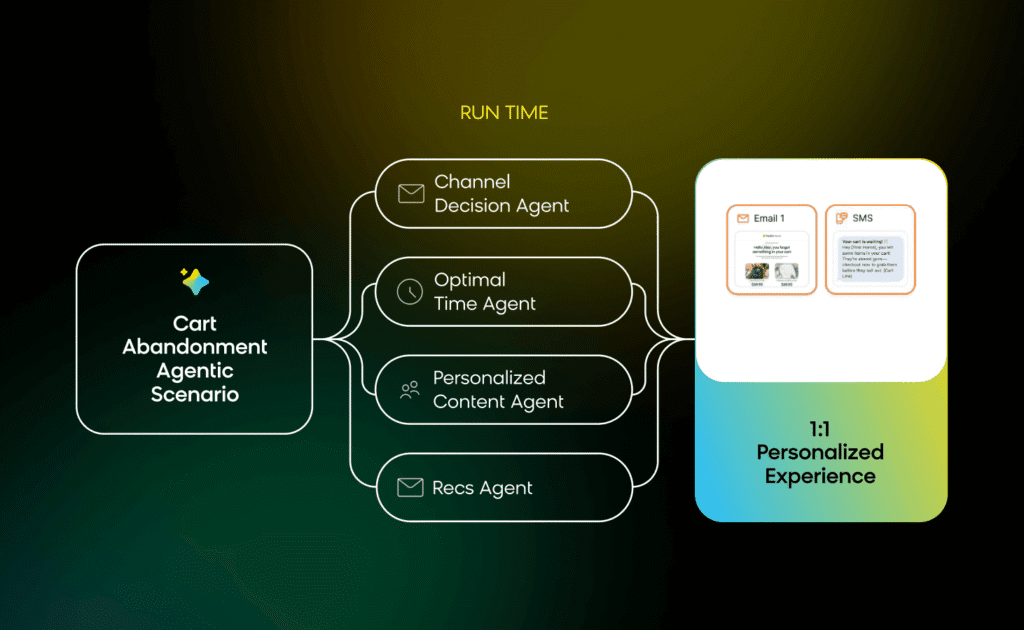
This is arguably where AI delivers the most immediate and measurable impact for SMBs. Basic segmentation is no longer enough. AI-powered tools can analyze customer behavior, purchase history, and engagement patterns to create far more granular segments. This allows for truly dynamic content, where email elements (product recommendations, calls to action, even imagery) adapt to individual subscriber preferences in real-time. This moves beyond simple name insertion to delivering genuinely relevant messages, which directly impacts open rates, click-through rates, and conversions. Focus on platforms that offer built-in predictive analytics for segmenting, rather than requiring complex custom integrations.
Content Augmentation for Efficiency
AI writing assistants are mature enough in 2026 to be genuinely useful for drafting email copy, subject lines, and even A/B test variations. For SMBs, this isn’t about fully automating content creation, but about speeding up the initial draft process. Use AI to generate multiple subject line options, brainstorm body copy angles, or even rephrase existing content for different segments. The critical step here is always human review and refinement. AI provides a strong starting point, but your brand voice and strategic messaging still require a human touch. This approach significantly reduces the time spent on initial content generation, freeing up your team for strategic oversight and creative refinement.
Send Time Optimization
Many modern email service providers (ESPs) now incorporate AI to analyze subscriber engagement patterns and predict the optimal send time for individual recipients. This is a ‘set it and forget it’ optimization that can yield noticeable improvements in open rates and engagement without any additional manual effort. For SMBs, this is a low-effort, high-reward AI application that should be enabled if your ESP offers it. It removes the guesswork from scheduling and ensures your emails land when they’re most likely to be seen.
What to Delay or Skip Today
For SMBs, the temptation to chase every shiny new AI feature can be strong, but it’s a path to wasted resources. Today, in 2026, you should deprioritize or outright skip highly complex, bespoke AI solutions that require significant data engineering or custom model training. These are typically designed for enterprise-level operations with dedicated data science teams and budgets that far exceed what an SMB can realistically allocate. Avoid investing in platforms that promise fully autonomous campaign management without clear, accessible controls or transparent reporting. The risk of ‘black box’ AI making suboptimal decisions without human oversight is too high for businesses with limited room for error.
Furthermore, resist the urge to over-automate content creation to the point where your brand voice becomes generic or inconsistent. While AI is excellent for augmentation, a fully AI-generated email stream without human review can quickly alienate your audience. Prioritize foundational email marketing best practices – list hygiene, clear calls to action, mobile optimization – before layering on advanced AI features that might not move the needle as much. Ensure your core email infrastructure is solid before attempting to build a complex AI superstructure.
The deeper issue with relying on ‘black box’ AI isn’t just suboptimal decisions in the moment; it’s the gradual atrophy of human judgment within your team. When critical decision-making is delegated to AI without a clear understanding of its underlying logic or consistent human scrutiny of its outputs, your team can lose the practical skills needed to diagnose problems, adapt to unexpected market shifts, or even articulate *why* a particular strategy succeeded or failed. This creates a dangerous dependency, turning a supposed efficiency gain into a long-term strategic vulnerability as your team becomes less capable of independent strategic thought.
Similarly, the allure of fully automated content generation carries a hidden cost beyond generic messaging: the slow erosion of your brand’s distinctiveness. In a crowded market, a unique brand voice is a hard-won asset. When AI tools are used to mass-produce content without a robust human editorial filter, the cumulative effect can be a homogenization of your brand’s communication, making it indistinguishable from others leveraging similar technologies. This isn’t just about a single campaign; it’s about the long-term impact on brand equity. Furthermore, the practical reality of integrating new AI solutions often overlooks the significant organizational friction they introduce. A new tool might promise efficiency, but if it doesn’t seamlessly connect with existing CRM, analytics, or content management systems, it quickly becomes another silo. This leads to manual workarounds, inconsistent data, and a fragmented customer view, ultimately creating more operational drag than the initial efficiency gains might suggest.
The Enduring Role of Human Strategy
Even with the advancements in AI, the strategic direction of your email marketing remains firmly in human hands. AI is a powerful assistant, but it lacks the nuanced understanding of your brand, your customers’ emotional drivers, and the broader market context that only a human strategist possesses. Your team’s role shifts from manual execution to strategic oversight, data interpretation, and creative direction.
Effective email marketing in 2026 means leveraging AI to handle the repetitive, data-intensive tasks, freeing up your team to focus on crafting compelling narratives, developing innovative campaign ideas, and building genuine relationships with your audience. The best results come from a symbiotic relationship where AI provides the efficiency and insights, and human marketers provide the empathy, creativity, and strategic judgment. This blend ensures your email marketing not only performs well but also resonates deeply with your target audience. email marketing strategy


Leave a Comment