

Building a Marketing Foundation for Consistent Results
For small to mid-sized businesses, sustainable growth isn’t about chasing every new trend; it’s about building a robust, adaptable marketing structure. This article cuts through the noise to provide practical insights on how to organize your marketing efforts, team, and tools to deliver consistent, measurable results, even with limited resources. You’ll gain clarity on what to prioritize, what to delay, and what to avoid to maximize your impact.
The goal here is to move beyond ad-hoc campaigns and establish a strategic framework that supports long-term business objectives. This means making deliberate choices about where to invest your time, budget, and team’s energy for the greatest return.
Aligning Marketing with Business Objectives – The Non-Negotiable First Step
Marketing isn’t an isolated function; it’s a growth engine directly tied to your business’s bottom line. The most effective marketing leaders ensure their team’s efforts directly support overarching company goals, whether that’s increasing revenue, expanding market share, or improving customer retention. This isn’t theoretical; it’s a practical necessity for resource-constrained teams.
To achieve this alignment, establish clear communication channels with sales, product development, and executive leadership. Regularly review key performance indicators (KPIs) that directly correlate with business outcomes, not just marketing vanity metrics. This ensures everyone is working towards the same targets.
- Understand sales pipeline needs and lead quality requirements.
- Identify product launch priorities and target audience segments.
- Define customer lifetime value (CLTV) targets and retention strategies.
- Ensure marketing messaging reflects core business value propositions.
The real challenge isn’t just *establishing* alignment, but *maintaining* it and recognizing when it’s superficial. It’s easy for teams to agree on high-level objectives in a meeting, only for the day-to-day execution to diverge. This creates a hidden cost: marketing might hit its internal metrics—like generating a high volume of leads or increasing website traffic—but if those leads don’t convert for sales, or if that traffic isn’t relevant to the current product focus, the effort is largely wasted. The downstream effect is not just inefficient spend, but a slow erosion of trust between departments, with sales questioning lead quality and marketing feeling undervalued despite their output.
Furthermore, alignment isn’t a static state; it’s a continuous process. Business priorities shift, market conditions evolve, and product roadmaps change. What was perfectly aligned last quarter might be misaligned today. Overlooking this dynamic aspect means teams can slowly drift off course, leading to increasing frustration and decision pressure. Marketing teams find themselves constantly re-justifying their existence, while leadership struggles to see a clear return on investment, often leading to reactive budget cuts rather than strategic adjustments.
For resource-constrained teams, this means making explicit trade-offs. Instead of attempting to align perfectly with every possible business objective simultaneously, prioritize the one or two most critical goals for the current quarter or half-year. For instance, if the primary objective is improving customer retention, then deep alignment with customer success and product teams on messaging and value delivery should take precedence over, say, a broad brand awareness campaign. Trying to align with everything often results in aligning with nothing effectively, spreading limited resources too thin and delaying meaningful impact.
Building a Lean, Effective Marketing Team
For SMBs, a lean team is a powerful team. Initially, versatility trumps hyper-specialization. A marketing generalist or manager who can oversee strategy, content, and project management is often more valuable than multiple specialists. They can identify gaps and manage external resources effectively.
Deciding when to hire versus outsource is a critical trade-off. Core strategy, brand voice, and customer understanding should generally remain in-house. Execution-heavy tasks, like advanced search engine optimization (SEO) audits, specific paid ad platform management, or complex graphic design, can often be more efficiently handled by targeted freelancers or agencies.
- **Marketing Generalist/Manager:** Drives strategy, oversees content, manages projects, coordinates with sales.
- **Content Creator:** Focuses on writing, basic visual assets, and adapting content for different channels.
- **(Optional) Performance Marketing Specialist:** If paid channels are a primary growth driver and require dedicated, in-depth management.
Avoid hiring a full suite of specialists too early. A dedicated social media manager, PR specialist, or advanced data scientist might seem appealing, but for most SMBs, these roles are better handled by a generalist or a targeted agency/freelancer until specific, measurable needs justify a full-time hire. Over-specialization too soon leads to underutilized talent and budget drain, pulling resources from more critical, foundational marketing efforts.
While the generalist is the linchpin, it’s easy to overlook the immense pressure and potential for burnout they face. Expecting one person to flawlessly execute strategy, content, project management, and coordinate external resources often leads to a “jack of all trades, master of none” scenario. The hidden cost here isn’t just underperformance in specific areas, but a delayed strategic clarity as the generalist struggles to dedicate deep thought to any single domain. This creates a constant internal tension, forcing them to make daily trade-offs that impact long-term direction.
The decision to outsource execution also carries non-obvious failure modes. While it frees up internal capacity, it introduces a new management overhead. Many teams mistakenly view outsourcing as a set-it-and-forget-it solution. Without a dedicated internal point person to provide clear briefs, consistent feedback, and quality control, external partners can drift from the core brand voice or strategic objectives. The downstream effect is often a cycle of rework, missed deadlines, and a diluted brand message, ultimately costing more in time and frustration than the initial savings suggested.
Further, the allure of a specialized role can mask a deeper operational problem. Hiring a dedicated social media manager, for instance, when the core content strategy isn’t robust, often results in a specialist with nothing truly strategic to manage. Their efforts become tactical noise rather than integrated campaigns. This isn’t just a budget drain; it creates internal friction and a sense of underutilization for the specialist, while simultaneously diverting attention from the foundational content and audience understanding that should be the priority. Deprioritize any specialist hire that doesn’t directly solve a bottleneck identified *after* your generalist has established a clear, measurable need that cannot be met by upskilling or targeted external support.
The Essential Marketing Tech Stack – Less is More
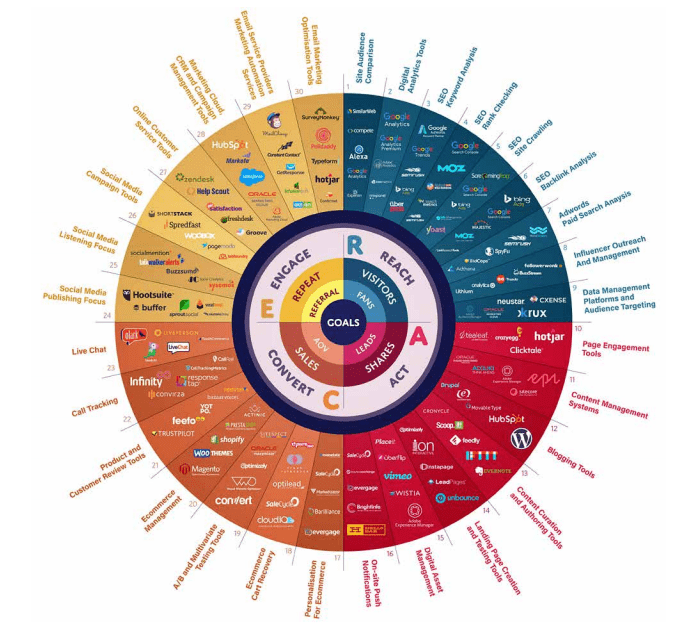
The marketing technology landscape is vast and constantly evolving. Resist the urge to adopt every new tool. Instead, focus on a core set of platforms that solve immediate, critical problems and integrate well. A bloated tech stack leads to complexity, wasted budget, and underutilized features.
Prioritize tools for customer relationship management (CRM), analytics, email marketing, and content management. These are the foundational pillars for most marketing operations.
- **CRM:** HubSpot (free tier is robust for many SMBs) HubSpot CRM features for small business, or Salesforce for larger, more complex sales processes.
- **Analytics:** Google Analytics 4 (GA4) is non-negotiable for understanding website traffic and user behavior Google Analytics 4 setup guide.
- **Email Marketing:** Mailchimp, ActiveCampaign, or HubSpot Marketing Hub for nurturing leads and customer communication.
- **Content Management System (CMS):** WordPress for blogs and websites, Shopify for e-commerce.
- **SEO Tools:** Google Search Console (free and essential), Ahrefs or Semrush (paid, but powerful for competitive analysis and keyword research).
Data-Driven Decisions, Not Data Overload
Effective marketing leaders don’t just collect data; they use it to make informed decisions. For SMBs, this means focusing on actionable metrics that directly inform strategy, rather than getting lost in a sea of dashboards. Over-analysis can lead to paralysis.
Prioritize key performance indicators (KPIs) that directly reflect your business goals. Regularly review these metrics and be prepared to adjust your tactics based on what the data reveals. Simplicity in reporting is key to ensuring insights are accessible and acted upon.
- **Customer Acquisition Cost (CAC):** How much it costs to acquire a new customer.
- **Customer Lifetime Value (CLTV):** The total revenue a customer is expected to generate over their relationship with your business.
- **Conversion Rate:** The percentage of visitors who complete a desired action.
- **Qualified Website Traffic:** Visitors who fit your ideal customer profile.
- **Engagement Rates:** How users interact with your content (e.g., email open rates, social media interactions).
Agile Marketing Workflows for Real-World Constraints
In a dynamic market, rigid annual plans are often ineffective. Modern marketing leaders adopt agile, iterative approaches. This means planning in short cycles (sprints), testing hypotheses, learning from results, and adapting quickly. This methodology is particularly powerful for SMBs with limited budgets, as it allows for rapid course correction and minimizes wasted effort.
Implement weekly planning meetings to prioritize tasks, review progress, and address roadblocks. Focus on delivering Minimum Viable Campaigns (MVCs) – the smallest possible effort to test a concept and gather data – before scaling. This iterative process ensures your marketing remains responsive and effective.
- **Short Planning Cycles:** Work in one-to-two-week sprints.
- **Prioritized Backlog:** Maintain a clear list of tasks, ranked by business impact.
- **Regular Stand-ups/Check-ins:** Brief daily or weekly meetings to sync the team.
- **Performance Reviews:** Analyze campaign results at the end of each cycle to inform the next.
- **Continuous Improvement:** Embrace a culture of testing, learning, and adapting.
Cultivating a Growth Mindset and Continuous Learning
The marketing landscape is in constant flux, driven by technological advancements and evolving consumer behavior. A modern marketing leader fosters a culture of continuous learning and experimentation within their team. This isn’t about chasing every fleeting trend, but about understanding foundational shifts and pragmatically applying new knowledge.
Encourage team members to stay updated on industry best practices, share insights, and challenge existing assumptions. This proactive approach ensures your marketing strategy remains relevant and effective, allowing your business to adapt and thrive in an ever-changing environment.



Leave a Comment