


The rapid evolution of AI isn’t just for tech giants; it’s fundamentally reshaping how small to mid-sized businesses operate. This guide cuts through the noise, offering a pragmatic roadmap to equip your existing team with the skills needed to leverage AI effectively. You’ll learn how to identify the most impactful AI competencies for your specific context, implement cost-effective training, and integrate AI tools into daily workflows, ensuring your business remains competitive and efficient without overhauling your entire operation.
Our focus here is on actionable steps for teams with limited budgets and headcount, emphasizing what truly moves the needle in real-world scenarios rather than theoretical ideals. We’ll prioritize practical application over deep technical expertise, helping you make smart trade-offs to future-proof your talent.
Understanding the AI Shift for SMBs
For small to mid-sized businesses, the AI revolution isn’t about developing complex machine learning models from scratch. It’s about intelligently adopting and integrating existing AI tools to augment human capabilities. Think of AI as a powerful co-pilot for your team, not a replacement. The shift demands a new kind of literacy – one focused on effective interaction with AI systems, understanding their outputs, and leveraging them to streamline operations, enhance marketing, and improve customer engagement.
Currently, the biggest impact areas for SMBs include content generation, data analysis, customer service automation, and personalized marketing. The challenge isn’t access to AI, but knowing how to train your team to use it strategically within your specific business context.
Prioritizing Key AI Skills for Your Team
Given limited resources, you can’t train everyone on everything. Focus on skills that offer the highest immediate return and enable your team to effectively utilize AI tools available today.
- Prompt Engineering and AI Interaction: This is arguably the most critical skill right now. Your team needs to know how to formulate clear, effective prompts for large language models and other generative AI tools to get relevant, high-quality outputs. This isn’t just about asking questions; it’s about structuring requests, providing context, and iterating to refine results.
- Data Interpretation and Critical Thinking: AI tools generate vast amounts of data and insights. Your team must be able to critically evaluate AI outputs, identify potential biases or inaccuracies, and interpret the information in the context of your business goals. Blindly trusting AI is a recipe for poor decisions.
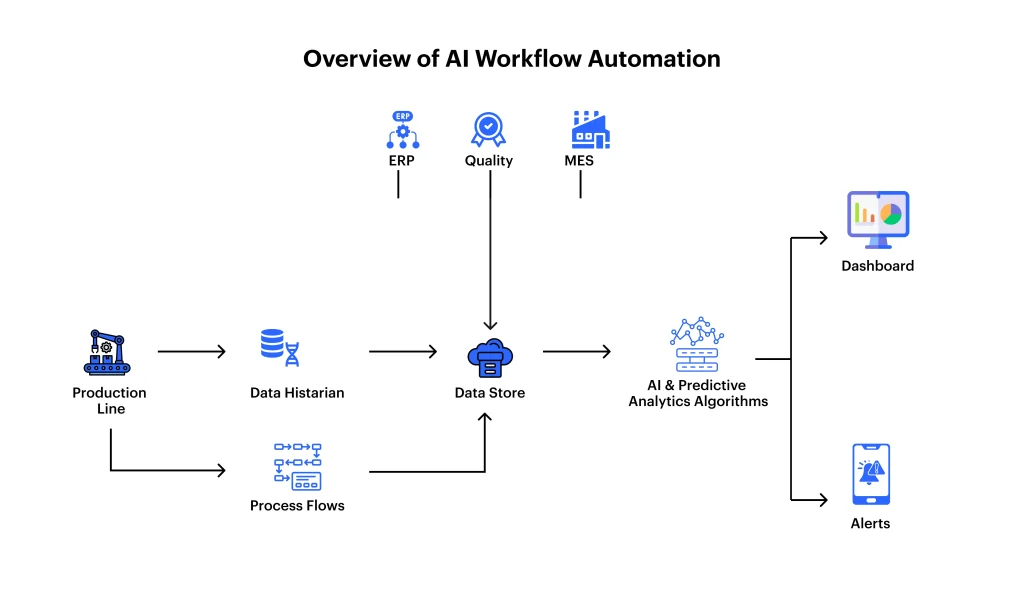
- AI Tool Integration and Workflow Automation: Understanding how to connect AI tools to your existing software stack (CRM, marketing automation, project management) is key. This involves identifying repetitive tasks that AI can automate or assist with, and then integrating the tools to create more efficient workflows.

AI workflow integration diagram - Ethical AI Use and Data Privacy: As AI becomes more pervasive, understanding the ethical implications and data privacy requirements is non-negotiable. Your team needs to be aware of how to use AI responsibly, protect customer data, and maintain brand trust.
It’s easy to focus on getting good outputs from AI, but the hidden cost of poor prompt engineering is often overlooked. It’s not just about receiving irrelevant text; it’s the cumulative drain on team time spent refining, re-prompting, or manually correcting AI-generated content. This friction can quickly erode confidence in the tools themselves, leading to underutilization or even outright abandonment, not because the AI is incapable, but because the interaction model is inefficient. This creates a cycle of frustration and missed opportunities, masking the true potential of the technology.
While critical thinking is essential for interpreting AI outputs, the practical challenge lies in the sheer volume and velocity of information. Teams often struggle with the bandwidth required to truly validate AI-generated insights against primary data or real-world context. This can lead to two non-obvious failure modes: either a superficial acceptance of AI output due to time pressure, or conversely, an over-reliance on manual verification that negates the efficiency gains AI promised. The decision pressure to act quickly on “insights” without sufficient validation can introduce subtle errors that compound over time.
The initial excitement of integrating AI tools into existing workflows often overshadows the downstream maintenance burden. Each new integration point introduces complexity and potential technical debt. What seems like a simple connection today can become a significant operational overhead tomorrow as APIs change, tools update, or data schemas evolve. Teams with limited technical resources can quickly find themselves in a reactive maintenance loop, spending more time patching and troubleshooting integrations than leveraging the strategic advantages of AI, turning a promised efficiency gain into an unexpected drain on resources.
Practical Strategies for Skill Development
Building AI literacy doesn’t require massive training budgets. Start with practical, hands-on approaches.
- Identify Internal Champions: Find team members who are naturally curious about AI. Empower them with resources and time to explore, then have them share their learnings and best practices with the wider team.
- Micro-learning and Online Courses: Platforms like Coursera, LinkedIn Learning, and even YouTube offer excellent, often free or low-cost, modules on prompt engineering, AI basics, and specific tool usage. Encourage short, focused learning sessions rather than lengthy certifications.
- Hands-on Projects and Experimentation: The best way to learn is by doing. Assign small, low-risk projects where team members can experiment with AI tools. For example, use AI to draft social media posts, summarize meeting notes, or brainstorm content ideas.
- Vendor-Provided Training: Many AI tool providers offer tutorials, webinars, and documentation. Leverage these resources to ensure your team maximizes the value of the specific tools you’ve invested in. For example, if you’re using an AI-powered SEO tool, ensure your marketing team understands its specific features. Ahrefs AI features
- Internal Knowledge Sharing: Establish a dedicated channel (e.g., a Slack channel or internal wiki) for sharing AI tips, successful prompts, and new tool discoveries. Foster a culture of continuous learning and peer support.
While the initial investment in learning resources might seem minimal, the hidden cost often lies in the time commitment. For small teams already stretched thin, carving out dedicated time for skill development, even micro-learning, can feel like an impossible task. This often leads to fragmented learning, where individuals start courses but rarely complete them, or they dabble without truly integrating new knowledge into their workflow. The pressure to “just figure it out” can lead to frustration and a sense of being perpetually behind, rather than empowered.
Another common pitfall, especially with the “internal champions” approach, is creating an unintentional single point of failure. While empowering a curious team member is valuable, if that individual becomes the sole repository of AI knowledge, it creates a bottleneck. Others might defer all AI-related questions to them, hindering broader team development and potentially overwhelming the champion. This can also lead to a lack of diverse perspectives on how AI can be applied, limiting its strategic impact across different functions.
Furthermore, simply knowing how to use an AI tool doesn’t automatically translate into effective business application. Many teams can quickly grasp prompt engineering basics or navigate a new platform’s interface. The real challenge, and often the overlooked step, is understanding when and why to deploy AI within existing workflows, and critically, what problems it actually solves for your specific business context. Without this deeper strategic integration, AI tools risk becoming another set of underutilized subscriptions, generating outputs that don’t quite fit or require extensive manual rework, ultimately adding to, rather than reducing, operational overhead.
What to Deprioritize (and Why)
In the current landscape (March 2026), small to mid-sized businesses should actively deprioritize or completely skip deep investments in custom AI model development or hiring dedicated AI researchers. Unless your core product is AI, attempting to build sophisticated AI solutions in-house is a resource drain that rarely yields a positive ROI for SMBs. The cost, complexity, and specialized talent required are prohibitive. Instead, focus your efforts on becoming expert users and integrators of existing, off-the-shelf AI tools. Avoid chasing every new AI trend or investing in expensive, broad AI certifications that don’t directly translate to immediate, practical business applications. Your priority should be leveraging AI to solve current business problems and enhance existing workflows, not becoming an AI development lab.
Integrating AI Tools and Workflows
Upskilling is only effective if the knowledge is applied. Integrate AI into daily operations systematically.
- Start Small, Identify Pain Points: Don’t try to overhaul everything at once. Identify one or two specific areas where AI can offer immediate relief, such as drafting email subject lines or summarizing customer feedback.
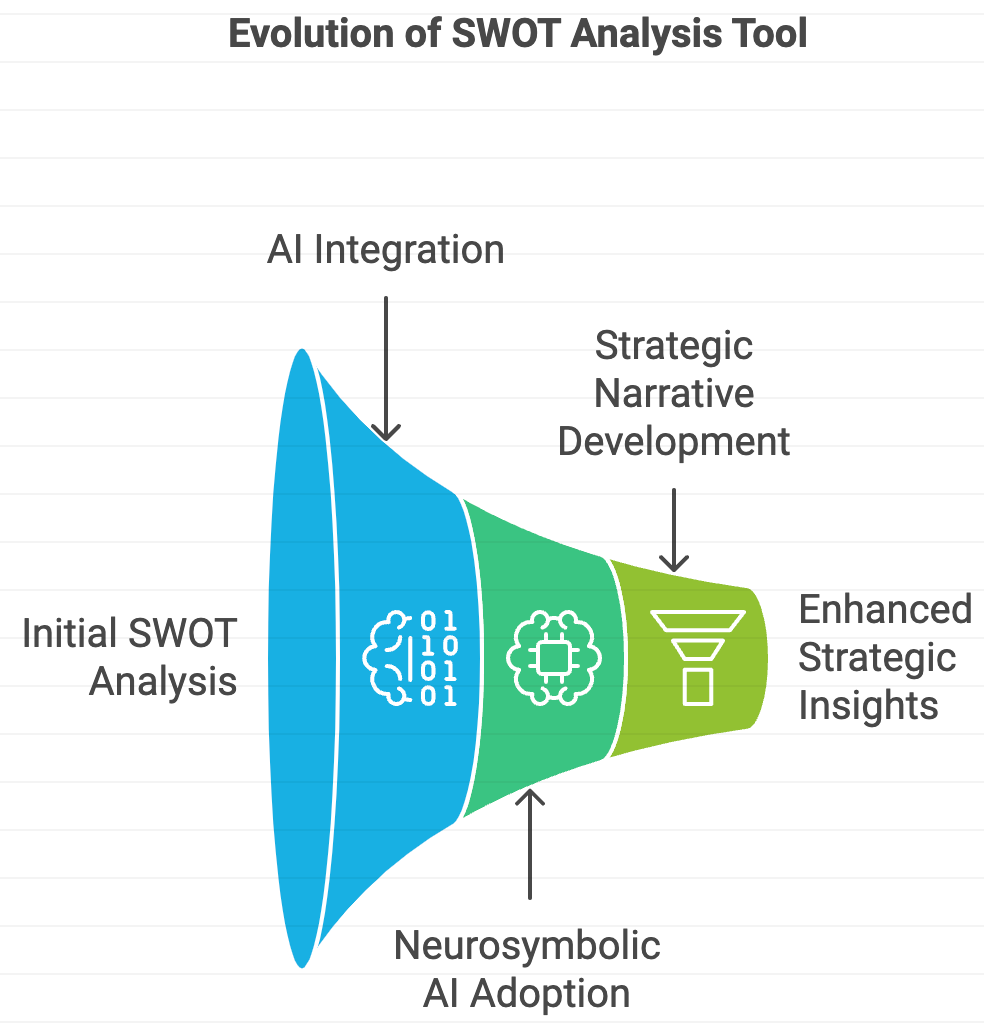
- Pilot Programs: Introduce new AI tools or workflows to a small team first. Gather feedback, refine the process, and then roll it out more broadly. This iterative approach minimizes disruption and builds confidence.

AI tool adoption funnel - Standardize Best Practices: As your team gains experience, document successful prompts, effective workflows, and common pitfalls. Create internal guidelines to ensure consistent and effective AI usage across the organization.
- Regular Review and Optimization: AI tools and capabilities are constantly evolving. Schedule regular reviews to assess the effectiveness of your AI integrations and identify opportunities for further optimization or new applications.
Measuring Impact and Adapting
To justify your upskilling efforts, you need to measure their impact. Focus on tangible business outcomes.
- Key Performance Indicators (KPIs): Track metrics like time saved on specific tasks, improved content quality scores, increased conversion rates from AI-assisted marketing campaigns, or faster customer service response times. For example, if your marketing team is using AI for content outlines, measure the time reduction in drafting initial content. Measuring marketing efficiency
- Feedback Loops: Regularly solicit feedback from your team on their experience with AI tools and new skills. What’s working? What’s challenging? Use this input to refine your training and integration strategies.
- Continuous Learning Culture: The AI landscape will continue to evolve rapidly. Foster a culture where continuous learning and adaptation are the norm. Encourage your team to stay updated on new AI capabilities and share how they can be applied to your business. This ensures your workforce remains agile and future-ready.


Leave a Comment