


Shifting from Data Collection to Actionable Insights
For small to mid-sized businesses, leveraging AI isn’t about chasing futuristic tech; it’s about making smarter, faster decisions with the resources you already have. This guide cuts through the noise to show you how to practically apply AI today to optimize campaigns, understand your customers better, and drive revenue growth. You’ll gain clear judgment on where to focus your limited budget and team effort for tangible results, and crucially, what to bypass entirely.
Many SMBs collect a wealth of data – website analytics, CRM entries, social media metrics – but struggle to translate it into clear, actionable strategies. This isn’t a data problem; it’s an insight problem. AI tools, even the simpler ones embedded in platforms you already use, excel at identifying patterns and anomalies that human analysis might miss. Instead of investing more time in collecting additional data, prioritize using AI to extract value from what’s already sitting in your databases.
The immediate benefit is moving beyond descriptive reporting (“what happened”) to predictive and prescriptive insights (“what will happen” and “what should we do about it”). This shift enables proactive decision-making, allowing you to anticipate market changes or customer needs rather than just reacting to them.
Prioritizing AI Applications for Immediate Impact
When resources are tight, focus AI efforts where they can deliver the quickest, most measurable return. For most SMBs, this means starting with marketing and sales functions. These areas typically have more accessible data and direct ties to revenue.
- Customer Segmentation and Personalization: Use AI to analyze customer behavior and purchase history, creating more precise segments. This allows for highly targeted email campaigns, personalized website experiences, and more effective ad targeting, reducing wasted spend.
- Content Optimization: AI can analyze top-performing content, suggest topics, optimize headlines, and even assist in generating ad copy or social media posts. This streamlines content creation and improves its effectiveness for SEO and engagement. AI content marketing tools
- Predictive Analytics for Sales: Leverage AI to forecast sales trends, identify leads most likely to convert, or predict potential churn. This helps allocate sales resources more efficiently and proactively address customer retention.
Starting with these applications means you’re not building complex systems from scratch. You’re enhancing existing processes with intelligent automation and insights. This pragmatic approach ensures that your initial AI investments directly support core business objectives.
What often gets overlooked in the pursuit of quick wins is the foundational effort required for data preparation. While marketing and sales data might be ‘accessible,’ it’s rarely clean, consistent, or structured enough for immediate AI consumption. This data wrangling—cleaning, standardizing, and integrating disparate sources—becomes a significant hidden cost and a major bottleneck, delaying impact and frustrating teams who expect more immediate returns from their AI investments.
Furthermore, integrating AI tools, even those designed to enhance existing processes, isn’t a one-time setup. It often introduces new technical dependencies and requires ongoing monitoring, maintenance, and recalibration. For SMBs with lean IT or marketing operations teams, this can quickly become an unmanageable technical debt, diverting resources from other critical tasks and creating a new layer of operational overhead that wasn’t factored into the initial cost-benefit analysis.
A more subtle, downstream risk is the erosion of human judgment. When AI consistently provides ‘good enough’ recommendations for customer segmentation or content optimization, teams can become overly reliant. This can lead to a loss of the critical thinking skills needed to question outputs, understand underlying assumptions, or adapt to novel situations the AI hasn’t been trained on. The ‘black box’ mentality can set in, making it harder to diagnose issues or course-correct when the AI inevitably makes an error or operates on outdated information, ultimately hindering strategic agility rather than enhancing it.
What to Deprioritize and Why
For small to mid-sized teams operating under real-world constraints, the biggest trap with AI is trying to do too much, too soon, or chasing the wrong things. Today, you should absolutely deprioritize or skip any initiatives involving custom AI model development or large-scale, enterprise-grade data infrastructure projects. These endeavors demand significant capital, specialized data science teams, and lengthy development cycles that are simply out of reach for most SMBs. The risk of failure is high, and the opportunity cost of diverting resources from proven strategies is too great.
Similarly, avoid investing in standalone “AI tools” that don’t integrate seamlessly with your existing marketing, sales, or operational platforms. The overhead of managing disparate systems and manually transferring data will negate any potential AI benefits. Focus instead on leveraging AI features embedded within your current CRM, marketing automation, or analytics platforms. This approach minimizes integration headaches and maximizes the utility of tools you already pay for.
The allure of AI-driven content generation, for instance, often presents a hidden cost. While it promises speed, the reality for many teams is that AI-generated drafts, without careful human oversight, often lack the specific brand voice, nuance, or strategic depth required. This isn’t a time-saver; it’s a time-shifter. Instead of truly accelerating output, teams frequently spend valuable hours editing, fact-checking, and injecting personality, sometimes taking longer than if they had simply started with a human writer. The initial ‘efficiency gain’ quickly evaporates under the weight of necessary human refinement.
Another common pitfall is the assumption that integrating AI features automatically solves underlying data quality issues. If your CRM or analytics platform is fed inconsistent, incomplete, or outdated information, AI will simply amplify those flaws, leading to skewed insights or misdirected automation. This isn’t a magic bullet; it’s a mirror reflecting your existing data hygiene. Furthermore, the sheer volume of new AI features constantly rolled out by platform vendors can create a different kind of pressure. Teams often feel compelled to activate every new capability, leading to feature bloat and a lack of focused application. Without a clear strategic objective for each AI application, these features become distractions rather than accelerators, adding complexity without commensurate value.
The downstream effect of these missteps is often team frustration and a creeping skepticism towards AI’s true utility. When initial promises of efficiency or insight don’t materialize, or when the ‘AI solution’ creates more work in cleanup or oversight, it erodes confidence. This can lead to underutilization of genuinely valuable AI capabilities or, worse, a complete abandonment of AI initiatives, even those that could have delivered real impact with a more pragmatic, focused approach. The theoretical ease of AI adoption often clashes with the practical reality of adapting internal processes and managing human expectations under real-world operational constraints.
Building Your AI Decision-Making Framework
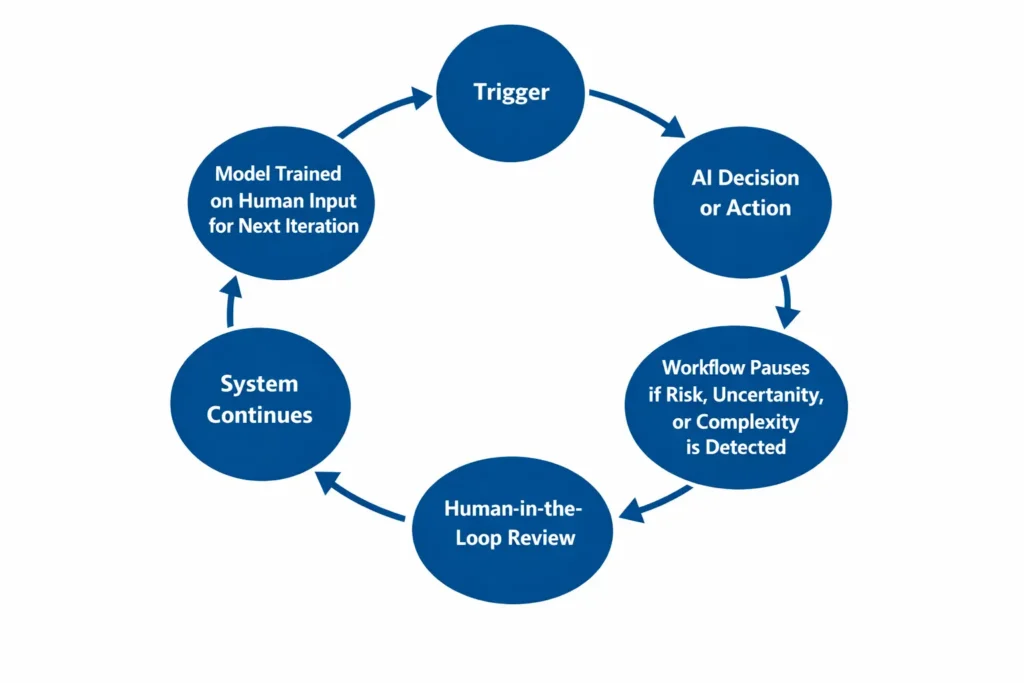
Effective AI integration isn’t about a big bang; it’s about iterative improvement. Start by identifying one or two specific business questions that AI could help answer more effectively. For example, “Which customer segment is most likely to respond to our new product launch?” or “What content topics will drive the most organic traffic next quarter?”
Once you have a clear question, define measurable success metrics. Implement an AI-powered solution (even a simple one, like an AI-driven segmentation tool in your email platform), measure the results against your baseline, and then refine your approach. This continuous loop of “Identify, Implement, Measure, Refine” ensures that AI becomes a practical, integrated part of your decision-making process, not just a standalone experiment.
Practical Tools and Integrations for SMBs
You don’t need to be a tech giant to use AI. Many popular platforms now offer robust AI capabilities designed for business users. The key is to leverage these existing integrations rather than building from scratch.
- CRM Platforms: Tools like HubSpot now integrate AI for lead scoring, sales forecasting, and personalized customer communication, helping sales teams prioritize efforts. AI features for small business CRM
- Marketing Automation: Platforms such as Mailchimp, ActiveCampaign, and Constant Contact use AI for audience segmentation, send-time optimization, and content suggestions, improving campaign performance.
- SEO & Content Tools: Semrush and Ahrefs incorporate AI for keyword research, content gap analysis, and competitive intelligence, streamlining your organic growth strategy.
- Advertising Platforms: Google Ads and Meta Ads utilize AI extensively for audience targeting, bid optimization, and ad creative suggestions, maximizing your ad spend efficiency.
The power here lies in using AI to augment your team’s capabilities, allowing them to focus on strategy and creativity while AI handles data analysis and optimization tasks.
Cultivating an AI-Ready Team Mindset
Ultimately, the success of AI in your business hinges on your team’s ability to understand and utilize its outputs. This isn’t about replacing human judgment but enhancing it. Invest in basic training for your marketing and sales teams on how to interpret AI-generated insights, understand their limitations, and apply them strategically.
Encourage a culture of experimentation. Start with low-risk applications, celebrate small wins, and learn from what doesn’t work. The goal is to build confidence and familiarity with AI as a decision-support tool, ensuring that your team sees it as an enabler, not a threat or an overly complex system.

Leave a Comment