


The Evolution of AI in Business: Beyond Automation
In recent years, Artificial Intelligence has transitioned from a futuristic concept to an indispensable component of modern business operations. While initial adoption often focused on automating repetitive tasks and streamlining workflows, the true potential of AI lies in its capacity to act as a strategic partner. Businesses that merely use AI as a tool risk missing out on deeper insights, innovative solutions, and a significant competitive advantage that comes from a more integrated approach.
The shift from viewing AI as a simple utility to a collaborative entity is critical for unlocking its full value. This partnership model emphasizes augmenting human intelligence and creativity, rather than replacing it. By leveraging AI’s analytical prowess and predictive capabilities in tandem with human strategic thinking, organizations can achieve outcomes far beyond what either could accomplish independently.
Understanding the Partnership Paradigm: Tool vs. Partner
The distinction between an AI “tool” and an AI “partner” is fundamental. An AI tool typically performs predefined functions, such as generating content drafts, analyzing basic data sets, or automating customer service responses. Its value is primarily in efficiency and task execution, often operating within narrow parameters set by human users. While valuable, this approach limits AI’s potential to contribute to higher-level strategic decisions or complex problem-solving.
Conversely, an AI partner is integrated into the strategic fabric of the business, collaborating on objectives, providing nuanced insights, and even suggesting novel approaches. This involves feeding AI with broader contextual data, allowing it to identify patterns and correlations that might escape human observation, and then working with human experts to interpret these findings and formulate actionable strategies. The partnership thrives on iterative feedback and a shared goal of innovation and growth.
Strategic Integration: Identifying AI’s Role in Your Workflow
To effectively partner with AI, businesses must strategically identify areas where AI can genuinely augment human capabilities and contribute to strategic objectives. This goes beyond automating existing processes; it involves re-evaluating workflows to pinpoint opportunities for AI to provide predictive analytics, prescriptive recommendations, or advanced pattern recognition that informs critical decisions. Consider areas like market trend forecasting, personalized customer journey mapping, or dynamic resource allocation.
Successful integration requires a clear understanding of AI’s strengths—its ability to process vast datasets, identify subtle correlations, and operate at scale—and human strengths—creativity, ethical judgment, emotional intelligence, and strategic vision. The goal is to create synergistic loops where AI provides data-driven insights, and humans apply their expertise to refine, validate, and act upon those insights, leading to more informed and impactful business strategies.
Building a Collaborative Framework with AI
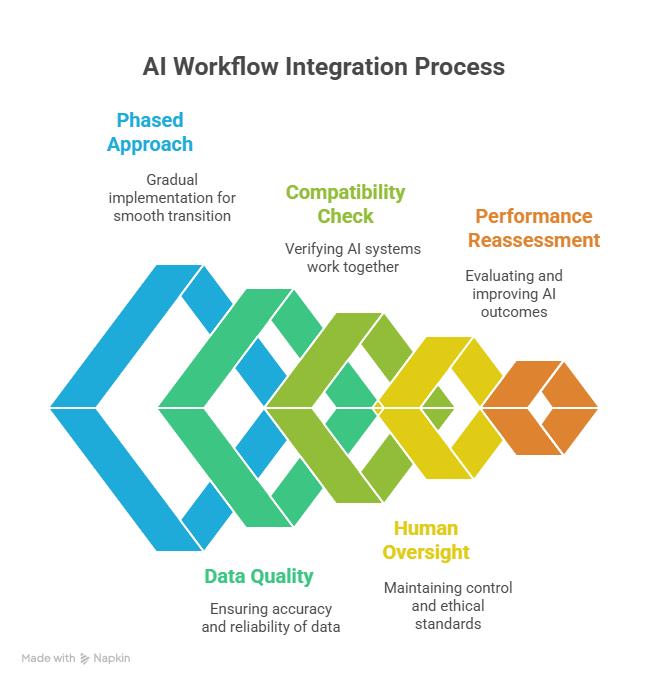
Establishing a robust collaborative framework is essential for a successful AI partnership. This begins with defining clear objectives for AI involvement, ensuring that its contributions directly align with business goals. It also necessitates creating structured feedback loops where human teams regularly review AI outputs, provide context, and refine parameters, allowing the AI model to continuously learn and improve its relevance and accuracy. This iterative process is crucial for evolving AI from a static tool to a dynamic, responsive partner.
Furthermore, cultivating an AI-ready organizational culture is paramount. This includes investing in data quality management, as AI’s effectiveness is directly tied to the integrity of its input data, and addressing ethical considerations such as bias and privacy from the outset. Training and upskilling employees to understand AI capabilities, interpret its outputs, and effectively collaborate with AI systems will empower teams to maximize the partnership’s strategic value.
Real-World Applications: AI as a Strategic Marketing Partner
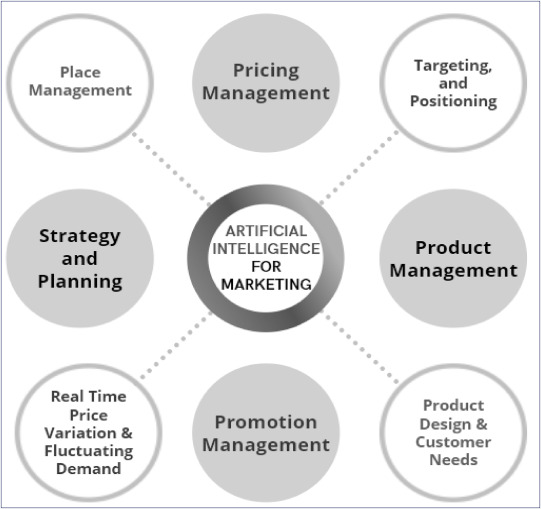
In marketing, AI partnership unlocks unprecedented opportunities for growth and optimization. For instance, AI can act as a strategic advisor for personalized customer experiences, analyzing vast behavioral data to predict individual preferences and recommend hyper-targeted content or product offerings in real-time. This moves beyond simple segmentation to truly dynamic, one-to-one engagement that drives loyalty and conversions.
AI also excels in advanced market intelligence, sifting through global data, social media trends, and competitor activities to identify emerging opportunities or potential threats long before human analysts could. For optimized campaign management, AI can dynamically adjust bidding strategies, allocate budgets across channels based on real-time performance, and even suggest creative variations that resonate most with specific audience segments. This level of agility and data-driven precision significantly enhances ROI.
Overcoming Challenges and Ensuring Ethical AI Partnership
While the benefits of AI partnership are substantial, businesses must proactively address potential challenges. Data privacy and security remain paramount; robust protocols are necessary to protect sensitive information processed by AI systems. Additionally, mitigating algorithmic bias is critical to ensure fair and equitable outcomes, requiring careful data curation and continuous model auditing. Human oversight is non-negotiable, ensuring accountability and preventing unintended consequences.
Maintaining a balanced perspective is key: AI should augment human decision-making, not replace it entirely. Establishing clear governance frameworks and ethical guidelines for AI deployment helps navigate complex scenarios. Continuous learning and adaptation are also vital, as AI technologies evolve rapidly. Businesses must commit to ongoing education and system updates to keep their AI partnerships effective, ethical, and aligned with evolving business needs.
Cultivating an AI-Driven Growth Mindset
The future of business growth is intrinsically linked to how effectively organizations can partner with AI. Cultivating an an AI-driven growth mindset means embracing continuous experimentation, viewing AI as an enabler for innovation, and fostering a culture where human creativity and AI intelligence synergize. It’s about asking not just “What can AI do for us?” but “How can we collaborate with AI to achieve what was previously impossible?”
This mindset encourages exploring new frontiers in data analysis, predictive modeling, and customer engagement, pushing the boundaries of traditional marketing and business strategy. By actively seeking opportunities for human-AI collaboration, businesses can unlock new levels of efficiency, insight, and competitive advantage, positioning themselves for sustainable success in an increasingly AI-powered world.


Leave a Comment