

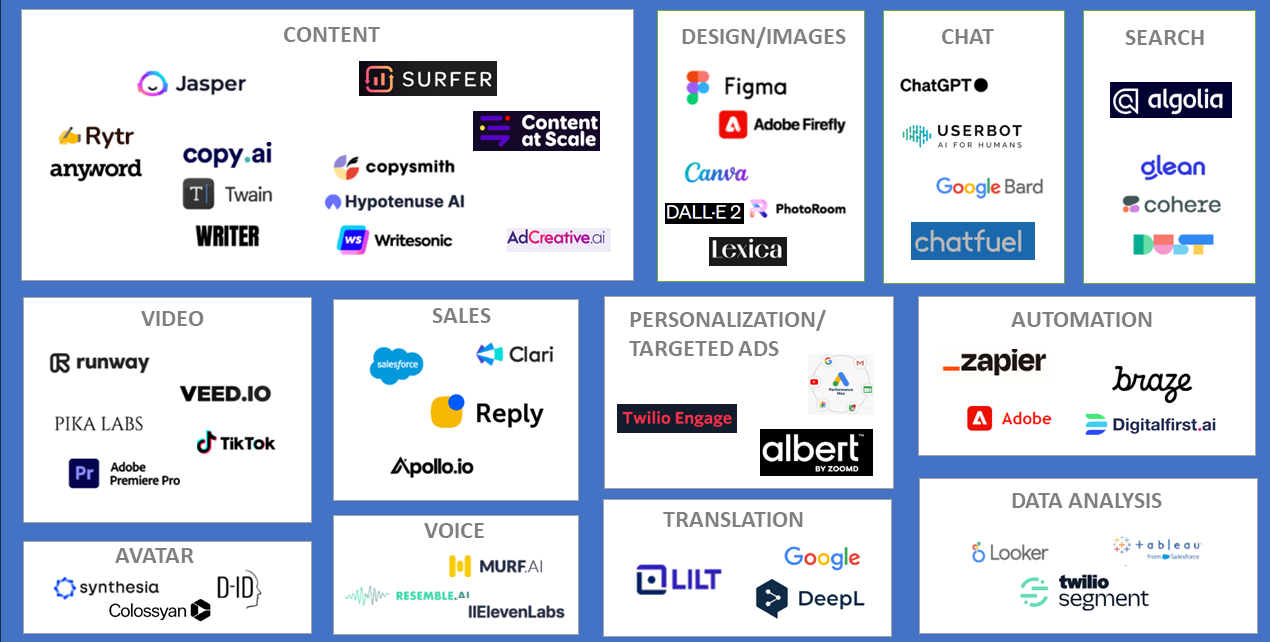
The Pragmatic View of an AI Marketing Stack
For small to mid-sized businesses, the promise of AI in marketing isn’t about futuristic concepts; it’s about immediate, tangible improvements to daily operations. This guide cuts through the noise to show you how to strategically integrate AI tools into your existing marketing efforts. You’ll gain practical insights on prioritizing investments, identifying the most impactful applications, and building a lean, effective AI marketing stack that genuinely drives growth and efficiency without overwhelming your limited resources.
An AI marketing stack isn’t a collection of bleeding-edge, custom-built solutions. For SMBs, it’s a curated set of accessible, integrated tools that leverage artificial intelligence to automate repetitive tasks, analyze data at scale, and provide actionable insights. Think of it as augmenting your team’s capabilities, not replacing them. The goal is to make smarter decisions faster, optimize budget allocation, and free up human talent for higher-value strategic work.
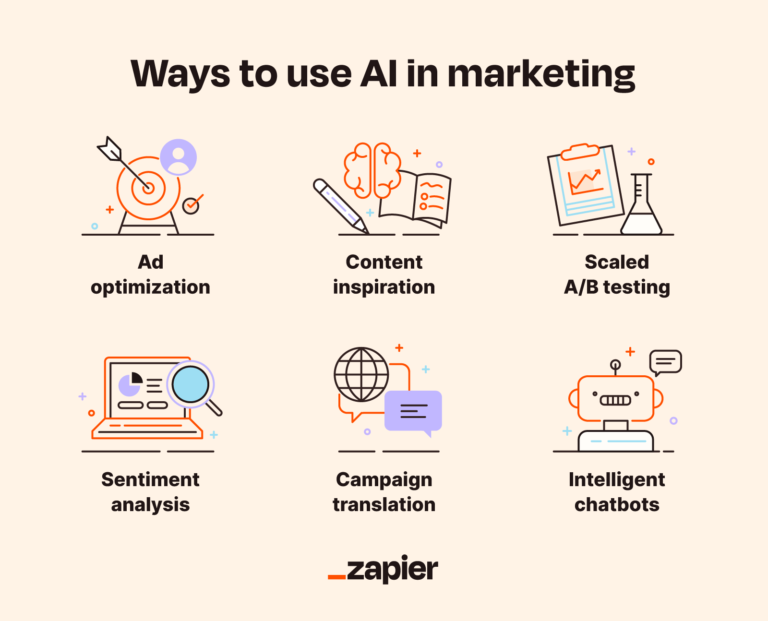
Today, the focus should be on practical applications: content generation assistance, ad optimization, customer service automation, and predictive analytics for sales forecasting. These are areas where off-the-shelf AI tools have matured enough to deliver real ROI without requiring a data science team.
Prioritizing Your AI Investments: Where to Start
With limited budgets and headcount, prioritization is paramount. Don’t chase every new AI feature. Instead, identify your biggest marketing bottlenecks and areas where even marginal improvements yield significant returns. Ask:
- Where do we spend the most manual time on repetitive tasks? (e.g., content drafting, ad copy variations, basic customer support)
- Which marketing activities lack data-driven optimization? (e.g., ad spend allocation, email segmentation)
- Where are we missing opportunities due to slow analysis or reactive decision-making? (e.g., identifying customer churn risks, personalizing offers)
Your answers will point to the most impactful starting points. For many SMBs, this often means focusing on content creation, ad management, and basic customer engagement first.
What’s often overlooked in the rush to adopt AI is the foundational requirement of clean data and mature processes. AI doesn’t magically fix a broken system; it merely amplifies what’s already there. If your underlying data is messy, inconsistent, or incomplete, AI will produce sophisticated garbage faster, leading to flawed insights and wasted investment. Similarly, if your existing marketing workflows are inefficient or poorly defined, automating them with AI will only scale those inefficiencies, not resolve them. Prioritize cleaning up your data and streamlining your core processes *before* layering on AI solutions.
Another subtle but significant pitfall is the erosion of critical human judgment. When teams become overly reliant on AI for first drafts, basic analysis, or even decision prompts, there’s a risk that their own analytical muscles can atrophy. The ability to spot nuances, challenge assumptions, or generate truly original, brand-aligned content requires constant practice. If AI is always providing the starting point, human practitioners might lose the capacity to identify when AI outputs are merely plausible but not optimal, or worse, subtly off-brand. This isn’t about replacing human effort, but augmenting it, and that demands humans remain sharp and engaged in the critical thinking process.
Finally, avoid the temptation to chase every new AI feature in isolation. A fragmented approach, where different teams or departments adopt disparate AI tools without a cohesive strategy, often leads to new data silos and integration headaches. The real power of AI for SMBs comes from its ability to connect and optimize across different marketing functions. A piecemeal strategy, while seemingly easier to implement in the short term, rarely delivers cumulative value and can quickly become an operational burden, adding complexity without commensurate strategic gains.
Core Components for an SMB AI Stack
A lean, effective AI marketing stack for an SMB typically includes tools that address these key functions:
- Content & SEO Assistance: Tools that help generate blog post outlines, draft social media updates, refine ad copy, and suggest SEO keywords. These don’t replace human creativity but accelerate the process.
- Advertising Optimization: Platforms that use AI to optimize ad spend across channels, personalize ad creatives, and predict campaign performance. Google Ads and Meta’s ad platforms already incorporate significant AI capabilities.
- Customer Engagement & Support: AI-powered chatbots for website FAQs, email response automation, and tools that analyze customer sentiment to improve service.
- Data Analysis & Personalization: CRM systems with AI features for lead scoring, predictive analytics for customer segmentation, and tools that personalize website experiences or email campaigns.
The key is integration. Ensure your chosen tools can communicate, even if it’s via simple CSV exports or basic API connections. A fragmented stack creates more work than it saves.
Initial gains from AI content tools often mask a downstream quality control burden. Without robust human oversight, the sheer volume of AI-generated drafts can dilute brand voice, introduce factual errors, or lead to keyword cannibalization if not carefully managed. The time saved in drafting is then spent in extensive editing, fact-checking, and strategic review, or worse, the low-quality content goes live, eroding trust and SEO authority over time. This isn’t a failure of the AI, but a failure in process adaptation.
The emphasis on integration is critical, but the practical reality of data flow often gets overlooked. Even with basic API connections or CSV exports, data quality issues frequently arise. Mismatched fields, inconsistent formatting, or incomplete transfers can feed an AI model with “dirty” data, leading to skewed insights or ineffective optimizations. What looks like a simple connection on paper can become a constant manual reconciliation task, undermining the very efficiency AI promises and creating significant operational drag.
Another common pitfall is the tendency to treat AI optimization as a set-it-and-forget-it solution. While platforms like Google Ads and Meta offer powerful AI, relying solely on their automated recommendations without understanding the underlying logic can lead to a loss of strategic control. Teams might optimize for short-term metrics at the expense of long-term brand building or customer lifetime value, simply because the AI’s objective function is narrowly defined. This creates a “black box” scenario where the team loses the ability to articulate why certain decisions are being made, hindering their own learning and adaptability.
What to Implement First for Quick Wins
For most SMBs, the fastest path to demonstrating AI value lies in these areas:
- AI-Powered Content Generation Tools: Start with tools that assist in drafting blog posts, social media captions, or ad copy. The time savings are immediate, and the quality, while requiring human review, is often a significant step up from starting from scratch. Focus on tools that integrate with your existing content workflow.
- Leveraging AI in Existing Ad Platforms: Maximize the AI capabilities already built into Google Ads and Meta Ads. Use smart bidding strategies, dynamic creative optimization, and audience expansion features. These are often underutilized and offer substantial performance gains with minimal setup.
- Basic Chatbot for FAQs: Implement a simple AI chatbot on your website to handle common customer inquiries. This frees up your team from repetitive questions and provides instant support, improving customer experience.
These initial steps are low-risk, high-impact, and provide immediate feedback on the value of AI, building internal confidence for further adoption.

What to Delay or Avoid Today
While the allure of advanced AI is strong, small to mid-sized businesses should explicitly deprioritize or outright avoid several areas today. Steer clear of investing in custom-built AI models or complex predictive analytics requiring dedicated data scientists. These initiatives demand significant capital, specialized talent, and a robust data infrastructure that most SMBs simply don’t possess. The cost-benefit ratio is typically unfavorable, leading to stalled projects and wasted resources.
Similarly, resist the urge to adopt every new AI tool that emerges. The market is saturated, and many tools offer overlapping functionalities or address niche problems that aren’t critical for your immediate growth. A “shiny object syndrome” approach leads to tool sprawl, integration headaches, and underutilized subscriptions. Focus on solving your core problems with proven, accessible solutions rather than chasing the bleeding edge.
Also, avoid AI tools that promise to completely automate strategic thinking or creative direction. AI is a powerful assistant, but human oversight, strategic judgment, and creative input remain indispensable for effective marketing. Tools that claim to fully replace these functions often overpromise and underdeliver, leading to generic or off-brand outputs.
Integrating Your AI Tools for Cohesion
A collection of disparate AI tools isn’t a stack; it’s a mess. True efficiency comes from integration. For SMBs, this doesn’t mean complex API development. Start with simpler methods:
- Native Integrations: Prioritize tools that offer direct integrations with your existing CRM, email marketing platform, or e-commerce system (e.g., shopify app store ai marketing).
- Zapier or Similar Automation: For tools without native connections, use no-code automation platforms like Zapier to connect them. This allows data to flow between systems, automating workflows like sending chatbot leads to your CRM or pushing content ideas to your project management tool.
- Centralized Data Hub: Even if it’s a well-organized spreadsheet initially, have a central place where key data from different AI tools can be aggregated and reviewed. This helps in understanding the holistic impact.
The goal is to minimize manual data transfer and ensure insights from one tool can inform decisions in another.
Measuring Impact and Iterating
Implementing AI tools without measuring their impact is a common pitfall. Define clear KPIs before you start. For content AI, track time saved on drafting, content output volume, and engagement metrics. For ad optimization, monitor CPA, ROAS, and conversion rates. For chatbots, track resolution rates and customer satisfaction scores.
Regularly review these metrics. AI tools are not “set it and forget it.” They require ongoing monitoring, tweaking, and iteration. What works today might need adjustment as your business evolves or as the AI models themselves update. Be prepared to experiment, learn, and refine your approach based on real-world performance.
Evolving Your Stack with Purpose
Building an AI marketing stack is an ongoing process, not a one-time project. As your business grows and your team becomes more comfortable with AI, you can gradually expand your stack. However, always maintain a pragmatic approach. Evaluate new tools based on their proven ability to solve specific business problems, not just their novelty. Focus on deepening the integration and utility of your existing tools before adding new ones. This disciplined approach ensures your AI investments continue to drive tangible growth and efficiency, keeping your marketing efforts smart and effective.

Leave a Comment