


The Real AI Skill Gap Isn’t Just About Coding
For small to mid-sized businesses, the promise of AI can feel out of reach, often overshadowed by perceived complexity or high costs. This article cuts through the noise, offering a pragmatic roadmap to bridge the AI skill gap within your existing team. You’ll gain clear insights into which AI skills deliver immediate, tangible value, how to cultivate them with limited resources, and what common pitfalls to sidestep. Our focus is on actionable strategies that empower your team to harness AI for real business growth, even under tight operational constraints.
When we talk about an ‘AI skill gap,’ many immediately think of data scientists or machine learning engineers. For most small and mid-sized businesses, that’s a misdirection. The critical gap isn’t in developing complex algorithms, but in understanding how to apply existing AI tools effectively to solve business problems. This means developing skills in prompt engineering, data interpretation, workflow integration, and strategic decision-making around AI outputs. It’s less about building AI and more about intelligently using it to enhance marketing, customer service, and operational efficiency.
Prioritizing AI Skills for Immediate Impact
Given limited resources, your team needs to focus on skills that yield the quickest returns. Here’s where to start:
- Prompt Engineering: The ability to craft clear, effective prompts for generative AI tools (text, image, code) is paramount. This directly impacts the quality and relevance of AI-generated content, saving significant time in content creation, brainstorming, and initial drafts.
- Data Interpretation & Critical Thinking: AI tools often provide data insights or recommendations. Your team needs to understand what these outputs mean, question their biases, and apply human judgment before acting. This isn’t about deep statistical analysis, but about practical data literacy.
- AI Tool Integration: Understanding how to connect and automate tasks between various AI-powered platforms and your existing tech stack (e.g., CRM, marketing automation) is crucial for efficiency. This often involves low-code or no-code solutions.
- Ethical & Responsible AI Use: Knowing the limitations, potential biases, and privacy implications of AI is vital to avoid costly mistakes and maintain customer trust. This is less a technical skill and more a strategic awareness.
The immediate gains from effective prompt engineering are clear, but the inverse is also true: poorly crafted prompts don’t just waste time, they actively erode trust in AI tools. Teams can get stuck in endless cycles of refinement, generating plausible but ultimately unusable content that demands more human correction than if it were started from scratch. This isn’t just inefficient; it breeds frustration and can lead to a premature abandonment of valuable tools. Similarly, while data interpretation is critical, the practical challenge often lies in avoiding two extremes: either an uncritical acceptance of AI-generated insights, leading to flawed decisions, or an over-analysis that paralyzes action. The real skill is discerning when an AI output is “good enough” to act on, and when it requires deeper human scrutiny, especially when resources for validation are scarce.
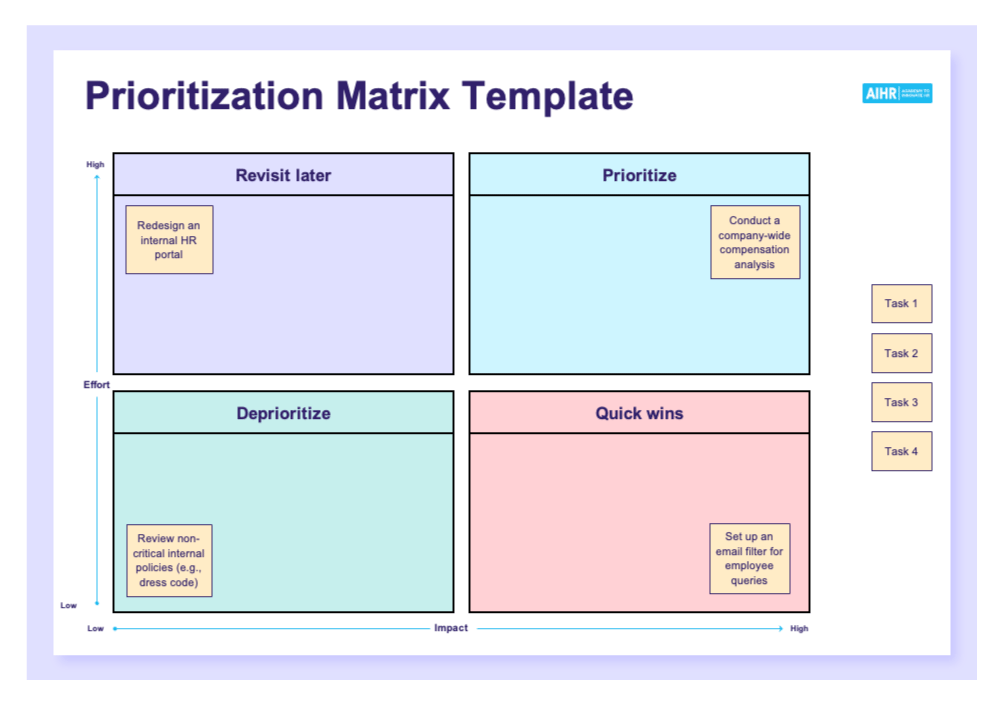
The allure of seamless AI tool integration is strong, promising exponential efficiency. However, the reality often involves hidden costs and delayed consequences. What appears as a low-code solution on paper can quickly become a significant drain on limited team bandwidth due to unexpected API changes, data mapping complexities, or the sheer effort required to maintain connections between disparate platforms. This ongoing maintenance and troubleshooting is easy to overlook during initial setup, leading to a “set it and forget it” mentality that inevitably breaks down. For most small to mid-sized teams, attempting complex, multi-tool integrations that demand significant custom development or deep technical expertise should be a clear deprioritization today. The operational overhead often outweighs the immediate gains, tying up resources that could be better spent on mastering individual AI applications that deliver more contained, tangible value.
Practical Strategies for Upskilling Your Existing Team
You don’t need to hire a new AI department. Leverage your current talent with targeted, cost-effective approaches.
- Internal ‘AI Champions’ Program: Identify team members who are naturally curious about technology. Empower them with dedicated time and resources to explore AI tools relevant to their roles. They can then become internal trainers and advocates, sharing best practices and troubleshooting common issues. This fosters organic adoption.
- Micro-Learning & Focused Workshops: Instead of broad, generic AI courses, focus on specific tools and use cases. For example, a workshop on ‘Using ChatGPT for Marketing Copy’ or ‘Automating Customer Service Responses with AI’. Many platforms offer free or low-cost tutorials. AI tools for small business marketing
- Hands-On Project-Based Learning: Assign small, low-risk projects where teams must use AI tools to achieve a specific outcome. This could be generating blog post ideas, analyzing competitor content, or drafting social media updates. Learning by doing is the most effective method.
- Leverage Vendor Training: Many AI tool providers offer free webinars, documentation, and tutorials. Encourage your team to utilize these resources to master the specific tools you’ve adopted.
While identifying ‘AI Champions’ is a sound strategy, a common pitfall is inadvertently turning these individuals into bottlenecks or burning them out. What starts as empowerment can quickly become an additional, often unacknowledged, support role. They end up fielding every basic query, troubleshooting minor issues for others, and struggling to balance their primary responsibilities with their new ‘champion’ duties. This not only exhausts your most proactive team members but also prevents broader knowledge distribution, creating a single point of failure rather than fostering true organizational capability.
Another subtle challenge is the temptation to chase every new AI tool or feature that emerges. The rapid pace of innovation can lead teams to adopt a ‘tool-of-the-week’ mentality, resulting in fragmented efforts and shallow understanding across many applications, rather than deep proficiency in a few strategically chosen ones. This constant context-switching and superficial engagement dilutes potential impact, creates more operational overhead than value, and ultimately leads to tool fatigue. Prioritizing depth of integration and mastery over breadth of experimentation is a critical, often overlooked, judgment call.
Finally, the pressure to demonstrate immediate, tangible ROI from AI initiatives can stifle the necessary exploratory phase. In practice, initial AI adoption is often more about learning, experimenting, and understanding new capabilities than delivering instant, blockbuster results. Expecting quick wins can lead teams to prematurely abandon promising avenues if the initial returns aren’t dramatic, or to misattribute modest gains as significant. This creates undue stress on teams and can lead to a perception that AI isn’t ‘working’ when, in reality, the organization hasn’t allowed sufficient time for the learning curve and strategic integration to mature.
What to Deprioritize or Skip Today
For small to mid-sized businesses, making smart trade-offs is non-negotiable. Here’s what you should actively deprioritize or avoid in the immediate future to conserve resources and focus on what truly moves the needle:
- Building Custom AI Models from Scratch: Unless your core business is AI development, attempting to build proprietary AI models is a massive drain on resources, time, and specialized talent that most SMBs simply don’t have. The cost-benefit ratio is almost always unfavorable compared to leveraging existing, off-the-shelf AI solutions.
- Chasing Every New AI Tool or Trend: The AI landscape is evolving rapidly. Trying to adopt every new tool or framework that emerges will lead to tool fatigue, fragmented efforts, and wasted subscriptions. Instead, identify a few core AI applications that address your most pressing business needs and master those. Focus on stability and integration over novelty.
- Hiring Senior AI/ML Engineers: While these roles are critical for large enterprises, an SMB’s immediate need is for practical application, not deep research or development. Invest in upskilling your current team in prompt engineering and tool integration first. A fractional consultant might be useful for strategic guidance, but a full-time, high-salary AI engineer is likely an overspend for initial AI readiness.
- Over-Automating Without Clear ROI: Don’t automate processes just because you can. Prioritize automation efforts where there’s a clear, measurable return on investment, such as reducing manual data entry, speeding up content generation, or improving customer response times. Automation for automation’s sake can introduce complexity without tangible benefits.
Integrating AI into Existing Workflows
The goal isn’t to overhaul your entire operation, but to strategically inject AI where it can augment human capabilities and streamline processes.
- Start Small with Repetitive Tasks: Identify areas where your team spends significant time on mundane, predictable tasks. This could be drafting initial email responses, summarizing long documents, generating social media captions, or basic data categorization. These are prime candidates for AI assistance.
- Pilot Programs in Specific Departments: Instead of a company-wide rollout, test AI integration within a single department (e.g., marketing, customer support). Learn from these pilots, refine your approach, and then scale successful strategies.
- Focus on Augmentation, Not Replacement: Frame AI as a co-pilot that enhances your team’s productivity and creativity, allowing them to focus on higher-value, strategic work. This helps mitigate fear and encourages adoption.
Measuring Impact and Iterating for Growth
Implementing AI isn’t a one-time project; it’s an ongoing process of refinement. You need to track its effectiveness.
- Define Clear Metrics: Before implementing an AI tool, establish what success looks like. Are you aiming to reduce content creation time by thirty percent? Improve customer response rates by twenty percent? Track these metrics rigorously.
- Gather Team Feedback: Regularly solicit input from team members using AI tools. What’s working well? What are the pain points? This qualitative data is invaluable for optimization.
- Iterate and Adapt: Based on your metrics and feedback, be prepared to adjust your AI tools, training, and integration strategies. The AI landscape changes, and your approach should too.
Cultivating a Future-Ready Mindset
Bridging the AI skill gap is less about reaching a destination and more about fostering a culture of continuous learning and adaptability. Encourage experimentation, celebrate small wins, and view AI as an evolving set of tools that will continually reshape how we do business. Your team’s willingness to learn and adapt will be your most significant competitive advantage in the years ahead. AI adoption trends small business


Leave a Comment