


For small to mid-sized businesses, the promise of AI often feels out of reach, reserved for enterprises with vast budgets and specialized teams. However, the landscape has shifted dramatically. Today, accessible AI tools offer practical, immediate benefits, enabling your lean marketing team to punch above its weight.
This article cuts through the hype to focus on what truly matters: how to integrate AI into your existing workflows to make smarter decisions, prioritize effectively, and achieve tangible growth without needing a data science degree or a massive investment. You’ll learn where to focus your efforts for the greatest impact, what to delay, and what to avoid entirely.
Prioritizing AI for Immediate Impact
When resources are tight, the first question isn’t “what can AI do?” but “what AI applications will deliver the quickest, most measurable return?” For SMBs, the answer lies in augmenting existing tasks that are time-consuming or require specialized skills your team might lack. Focus on tools that integrate easily and offer clear, actionable outputs.
- Content Generation & Repurposing: AI writing assistants are no longer just for generating first drafts. They excel at summarizing long-form content, rephrasing for different platforms (e.g., blog post to social media captions), and even generating variations of ad copy. This frees up your team to focus on strategy and human-centric editing.
- Basic Data Analysis & Reporting: Many marketing platforms now embed AI features that highlight key trends, anomalies, or performance drivers. Instead of manually sifting through spreadsheets, leverage these insights to quickly identify what’s working or what needs attention in your campaigns.
- Keyword Research & SEO Support: While AI won’t replace strategic SEO expertise, it can significantly accelerate the initial research phase. Tools can suggest long-tail keywords, analyze competitor content for gaps, and even help structure content outlines based on search intent.

Leveraging AI for Content Creation & SEO
Content remains king, but producing high-quality, SEO-optimized content consistently is a major drain on SMB resources. AI provides a powerful assist, not a replacement for human creativity and oversight.
Start by using AI for brainstorming and outlining. Feed it your target keywords and audience, and it can generate structured article outlines, blog post ideas, or even video script concepts. For drafting, AI can produce initial paragraphs or sections, allowing your writers to focus on refining the message, adding unique insights, and ensuring brand voice consistency. This isn’t about letting AI write your entire blog; it’s about accelerating the tedious parts of the process.
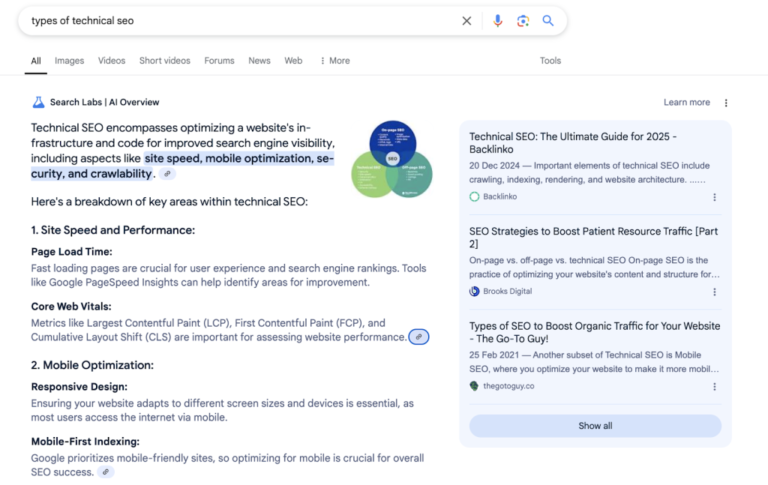
For SEO, AI tools can analyze search engine results pages (SERPs) to identify common questions, topics, and entities associated with your target keywords. This helps ensure your content covers the necessary breadth and depth to rank. They can also assist with generating meta descriptions and title tags that are both compelling and optimized for search.
Where teams often stumble is underestimating the sheer volume of human effort still required to elevate AI-generated drafts from functional to truly impactful. It’s not just a quick edit; it often demands significant rewriting to infuse genuine insight, align with a nuanced brand voice, or correct subtle inaccuracies. The initial time savings from AI can quickly erode if writers spend more time fixing generic or bland output than they would have spent crafting original content from scratch. This can lead to frustration and a perception that AI isn’t delivering on its promise, especially when deadlines loom and resources are tight.
Another common pitfall is allowing AI to dictate content strategy solely based on keyword analysis. While AI excels at identifying topics and entities for SEO, relying too heavily on its output without a strong human editorial filter can lead to a proliferation of generic, uninspired content. This isn’t just a quality issue; it’s a long-term brand risk. Content that merely checks SEO boxes but fails to offer unique value or a distinct perspective will struggle to build authority, engage readers, or convert prospects, ultimately diluting your brand’s voice and making it harder to stand out in a crowded digital landscape. The downstream effect is a content library that looks optimized on paper but underperforms in practice, requiring a costly overhaul later.
Furthermore, the skill of ‘prompt engineering’ is often overlooked. Getting truly valuable output from AI isn’t a one-and-done task; it requires iterative refinement of prompts, a deep understanding of the AI’s capabilities and limitations, and a clear process for guiding its output. This isn’t a static skill either, as AI models evolve. Teams must invest time in developing and maintaining this expertise, or they risk consistently receiving mediocre results that demand excessive human intervention, negating much of the intended efficiency gain.
Streamlining Ad Campaigns with AI
Paid advertising is a critical growth lever, but optimizing campaigns requires constant monitoring and adjustment. AI tools, often built directly into advertising platforms or available as third-party integrations, can significantly improve efficiency and performance.
AI excels at identifying audience segments that are most likely to convert, often uncovering patterns that human analysis might miss. This leads to more precise targeting and reduced ad spend waste. Furthermore, AI can dynamically optimize ad creatives and copy by testing multiple variations and automatically prioritizing the best performers. This A/B testing at scale is something a small team simply cannot replicate manually.
For budget allocation, some AI tools can recommend how to distribute your spend across different campaigns or channels based on real-time performance data, ensuring your budget is always working its hardest. This doesn’t mean handing over control entirely; it means using AI as an intelligent co-pilot, providing data-driven recommendations that you then review and approve.
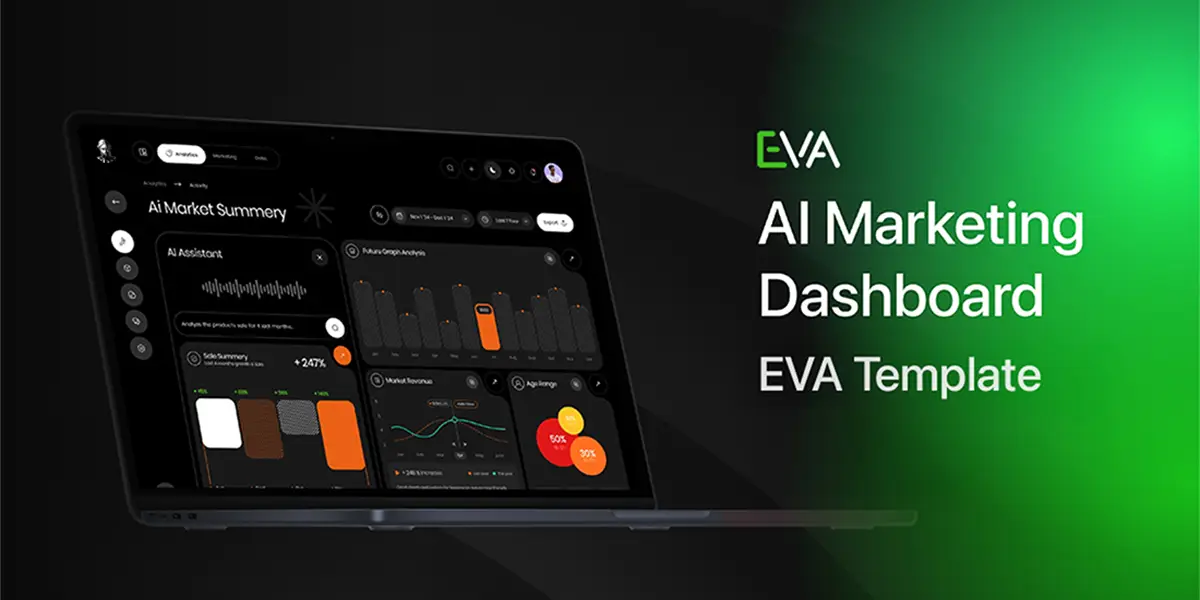
While AI promises efficiency, it also introduces a new kind of operational overhead: the need to understand and vet its recommendations. The “black box” nature of some AI algorithms means that while you see the outcome, the precise reasoning behind a targeting adjustment or budget shift isn’t always transparent. This can create a decision pressure for teams, who might feel compelled to accept AI suggestions for the sake of performance, even if they don’t fully grasp the underlying logic. Over time, this can erode a team’s strategic intuition and make it harder to diagnose issues when performance inevitably fluctuates.
A second-order effect often overlooked is the potential for creative fatigue. While AI excels at optimizing ad variations for immediate engagement, it can inadvertently push towards a lowest-common-denominator approach. This means creatives might become highly effective at generating clicks or conversions in the short term, but at the cost of brand distinctiveness or long-term audience interest. Without careful human oversight and strategic input, AI might optimize for short-term metrics that don’t align with building a sustainable brand or acquiring high-lifetime-value customers.
The “intelligent co-pilot” metaphor is accurate, but it underscores a critical point: the human pilot still sets the destination and overall flight plan. AI is a powerful engine for execution, but it lacks strategic foresight or qualitative understanding of your brand’s unique value proposition. Teams must actively feed the AI with strategic guardrails, qualitative insights about customer segments, and clear definitions of what constitutes a “valuable” conversion beyond just the immediate transaction. Failing to do so can lead to optimization for local maxima that don’t serve the broader business objectives, requiring more effort to course-correct later.
What to Deprioritize (and Why)
While AI offers immense potential, it’s crucial for SMBs to understand what to *avoid* or *delay* today. Do not invest in developing custom AI models from scratch. This requires specialized data scientists, massive datasets, and significant computational resources—all beyond the scope and budget of most small to mid-sized businesses. The ROI simply isn’t there when off-the-shelf, accessible tools can solve eighty percent of your immediate problems.
Similarly, deprioritize complex predictive analytics that demand deep integration with disparate systems and large, perfectly clean datasets. While enticing, the setup time, maintenance, and data quality requirements often outweigh the marginal gains for teams with limited headcount. Focus on tools that provide clear, immediate value with minimal setup and data preparation. Avoid chasing every new AI trend or tool; instead, integrate solutions that directly address your most pressing marketing challenges and fit seamlessly into your existing tech stack.
Building an AI-Powered Marketing Workflow
Integrating AI isn’t about replacing your team; it’s about empowering them. Start by identifying repetitive, data-heavy, or creativity-stalling tasks. These are prime candidates for AI augmentation. For example, use an AI writing assistant to generate initial drafts for blog posts, then have your human writer refine and add their unique voice. Use AI-powered analytics to flag underperforming ad campaigns, allowing your ad manager to focus on strategic adjustments rather expertly guided by data.
The key is to create a feedback loop: use AI, analyze its output, provide human refinement, and then use that refined data to improve future AI prompts or configurations. This iterative process ensures that AI tools become more effective over time, tailored to your specific business needs and brand voice. Think of AI as a force multiplier for your existing talent, not a substitute.
The Next Steps for Your Marketing Team
The accessible AI landscape is evolving rapidly, but the core principle for SMBs remains constant: leverage these tools to do more with less. Start small, experiment with one or two high-impact areas like content generation or ad optimization, and measure the results. The goal isn’t to become an AI company, but to become a more efficient, data-driven marketing organization. By making smart, pragmatic choices about which AI tools to adopt and how to integrate them, your business can unlock significant growth opportunities that were previously out of reach.

Leave a Comment