

This guide cuts through the noise to show you where AI can genuinely deliver long-term advantage for your business. You will learn how to identify high-impact AI applications, prioritize integration efforts, and avoid common pitfalls that drain resources without clear returns. Our focus is on practical, sustainable innovation that fits within the realities of a small to mid-sized operation.
For teams with limited budgets and headcount, making smart AI choices today is not just about efficiency; it is about building a resilient, competitive edge that compounds over time. We will outline a pragmatic approach to leveraging AI, emphasizing what truly works under real-world constraints.
Beyond Hype: Why AI Matters for Sustainable Growth
AI is not merely a trend; it is a foundational shift in how businesses operate and innovate. For small to mid-sized businesses, this means more than just automating repetitive tasks. It is about augmenting your team’s capabilities, making smarter decisions with limited data, and unlocking efficiencies that directly impact your bottom line. Sustainable growth, in this context, means leveraging AI to build processes and insights that continue to deliver value without constant, heavy investment.
The real power of AI for SMBs lies in its ability to:
- **Optimize Resource Allocation:** Identify where your marketing spend, sales efforts, or operational time yields the best returns.
- **Enhance Customer Experience:** Provide faster, more personalized interactions without scaling your support team proportionally.
- **Drive Data-Informed Decisions:** Turn raw data into actionable insights for product development, market positioning, and strategic planning.
- **Boost Content Velocity:** Generate drafts, repurpose existing content, and optimize messaging for different channels, extending your content reach significantly.
Prioritizing AI Integration: Where SMBs Should Start
Given finite resources, the key is to start where AI can deliver immediate, measurable impact with minimal disruption. Do not aim for a complete overhaul; target specific pain points first.
- **Customer Support Automation:** Implement AI-powered chatbots for common queries or use AI to analyze support tickets for trend identification. This frees up human agents for complex issues and improves response times.
- **Content Creation & Optimization:** Leverage generative AI for drafting blog posts, social media updates, or email copy. Use AI tools to optimize existing content for SEO or personalize messaging for different audience segments. This significantly reduces the time spent on initial content generation and refinement.
- **Data Analysis for Marketing & Sales:** Employ AI-driven analytics platforms to segment your customer base, predict purchasing behavior, or identify high-potential leads. This allows for more targeted campaigns and more efficient sales outreach.
- **Internal Process Automation:** Look for AI tools that can automate routine administrative tasks like scheduling, data entry, or report generation. Even small time savings across multiple tasks can add up.
Prioritize solutions that offer clear, quantifiable ROI within a short timeframe and integrate relatively smoothly with your existing CRM, marketing automation, or project management tools. Focus on off-the-shelf SaaS solutions rather than custom builds.
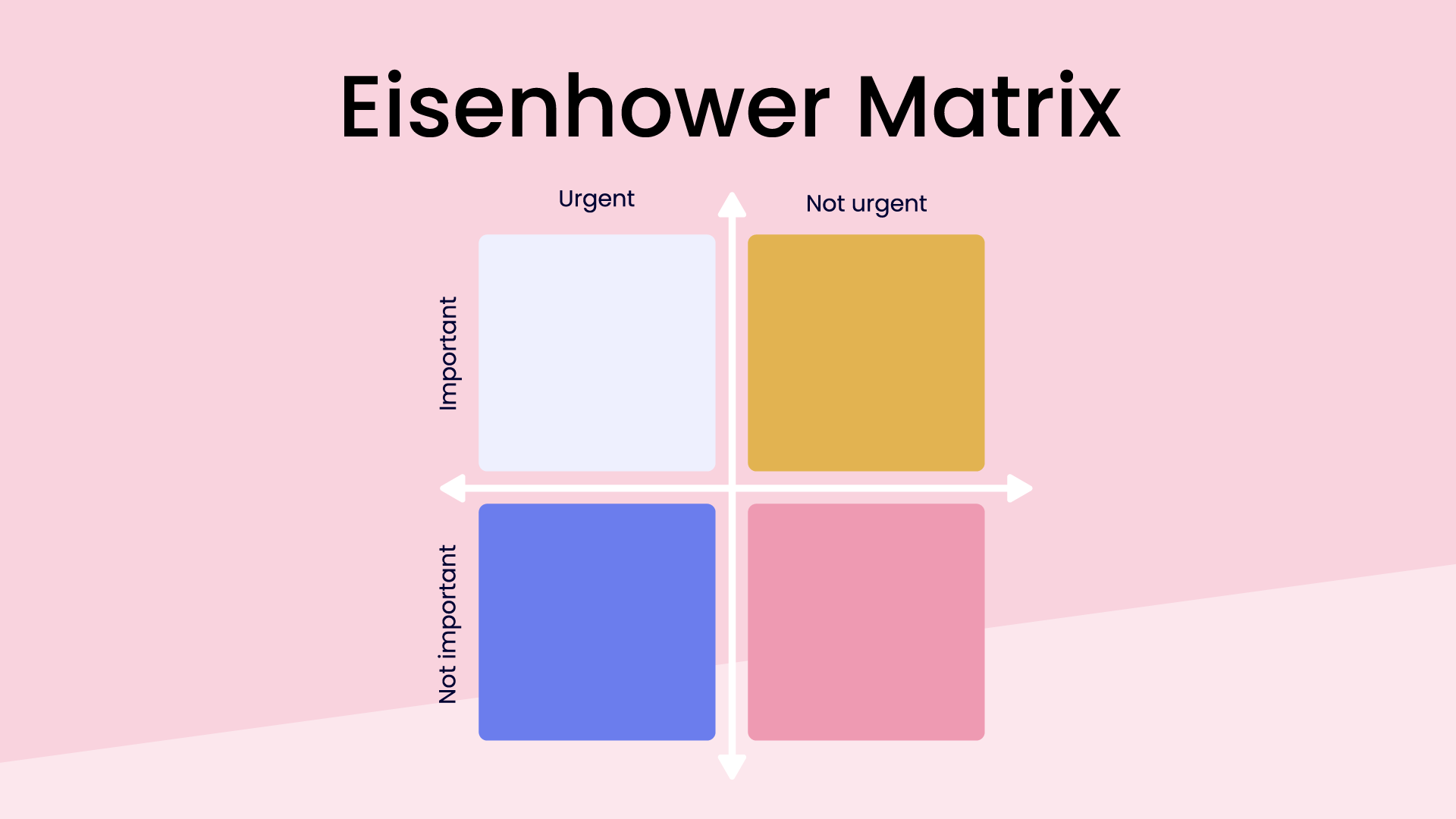
While the immediate benefits of off-the-shelf AI solutions are appealing, it’s easy to overlook the ongoing operational overhead. “Minimal disruption” often refers to the technical integration, not the continuous effort required for data hygiene, model monitoring, and human oversight. AI tools, especially generative ones, demand consistent validation and correction. The time saved in initial drafting, for instance, can quickly be consumed by fact-checking, refining tone, and ensuring brand consistency, particularly if the input data or prompts aren’t perfectly structured.
A common pitfall is underestimating the “garbage in, garbage out” principle. If your underlying data for customer support or sales analytics is inconsistent, incomplete, or biased, AI will simply amplify those flaws, leading to misleading insights or ineffective automation. This isn’t a purely technical problem; it’s a data governance challenge that often surfaces only after significant investment. Furthermore, while AI can free up human agents from routine tasks, it often leaves them with a disproportionate load of complex, emotionally draining, or highly nuanced problems. This shift can lead to increased stress and potential burnout if not proactively managed, turning an efficiency gain into a human capital drain.
For SMBs, this means deprioritizing AI applications where your data quality is known to be poor or where the cost of an AI error is exceptionally high. For example, using AI for highly sensitive customer communications without robust human review is a risk that rarely pays off. Focus instead on areas where data is relatively clean and the impact of an occasional AI misstep is low, allowing your team to build confidence and refine processes without constant firefighting.
What to Delay or Avoid: Common AI Pitfalls for Lean Teams
For small to mid-sized businesses, the biggest pitfall is overcommitting to complex, unproven, or resource-intensive AI initiatives. **You should deprioritize or skip any custom AI model development unless you have dedicated data science resources, a unique competitive need that cannot be met by existing solutions, and a clear, substantial budget.** The cost, complexity, and ongoing maintenance burden of custom AI far outweigh the benefits for most SMBs. Similarly, resist the urge to adopt every new AI tool that emerges; many are niche, lack robust integration, or offer marginal gains compared to focusing on core business functions. Stick to proven, accessible solutions that solve immediate, tangible problems.
Beyond custom development, be wary of:
- **”Black Box” Solutions:** Tools that promise magic without clear explanations of how they work or what data they use. Transparency is crucial for trust and effective troubleshooting.
- **Data-Hungry AI Without Data:** If an AI solution requires vast amounts of proprietary data that you do not possess or cannot ethically and efficiently acquire, it is not a viable option.
- **Solutions Creating New Silos:** AI tools should integrate and enhance your existing workflows, not create new, isolated systems that require additional manual effort to bridge.
- **Over-Automation of Critical Human Touchpoints:** While efficiency is good, completely automating customer interactions that require empathy or complex problem-solving can damage relationships. Use AI to assist, not replace, human judgment in these areas.
Another subtle trap is the silent degradation of AI performance. Many off-the-shelf AI solutions, especially those relying on external data feeds or evolving models, can gradually become less accurate or relevant without obvious warning signs. What worked well six months ago might now be producing suboptimal or even incorrect outputs because the underlying data landscape or user behavior has shifted. For lean teams, this means a hidden cost: the need for ongoing monitoring and validation, which often gets overlooked until a significant problem surfaces, leading to wasted effort or damaged customer trust. Assuming ‘set it and forget it’ with AI is a dangerous gamble.
Furthermore, be wary of seemingly ‘easy’ integrations that promise quick wins. While avoiding new silos is critical, some AI tools achieve integration by deeply embedding themselves into your core systems or by requiring proprietary data formats. This can create a different kind of dependency: vendor lock-in. Extracting yourself later, should the tool prove inadequate or too costly, can become an expensive and disruptive undertaking, far outweighing the initial convenience. The upfront effort to ensure true interoperability and data portability, even if it means a slower initial rollout, often pays dividends by preserving future flexibility.
Finally, the ‘last mile’ problem with AI is often underestimated. Many AI tools excel at generating content, insights, or recommendations, but the real work for a lean team often begins after the AI output is produced. Transforming raw AI output into something truly actionable, polished, and aligned with your brand voice or specific customer context still requires significant human review, editing, and strategic application. This isn’t just about ‘over-automation’; it’s about the practical reality that AI often provides a strong draft, not a finished product. The frustration comes when teams expect a fully autonomous solution, only to find they’ve merely shifted manual effort from creation to extensive refinement and oversight.
Building an AI-Powered Innovation Loop
Sustainable innovation with AI is not a one-time project; it is an ongoing cycle of experimentation, implementation, and refinement. Think of it as a continuous feedback loop designed to incrementally improve your business operations and offerings.
- **Identify Opportunities:** Regularly assess your business for bottlenecks, inefficiencies, or areas where data insights are lacking. Where could AI provide a tangible improvement?
- **Experiment & Pilot:** Start small. Choose one specific problem and test an AI solution with a limited scope or a small team. Gather initial data and feedback. For instance, pilot an AI content generator for blog post outlines before committing to full article generation.
- **Implement & Integrate:** If a pilot proves successful, integrate the AI tool or process more broadly. Ensure it connects smoothly with your existing systems and that your team is adequately trained.
- **Measure & Analyze:** Establish clear KPIs before implementation and rigorously track the performance of your AI-powered initiatives. Are you seeing the expected improvements in efficiency, customer satisfaction, or revenue? Measuring AI ROI for small businesses
- **Refine & Scale:** Based on your measurements, refine the AI’s application, adjust parameters, or explore scaling it to other areas of your business. If it is not working, be prepared to pivot or discontinue.
Measuring Impact and Adapting Your AI Strategy
The true value of AI for sustainable innovation lies in its measurable impact. Before deploying any AI tool, define what success looks like. This means establishing clear, quantifiable metrics that align with your business objectives. For example, if you implement an AI chatbot, track metrics like resolution rate, average response time, and customer satisfaction scores. For AI-driven content, monitor engagement rates, organic traffic, and conversion rates.
Regularly review these metrics, perhaps monthly or quarterly, to assess the AI’s performance. Do not be afraid to adapt your strategy. The AI landscape is evolving rapidly, and what works today might need adjustment tomorrow. Be agile, learn from your data, and continuously seek ways to optimize your AI investments. This iterative approach ensures your AI efforts remain aligned with your long-term business goals and continue to deliver real value.
Your Next Steps in AI-Driven Innovation
To truly harness AI for sustainable advantage, begin by identifying one or two high-impact areas where an accessible AI tool can solve a current pain point. Prioritize solutions that offer clear, measurable benefits and integrate easily with your existing operations. Educate your team on the practical applications and benefits, fostering an environment of experimentation and learning. Remember, the goal is not to adopt every new technology, but to make strategic, pragmatic choices that build long-term value for your business.


Leave a Comment