

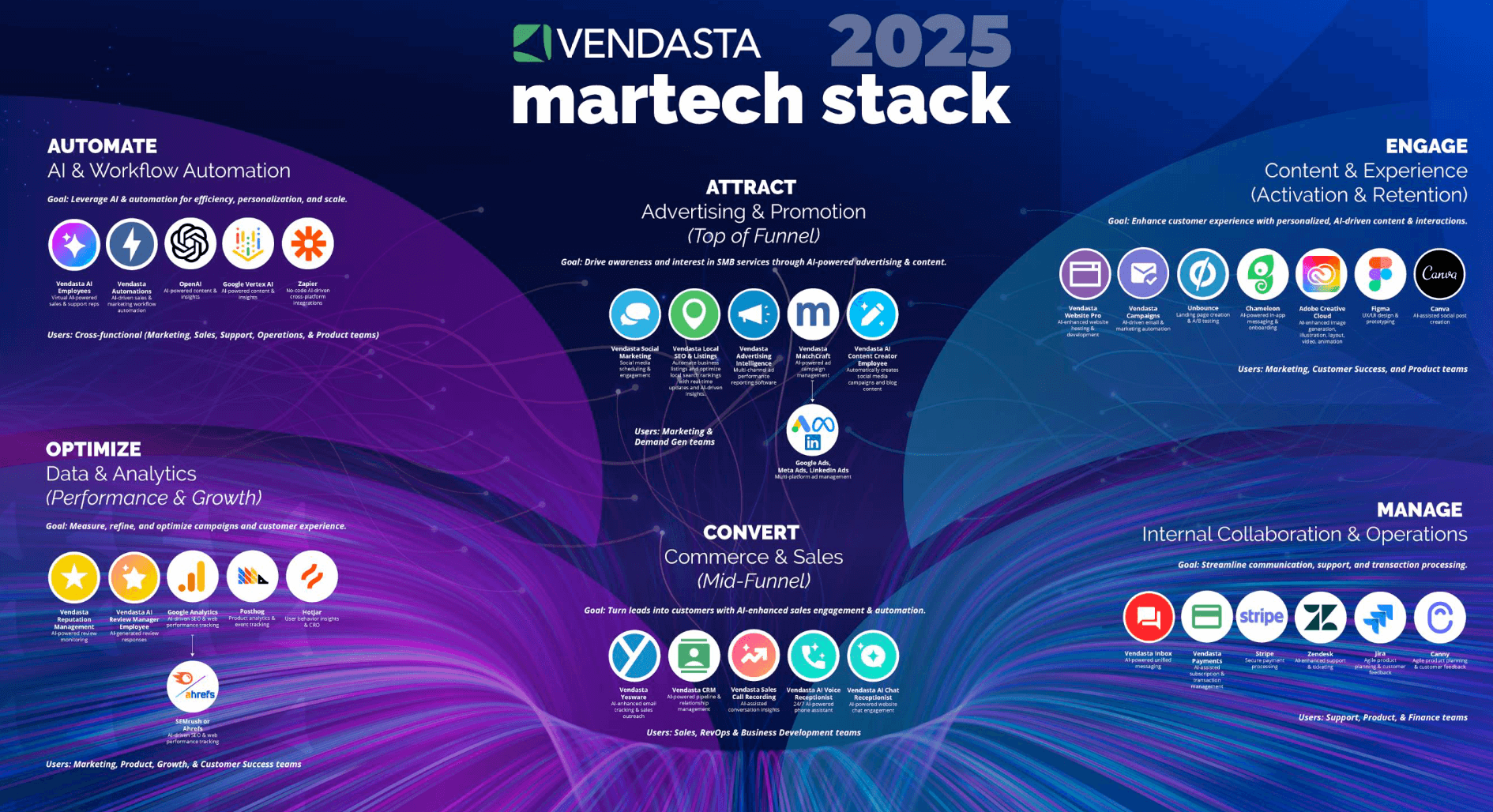
The Strategic Imperative: Why Your Tech Stack Needs AI Now
For small to mid-sized businesses, AI isn’t a future trend; it’s a current operational necessity for efficiency and competitive edge. Leveraging AI strategically allows smaller teams to punch above their weight, automating repetitive tasks and freeing up valuable human capital for more strategic, creative work. The goal isn’t to replace your team, but to augment their capabilities, making them more productive and impactful.
Prioritizing Your Core Marketing Stack: Foundation First
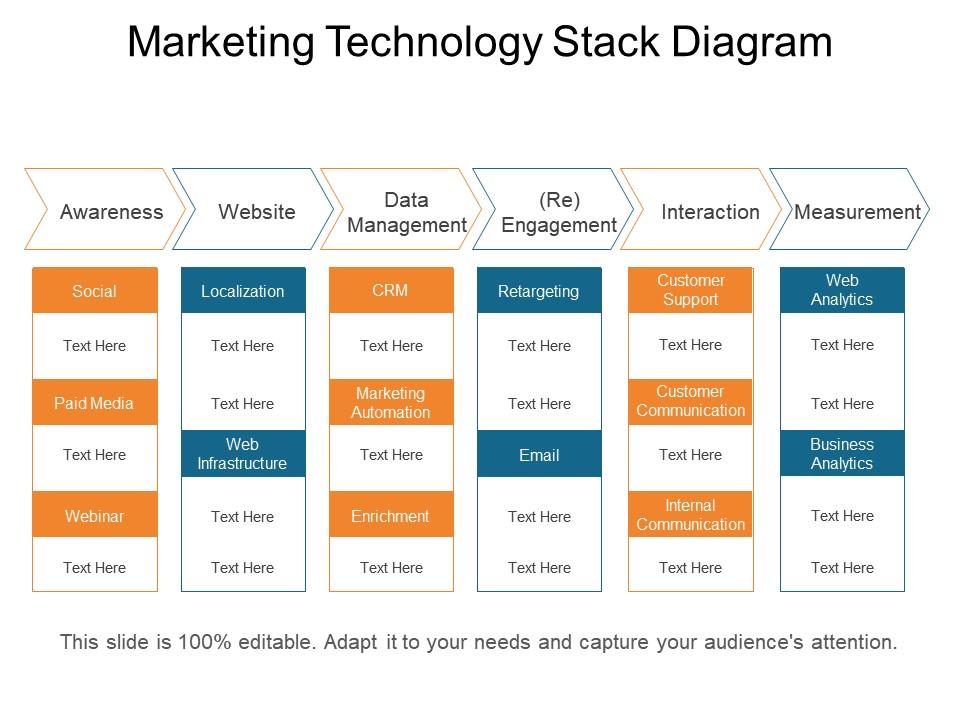
Before you even consider advanced AI integrations, ensure your foundational marketing tools are robust and well-utilized. Without a solid base, any AI you layer on top will struggle to deliver meaningful value. Think of this as your operational bedrock.
- CRM (Customer Relationship Management): This is your absolute core. A centralized system for customer data is non-negotiable for personalization, segmentation, and understanding your audience. It’s the single most impactful step for future AI integration. CRM for small business
- Marketing Automation Platform: Essential for automating email campaigns, lead nurturing sequences, and social media scheduling. This platform becomes a key conduit for AI-driven messaging.
- Analytics & Reporting: Tools like Google Analytics 4 (GA4) are standard. You cannot optimize what you don’t measure. Robust analytics are crucial for feeding AI insights and validating its impact.
- Content Management System (CMS): Your website’s backbone. A flexible CMS allows for dynamic content delivery, which AI can enhance through personalization.
Judgment Call: If your customer data is still scattered across spreadsheets or disparate systems, your first priority must be implementing a reliable CRM. This foundational step will unlock far more potential for AI than any standalone AI tool could offer.
What’s often overlooked in the rush to implement these foundational tools is the ongoing commitment required for data hygiene. It’s easy to assume that once a CRM is in place, your data problems are solved. In practice, without consistent processes for data entry, deduplication, and enrichment, your centralized system quickly becomes a repository of outdated or conflicting information. This isn’t just an inconvenience; it’s a hidden cost that directly undermines any future AI initiatives. Feeding an AI model with dirty data guarantees skewed insights and unreliable predictions, leading to wasted effort and a loss of trust in the very systems meant to empower your team.
Another common pitfall is underestimating the operational overhead and the friction of integration. While individual tools might excel, their true value is unlocked when they communicate seamlessly. Many teams acquire what seem like “best-of-breed” solutions without fully vetting their interoperability. This often leads to significant integration debt down the line, requiring manual data transfers, custom development, or expensive middleware. The initial savings on a standalone tool can quickly be eclipsed by the ongoing cost and complexity of making disparate systems talk to each other, creating a bottleneck that stifles agility and frustrates practitioners trying to execute campaigns.
Finally, the human element is frequently deprioritized. Purchasing a sophisticated marketing automation platform or a robust CMS is only the first step. The real challenge lies in ensuring your team is adequately trained, adopts new workflows, and consistently utilizes these tools to their full potential. Without dedicated time for training, process documentation, and ongoing support—often the first things to be cut when budgets or timelines tighten—even the most powerful stack can become shelfware. This common oversight means teams revert to familiar, less efficient methods, leaving the advanced capabilities of their new tools untapped and creating a cycle of frustration and underperformance that erodes confidence in strategic investments.
Integrating AI: Where to Start for Immediate Impact
Resist the urge to integrate AI everywhere at once. For small teams, the most effective approach is to identify high-friction, high-volume tasks where AI can provide immediate, tangible benefits and a clear return on investment.
- Content Generation & Optimization: AI writing assistants can draft blog posts, social media updates, and email copy, significantly reducing time spent on initial drafts. AI tools also excel at keyword research and topic ideation, ensuring your content is relevant and discoverable. AI for SEO content
- Data Analysis & Insights: AI-powered tools can sift through vast amounts of analytics data, identify trends, and flag anomalies much faster than manual review. This helps your team make data-driven decisions without getting bogged down in spreadsheets.
- Personalization: Leverage AI for dynamic content delivery, product recommendations, and segmenting audiences for highly targeted campaigns. This moves beyond basic segmentation to truly individualized experiences.
- Customer Service Augmentation: Implement AI chatbots for handling frequently asked questions, freeing up your human agents to focus on more complex, high-value customer interactions.
Practitioner Insight: Start with AI tools that integrate seamlessly with your existing foundational stack. Many modern CRM and marketing automation platforms now offer built-in AI content generation, personalization, or analytics features, simplifying adoption and reducing integration headaches.
While the immediate gains from AI are clear, it’s easy to overlook the downstream effects and hidden costs. For instance, AI-generated content, while fast, often requires significant human oversight to maintain brand voice, factual accuracy, and strategic depth. What seems like a time-saver in initial drafting can quickly become a frustrating quality control bottleneck, where teams spend more time editing and refining AI output than they would have spent crafting original content from a well-defined outline. The pressure to “use” the AI’s output, even when it’s mediocre, can also lead to a subtle erosion of content quality and distinctiveness over time.
Similarly, relying solely on AI for data analysis can create a false sense of insight. AI excels at identifying patterns, but it lacks the qualitative understanding of your specific market, customer relationships, or operational nuances. Without a human practitioner to contextualize these patterns, interpret the ‘why’ behind the ‘what,’ and validate them against real-world experience, teams risk making decisions based on generic or misleading recommendations. The real work often begins after the AI delivers its findings, requiring dedicated human effort to translate raw data insights into actionable, relevant strategies for your unique business.
Finally, the promise of “set it and forget it” AI, particularly for personalization or customer service augmentation, is a common pitfall. These systems require continuous monitoring, feedback loops, and periodic human intervention to remain effective. AI models can drift, providing irrelevant recommendations or outdated information if not regularly trained and aligned with evolving business goals and customer expectations. The initial time saved can quickly be offset by the need to correct errors, update knowledge bases, or re-train models, adding an an ongoing maintenance burden that is rarely factored into initial adoption plans.
What to Deprioritize and Avoid Today
For small to mid-sized teams, resource allocation is critical. A common pitfall is the \

1 Comment