


For small to mid-sized businesses, building a truly distinctive brand often feels like an uphill battle against limited budgets and stretched teams. This article cuts through the noise, showing you how to strategically leverage AI tools to develop unique creative assets and maintain a consistent brand identity without needing an army of designers or copywriters.
You’ll learn where to focus your AI efforts for maximum impact, what to put off, and what pitfalls to avoid. Our focus is on practical, actionable strategies that deliver real results under real-world constraints.
Defining “Distinctive” in the AI Era for SMBs
Distinctiveness isn’t about being flashy; it’s about being recognizable and memorable. For SMBs, this means creating a consistent visual and verbal identity that stands out in a crowded market. AI doesn’t invent distinctiveness; it amplifies your strategic choices. It helps you rapidly iterate on concepts, ensure consistency across touchpoints, and free up human creative energy for higher-level strategic thinking. Your goal isn’t just AI-generated content, but AI-assisted distinctive content.
Prioritizing AI for Core Brand Assets
When resources are tight, focus AI on the foundational elements that define your brand. This isn’t about automating your entire creative department, but about smart application.
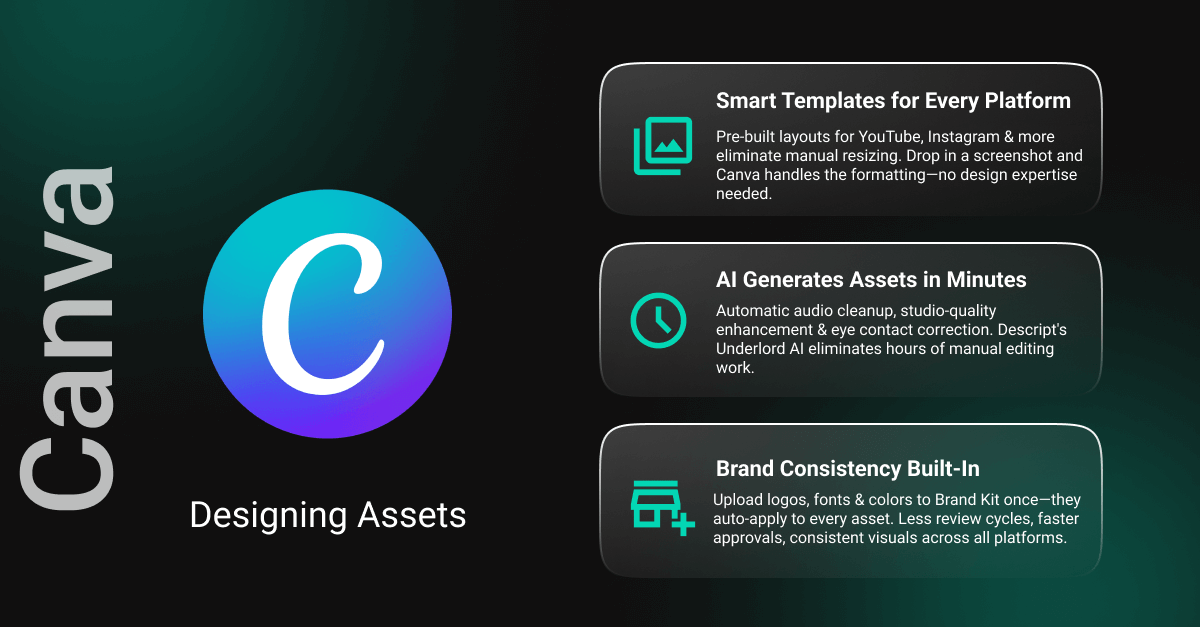
- Visual Identity Iteration: Use AI image generators (like Midjourney, DALL-E 3, or Stable Diffusion variants) to explore logo concepts, color palettes, and stylistic elements. Don’t expect a final logo from AI, but use it to generate dozens of variations based on your prompts, giving your designer a strong starting point or helping you visualize directions quickly. This accelerates the initial exploration phase significantly.
- Brand Messaging Frameworks: AI language models excel at generating variations of taglines, mission statements, and value propositions. Feed it your core differentiators and target audience, and let it produce multiple angles. This helps refine your messaging and ensures you’re hitting the right notes consistently.
- Content Style Guides: Train an AI model on your existing brand voice and preferred terminology. This can then be used to check new content for consistency, suggest alternative phrasing, or even generate initial drafts that adhere to your established style, saving significant editing time.
The immediate efficiency gains from AI are compelling, but it’s easy to overlook the downstream effects and hidden costs. One common pitfall is the assumption that AI-generated output is inherently “good enough” or requires minimal human intervention. This often leads to a cycle where teams rush to generate concepts, only to find they lack the strategic depth, unique brand voice, or emotional resonance required. What seems like time saved in initial creation can quickly be eaten up by extensive revisions, internal debates, and the frustration of trying to inject soul into something fundamentally generic.
Another area frequently underestimated is the skill of prompt engineering. While AI models are powerful, their utility is directly proportional to the quality and specificity of the input. Crafting effective prompts isn’t a trivial task; it requires a deep understanding of your brand, clear communication, and iterative refinement. Teams often spend significant time generating mediocre outputs because they haven’t invested in developing this crucial skill, leading to wasted cycles and a perception that the AI isn’t performing, when in reality, the input is the limiting factor.
Perhaps the most insidious long-term risk is the subtle erosion of brand distinctiveness. AI models, by their nature, are trained on vast datasets of existing content, which can bias outputs towards common patterns and averages. Without a strong human filter and a clear strategic vision, over-reliance on AI for core brand assets can inadvertently lead to a homogenization of your brand’s voice and visual identity. Your brand might become technically competent but ultimately indistinguishable from competitors leveraging similar tools, making differentiation a far harder battle down the line.
AI for Content Ideation and Variation
Beyond core assets, AI is a powerful engine for content ideation and adaptation. This is where SMBs can truly scale their output without scaling headcount.
- Topic Brainstorming: Use AI to generate blog post ideas, social media themes, or video scripts based on keywords, audience interests, and competitor analysis. It can quickly identify gaps or novel angles you might have missed.
- Repurposing Content: Take a long-form blog post and ask AI to distill it into five social media captions, a short video script, or an email newsletter snippet. This ensures your valuable content reaches multiple channels efficiently, maintaining a consistent message.
- A/B Testing Variations: For ad copy or landing page headlines, AI can generate numerous variations that test different angles, tones, or calls to action. This allows for faster, data-driven optimization without extensive manual writing.
The key here is to use AI as a creative partner, not a replacement. Your human judgment still guides the strategy and final selection.
While AI promises significant leverage for content creation, there’s a practical trap: over-reliance on its ideation capabilities can inadvertently lead to content homogenization. When multiple businesses use similar AI models and prompts for brainstorming, the output naturally converges on common themes and structures. This makes it increasingly difficult to differentiate your brand’s voice or offer truly novel perspectives, turning a perceived efficiency gain into a subtle erosion of unique market positioning. It’s easy to generate ideas, but much harder to generate distinctive ones without strong human strategic input.
The efficiency of repurposing content also introduces a downstream challenge for lean teams: managing the increased volume of assets. Generating five social media captions from one blog post is quick, but each of those then requires individual scheduling, platform-specific optimization, and performance monitoring. This operational overhead can quickly overwhelm small teams, leading to content being published without proper strategic context or follow-through, ultimately diluting its intended impact. Similarly, while AI excels at generating A/B test variations, the actual execution and analysis—setting up robust experiments, ensuring statistical significance, and interpreting nuanced results—remain human-intensive tasks. The speed of generation can mask the slower, more resource-intensive reality of effective testing, often leading to inconclusive data or analysis paralysis if not approached with clear priorities.
This often creates a decision pressure point for teams: the temptation to deploy every AI-generated variation or repurposed snippet, fearing they’re leaving value on the table. However, the real-world trade-off is that strategic curation and thoughtful deployment are far more critical than raw output volume. Prioritizing quality, relevance, and manageability over sheer quantity, even when AI makes quantity easy, is a consistent judgment call small teams must make to avoid spreading their limited resources too thin.
Maintaining Brand Voice and Consistency with AI
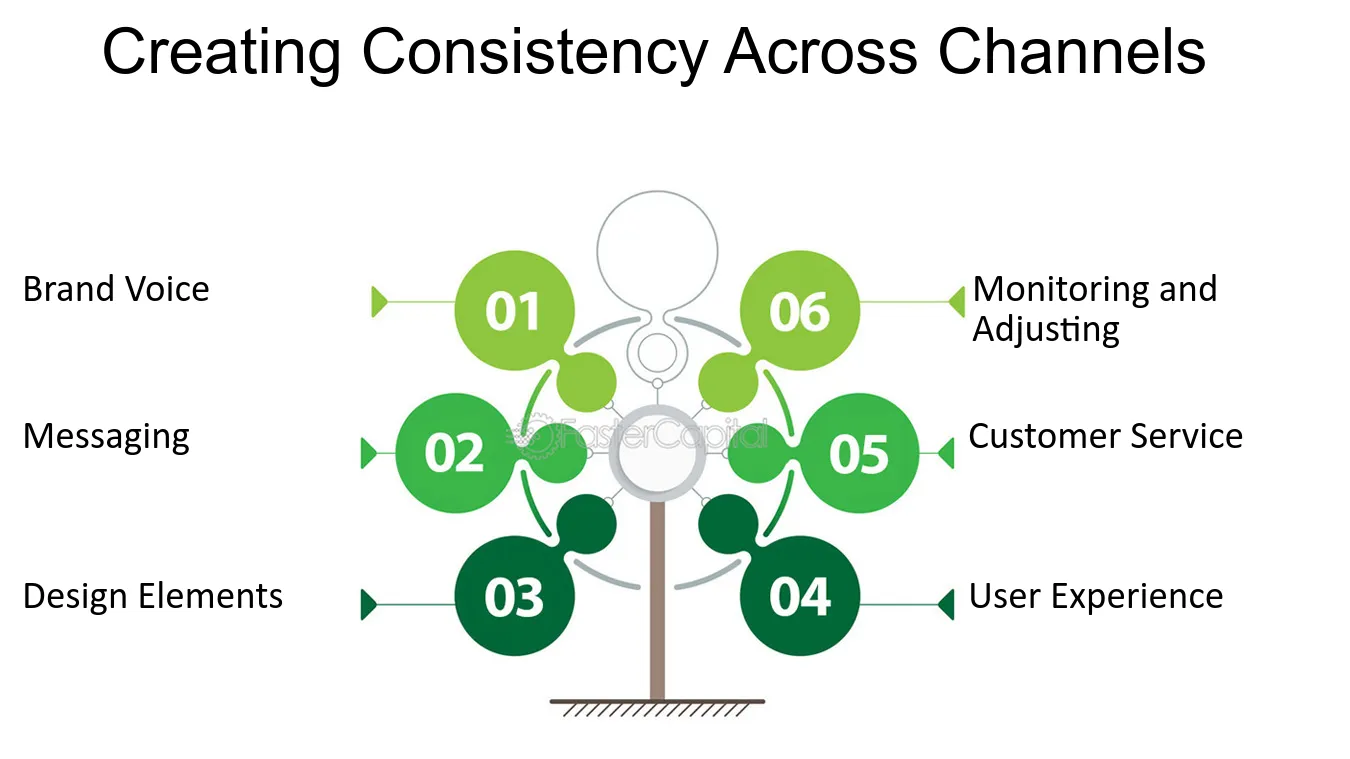
Consistency is the bedrock of distinctiveness. AI tools, when properly integrated, can be your best ally in maintaining a unified brand voice across all communications.
Start by creating a comprehensive brand guide that includes tone of voice, key messaging, specific terminology, and even a list of ‘do’s and don’ts’. Feed this guide into your chosen AI language model. Many advanced platforms allow for custom instructions or fine-tuning, enabling the AI to learn and mimic your specific brand persona. This ensures that whether you’re drafting an email, a social post, or a website update, the AI-generated content aligns with your established voice. Consider tools that offer brand voice monitoring or content governance features, even if they come with a subscription. The time saved in editing and the improved consistency are often worth the investment for a lean team.
What to Deprioritize or Skip Today
While AI offers immense potential, not every application is a priority for SMBs with limited resources. Deprioritize using AI for highly strategic, emotionally resonant, or deeply nuanced creative that requires genuine human intuition and oversight. This includes:
- Complex Storytelling Campaigns: AI can generate narratives, but crafting a truly compelling, emotionally resonant brand story that connects deeply with your audience still demands human empathy and strategic insight. Don’t delegate your core brand narrative entirely to an algorithm.
- High-Stakes Messaging: For critical communications, like crisis management or sensitive customer announcements, AI should only be used for initial drafting, if at all. The final output must be meticulously reviewed and refined by a human to ensure accuracy, tone, and legal compliance.
- Blind Automation of All Creative: Avoid the trap of generating content purely for volume. Generic, uninspired AI output can dilute your brand’s distinctiveness rather than enhance it. Focus on quality and strategic application over sheer quantity.
Your team’s unique perspective and understanding of your customers are irreplaceable. AI is a tool to empower that, not to replace it.
Implementing Your AI Creative Workflow
Getting started doesn’t require a massive overhaul. Begin with small, manageable steps.
- Identify Pain Points: Where does your team spend the most time on repetitive creative tasks? Is it drafting social media captions, generating ad variations, or brainstorming blog topics? Start there.
- Choose the Right Tools: For visual iteration, explore Midjourney or DALL-E 3. For text, ChatGPT Plus, Claude, or specialized marketing AI writers are good starting points. Many marketing platforms now integrate AI features directly AI marketing tools.
- Develop Clear Prompts: The quality of AI output directly correlates with the quality of your prompts. Be specific about tone, audience, desired outcome, and any brand guidelines. Experiment and refine your prompts.
- Integrate Human Oversight: Every piece of AI-generated content should pass through a human editor. This ensures accuracy, brand alignment, and injects the unique human touch that makes your brand distinctive.
- Iterate and Learn: AI tools are constantly evolving. What works today might be even better tomorrow. Stay updated, experiment with new features, and refine your processes based on what yields the best results for your brand.

1 Comment