


Strategic Platform Selection: Beyond Feature Lists
For small to mid-sized businesses, the right marketing platforms aren’t just tools; they’re strategic assets that can significantly impact your competitive standing. This article cuts through the noise to offer a practitioner’s perspective on how to truly maximize your marketing technology stack. You’ll gain clear guidance on making smarter platform choices, integrating them effectively, and extracting actionable insights to drive revenue, all while navigating the real-world constraints of limited budgets and team capacity.
We’ll focus on practical benefits: how to prioritize features that deliver immediate value, what integrations actually matter, and how to build a system that supports consistent growth without constant overhauls. Our aim is to equip you with the judgment needed to turn your marketing platforms into a genuine competitive advantage, not just another expense.
Don’t chase every shiny new tool on the market. Start by clearly defining your core business objectives and identifying your most pressing marketing gaps. Prioritize platforms that solve a critical problem today and integrate seamlessly with your existing essential systems, such as your CRM or e-commerce platform. For instance, if lead nurturing is a significant weakness, a robust email marketing and CRM platform is far more critical than a complex social listening tool. Always factor in user adoption; a powerful tool that your team doesn’t use effectively is a wasted investment.
Integration: The Unified View Advantage
Isolated marketing platforms inevitably create data silos, leading to fragmented customer journeys and incomplete insights. Your priority should be to connect key customer data points across your stack. Think about integrating your CRM with your email marketing platform, your e-commerce system with your analytics, and your ad platforms with your attribution models.
Native integrations are always preferable for stability and ease of use. If native options aren’t available, explore reliable middleware solutions or simple API connections. The ultimate goal is to achieve a single, aggregated view of your customer, even if it’s consolidated within a central dashboard. This unified perspective is essential for making informed, data-driven decisions that impact the entire customer lifecycle.
However, simply connecting systems doesn’t automatically deliver clean, actionable data. A common, often overlooked pitfall is creating a “unified mess” where disparate data points are aggregated without proper standardization or deduplication. This leads to a false sense of insight, where teams might make decisions based on incomplete or contradictory information, resulting in misallocated budget or ineffective campaign targeting – a costly second-order effect that only surfaces much later.
Furthermore, integration is rarely a “set it and forget it” task. Platforms update, APIs change, and business rules evolve, meaning what works today can silently break tomorrow. Teams frequently underestimate the ongoing operational overhead required to monitor, troubleshoot, and maintain these connections. This constant vigilance adds a layer of human frustration and decision pressure, as confidence in the data erodes when integrations are perceived as unreliable or constantly in flux.
The theoretical advantage of a unified view also demands a practical shift in team operations. When data flows freely across systems, the traditional lines between platform-specific roles (e.g., “our email person,” “our CRM person”) begin to blur. This requires a greater degree of cross-functional understanding and collaboration, which can be challenging for teams historically structured around specialized expertise. Without a deliberate effort to foster shared ownership and interpretation of the integrated data, the unified view can become a bottleneck, relying too heavily on a single individual to validate insights across the entire stack.
Actionable Data: Moving Past Vanity Metrics
Modern marketing platforms generate an overwhelming amount of data. Your role is to filter this noise and focus on what truly matters for your business outcomes. Deprioritize vanity metrics like raw follower counts or page views that don’t directly correlate with revenue or customer growth.
Instead, concentrate on key performance indicators (KPIs) directly tied to business results: customer acquisition cost (CAC), customer lifetime value (CLTV), conversion rates, and return on ad spend (ROAS). Set up custom dashboards within your platforms or a dedicated analytics tool that highlight these critical metrics, allowing for quick identification of trends, opportunities, or issues. Regularly review and refine your reporting to ensure it’s actively driving strategic decisions, not just presenting numbers. actionable marketing metrics for SMBs
While setting up dashboards is crucial, it’s easy to fall into the trap of over-engineering them. The pursuit of a ‘perfect,’ all-encompassing view often consumes valuable time that should be spent acting on insights. Teams can spend weeks refining metrics, adding new data sources, and tweaking visualizations, only to delay the actual decision-making process. This perfectionism often stems from a desire to avoid making a wrong move, but in practice, it leads to analysis paralysis, where the sheer volume of data, even good data, becomes an excuse for inaction.
Beyond the setup, the real challenge lies in consistent interpretation and follow-through. Even with clear KPIs, teams frequently struggle with what constitutes an ‘actionable’ insight versus a mere observation. Without pre-defined thresholds or clear decision frameworks, a dip in conversion rate might trigger panic, or a slight increase in CLTV might be over-celebrated, leading to misallocated resources. The human element introduces pressure to show immediate results, which can lead to cherry-picking data points that support a narrative, rather than confronting the full, often complex, picture. This is a significant hidden cost: data collection and reporting become an exercise in justification rather than genuine strategic guidance.
Smart Automation: Freeing Up Your Team
Automation in marketing isn’t about replacing human talent; it’s about amplifying your team’s impact by offloading repetitive, time-consuming tasks. Prioritize automating high-volume, low-complexity processes such as email drip campaigns, social media scheduling, basic lead scoring, and routine reporting. This frees up your team to focus on strategic planning, creative development, and personalized customer interactions.
However, avoid the temptation to over-automate customer interactions that genuinely require a human touch or complex problem-solving. Start with small, well-defined automation projects, test their effectiveness, and then scale. Attempting to automate everything at once often leads to more operational headaches than it solves, especially for teams with limited technical resources.
What to Deprioritize and Why
For small to mid-sized teams operating with real-world constraints, understanding what to *not* do right now is as critical as knowing what to prioritize. Deprioritize investing heavily in niche, highly specialized AI tools that promise revolutionary results but demand significant data science expertise or custom development for integration. While powerful in theory, these often become resource sinks for teams without dedicated data scientists or developers. Instead, leverage the AI capabilities already built into your core platforms, such as ad platform optimization features or content suggestions within a CMS. Focus on mastering the foundational tools you have before chasing bleeding-edge solutions that demand resources you don’t possess. Additionally, avoid implementing overly complex attribution models beyond basic first-touch or last-touch if your data infrastructure isn’t robust; simpler models are often sufficient for practical decision-making and prevent analysis paralysis.
Team Adoption & Continuous Improvement
Even the most sophisticated marketing platform will fail to deliver its potential without strong team buy-in and effective utilization. Invest in comprehensive training that goes beyond simply showing team members how to click buttons. Explain *why* the platform is important, *how* it contributes to overall business goals, and *how* it directly benefits their individual roles. Foster a culture of continuous learning and experimentation. Encourage team members to explore new features, share best practices, and identify areas where the platform can be leveraged more effectively. Regularly review platform usage and identify any bottlenecks or areas requiring further training or process optimization.
Evolving Your Stack: Pragmatic Scaling
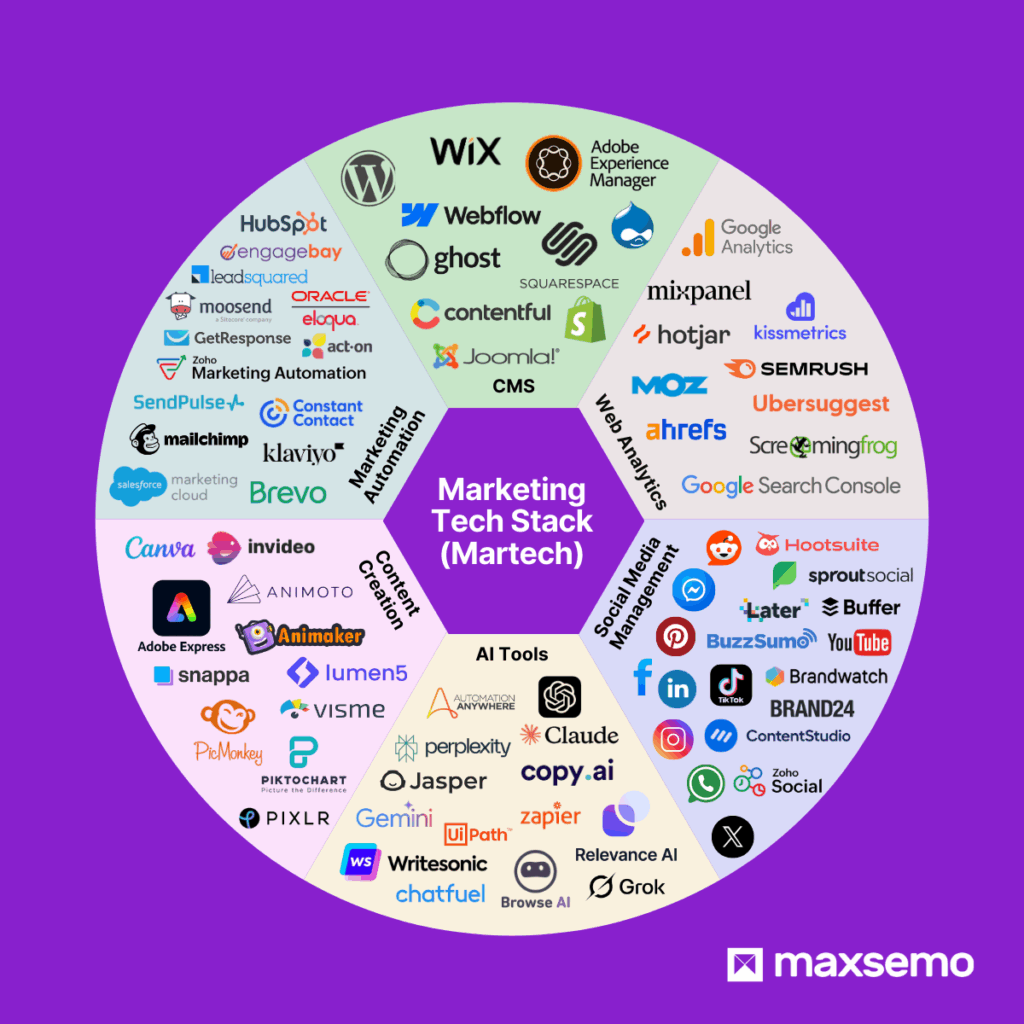
Your marketing platform needs will inevitably evolve as your business grows and market conditions shift. When selecting platforms, consider their scalability, but avoid over-engineering for future needs that are years away. Focus on modularity: can you swap out one component of your stack without requiring a complete rebuild of your entire system? Conduct a regular audit of your marketing technology stack, ideally annually or bi-annually. This audit should assess whether each tool is still serving your current needs, providing a clear return on investment, and integrating effectively. Be prepared to eliminate redundant or underutilized platforms to streamline operations and reduce unnecessary costs. marketing technology stack growth


Leave a Comment