

Navigating the AI landscape can feel overwhelming, especially for small to mid-sized businesses operating with lean teams and tight budgets. This guide cuts through the noise, focusing on the essential AI literacy your leadership team needs to make informed decisions, not just understand buzzwords. You’ll gain a pragmatic framework to identify genuine opportunities, prioritize impactful applications, and avoid costly missteps, ensuring your AI investments deliver tangible value.
Our goal is to equip you with the judgment to discern what truly matters for your specific business context, allowing you to leverage AI effectively without needing to become a data scientist. We’ll focus on actionable insights that help you allocate resources wisely and build a foundation for sustainable growth.
What AI Literacy Means for Your Business
For business leaders, AI literacy isn’t about coding or deep technical expertise. It’s about understanding AI’s capabilities, its inherent limitations, and the ethical implications of its use. Fundamentally, it’s about problem-solving: identifying specific business challenges that AI can realistically address within your operational constraints.
Key areas of focus include recognizing the data requirements for effective AI, understanding its potential for automation, and discerning where it can provide predictive insights. This foundational understanding enables strategic thinking, allowing you to evaluate AI solutions based on their practical impact rather than just their perceived sophistication.
Prioritizing Core AI Concepts
With limited resources, focus on AI concepts that offer clear, immediate utility:
- Machine Learning (ML) Fundamentals: Grasp the distinction between supervised learning (training AI with labeled data for specific tasks like classification or prediction) and unsupervised learning (finding patterns in unlabeled data). For most SMBs, supervised learning offers more immediate, clear business applications such as customer segmentation, lead scoring, or fraud detection.
- Natural Language Processing (NLP): Understand how AI processes and generates human language. This is highly impactful for customer service (chatbots, sentiment analysis) and marketing (content generation, summarization).
- Automation & Robotic Process Automation (RPA): Recognize how AI can drive automation of repetitive, rule-based tasks. This often yields immediate efficiency gains in areas like data entry, report generation, or scheduling.
- Data Foundation: Critically, AI is only as effective as the data it’s trained on. Prioritize understanding data quality, collection methods, and basic data governance. This often-overlooked aspect is paramount for any successful AI initiative.
What often gets overlooked is that the “Data Foundation” isn’t a one-time setup; it’s an ongoing operational commitment. Initial data cleanup is merely the first step. As your business evolves, new systems are introduced, and staff changes, maintaining data integrity becomes a continuous, resource-intensive task. Neglecting this leads to a phenomenon known as “data drift” or “concept drift,” where models trained on past data slowly become less accurate over time. This silent degradation necessitates costly re-training, troubleshooting, and often, a complete re-evaluation of your data pipelines—a significant delayed consequence that can derail an otherwise promising AI initiative.
Another common pitfall lies in the human element of AI adoption. Even a technically robust AI solution can fail if the team meant to use it doesn’t integrate it into their daily workflow. This isn’t a technical flaw but an operational one, often stemming from insufficient training, poor integration with existing tools, or a lack of trust in the AI’s outputs. The frustration of learning cumbersome new systems or constantly having to correct AI-generated errors can quickly outweigh any perceived benefits, leading to shadow processes or outright abandonment. The AI must not only work, but it must work for the people using it, reducing friction rather than adding it.
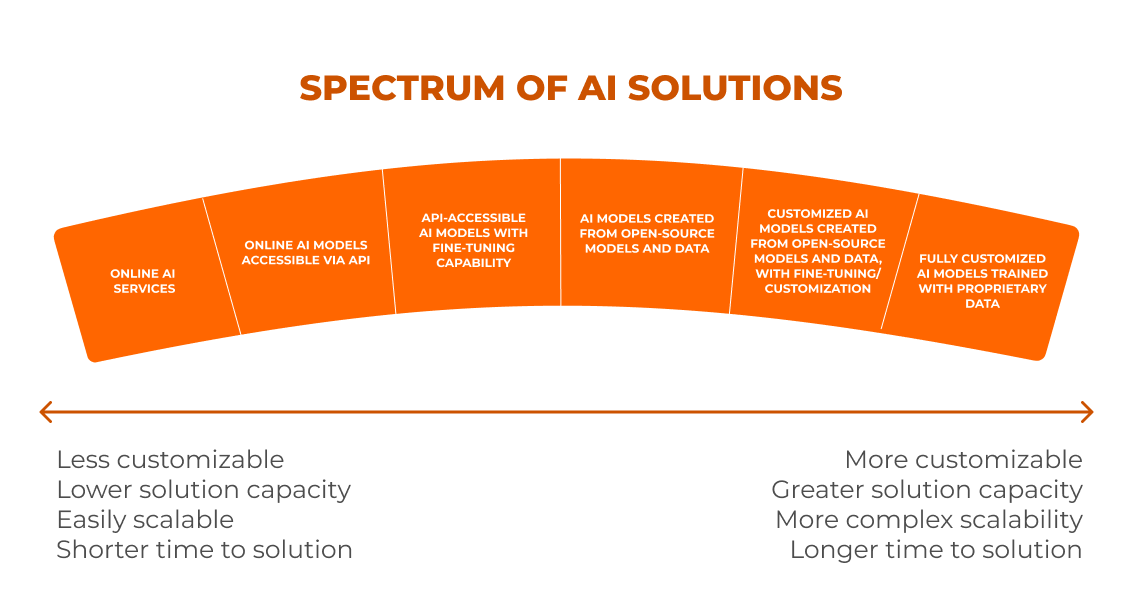
For most small to mid-sized businesses, it’s critical to deprioritize the pursuit of cutting-edge, bespoke AI solutions, especially those involving complex generative models or custom large language models. While these technologies are powerful, the practical reality is that the expertise, vast data volumes, computational resources, and continuous fine-tuning required are often prohibitive. The time and money spent chasing these often yield minimal tangible returns compared to focusing on simpler, proven supervised learning applications that solve specific, immediate business problems. Prioritize integrating existing, mature AI capabilities where they offer a clear, measurable advantage, rather than attempting to build bleeding-edge solutions from scratch.
Practical Applications: Where to Start
Begin with AI applications that address well-defined problems and have accessible data:
- Customer Service Automation: Implement AI-powered chatbots for handling frequently asked questions, routing inquiries, or providing instant support. This significantly reduces the load on human agents and improves response times.
- Marketing Personalization: Leverage AI for advanced audience segmentation, product recommendations, and optimizing ad campaign performance. This can lead to higher conversion rates and more efficient ad spend.
- Content Generation & Optimization: Utilize AI tools to draft initial marketing copy, blog outlines, social media posts, or optimize existing content for SEO. This accelerates content creation and improves its effectiveness.
- Internal Process Efficiency: Automate mundane administrative tasks like data entry, invoice processing, or report compilation. These small wins accumulate into significant time and cost savings.
The decision point here is to start with areas where data is readily available and the problem is clearly defined. Focus on low-hanging fruit that can demonstrate tangible ROI quickly, building internal confidence and momentum.
What often gets overlooked in the pursuit of these initial wins is the true state of “accessible data.” While data might exist, it’s rarely in a pristine, AI-ready format. The hidden cost here isn’t just the tool’s subscription; it’s the significant, often manual, effort required to clean, normalize, and structure that data before any AI model can reliably use it. This data preparation phase can quickly become a resource drain, leading to team frustration and delayed timelines, especially for lean teams already stretched thin.
Furthermore, a common pitfall when chasing individual “low-hanging fruit” is the creation of fragmented solutions. Each successful AI deployment, while solving a specific problem, might operate in its own silo, using its own data sources and interfaces. Over time, this patchwork approach leads to integration headaches, inconsistent customer experiences, and a complex technical landscape that becomes difficult and expensive to maintain or scale. The initial quick win can inadvertently build technical debt, hindering future, more strategic AI initiatives.
Given these realities, it’s critical to deprioritize the impulse to deploy every seemingly easy AI application without first assessing its data readiness and potential for future integration. Instead of rushing to automate a single task with imperfect data, it’s often more pragmatic to invest in foundational data hygiene and a clearer understanding of how different AI components might eventually connect. Skipping this foundational work to chase immediate, isolated gains can create more problems than it solves down the line, turning what looked like a quick win into a long-term operational burden.
What to Deprioritize (and Why)
To avoid resource drain and maintain focus, several areas should be explicitly deprioritized by most small to mid-sized businesses today:
Complex, Custom AI Model Development: Unless you possess a dedicated in-house data science team and a substantial budget, avoid attempting to build bespoke AI models from scratch. The cost, time, and specialized expertise required are prohibitive for the vast majority of SMBs. Instead, leverage readily available, off-the-shelf AI tools, platforms, and APIs that are designed for specific business functions. These solutions are more cost-effective, faster to implement, and often more robust than anything you could build internally without significant investment.
“Bleeding Edge” Research & Development: Chasing the absolute latest AI research trends or highly experimental generative AI models is a distraction. While fascinating, these often lack the maturity, stability, and clear ROI needed for practical business application. Your focus should remain on proven AI applications that solve current, identifiable business problems, not speculative future capabilities. Prioritize stability and reliability over novelty.
AI for AI’s Sake: Never implement AI simply because it’s a popular trend. Every AI initiative must be directly tied to a clear business objective, whether that’s reducing operational costs, increasing revenue, improving customer satisfaction, or enhancing efficiency. Without a defined problem or a measurable goal, AI becomes an expensive and complex toy that consumes resources without delivering genuine value.
Building a Culture of Informed Experimentation
Foster an environment where teams feel empowered to explore and test AI tools within their existing workflows. Encourage small, controlled pilot projects with clear, measurable metrics to evaluate their effectiveness. This iterative approach allows for learning and adaptation without significant risk.
Crucially, cultivate a learning environment where both successes and failures are shared openly. Emphasize the ethical considerations of AI, including data privacy, potential biases, and the need for transparency in AI-driven decisions. Remember, AI literacy is an ongoing journey, not a one-time training event. AI tools for small business Machine learning basics
Sustaining Your AI Advantage
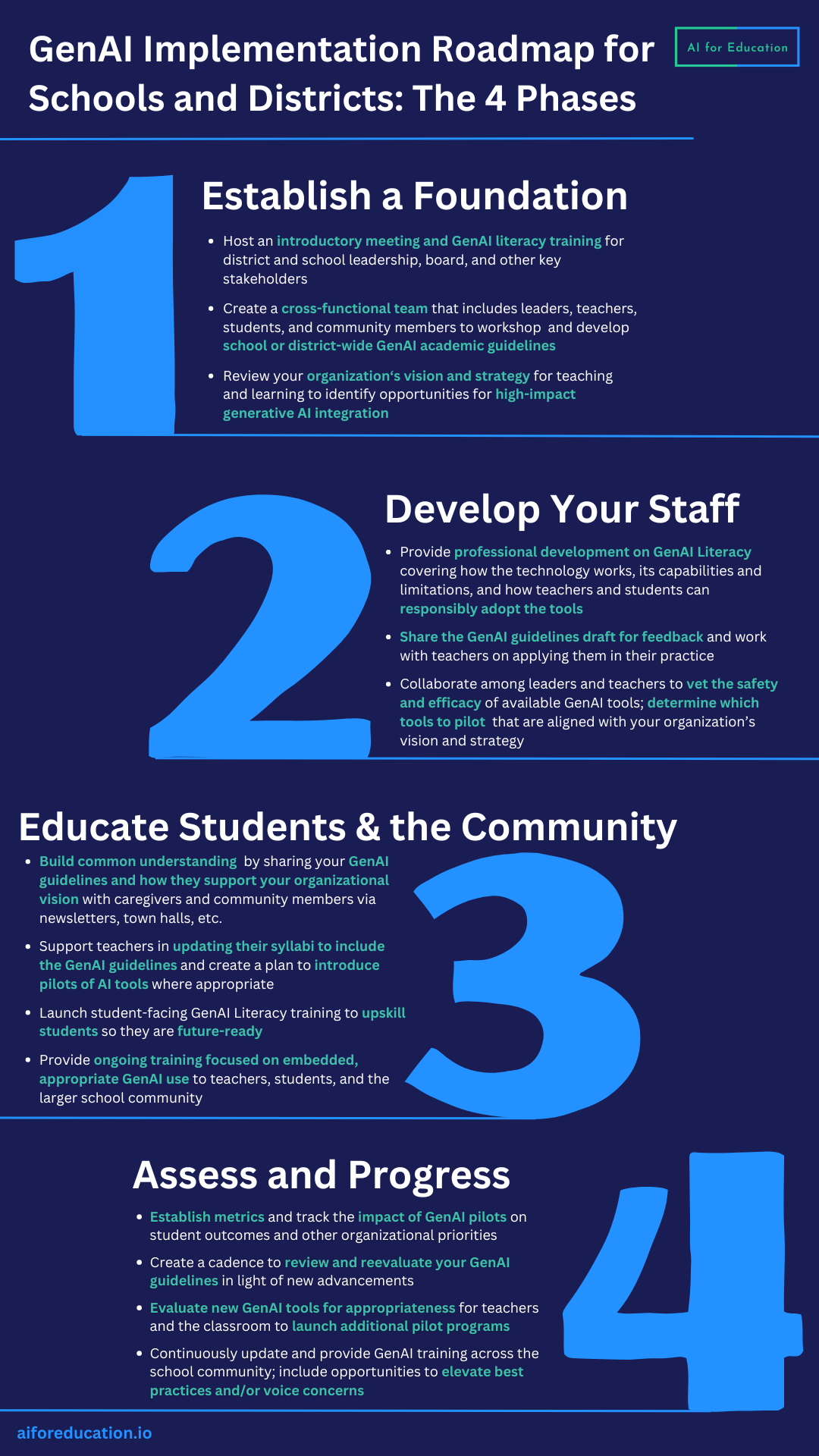
To ensure AI continues to deliver value, regularly review the performance and impact of your implemented AI tools. Stay updated on practical advancements and new solutions that directly address your business needs, rather than getting lost in theoretical discussions. Invest in continuous, targeted training for key personnel who interact with or manage AI systems.
Focus on integrating AI seamlessly into your existing operational systems and workflows, avoiding the creation of isolated AI silos. The ultimate goal is to make AI a fundamental, integrated part of your strategic operations, not a separate, standalone project.

1 Comment