


For small to mid-sized businesses, hyper-personalization isn’t just a buzzword for enterprise brands; it’s a practical necessity to stand out and maximize limited marketing budgets. By strategically applying AI tools, you can deliver highly relevant experiences to individual customers, making your marketing efforts more efficient and impactful.
This article cuts through the hype to provide actionable insights on how to implement AI-driven personalization, focusing on what truly works for teams with real-world constraints. You’ll learn where to invest your effort, what tools offer the best return, and what common pitfalls to sidestep.
Understanding Hyper-Personalization for SMBs
Hyper-personalization, at its core, means delivering content, offers, and experiences tailored to an individual customer’s real-time behavior, preferences, and context. For SMBs, this isn’t about building bespoke AI models from scratch. It’s about leveraging existing AI capabilities within marketing platforms to automate and scale what was once a manual, resource-intensive process.
The goal is to move beyond basic segmentation (e.g., age or location) to dynamic, behavior-driven interactions. Think about a customer browsing specific product categories on your site and then receiving an email with related recommendations, or seeing a dynamic hero banner reflecting their past purchases.
The AI Advantage: Making Limited Resources Go Further
AI’s primary benefit for personalization in an SMB context is efficiency. It automates the heavy lifting of data analysis, pattern recognition, and content matching that would otherwise require significant human hours. This allows smaller teams to:
- Analyze Customer Data at Scale: AI can process vast amounts of behavioral data (clicks, purchases, browsing history) far faster than humans, identifying subtle patterns and preferences.
- Automate Content & Offer Generation: Many AI tools can dynamically assemble personalized content blocks, product recommendations, or even adjust messaging based on individual profiles.
- Optimize Delivery & Timing: AI can predict the best time and channel to reach a customer, increasing engagement rates for emails, push notifications, or website pop-ups.
What often gets overlooked, however, is the foundational work required before AI can deliver on its promise. AI’s effectiveness is directly tied to the quality and structure of the data it consumes. For many SMBs, customer data is fragmented, inconsistent, or incomplete. The initial effort to clean, normalize, and integrate these disparate data sources into a usable format for AI can be substantial, often consuming more time and resources than anticipated. This isn’t a one-time fix; maintaining data hygiene is an ongoing operational overhead that can quickly erode the perceived efficiency gains if not properly managed.
Furthermore, while AI excels at pattern recognition, it doesn’t inherently provide strategic insight or explain why a particular personalization works. This ‘black box’ effect can lead to a dangerous over-reliance on algorithmic outputs without a deeper understanding of customer motivations. Teams might find themselves executing AI-driven campaigns that are technically effective but strategically opaque, making it harder to adapt when market conditions shift or customer preferences evolve in non-obvious ways. The risk here is trading immediate efficiency for a gradual erosion of human intuition and strategic agility.
Another common pitfall is the assumption that once an AI personalization system is configured, it runs autonomously forever. In practice, customer behavior isn’t static, and AI models can ‘drift’ over time, becoming less accurate or relevant. This necessitates continuous monitoring, periodic retraining, and refinement of the underlying algorithms and rules. Neglecting this ongoing maintenance can lead to stale personalization that feels generic or even irrelevant, ultimately diminishing customer experience and wasting the initial investment. The ‘set it and forget it’ mentality is a costly illusion in this domain.
Given these practical realities, SMBs should deprioritize chasing the most sophisticated, multi-channel, real-time personalization systems right out of the gate. The complexity of integrating diverse data streams and managing multiple AI models simultaneously can quickly overwhelm limited teams. Instead, focus on a single, well-defined personalization objective—like improving email open rates or website conversion on a specific product category—with clean, accessible data. Building competence and proving value in a contained environment is far more pragmatic than attempting an all-encompassing solution that quickly becomes an unmanageable drain on resources.
Core Applications of AI in Personalization
Focus your initial efforts on these high-impact areas where AI can deliver tangible results:
Dynamic Content & Product Recommendations
This is often the most accessible entry point. AI-powered recommendation engines, commonly found in e-commerce platforms or marketing automation suites, analyze browsing history, purchase data, and similar customer behavior to suggest relevant products or content. This can be implemented on product pages, in shopping carts, or as part of post-purchase follow-ups.
- Website Personalization: Dynamically alter website elements (banners, calls-to-action, product grids) based on visitor segments or individual behavior.
- Product Bundling: AI can identify complementary products that are likely to be purchased together, increasing average order value.
Personalized Email & Messaging Sequences
Email remains a cornerstone of SMB marketing. AI elevates this by personalizing not just the recipient, but the content, subject line, and send time. Tools can analyze engagement patterns to determine the optimal time to send an email for each individual, or suggest subject lines that are more likely to resonate.
- Behavioral Triggers: Automate emails based on specific actions, like abandoned carts, product views, or content downloads, with AI-optimized messaging.
- Lifecycle Campaigns: Personalize onboarding, re-engagement, and loyalty campaigns with dynamic content blocks relevant to each customer’s stage.
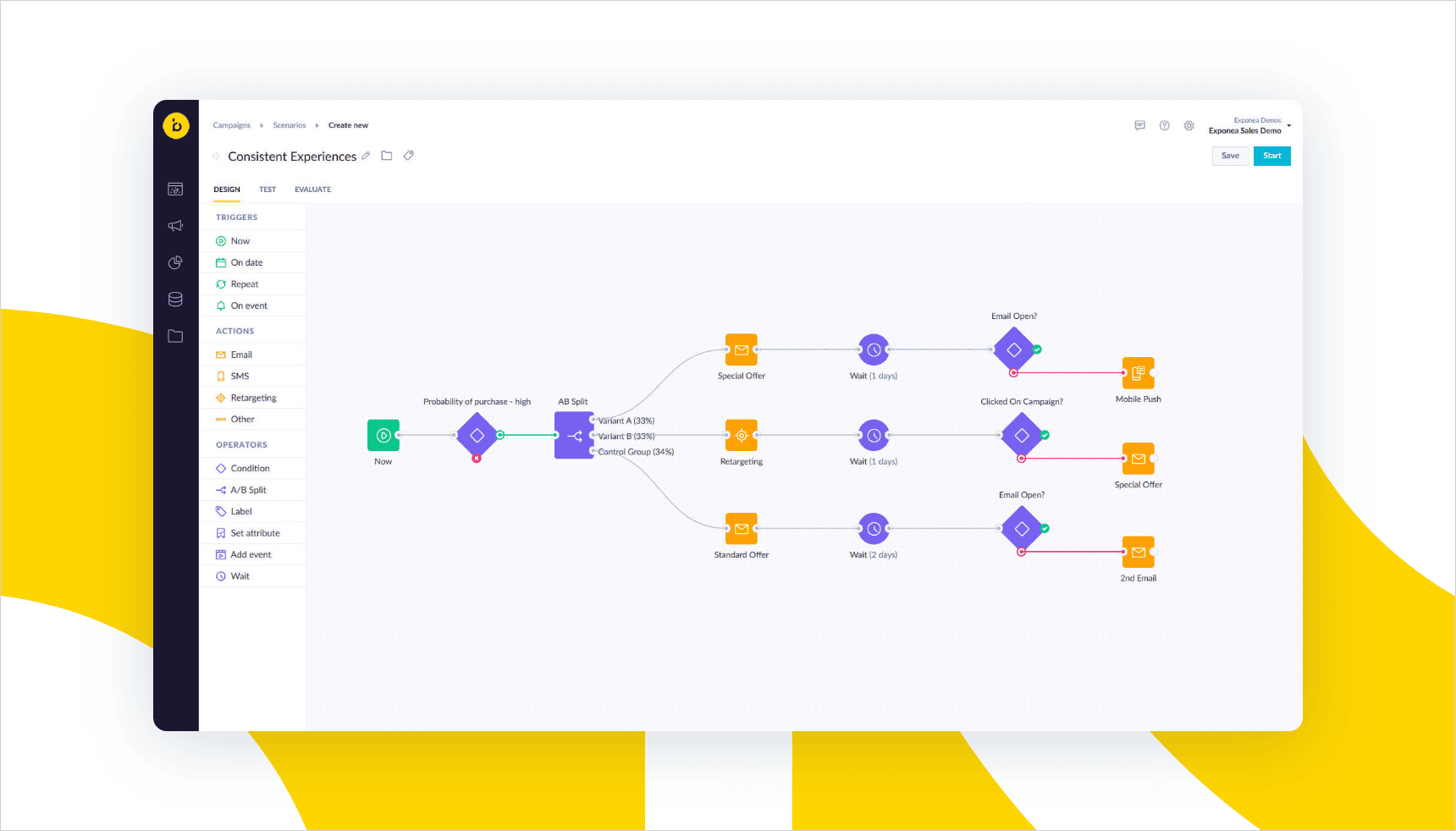
Predictive Customer Journey Mapping
While more advanced, some AI tools can analyze historical data to predict future customer behavior, such as churn risk or likelihood to purchase a specific product. This allows you to proactively intervene with targeted offers or support, rather than reactively addressing issues.
- Churn Prevention: Identify customers showing signs of disengagement and trigger personalized re-engagement campaigns.
- Next Best Action: Suggest the most relevant next step or offer for a customer based on their current journey stage and predicted needs.
While the promise of dynamic content and product recommendations is compelling, the practical reality for many SMBs hits a wall with data quality and integration. Recommendation engines are only as good as the data feeding them. Disparate systems—CRM, e-commerce, marketing automation—often hold fragmented customer data. Unifying this data into a clean, usable format is a significant, often underestimated, upfront investment. Without it, recommendations can quickly become irrelevant or repetitive, leading to customer frustration rather than engagement. This isn’t just about missing an opportunity; it’s about actively eroding trust when the system suggests items a customer just bought or has no interest in.
Another common pitfall, particularly with personalized messaging, is the line between helpful and intrusive. AI can identify deep patterns, but without careful human oversight, it can lead to “creepy” personalization. Suggesting products based on highly sensitive past behavior, or referencing obscure data points, can make customers feel monitored rather than understood. The pressure to maximize relevance can inadvertently push teams to leverage every available data point, forgetting that the goal is to enhance the customer experience, not just demonstrate technical capability. This can result in a backlash, leading to higher unsubscribe rates or negative brand sentiment, which is far more damaging than a generic message.
For many small to mid-sized teams, the allure of predictive customer journey mapping can be strong, but it’s often a trap. While the models can accurately predict churn or next best actions, the real challenge lies in operationalizing those predictions. A model telling you a customer is at high churn risk is only valuable if you have a clear, resourced, and effective intervention strategy ready to deploy. Without dedicated staff to design, implement, and iterate on these proactive campaigns, the predictions remain just data points. For most SMBs, it’s wiser to deprioritize complex predictive mapping in favor of mastering more immediate, behavior-triggered automations. Focus on perfecting abandoned cart sequences and basic re-engagement flows before investing heavily in predicting future states you might not have the capacity to act upon effectively. The risk of building a sophisticated prediction engine that sits idle due to lack of operational follow-through is high, making it a low-ROI endeavor for resource-constrained teams.
Building Your Foundation: Data & Tool Selection
Effective personalization hinges on good data. Your priority should be collecting and organizing first-party data – information you gather directly from your customers through website interactions, purchases, and direct communications. This is far more valuable than relying solely on third-party data.
When selecting tools, prioritize integrated platforms that can centralize customer data and offer built-in AI capabilities. For most SMBs, trying to stitch together multiple standalone AI tools or build custom models is an inefficient use of resources. Look for solutions that integrate with your existing CRM, e-commerce platform, or email marketing service. Examples include marketing automation platforms with integrated AI features or specialized personalization engines that connect seamlessly to your existing stack. AI marketing automation features
Strategic Implementation: Start Small, Scale Smart
Don’t try to personalize every touchpoint at once. Start with one or two high-impact areas where you have good data and can see measurable results quickly. For instance, begin with personalized product recommendations on your website or an abandoned cart email sequence with AI-optimized content.
Implement, test, analyze, and iterate. AI tools provide data on what’s working and what isn’t. Use these insights to refine your personalization strategies over time. A phased approach allows your team to learn and adapt without being overwhelmed.
What to Deprioritize (and Why)
For small to mid-sized teams, the biggest trap in AI personalization is over-engineering. You should absolutely deprioritize or skip trying to build complex, custom AI models from scratch. This requires specialized data science expertise, significant computational resources, and a clean, massive dataset that most SMBs simply don’t possess. The time and cost investment will far outweigh any potential benefit, diverting resources from more impactful activities.
Similarly, avoid chasing every new, niche AI tool that promises revolutionary results without clear integration paths or proven ROI for your business size. Focus on established, integrated platforms that offer out-of-the-box AI features designed for marketers, not data scientists. Your priority should be leveraging accessible AI to solve immediate business problems, not becoming an AI development shop.
Optimizing Your Personalization Engine
Once you’ve implemented initial personalization efforts, the work shifts to continuous optimization. Regularly review your analytics to understand which personalized experiences are driving engagement and conversions. A/B test different personalized messages, offers, and recommendation algorithms to fine-tune performance. The beauty of AI in this context is its ability to learn and improve with more data and feedback, making your marketing increasingly effective over time. This iterative process ensures your personalization efforts remain relevant and continue to drive growth.


Leave a Comment