


For small to mid-sized businesses, leveraging AI in SEO isn’t about replacing your team; it’s about amplifying their impact. This article cuts through the noise to show you how to strategically integrate AI tools to boost your SEO productivity and performance. You’ll gain practical insights on where to focus your limited resources, what delivers real-world results, and what common AI pitfalls to sidestep, ensuring your efforts translate into tangible business growth.
Currently, the landscape of AI tools for marketing is vast, but not all solutions offer equal value for resource-constrained teams. Our focus here is on pragmatic application and measurable outcomes.
Prioritizing AI Integration for Immediate SEO Impact
When resources are tight, the first step is identifying high-leverage tasks where AI can provide immediate relief and efficiency gains. Don’t aim for a complete overhaul; target specific pain points that consume significant manual effort or require extensive data processing.
- Content Ideation & Outline Generation: AI excels at brainstorming topics, generating diverse content ideas based on keywords, and structuring comprehensive outlines. This dramatically reduces the initial research phase for content creators.
- Keyword Clustering & Intent Analysis: Manually grouping keywords by topic and user intent is time-consuming. AI tools can analyze vast keyword lists, identify semantic relationships, and cluster them efficiently, revealing content opportunities and preventing keyword cannibalization.
- Basic Content Drafts & Rewrites: For foundational content, FAQs, or rephrasing existing text, AI can generate initial drafts. This isn’t about publishing AI-written content verbatim, but rather providing a strong starting point for human editors to refine and infuse with unique insights and brand voice.
- Technical SEO Auditing Assistance: AI-powered crawlers can quickly scan websites for common technical issues like broken links, crawl errors, duplicate content, or basic schema markup problems, flagging them for human review. This accelerates the diagnostic phase.
By focusing on these areas first, your team can free up valuable time for strategic thinking, in-depth content creation, and relationship building – tasks where human expertise remains irreplaceable.
Practical AI Applications That Deliver Real-World SEO Gains
Effective AI integration means augmenting human capabilities, not replacing them. Here’s how small teams can apply AI to achieve tangible SEO improvements:
- Content Augmentation, Not Automation: Use AI to generate multiple title options, meta descriptions, or introductory paragraphs. This provides variety and helps overcome writer’s block, but the final polish and strategic messaging must come from a human. For example, an AI might suggest ten different headlines, and your team selects and refines the best one.
- Enhanced Keyword Research & Competitive Analysis: AI tools can process massive amounts of search data to uncover long-tail keywords, identify emerging trends, and analyze competitor content gaps more efficiently. This allows for more precise targeting and content strategy. AI keyword research tools
- Personalized Content Recommendations: While advanced, some AI platforms can analyze user behavior data to suggest personalized content recommendations, potentially improving engagement and reducing bounce rates. For smaller teams, this might start with basic segmentation and AI-assisted content mapping.
- Automated Reporting & Anomaly Detection: AI can monitor SEO performance metrics, identify unusual spikes or drops in traffic or rankings, and alert your team. This allows for quicker responses to issues or opportunities without constant manual data review.
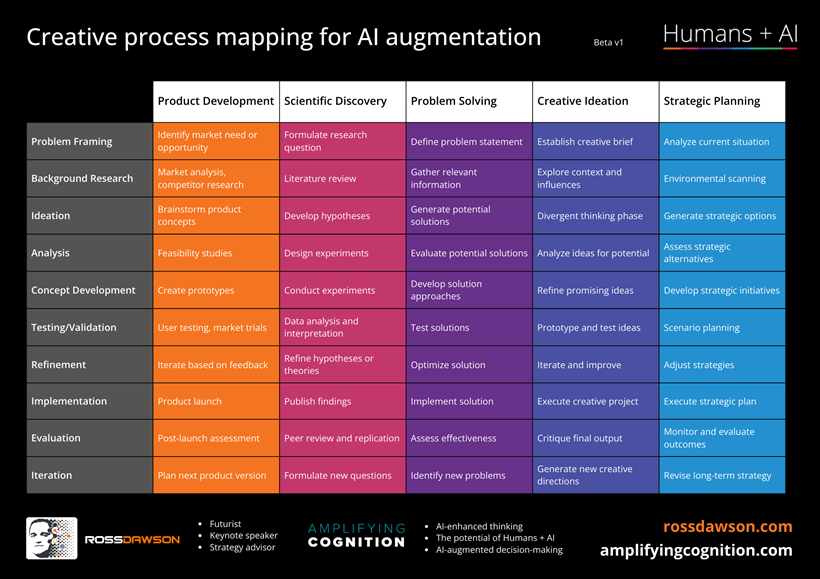
While AI promises efficiency, the reality often introduces hidden costs. For instance, the ‘final polish’ on AI-generated content can frequently demand more time and effort than anticipated. This isn’t just about minor edits; it often involves significant structural adjustments, factual verification, and a complete overhaul of tone to align with a specific brand voice. What starts as an augmentation tool can quickly become a remediation task, leading to team frustration and a subtle erosion of confidence in the AI’s practical utility.
Similarly, the power of AI to process massive datasets for keyword research can be a double-edged sword. While it uncovers a wealth of potential targets, the critical, human-led task of prioritizing those keywords based on business objectives, audience intent, and competitive viability remains paramount. Without a robust strategic filter, teams can easily fall into analysis paralysis, chasing high-volume but low-relevance terms, or trends that are simply too saturated for a small team’s resources to effectively penetrate.
A more insidious, second-order effect is the potential for over-reliance on AI to subtly degrade human critical thinking and strategic foresight. When AI consistently provides the initial draft or the first pass at analysis, practitioners might gradually lose the muscle memory for independent ideation, nuanced problem-solving, and the deep, contextual understanding that truly differentiates effective strategy. This isn’t about AI replacing roles, but about its potential to reshape the cognitive demands of those roles in ways that aren’t always beneficial for long-term team capability.
What to Deprioritize or Skip Today, and Why
For small to mid-sized teams, not every AI trend is worth pursuing. Prioritizing wisely means knowing what to delay or avoid altogether to prevent wasted resources and diluted effort.
Deprioritize full content automation without significant human oversight. While tempting, relying on AI to write entire articles from scratch and publishing them without extensive human editing is a critical mistake. AI-generated content often lacks the nuance, unique insights, original research, and authentic voice that Google’s helpful content systems reward. For teams with limited headcount, the burden of thoroughly editing and fact-checking AI output can easily outweigh the perceived time savings, leading to a flood of mediocre content that fails to rank or resonate with your audience. Your limited resources are better spent on fewer, higher-quality, human-led pieces augmented by AI, rather than a high volume of low-quality, fully automated content.
Avoid complex, expensive AI platforms with steep learning curves. Many enterprise-level AI solutions are overkill for small teams. The time and money required for implementation, training, and ongoing maintenance can quickly erode any potential benefits. Instead, focus on more accessible AI features integrated into existing SEO tools (like Ahrefs or Semrush) or simpler, purpose-built AI writing assistants that address specific, immediate needs without significant overhead.
Skip speculative AI predictions for algorithm updates. While AI can analyze historical data, accurately predicting future Google algorithm changes is largely speculative. Investing resources in tools or strategies based on such predictions is risky. A more pragmatic approach is to focus on creating high-quality, user-centric content and maintaining strong technical SEO foundations, which are consistently rewarded regardless of minor algorithm shifts.
Beyond the immediate content quality, an often-overlooked consequence of over-relying on AI for ideation and initial drafts is the subtle degradation of human skills within the team. When AI consistently provides the framework for articles, the muscle for original research, critical synthesis, and developing a truly unique brand voice can atrophy. Junior team members, in particular, may not develop the deep understanding of audience pain points or the nuanced ability to craft compelling narratives if AI is always doing the heavy lifting. This creates a long-term dependency and a skill gap, making the team less resilient when truly original, strategic thinking is required, or when AI tools inevitably shift or fail to deliver.
It’s also easy to overlook the internal pressure to “do AI” for its own sake, rather than for a clear strategic advantage. In theory, AI promises efficiency; in practice, teams often feel compelled to adopt AI tools simply because competitors are, or because leadership expects it. This can lead to what we call “AI-washing” – superficially integrating AI without the necessary human oversight or strategic alignment. The result is often a rushed workflow where AI-generated content is pushed through with minimal review, not because it’s good, but because it fulfills a quota. This creates significant frustration within marketing teams, who are forced to compromise on quality, potentially damaging brand reputation and eroding audience trust over time, all while feeling like they’re constantly fighting an uphill battle against generic output.
Integrating AI into Your Existing SEO Workflow
Successful AI integration isn’t about replacing your current processes but enhancing them. Start by identifying specific touchpoints where AI can streamline tasks without disrupting the entire workflow.
- Pilot Programs: Begin with a small, contained project. For instance, use an AI tool to generate five blog post outlines for your next content sprint. Evaluate the efficiency gains and quality improvements before scaling.
- Training & Guidelines: Provide clear instructions and best practices for your team on how to interact with AI tools. Emphasize that AI is a co-pilot, not an autopilot. Establish quality control checks for all AI-assisted outputs.
- Iterative Refinement: AI models improve with feedback. Encourage your team to provide specific critiques and adjustments to AI outputs. Regularly review the performance of AI-assisted content and adjust your prompts and processes accordingly.
- Tool Consolidation: Where possible, integrate AI features within tools your team already uses (e.g., your CMS, SEO platform, or project management software) to minimize context switching and learning curves.
Sustaining AI-Driven SEO Gains
Integrating AI is an ongoing process, not a one-time setup. To ensure long-term benefits, small teams must adopt a mindset of continuous optimization and strategic oversight.
- Regular Performance Review: Periodically assess the ROI of your AI tools and strategies. Are they truly saving time? Are they improving rankings, traffic, or conversions? Be prepared to pivot if a tool isn’t delivering.
- Stay Informed, Not Overwhelmed: The AI landscape evolves rapidly. Dedicate a small amount of time each month to stay updated on new developments, but critically evaluate their relevance to your specific business needs and resource constraints. AI tools for small business marketing
- Maintain Human Strategic Oversight: AI is a powerful tactical tool, but it lacks strategic vision, empathy, and the ability to understand complex business goals or brand nuances. Your human team must remain at the helm, guiding the AI, interpreting its outputs, and making the final strategic decisions.
- Focus on Adaptability: As AI technology matures and search engine algorithms evolve, your approach to AI integration will need to adapt. Build flexibility into your workflows to accommodate future changes without major disruptions.


Leave a Comment