

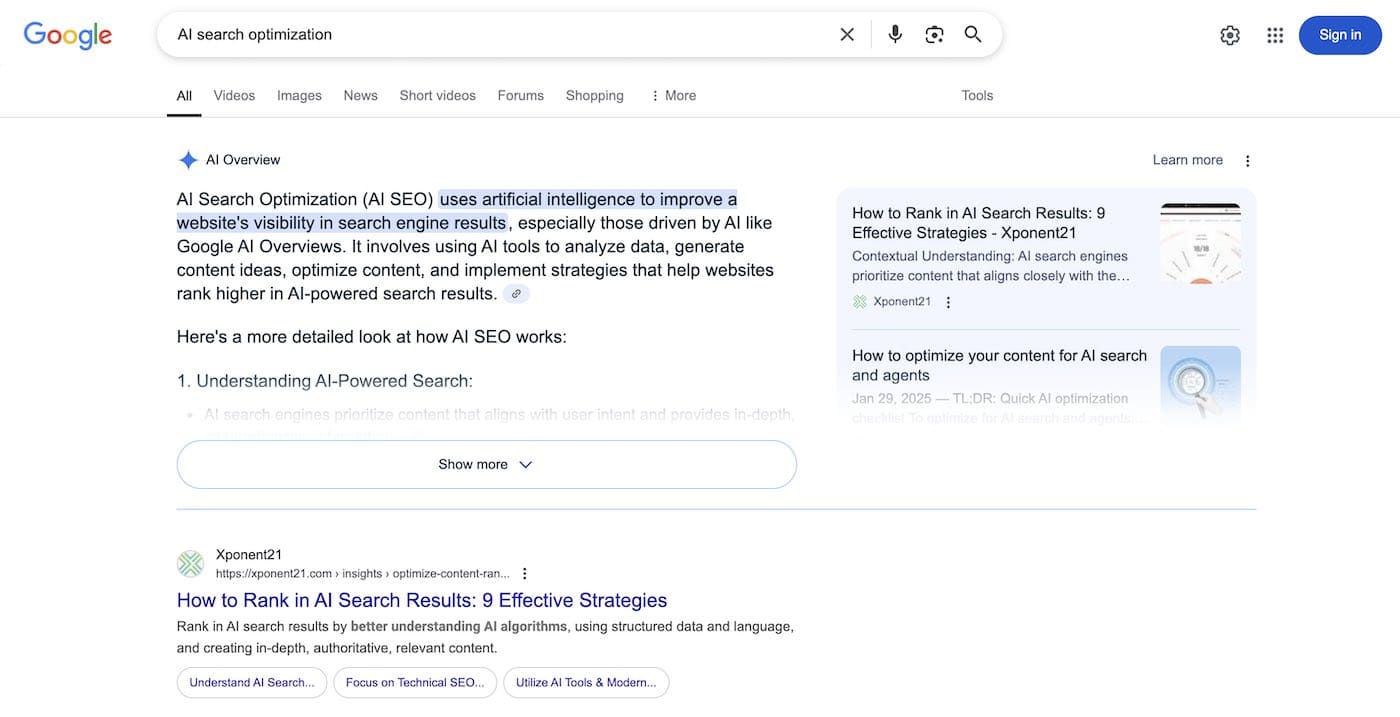
The shift towards AI Overviews in search results presents a new challenge for small and mid-sized businesses. This article cuts through the noise to provide actionable strategies for crafting content that actually gets seen in these generative snippets. You’ll learn how to prioritize your efforts, what content attributes matter most, and how to adapt your existing assets to gain visibility without overhauling your entire marketing operation.
Our focus is on practical application, helping you make smart trade-offs with limited resources. We’ll cover what works today, what to deprioritize, and how to build a content strategy that remains effective as generative AI continues to evolve.
Understanding the Generative Search Shift
AI Overviews are fundamentally changing how users consume information directly on the search results page. For businesses, this means the traditional ‘ten blue links’ are often preceded by a synthesized answer, potentially reducing clicks to individual websites if the overview sufficiently answers the query. This isn’t just another SERP feature; it’s a re-imagining of the search experience itself.
For small teams, the implication is clear: your content needs to be not just discoverable, but also extractable and synthesizable by AI models. This demands a shift from simply ranking for keywords to providing clear, authoritative, and structured answers that an AI can confidently pull from. The goal isn’t just to appear on the first page, but to be the source material for the AI’s direct answer.
Prioritizing Content for AI Overview Visibility
With limited resources, you can’t optimize everything. Focus your efforts where they’ll have the most impact:
Direct Answer Queries: Identify queries where users are looking for a specific, factual answer (e.g., “how to install X,” “best Y for Z,” “what is A”). These are prime candidates for AI Overviews.
Comparison & Review Content: AI Overviews often summarize pros, cons, and key differences. Content that clearly compares products, services, or solutions is valuable.
“How-To” Guides & Step-by-Step Instructions: Structured, easy-to-follow guides are ideal for AI to break down into actionable steps.
Definition & Explainer Content: Pages that clearly define industry terms, concepts, or processes are frequently pulled into generative summaries.
Start by auditing your existing content for these types of queries. Look for pages that already rank well or have high traffic, as these are strong candidates for optimization.
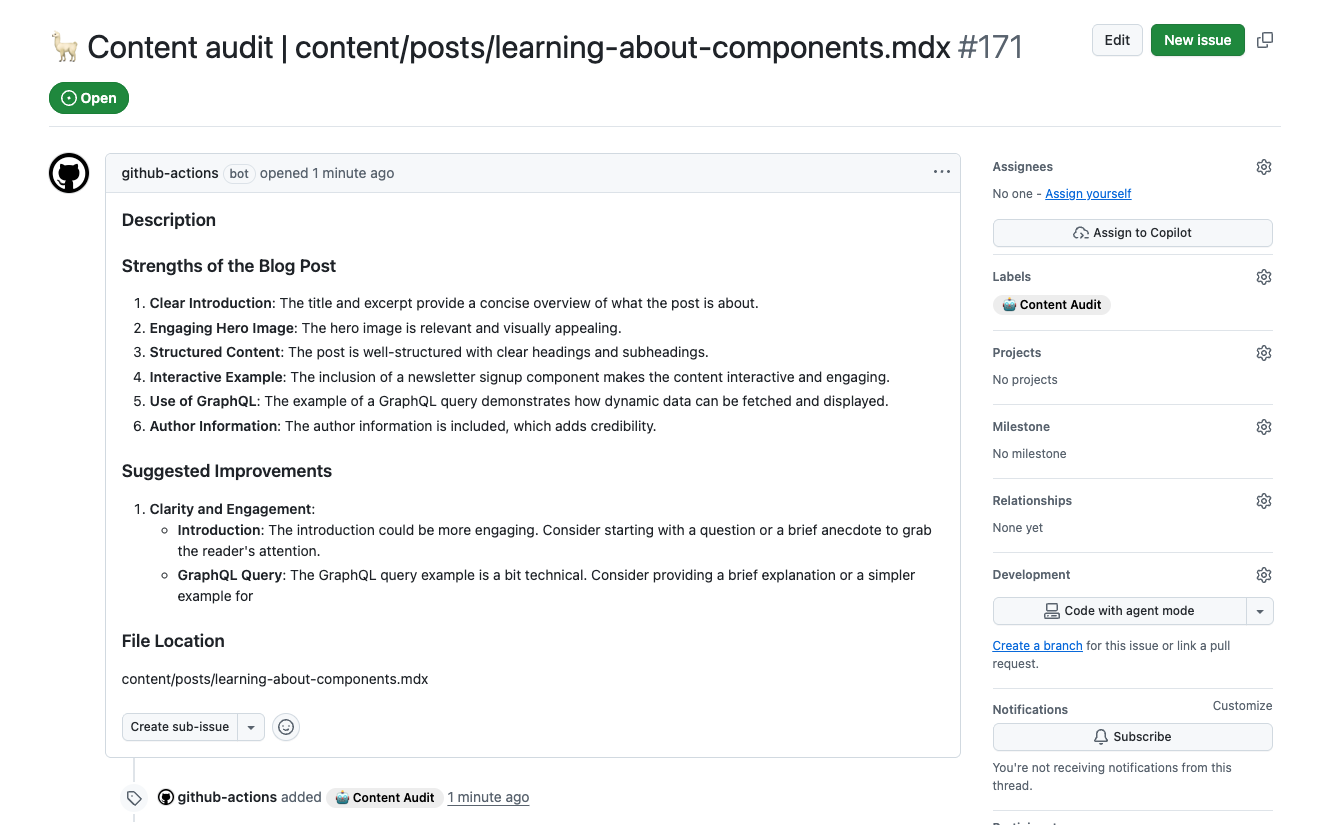
However, simply identifying these content types is only the first step. The critical, often overlooked, detail is how that information is structured and presented. AI Overviews thrive on clarity, conciseness, and explicit answers. Many businesses have valuable information buried in long paragraphs, fragmented across multiple pages, or presented without clear headings and bullet points. The theoretical idea of ‘having a how-to guide’ quickly hits the practical wall of ‘is this guide actually scannable and extractable by an algorithm?’ If the content requires significant human interpretation to find the core answer, it’s less likely to be effectively summarized.
This also introduces a hidden cost: ongoing maintenance. Content optimized for AI Overviews isn’t a ‘set it and forget it’ asset. As information evolves, products change, or best practices shift, the accuracy of your summarized content becomes paramount. An AI Overview pulling outdated or incorrect information directly from your site can erode trust faster than if a user had to dig for it themselves. The downstream effect is a potential hit to your brand’s authority, making future efforts to establish expertise more challenging.
Furthermore, the temptation to chase every potential AI Overview opportunity can lead to content sprawl and diluted effort. Teams with limited bandwidth often feel pressure to optimize everything that could be summarized. A pragmatic approach means recognizing that not every piece of content, even if it fits the categories above, warrants the investment. Deprioritize content that addresses highly niche queries with minimal search volume, or content that is inherently subjective and less amenable to factual summarization. The goal isn’t to be in every AI Overview, but to be in the ones that genuinely drive qualified traffic and support business objectives, even if that means consciously leaving some opportunities on the table for now.
Key Content Crafting Principles for AI Overviews
Clarity and Conciseness are Paramount
AI models excel at extracting precise information. Your content must be unambiguous and to the point. Avoid lengthy introductions or tangential discussions. Get straight to the answer, then elaborate. Use short sentences and paragraphs.
Demonstrate Authority and Trustworthiness (E-E-A-T)
Google’s emphasis on Experience, Expertise, Authoritativeness, and Trustworthiness (E-E-A-T) is even more critical for AI Overviews. Ensure your content is backed by credible sources, written by knowledgeable individuals, and free from factual errors. Clearly state your credentials or experience where relevant. This signals to AI models, and ultimately users, that your information is reliable. Google Search quality rater guidelines
Structured Data and Semantic HTML
This isn’t just about schema markup, though that remains important. It’s about using HTML elements correctly to signal structure and hierarchy. Utilize:
<h2>,<h3>,<h4>tags for clear sectioning.<ul>and<ol>for lists.<p>tags for distinct paragraphs.Tables for presenting comparative data or structured information.
This makes it easier for AI to parse and understand the relationships between different pieces of information on your page.
Address User Intent Directly and Comprehensively
Anticipate the primary question a user has, answer it directly, and then address logical follow-up questions within the same content. Think about the user’s journey: if they ask “what is X?”, they might next ask “how does X work?” or “what are the benefits of X?”. A well-structured piece of content can answer all these related queries, making it a richer source for AI.
While the push for clarity and conciseness is valid, it often leads to a practical dilemma: how much context is too much? The danger isn’t just verbosity, but the accidental omission of crucial nuance. Stripping content down to its bare bones for AI extraction can inadvertently remove the very details that differentiate your expertise or fully explain a complex concept. This isn’t about adding fluff; it’s about recognizing that a truly comprehensive answer, even for an AI, sometimes requires a slightly longer explanation to prevent misinterpretation or oversimplification. Teams often feel the pressure to hit a word count target for brevity, but overlook the point where conciseness begins to erode accuracy or completeness for the human reader who eventually lands on the page.
The emphasis on E-E-A-T, while critical, presents a non-obvious challenge for lean teams: it’s not enough to be an authority; you must demonstrate it consistently and visibly. Many small businesses have genuine expertise but fail to surface it effectively. This isn’t just about author bios, but about the cumulative signal of your entire site — from your “About Us” page to how consistently your content is updated and reviewed. A common failure mode is having excellent content written by an expert, but without clear attribution or a robust site-wide signal of trustworthiness, the AI may not fully recognize its E-E-A-T value. The hidden cost here is the missed opportunity for your content to be prioritized, simply because the signals of authority are weak or inconsistent across the broader site architecture.
The drive for structured data and direct answers can also lead to a subtle, second-order problem: content that feels overly prescriptive or robotic. While AI models benefit from clear hierarchies and explicit answers, humans still read your full articles. If every piece of content is engineered solely for AI extraction, it risks losing the natural flow, engaging voice, and storytelling elements that build a connection with your audience. The long-term consequence is content that might perform well in AI overviews but struggles to convert or retain human readers once they click through, ultimately undermining the broader marketing goals. Balancing machine-readability with human engagement is a constant tension, and prioritizing one too heavily often comes at the expense of the other.
What to Deprioritize (and Why)
For small to mid-sized teams, resource allocation is critical. Today, you should significantly deprioritize content that is overly promotional, vague, or purely opinion-based without clear factual support. AI Overviews are designed to provide objective, synthesized information, not marketing copy or subjective takes. Content that relies heavily on keyword stuffing or thin, unoriginal ideas will not only fail to appear in AI Overviews but may also see reduced visibility in traditional search results. Focus on utility and factual accuracy over volume or sales-driven fluff. Creating content solely for speculative, long-tail AI queries without existing search volume is also a low-ROI activity; prioritize optimizing for known user intent first.
Operationalizing Your AI Overview Strategy
Integrating this into your workflow doesn’t require a complete overhaul. Start with an audit of your top-performing content. Identify pages that align with the prioritized content types (direct answers, how-tos, comparisons). For these pages:
Refine Clarity: Edit for conciseness. Remove jargon. Ensure the core answer is immediately apparent.
Enhance Structure: Add or refine headings, lists, and tables. Break down complex ideas into digestible chunks.
Boost E-E-A-T: Add author bios, link to reputable sources, update statistics, and ensure accuracy.
Anticipate Follow-ups: Review user questions on forums, “People Also Ask” boxes, and related searches to expand your content to cover common follow-up queries.
For new content, adopt these principles from the outset. This iterative approach allows you to leverage existing assets while building a more robust foundation for future generative search visibility.
Measuring Success and Adapting
Tracking performance for AI Overviews requires looking beyond traditional organic traffic. While direct traffic from AI Overviews might be hard to isolate, you can monitor:
SERP Feature Tracking: Use tools like Semrush or Ahrefs to see if your content is appearing in featured snippets, knowledge panels, or direct answer boxes, which are precursors to AI Overview inclusion. SERP features tracking
Query Performance: Analyze Google Search Console for queries where your content is gaining impressions or clicks, especially those that are informational or question-based.
Engagement Metrics: While direct clicks might decrease for some queries, look at on-page engagement (time on page, scroll depth) for users who do click through. High engagement signals that your content is valuable even if the initial answer was provided by AI.
The generative search landscape is dynamic. Regularly review your top-performing content and adapt based on what the AI Overviews are surfacing. This isn’t a one-time fix, but an ongoing optimization process.


Leave a Comment