

The shift to generative AI in search isn’t just a technical update; it’s a fundamental change in how users find information and how your content earns visibility. For small to mid-sized businesses, this means your content must not only be relevant but also demonstrably trustworthy and authoritative. This article will guide you through practical, actionable strategies to build that essential trust, helping your content stand out and drive real business outcomes in today’s AI-driven search environment.
You’ll gain clear insights into prioritizing your efforts, understanding what truly works for lean teams, and identifying common pitfalls to avoid. Our focus is on tangible benefits: improving your content’s credibility, enhancing its discoverability by AI models, and ultimately, securing your position as a reliable source in your niche, even with limited resources.
What Generative Search Means for Your Content
Generative search, powered by large language models, is fundamentally changing the search experience. Instead of just a list of links, users often receive synthesized answers directly within the search interface. This means AI models are actively interpreting, summarizing, and presenting information. For your content to be included in these summaries or to be linked as a primary source, it must be perceived as highly credible and authoritative by the AI itself.
The implication for SMBs is clear: simply optimizing for keywords isn’t enough. Your content needs to demonstrate a deeper level of expertise and trustworthiness. AI models are trained on vast datasets, and they learn to identify patterns of authority. If your site consistently produces high-quality, well-researched, and clearly attributed content, you’re building the signals that AI values. This isn’t about gaming the system; it’s about genuinely earning the trust of both human users and the algorithms that serve them.
Prioritizing E-E-A-T in an AI-Driven Landscape
Experience, Expertise, Authoritativeness, and Trustworthiness (E-E-A-T) has always been important for SEO, but in the generative search era, it’s non-negotiable. AI models are designed to surface the most reliable information, and E-E-A-T is the framework they use to assess that reliability. For SMBs, this means every piece of content needs to clearly communicate who created it, why they’re qualified, and why the reader should trust it. This isn’t just about a byline; it’s about the entire content ecosystem.
Focusing on E-E-A-T helps you create content that AI models are more likely to select for generative answers or to rank highly. It’s a strategic investment that pays dividends in visibility and brand reputation. Without a strong E-E-A-T foundation, your content risks being overlooked in favor of more established, trusted sources, regardless of its keyword optimization.
Demonstrate Experience: Share first-hand accounts, case studies, and practical advice derived from real-world application. This shows you’ve actually done what you’re writing about.
Showcase Expertise: Ensure content is written or reviewed by individuals with verifiable qualifications or deep industry knowledge. Clearly state their credentials.
Build Authoritativeness: Consistently produce high-quality, accurate content that is frequently cited or referenced by others in your niche. This builds your reputation over time.
Cultivate Trustworthiness: Be transparent, provide accurate information, cite sources, and maintain a secure, professional website. Ensure your contact information is clear and accessible. E-E-A-T guidelines
The practical challenge for many SMBs isn’t just understanding E-E-A-T, but operationalizing it within existing constraints. It demands a fundamental shift from a volume-driven content strategy to one prioritizing depth and verifiable quality. This often translates to a slower content pipeline, which can feel counter-intuitive and generate internal pressure when teams are accustomed to pushing out content frequently. The upfront investment in deep research, expert interviews, and rigorous fact-checking is substantial and frequently underestimated, leading to difficult trade-offs when budgets and headcount are already stretched thin.
A common, yet non-obvious, failure mode is the compounding disadvantage of a superficial E-E-A-T approach. If content isn’t genuinely backed by first-hand experience and verifiable expertise, it will struggle to earn the organic backlinks, mentions, and social shares from credible sources that truly build “Authoritativeness.” This lack of external validation then prevents the content ecosystem from maturing, trapping the business in a cycle where their efforts, despite good intentions, never truly gain the traction needed to compete with more established players. It’s a long-term erosion of potential, not an immediate crash.
Furthermore, the human element often creates friction. The individuals within an SMB who possess the deepest experience and expertise are typically the busiest with client work, product development, or core operations. Bridging the gap between these subject matter experts (SMEs) and the content creation team becomes a significant internal coordination challenge. Overlooking this bottleneck means marketing teams are either forced to dilute the expert voice, delay publication, or burn out internal resources trying to extract the necessary insights, leading to frustration and inconsistent E-E-A-T signals.
Practical Steps to Build Trust and Authority
For small and mid-sized teams, building authority isn’t about having a massive content budget; it’s about strategic execution and consistency. Here’s where to focus your limited resources:
Clear Authorship & Bios: Every piece of content should have a clear author. Include a concise, credible author bio that highlights their relevant experience and expertise. Link to their professional profiles (e.g., LinkedIn) if appropriate. This humanizes your content and signals expertise to AI.
Data-Backed & Referenced Content: Support claims with verifiable data, studies, or expert opinions. Cite your sources clearly. This isn’t just good practice; it’s a direct signal of trustworthiness to AI models. Use internal data where possible to showcase unique insights.
Original Research & Insights: Even small businesses can conduct simple surveys, analyze their own customer data, or share unique perspectives based on their operational experience. Original content that can’t be found elsewhere is a powerful authority builder.
User-Generated Content & Testimonials: Integrate customer reviews, testimonials, and case studies directly into your content strategy. This provides social proof and demonstrates real-world experience with your products or services, boosting trustworthiness.
Content Updates & Accuracy: Regularly review and update existing content to ensure accuracy and relevance. Outdated information erodes trust. A clear content audit and update schedule is crucial.
Website Security & Professionalism: Ensure your website is secure (HTTPS), loads quickly, and offers a professional user experience. Technical trust signals are foundational for content trust.
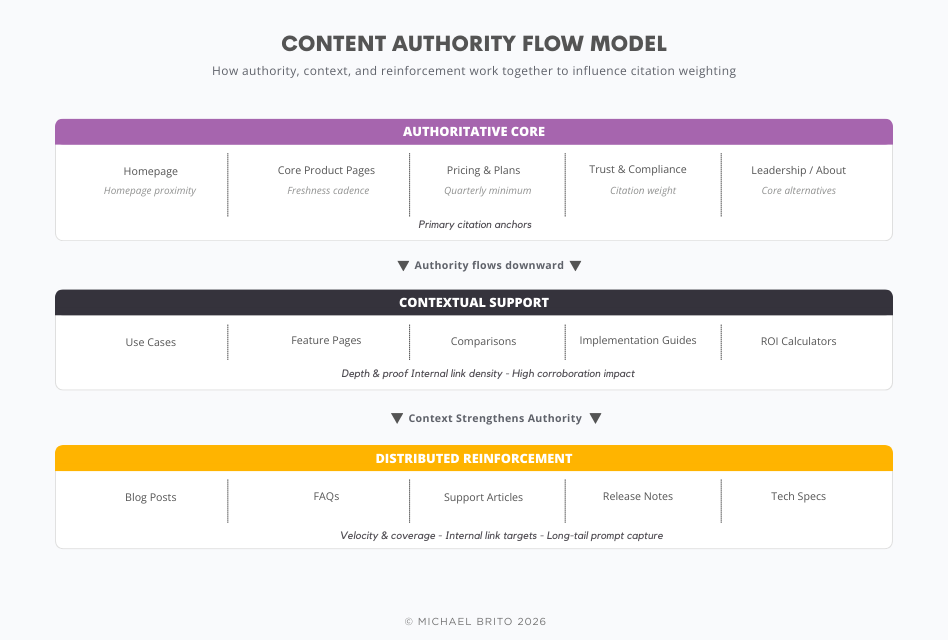
What often gets overlooked in the pursuit of these trust signals are the operational friction points and the human element. For instance, while clear authorship is critical, it can quickly become a bottleneck. Small teams often have a limited pool of true subject matter experts, and relying heavily on one or two individuals for all authoritative content can lead to significant delays or burnout. The pressure to consistently produce expert-level content under a specific author’s name can be immense, sometimes forcing content to sit in draft form rather than being published with a less ‘expert’ but still knowledgeable contributor.
Similarly, the directive to use data-backed and referenced content, while sound in theory, presents practical challenges. Sourcing truly robust, unbiased, and recent data takes considerable time and discernment—resources small teams rarely have in abundance. It’s easy to fall into the trap of citing easily accessible but ultimately weak or outdated sources, which can subtly erode trust rather than build it. Furthermore, interpreting internal data for unique insights requires a level of analytical rigor that often exceeds the capacity of marketing teams, leading to either superficial analysis or a complete avoidance of this powerful trust signal.
The commitment to regular content updates and accuracy is another area where theory often diverges from practice. While an audit schedule sounds proactive, in the day-to-day grind, updating existing content frequently gets deprioritized in favor of creating new material. This creates a hidden debt: over time, a growing library of outdated content becomes a liability, slowly undermining the authority you’ve worked to build. The decision of what to update, what to archive, and how much effort to invest in each piece can become a source of decision fatigue, leading to a ‘set it and forget it’ mentality that ultimately works against long-term trust and authority.
What to Deprioritize and Why
Given limited budgets and headcount, small to mid-sized businesses must be ruthless in their prioritization. Today, you should deprioritize chasing every new AI content generation tool or over-automating your content creation process without significant human oversight. While AI tools can assist, relying solely on them to churn out content at scale without a human expert’s review and unique insights will likely backfire. Generative AI models are becoming increasingly adept at identifying AI-generated content that lacks true E-E-A-T. Such content often feels generic, lacks original thought, and fails to demonstrate genuine experience. Investing heavily in quantity over quality, especially if that quantity is produced by AI without a strong human editorial layer, will dilute your brand’s authority and make it harder for your truly valuable content to stand out in generative search results. Focus your AI tool budget on augmentation, not full automation, for now.
Measuring Content Authority in the New Era
Measuring content authority goes beyond traditional keyword rankings. While rankings are still relevant, you need to look at a broader set of indicators to understand your impact in the generative search era.
Generative Snippet Inclusion: Track instances where your content is directly cited or summarized in generative AI search results. This is a direct indicator of AI trust.
Brand Mentions & Citations: Monitor how often your brand, experts, or content are mentioned and linked to by other reputable sites. Tools like Ahrefs or Semrush can help here. backlink analysis
Engagement Metrics: Look at time on page, bounce rate, and social shares for your authoritative content. High engagement suggests users find your content valuable and trustworthy.
Direct Traffic & Brand Search: An increase in direct traffic and searches for your brand name indicates growing recognition and trust in your authority.
Expert Recognition: Are industry peers or publications referencing your team members as experts? This external validation is a strong signal of authority.

Leave a Comment