

For small to mid-sized businesses, the promise of AI in SEO isn’t about replacing your team; it’s about amplifying their impact. This article cuts through the hype to show you how to practically integrate AI tools into your SEO operations, making your limited resources go further. You’ll learn where AI delivers real efficiency gains today, helping you make smarter decisions, prioritize tasks effectively, and ultimately drive more organic growth without needing a massive budget or an army of specialists.
We’ll focus on actionable strategies that fit within real-world constraints, emphasizing what truly moves the needle for businesses operating with lean teams and imperfect execution. Consider this your pragmatic guide to leveraging AI for SEO, focusing on impact over theoretical completeness.
Where AI Delivers Real SEO Value Today
In early 2026, AI’s most significant contributions to SEO for small teams lie in automation and augmentation, not full autonomy. It excels at data processing, pattern recognition, and generating structured outputs that human practitioners then refine and act upon. Here are the areas where AI currently offers tangible benefits:
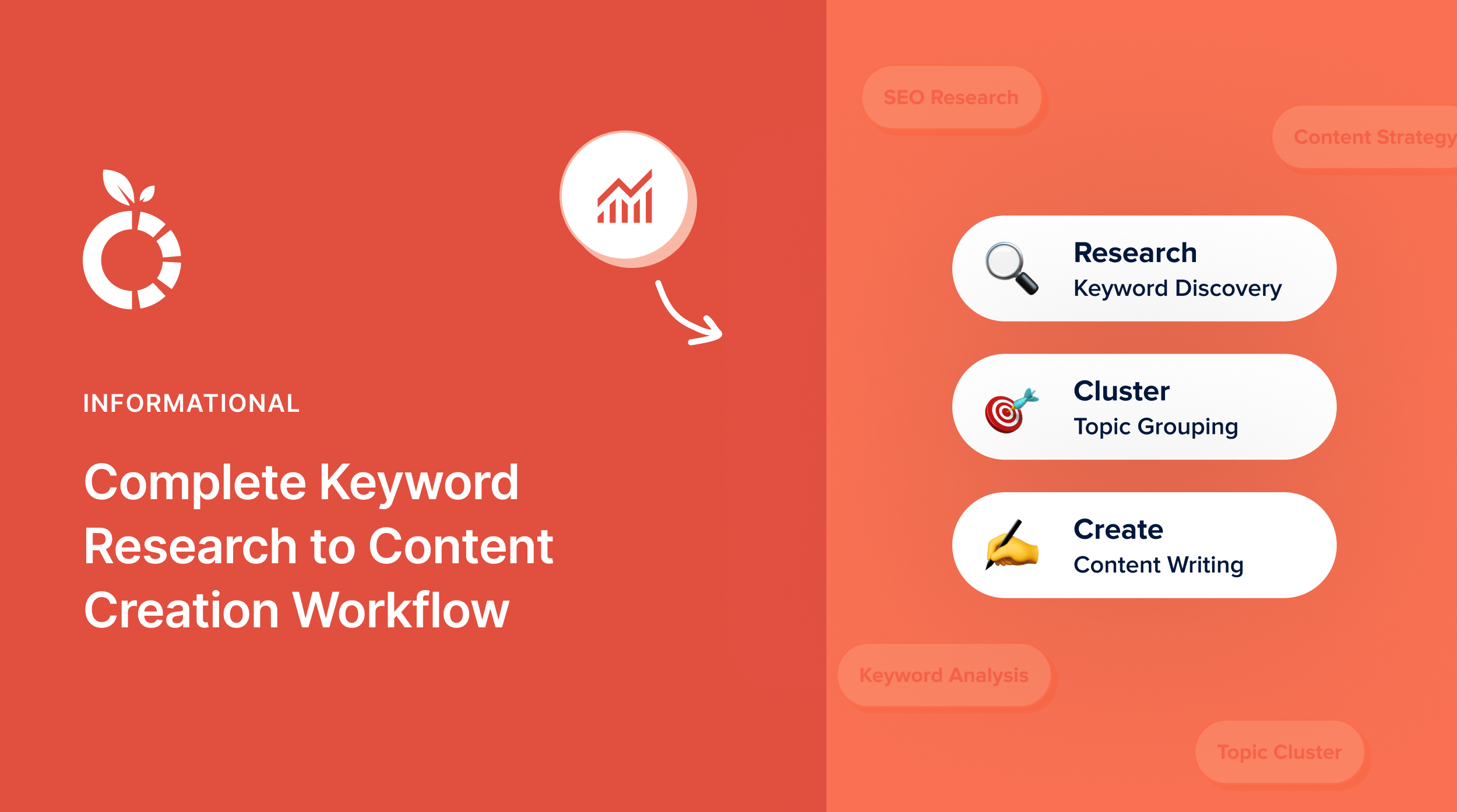
- Enhanced Keyword Research and Clustering: AI algorithms can process vast keyword lists, identify semantic relationships, and cluster keywords into logical topic groups far faster than manual methods. This helps you understand user intent more deeply and structure your content strategy effectively.

Keyword clustering workflow - Content Brief Generation: Instead of starting from scratch, AI can analyze top-ranking content for target keywords, extract common themes, entities, and questions, and then generate comprehensive content briefs. These briefs provide a solid foundation for writers, ensuring content aligns with search intent and covers necessary topics.
- On-Page Optimization Suggestions: AI tools can quickly scan existing or draft content and offer suggestions for title tags, meta descriptions, internal linking opportunities, and readability improvements. This speeds up the optimization process and helps catch common errors.
- Technical SEO Auditing (Initial Pass): While not a replacement for a deep technical audit by an expert, AI-powered tools can perform initial scans to identify common issues like broken links, crawl errors, duplicate content patterns, or missing schema markup. They act as an early warning system, flagging problems for human investigation.
- Content Repurposing and Summarization: AI can efficiently transform long-form content into shorter social media posts, email snippets, or summaries, extending the reach of your existing assets. It can also summarize complex reports, saving time on data interpretation.
Prioritizing AI Integration for Lean Teams
For small and mid-sized businesses, the key to successful AI integration isn’t adopting every new feature, but strategically choosing what provides the highest return on your limited time and budget. Focus on efficiency gains that free up your team for higher-level strategic work.
What to Do First: Quick Wins with High Impact
- Automate Keyword Clustering and Intent Analysis: This is foundational. Using AI to group keywords by intent and topic saves hours and leads to a more organized content strategy. Tools that offer this capability are a smart first investment.
- Implement AI-Assisted Content Briefs: Standardizing your content creation process with AI-generated briefs ensures consistency and reduces the back-and-forth with writers. It helps your content rank better from the start by addressing search intent comprehensively.
- Regular AI-Powered Technical Health Checks: Set up automated weekly or monthly scans to catch critical technical SEO issues early. This proactive approach prevents small problems from escalating into major ranking drops.
What to Delay: Higher Risk or Resource-Intensive
- Fully Automated Content Generation: While AI can draft content, relying solely on it without significant human editing and fact-checking is risky. Google’s emphasis on E-E-A-T (Experience, Expertise, Authoritativeness, Trustworthiness) means human oversight is critical for quality and brand voice. Delay full automation until you have robust human review processes in place.
- Complex Technical SEO Fixes via AI: AI can identify technical issues, but implementing complex fixes (e.g., server-side redirects, advanced JavaScript SEO) still requires a human expert. Don’t let AI dictate changes without thorough understanding and verification.
- AI for Personalized Link Building Outreach: While AI can help identify prospects, true personalized outreach that builds relationships and earns high-quality links still demands a human touch. Generic AI-generated outreach often falls flat.
What to Avoid: Chasing Hype Over Practicality
Today, you should deprioritize or outright avoid any AI solution that promises “set it and forget it” SEO. There’s no magic button. Specifically, steer clear of tools that claim to fully automate content creation without human input, or those that promise guaranteed rankings through AI alone. These often lead to low-quality content, potential penalties, and wasted resources. Your team’s judgment, strategic thinking, and understanding of your audience remain irreplaceable. Focus on AI as a powerful assistant, not a replacement for human intelligence and oversight.
While the initial efficiency gains from AI can be compelling, it’s easy to overlook the downstream demands these integrations place on a lean team. Automating tasks like keyword clustering or technical health checks doesn’t eliminate the need for human interpretation and strategic judgment. The “quick win” often requires ongoing human oversight to ensure the AI’s output aligns with evolving business goals and market nuances. Without this, teams risk generating data for data’s sake, or worse, acting on recommendations that are technically sound but strategically misaligned.
A common pitfall is assuming AI will correct for poor initial inputs. For instance, AI-assisted content briefs are only as good as the foundational keyword research and intent analysis fed into them. If the human-driven research phase is rushed or flawed, the AI will efficiently produce briefs that amplify those initial errors across multiple content pieces. This leads to a compounding effect of off-target content, wasting resources and creating significant frustration when teams realize they’ve scaled a flawed premise.
Furthermore, the sheer volume of data and recommendations AI can generate can become a new source of decision pressure. Teams accustomed to manual processes might find themselves overwhelmed by the constant stream of “insights” from various AI tools. The challenge shifts from gathering data to discerning which AI-driven suggestions are truly actionable and impactful, and which are noise. This can lead to a subtle de-skilling, where the team becomes reliant on the AI to identify problems, potentially losing the deeper diagnostic understanding that comes from manual investigation. Should the AI tool fail or change, the team’s ability to operate effectively could be compromised.
Practical AI Tools and Workflows
Integrating AI into your SEO workflow doesn’t require a complete overhaul. Start by identifying bottlenecks in your current process and see where AI can offer a targeted solution.
- For Keyword Strategy: Use AI to analyze competitor keyword profiles and identify gaps. Many established SEO platforms now incorporate AI features for semantic keyword grouping and opportunity identification. This helps you uncover long-tail keywords and niche topics your competitors might be missing. AI keyword research tools
- For Content Creation: After generating an AI-powered content brief, your human writer can focus on crafting unique insights, adding E-E-A-T, and refining the narrative. Use AI to assist with outlining, generating variations of headlines, or even drafting initial paragraphs, but always with a critical human editor.
- For On-Page Optimization: Integrate AI tools into your content editing process. Before publishing, run your content through an AI optimizer to check for keyword density, readability, internal linking suggestions, and basic schema recommendations. This acts as a final quality control layer.
- For Performance Monitoring: Leverage AI to summarize key trends from Google Search Console and Google Analytics. Instead of manually sifting through data, AI can highlight sudden drops in rankings, traffic anomalies, or new high-performing content, allowing your team to react faster. AI in Google Analytics
While AI can undoubtedly accelerate content drafting and ideation, a common pitfall is allowing it to dictate the final output or to become a crutch for original thought. The immediate gains in speed can mask a slower, more insidious loss: the erosion of your unique brand voice and perspective. When AI generates too much of the core narrative, content can become generic, even if technically optimized. This isn’t just about sounding bland; it’s about failing to build a distinct connection with your audience, which is a long-term SEO and brand liability. Human writers can quickly feel relegated to mere editors, leading to disengagement and a decline in the quality of original, insightful contributions.
Another often-overlooked aspect is the temptation to treat AI-driven insights as definitive. For performance monitoring, AI excels at identifying statistical anomalies or trends, allowing for faster reaction times. However, it fundamentally lacks the nuanced contextual understanding of your specific business, market dynamics, or recent strategic campaigns. A “sudden drop” flagged by AI might be a planned website update, or a “high-performing content” piece might be cannibalizing a more strategic page. Relying solely on AI summaries without a human layer of strategic interpretation can lead to misdirected efforts or, worse, inaction on critical, subtle shifts that AI deems “normal” within its statistical model. The real value comes from using AI to surface data points, not to make the final strategic call.
Finally, the operational overhead of integrating and maintaining effective AI workflows is frequently underestimated. While these tools promise efficiency, they still demand careful prompt engineering, rigorous data validation, and ongoing refinement to align with evolving goals. The “garbage in, garbage out” principle is particularly acute with AI; feeding it poorly structured data or vague instructions will consistently yield suboptimal, even misleading, results. Teams can find themselves spending significant time correcting AI outputs or wrestling with inconsistent performance, often negating the promised time savings. This isn’t a one-time setup; it’s an ongoing commitment to quality control and strategic oversight to ensure the AI is truly augmenting, not complicating, your team’s efforts.
Measuring Impact and Adapting Your Strategy
The true value of AI in your SEO operations isn’t just about efficiency; it’s about measurable impact on your organic growth. Don’t just implement AI tools; track their effectiveness.
Regularly review key performance indicators (KPIs) such as organic traffic, keyword rankings, conversion rates from organic search, and the time saved on specific tasks. Compare these metrics before and after implementing AI-powered workflows. Be prepared to iterate: if an AI tool isn’t delivering the promised efficiency or results, re-evaluate its use or explore alternatives. The SEO landscape, and AI capabilities within it, are constantly evolving, so your strategy must remain agile.


Leave a Comment