

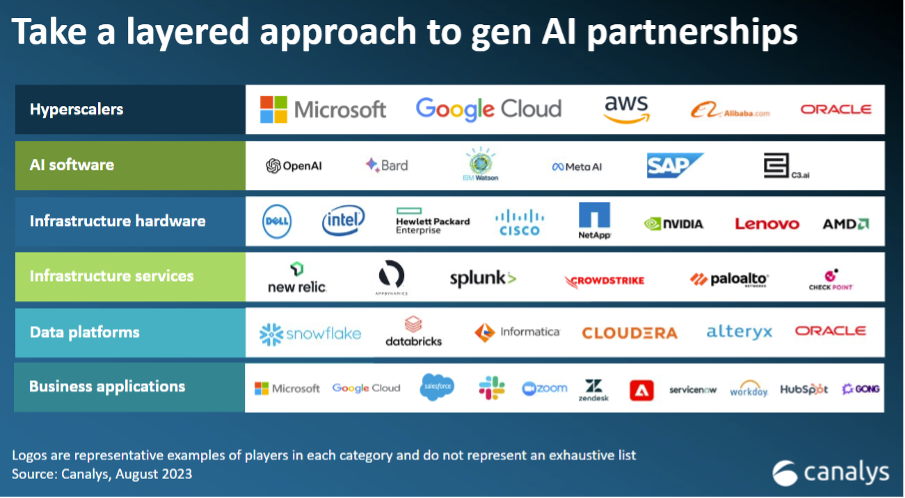
For small to mid-sized businesses, leveraging AI isn’t about building complex systems from scratch. It’s about smart partnerships that extend your team’s capabilities and accelerate growth without draining your limited budget or headcount. This article cuts through the hype to show you how to strategically engage with AI partners to solve real business problems and drive tangible results.
You’ll gain practical insights into identifying the right opportunities, vetting potential partners, and integrating AI solutions effectively. We’ll focus on what truly works under real-world constraints, helping you prioritize initiatives that deliver immediate value and avoid common pitfalls that waste resources.
Why Strategic AI Partnerships Outperform DIY Solutions
Many SMBs eye AI with a mix of excitement and apprehension. The excitement comes from the potential for efficiency and new capabilities; the apprehension from the perceived cost and complexity. For most, attempting to develop sophisticated AI in-house is a non-starter. It demands specialized talent, significant data infrastructure, and ongoing R&D – resources typically beyond an SMB’s reach.
Strategic AI partnerships offer a pragmatic alternative. Instead of buying generic AI tools and hoping they fit, you collaborate with specialized providers who bring deep expertise, pre-built models, and proven integration pathways. This approach allows you to tap into advanced AI capabilities for specific business functions – like customer service, content optimization, or data analysis – without the prohibitive upfront investment or the long-term maintenance burden. It’s about acquiring a capability, not just a piece of software.
Identifying High-Impact AI Partnership Opportunities
The key to successful AI adoption for SMBs lies in ruthless prioritization. Don’t chase every AI trend. Instead, focus on your most pressing operational bottlenecks or areas where a marginal improvement can yield significant returns. Start by asking: Where are we spending too much manual effort? Where are we losing customers due to slow responses? Where is our data underutilized?
- Customer Service Automation: AI chatbots and virtual assistants can handle routine inquiries, freeing up human agents for complex issues. This directly impacts customer satisfaction and operational costs.
- Personalized Marketing & Sales: AI can analyze customer data to segment audiences, personalize content, and optimize ad spend, leading to higher conversion rates.
- Content Generation & Optimization: For marketing teams, AI can assist with drafting copy, generating ideas, and optimizing existing content for SEO, saving significant time.
- Data Analysis & Insights: AI-powered analytics can uncover patterns and predict trends that human analysts might miss, informing better business decisions.
Prioritize opportunities that have clear, measurable KPIs and a direct line to revenue growth or cost reduction. A small team needs to see tangible results quickly to justify the investment and build internal momentum.
Vetting Potential AI Partners: Beyond the Sales Pitch
Selecting an AI partner isn’t just about features; it’s about fit, reliability, and long-term viability. Many providers promise the moon, but few deliver practical value under real-world conditions. Look for partners who understand the constraints of small to mid-sized businesses.
- Proven Track Record: Seek out partners with case studies or testimonials from businesses similar to yours. Generic enterprise success stories are less relevant.
- Integration Capabilities: How easily does their solution integrate with your existing CRM, marketing automation, or e-commerce platforms? Complex integrations can quickly derail a project.
- Data Security & Privacy: This is non-negotiable. Ensure they comply with relevant data protection regulations and have robust security protocols.
- Support & Training: A good partner offers ongoing support and training, recognizing that your team may not have dedicated AI specialists.
- Scalability & Flexibility: Can the solution grow with your business? Can it adapt to evolving needs without requiring a complete overhaul?
Consider starting with a pilot project or a proof of concept (POC) before committing to a long-term contract. This allows you to test the waters, validate the partner’s claims, and assess the real-world impact with minimal risk.

What often gets overlooked in the initial excitement is the internal burden an AI solution places on your team. Beyond the integration, there’s the significant, ongoing effort of data preparation and hygiene. Many AI tools are only as good as the data you feed them. If your internal data is inconsistent, incomplete, or poorly structured, the AI’s output will reflect those flaws. Cleaning and maintaining this data isn’t a one-time task; it’s a continuous operational cost that can quickly consume internal bandwidth, diverting resources from other critical tasks.
Furthermore, the promise of “automation” rarely means zero human involvement for small to mid-sized businesses. There’s always a “human in the loop” who needs to understand the AI’s outputs, validate its recommendations, and make final decisions. This requires training, ongoing oversight, and a willingness to adapt existing workflows. The friction points here can lead to significant team frustration and a perception that the AI isn’t delivering, even if the technology itself is sound. The real challenge often lies in optimizing this human-AI interaction, not just the AI’s raw capability.
Finally, consider the long-term implications of vendor lock-in. While a pilot project mitigates immediate risk, committing to a specific AI partner can create a dependency that’s expensive and disruptive to undo later. If the partner’s roadmap diverges from your needs, their pricing changes unfavorably, or their support declines, the cost and effort of migrating to an alternative solution can be prohibitive. This second-order effect means you’re not just buying a solution; you’re entering a long-term relationship with potential exit barriers that are rarely discussed upfront.
Integrating AI: Prioritize Impact Over Perfection
Once you’ve selected a partner, the integration phase demands a pragmatic approach. Don’t aim for a flawless, all-encompassing AI deployment from day one. Instead, focus on incremental improvements that deliver immediate value and allow your team to adapt.
Start with a single, well-defined use case. For example, if you’re automating customer service, begin with FAQs or common support tickets. This focused approach minimizes disruption, provides quick wins, and allows your team to learn and iterate. Ensure your internal data is clean and accessible; AI models are only as good as the data they’re trained on. Work closely with your partner to map out the data flow and ensure seamless operation.
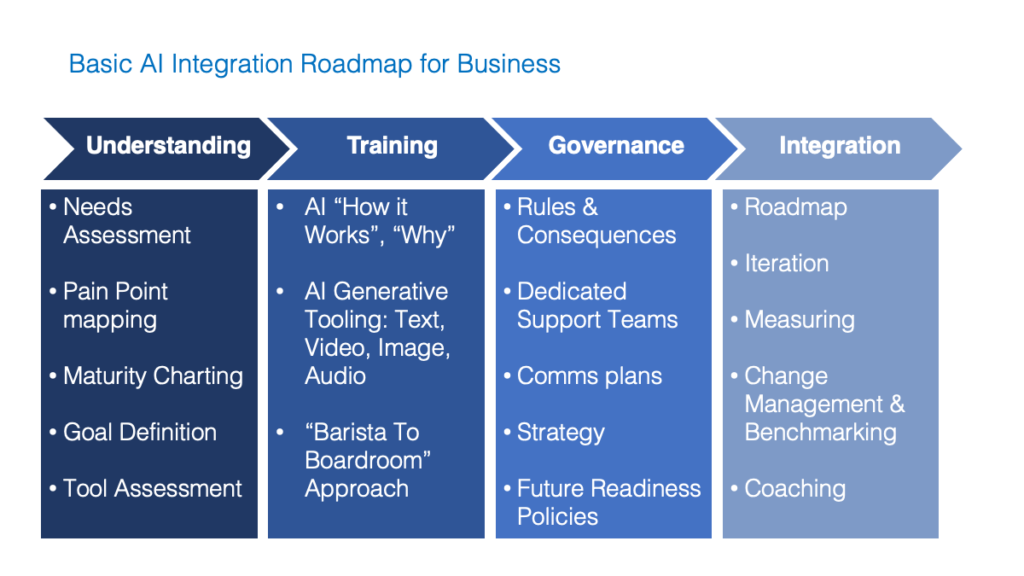
Remember, AI should augment your team, not replace it entirely. Train your staff on how to work alongside the AI, leveraging its capabilities to enhance their productivity and focus on higher-value tasks. This human-in-the-loop approach is critical for maintaining quality and adapting to unforeseen circumstances.
What to Deprioritize or Avoid Today
For small to mid-sized businesses, the biggest mistake is attempting to mimic large enterprise AI strategies. Deprioritize any initiative that requires building custom AI models from scratch, unless AI development is your core business. This path is resource-intensive, fraught with technical challenges, and rarely yields a positive ROI for non-tech companies. Similarly, avoid grand “AI transformation” projects that lack clear, measurable objectives or try to overhaul multiple departments simultaneously. These often lead to scope creep, budget overruns, and ultimately, failure to launch.
Also, be wary of AI partners who promise magic without asking for your data or explaining the underlying process. If a solution feels too good to be true, it probably is. Skip partners who don’t offer transparent pricing, clear integration pathways, or robust support. Your limited resources are best spent on proven, pragmatic solutions that address specific pain points with a clear path to measurable results. AI tools for marketing automation
Measuring Success and Iterating for Growth
The work doesn’t stop once AI is integrated. To truly fuel digital business transformation, you must continuously measure the impact of your AI partnerships and be prepared to iterate. Establish clear Key Performance Indicators (KPIs) before deployment. For customer service AI, this might be reduced response times or increased first-contact resolution rates. For marketing AI, it could be improved conversion rates or lower customer acquisition costs. AI adoption small business
Regularly review these metrics with your AI partner. Use the data to identify areas for optimization, refine the AI’s performance, and explore new applications. A successful AI partnership is a dynamic one, evolving with your business needs and market changes. Don’t be afraid to adjust your strategy or even pivot to a different partner if the current solution isn’t delivering the expected value. This iterative approach ensures your AI investments continue to drive growth and efficiency.

Leave a Comment