


The Evolving Landscape of SEO & AI’s Role
In early 2026, the conversation around AI in SEO has moved decisively past the ‘what if’ stage to ‘how to’. We’re no longer debating AI’s potential; we’re actively integrating it into our workflows. Search engines, particularly Google, are more sophisticated than ever, leveraging their own AI to understand user intent, context, and content quality. This means traditional SEO tactics, while still foundational, need augmentation. AI isn’t just a shiny new toy; it’s a practical toolkit for efficiency, deeper analysis, and scaling efforts that were once prohibitively time-consuming.
From a practitioner’s standpoint, AI allows us to shift focus from manual, repetitive tasks to higher-level strategy, creative problem-solving, and nuanced data interpretation. It’s about working smarter, not necessarily harder, and achieving a competitive edge in an increasingly complex digital environment.
AI-Powered Keyword Research & Content Ideation
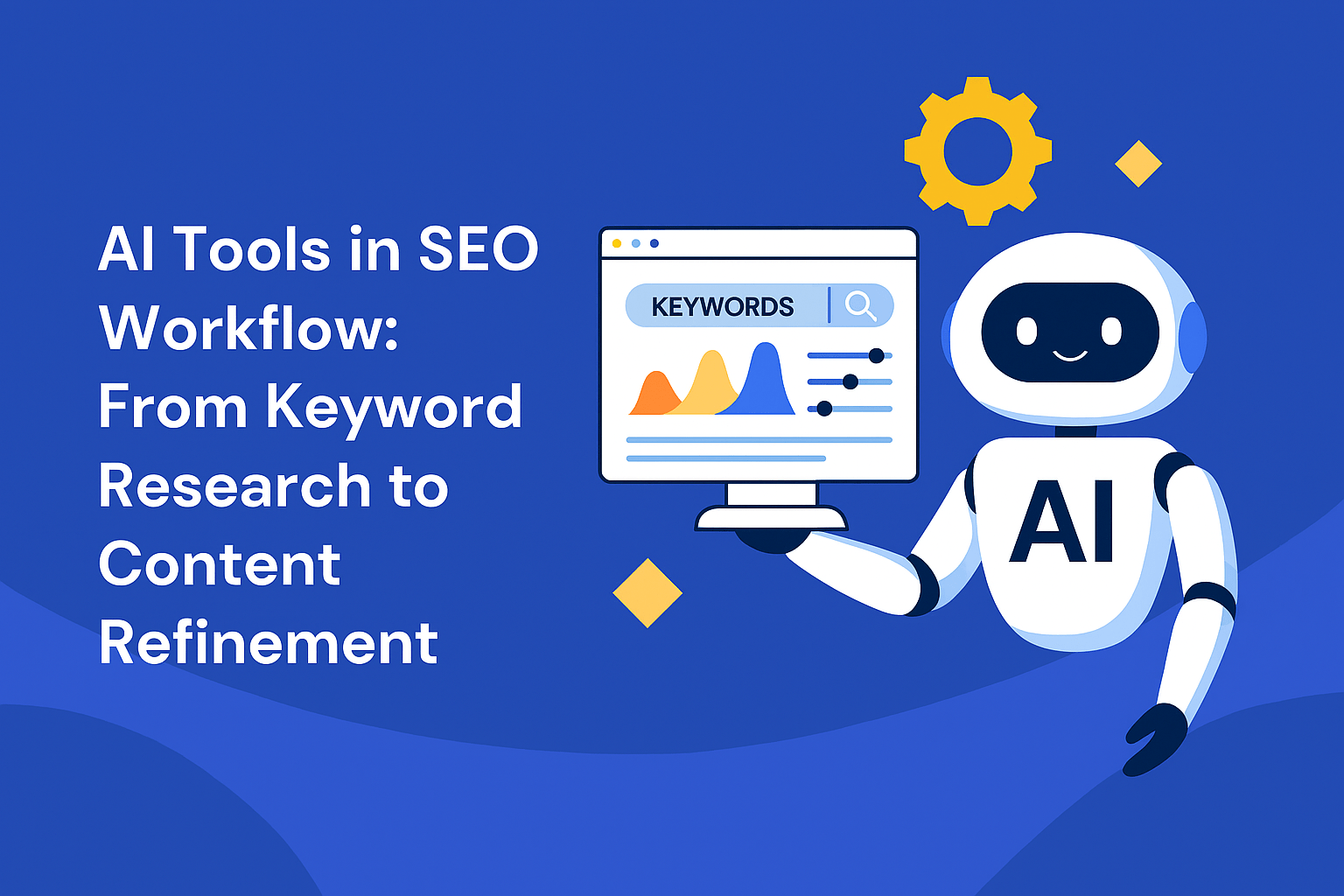
The days of relying solely on basic keyword volume metrics are long gone. AI tools currently excel at analyzing vast datasets to uncover semantic keyword clusters, long-tail opportunities, and the underlying user intent behind queries. This goes beyond simple keyword suggestions; AI can help us understand the full user journey and the questions they’re asking at each stage.
- Semantic Clustering: AI identifies related topics and entities, helping you build comprehensive content hubs that cover a subject exhaustively, signaling authority to search engines.
- Intent Analysis: Beyond keywords, AI deciphers whether a query is navigational, informational, transactional, or commercial investigation, guiding content strategy for optimal conversion.
- Content Gap Analysis: By analyzing competitor content and your own, AI can quickly pinpoint topics and angles you’re missing, offering data-driven ideas for new content or existing content optimization.
- Automated Briefs: Many AI tools can now generate detailed content briefs, including suggested headings, keywords to incorporate, and even competitor analysis, streamlining the content creation process significantly.
Content Creation & Optimization with AI
This is where AI truly acts as a co-pilot. It’s not about letting AI write your entire article and hitting publish; that’s a recipe for generic, uninspired content that often fails to rank or resonate. Instead, think of AI as an assistant that accelerates drafting, optimizes for clarity, and ensures SEO best practices are met.
- Drafting & Expansion: AI can generate initial drafts, expand on bullet points, or rephrase sections, saving significant time for writers. The human touch then refines, adds unique insights, and injects brand voice.
- Readability & Tone: AI tools can analyze content for readability scores, suggesting improvements for sentence structure, vocabulary, and overall flow. They can also help maintain a consistent tone across different pieces.
- On-Page Optimization: AI can suggest optimal keyword placement, internal linking opportunities, and meta descriptions based on content analysis and target keywords.
- E-E-A-T Enhancement: While AI can’t generate genuine experience or authority, it can help structure content to better demonstrate expertise and trustworthiness. For instance, suggesting sections for author bios, referencing studies, or structuring arguments logically.
Technical SEO & Site Performance via AI
Technical SEO often involves sifting through vast amounts of data. AI’s strength in pattern recognition makes it invaluable here, identifying issues far faster than manual audits.
- Crawl Error Detection: AI-powered tools can proactively monitor your site for crawl errors, broken links, and redirect chains, alerting you to issues before they impact rankings.
- Site Speed Optimization: Analyzing Core Web Vitals data, AI can pinpoint specific elements causing slowdowns and suggest actionable fixes, from image compression to code optimization.
- Log File Analysis: Understanding how search engine bots crawl your site is crucial. AI can analyze server log files to identify inefficient crawl patterns, wasted crawl budget, or areas where bots are struggling.
- Schema Markup Generation: While still evolving, AI can assist in generating accurate and comprehensive schema markup, ensuring search engines better understand your content’s context and display rich snippets.

The Reality Check: Where AI Falls Short (and Human Expertise Shines)
Let’s be clear: AI is not a magic bullet, and anyone telling you it will fully automate SEO is either selling something or hasn’t spent enough time in the trenches. A common assumption is that AI can simply take over content creation and optimization, leading to a ‘set it and forget it’ approach. This is a dangerous misconception. Blindly generating content without human review often leads to generic, uninspired, or even factually inaccurate results. AI lacks true creativity, empathy, and the nuanced understanding of brand voice or complex human intent that defines truly impactful marketing.
From hands-on work, we’ve seen AI-generated content struggle significantly in highly specialized, niche industries requiring deep, original thought leadership. If your goal is to establish unique authority or convey strong emotional resonance, AI-generated content, without substantial human editing, will likely fall flat. It also struggles with real-time, rapidly changing news or highly sensitive topics where factual accuracy, ethical considerations, and a human perspective are paramount. Furthermore, AI models are trained on existing data, meaning they can perpetuate biases or simply regurgitate common knowledge, failing to provide truly novel insights. The ‘garbage in, garbage out’ principle applies strongly; if you feed an AI poor prompts or expect it to replace strategic thinking, you’ll get mediocre results.
Implementing AI in Your SEO Workflow: Practical Steps
Integrating AI into your SEO strategy doesn’t require a complete overhaul. Start small, identify pain points, and scale gradually.
- Identify Repetitive Tasks: Look for areas like initial keyword research, content outlining, meta description generation, or basic technical audits that consume significant manual time.
- Choose Complementary Tools: Select AI tools that integrate well with your existing SEO stack (e.g., Google Analytics, Search Console, SEMrush, Ahrefs). Focus on tools that augment, not replace, your current capabilities.
- Upskill Your Team: Train your SEO specialists on how to effectively prompt AI, interpret its outputs, and integrate AI-assisted processes into their daily work. This isn’t about replacing roles, but evolving them.
- Monitor & Iterate: AI outputs are a starting point, not a final product. Continuously review the performance of AI-assisted content and optimizations. Refine your prompts and processes based on real-world results.

The Future of SEO: AI as a Strategic Partner
Looking ahead, AI will become even more deeply embedded in SEO. We anticipate more predictive capabilities, where AI can forecast ranking changes based on algorithm updates or competitor moves. The role of the human SEO specialist will evolve into that of an AI orchestrator – someone who understands how to leverage these powerful tools, interpret complex data, and apply strategic oversight. Our focus will shift further towards high-level strategy, creative direction, and ensuring the unique human element of brand voice and genuine connection remains at the core of our digital presence. AI will handle the heavy lifting, freeing us to innovate and connect more authentically with our audiences.


Leave a Comment