

Integrating AI into your marketing operations isn’t about adopting every new tool; it’s about making strategic choices that deliver tangible results for your small to mid-sized business. This article cuts through the noise to provide a pragmatic framework for identifying, prioritizing, and implementing AI solutions that genuinely enhance efficiency, optimize campaigns, and drive growth, even with limited budgets and headcount.
You’ll learn where to focus your efforts for maximum impact today, what common pitfalls to avoid, and how to build an AI strategy that scales with your team’s real-world constraints, ensuring you leverage AI as a powerful co-pilot, not a costly distraction.
Why AI Integration Isn’t Optional Anymore (But Requires Strategy)
The conversation around AI has shifted from “if” to “how.” For small to mid-sized businesses, this isn’t about keeping up with enterprise-level innovation, but about securing fundamental competitive advantages. AI tools, when applied correctly, can level the playing field by automating repetitive tasks, generating insights from data, and personalizing customer experiences at a scale previously unattainable. The strategic imperative is to integrate AI not as a novelty, but as a core component of your marketing stack, focused on solving specific business problems.
Prioritizing Your AI Marketing Investments: Where to Start
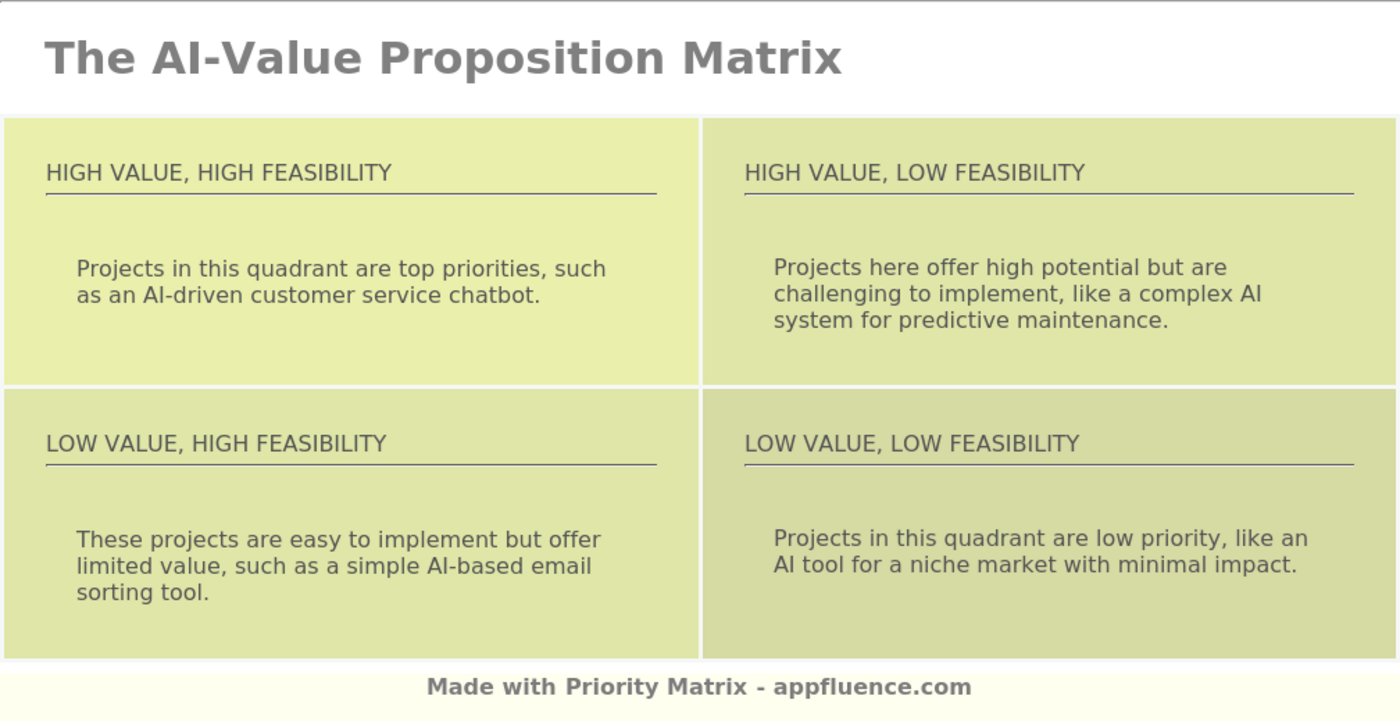
With countless AI tools emerging, the biggest challenge for lean marketing teams is deciding where to invest time and budget. Our advice: start with areas that offer immediate, measurable efficiency gains or direct revenue impact, leveraging your existing data. Don’t chase every new feature; focus on your most pressing operational bottlenecks.
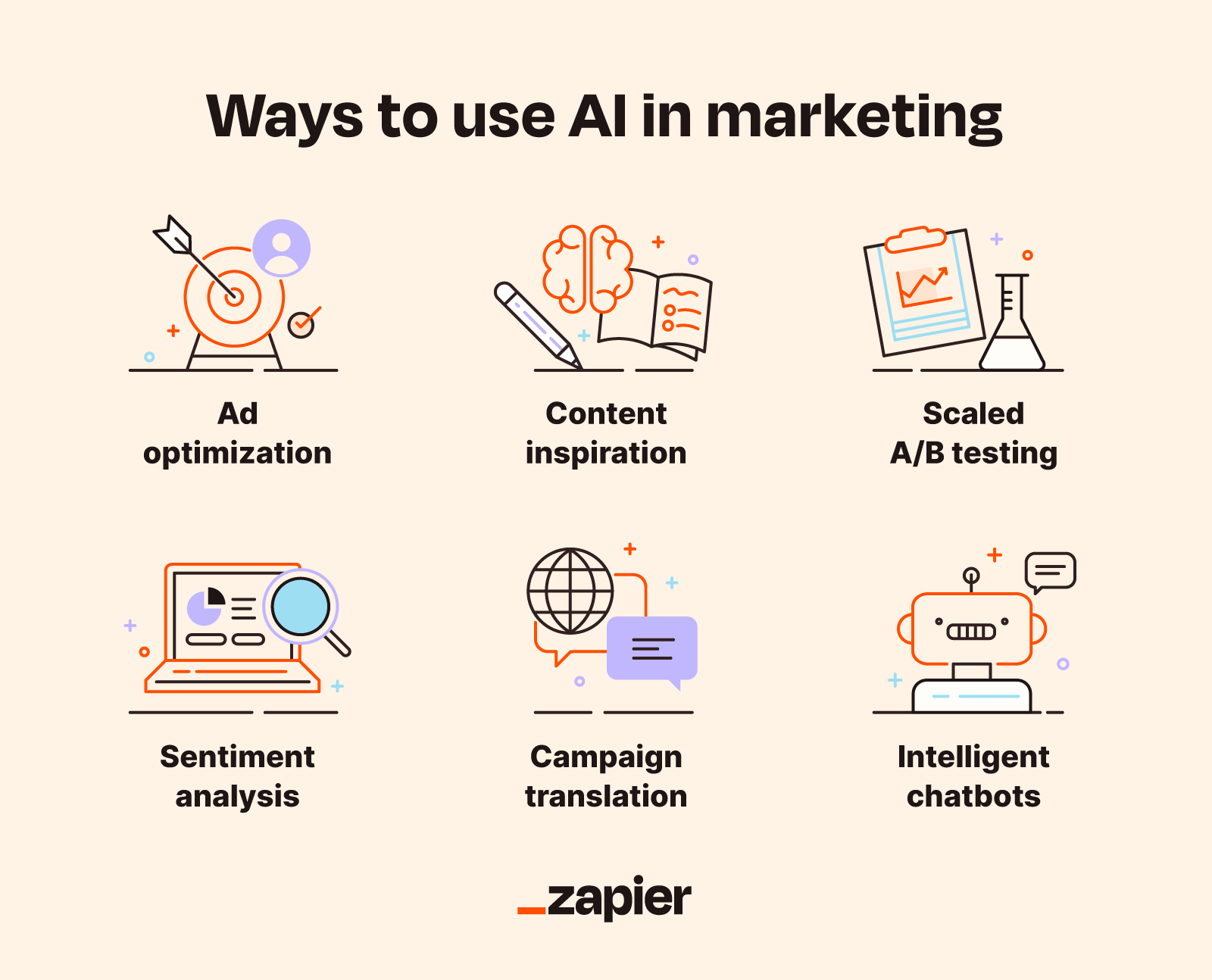
- Content Generation & Optimization: This is often the lowest-hanging fruit. AI writers can generate initial drafts for blog posts, social media updates, email subject lines, and ad copy. Tools that analyze content for SEO performance or readability can significantly reduce the time spent on manual optimization. For teams with limited content creators, this is a force multiplier.
- Data Analysis & Reporting: Instead of sifting through spreadsheets, AI-powered analytics platforms can quickly identify trends, anomalies, and actionable insights from your website, CRM, and ad platform data. This helps you make faster, more informed decisions about campaign performance and customer behavior. Think of it as having a junior data analyst on staff, without the salary.
- Ad Copy & Creative Iteration: AI excels at generating numerous variations of ad copy and even basic creative concepts in seconds. This allows for rapid A/B testing and optimization, leading to better campaign performance without extensive manual effort. It frees up your team to focus on strategic messaging and high-level creative direction.
What should you deprioritize or skip today? For most small to mid-sized businesses, avoid investing heavily in complex predictive analytics for long-term forecasting or building custom AI models from scratch. These initiatives typically demand significant clean data volumes, specialized data science expertise, and substantial financial investment that often outweigh the immediate, practical benefits for teams operating under tight constraints. Instead, leverage off-the-shelf solutions that provide descriptive and diagnostic insights, helping you understand “what happened” and “why” before attempting to predict “what will happen” with high accuracy. Similarly, fully automated, AI-driven customer service chatbots can be a resource drain if not perfectly implemented, often leading to customer frustration. A hybrid approach, where AI assists human agents, is a more pragmatic starting point.
While AI content generation offers a clear path to speed, it often shifts the bottleneck rather than eliminating it entirely. The real work moves to refinement, fact-checking, and ensuring brand voice consistency. Without a robust human editorial layer, teams risk a deluge of generic content that dilutes their unique messaging and fails to resonate. This isn’t just about editing time; it’s a subtle, downstream effect that can erode trust and make it harder for truly valuable insights to cut through the noise.
For data analysis, the promise of a ‘junior data analyst’ is compelling, but it hinges entirely on data quality. Many teams overlook the prerequisite of clean, consistent data. AI tools are powerful pattern-finders, but they operate on the principle of ‘garbage in, garbage out.’ If your CRM, website, or ad platform data is messy, incomplete, or inconsistently tagged, the ‘actionable insights’ generated will be flawed, leading to misinformed decisions and wasted effort. The frustration often sets in when teams realize their initial investment in an AI analytics platform is stalled by the unexpected, time-consuming project of data hygiene.
Similarly, the ability of AI to generate countless ad copy and creative variations can be a double-edged sword. While it enables rapid A/B testing, it also introduces a new decision burden. Teams can quickly become overwhelmed by the sheer volume of options, struggling to discern genuinely distinct and effective variations from minor permutations. This can inadvertently pull focus away from strategic messaging and into a rabbit hole of micro-optimizations, consuming valuable human judgment time that was supposed to be freed up. The human element of curation and strategic selection remains paramount, and its ongoing time commitment is often underestimated.
Implementing AI: A Phased, Practical Approach
Successful AI integration isn’t a flip of a switch; it’s a structured, iterative process. Adopt a phased approach to minimize disruption and maximize learning.
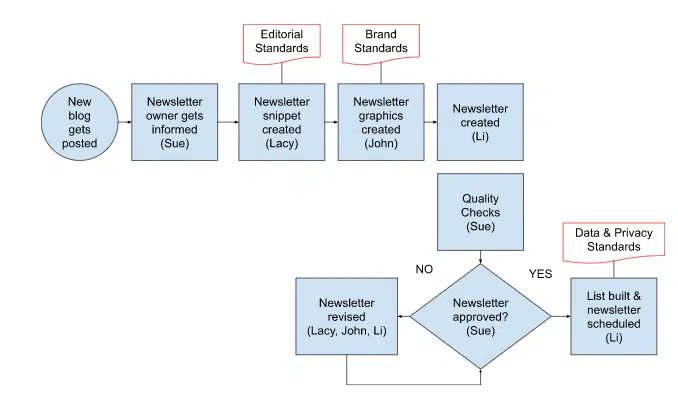
- Phase 1: Identify Core Pain Points & Existing Data Sources. Before looking at tools, pinpoint where your team spends excessive time or where critical insights are missing. Do you struggle with content volume? Are ad campaigns underperforming due to poor targeting? Map out your current workflows and identify specific bottlenecks.
- Phase 2: Pilot Small, Prove Value. Select one or two high-impact, low-complexity use cases. For example, use an AI tool to generate five blog post outlines or optimize ten ad headlines. Measure the time saved, quality improvement, or performance uplift. This builds internal confidence and provides concrete data for further investment.
- Phase 3: Integrate & Scale Gradually. Once a pilot proves successful, integrate the AI solution into your standard operating procedures. Provide clear training for your team. Start with a small group, gather feedback, and then expand. This iterative scaling ensures smooth adoption and allows for adjustments based on real-world usage. The trade-off here is speed versus stability; prioritize stability.
For example, a small e-commerce business might start by using AI to generate product descriptions for new inventory, significantly reducing the manual writing load. Once that’s smooth, they might integrate AI for email subject line optimization, then move to ad copy generation. This step-by-step integration minimizes risk and maximizes the likelihood of successful adoption. AI tools for e-commerce marketing
What often gets overlooked in the initial enthusiasm is the ongoing cost of data hygiene and model maintenance. A successful pilot often runs on a clean, limited dataset, but as you scale, the quality of your broader data inputs can degrade, leading to ‘garbage in, garbage out’ scenarios that undermine AI performance. Furthermore, market dynamics and customer behaviors aren’t static. An AI model that performs well today might slowly drift out of effectiveness as conditions change, requiring continuous monitoring and retraining – a non-trivial operational overhead that many teams fail to budget for.
Another subtle pitfall is the potential for skill atrophy within the team. While AI can automate tasks, an over-reliance without maintaining foundational human skills can create a new vulnerability. If the AI tool produces suboptimal results or fails entirely, the team might lack the expertise to critically evaluate, correct, or perform the task manually. This isn’t about replacing humans, but rather shifting their role from primary creators to critical editors and strategists, which requires a different kind of training and mindset adjustment that’s easy to underestimate.
The “integrate and scale gradually” phase, while sound in theory, often hits practical snags. A pilot might run smoothly in a sandbox environment, but truly embedding a new AI solution into an existing, often fragmented, tech stack can introduce unforeseen complexities and technical debt. Teams frequently underestimate the engineering effort required to connect the AI to their core systems and workflows, leading to delayed rollouts or partial implementations that don’t deliver the full promised value. This creates decision pressure: do you invest more in integration, or do you accept a less-than-optimal workflow that still requires significant manual bridging?
The Human Element: Guiding AI, Not Being Replaced By It
AI is a tool designed to augment human capabilities, not replace them. Your team’s strategic thinking, creativity, and nuanced understanding of your brand and customers remain indispensable. The role of the marketer evolves from manual execution to strategic oversight, prompt engineering, and quality control. Train your team to work alongside AI, understanding its strengths and limitations. Emphasize that AI handles the heavy lifting of repetitive tasks, freeing up human talent for higher-value activities like strategic planning, complex problem-solving, and building genuine customer relationships. This shift requires a mindset change, viewing AI as a co-pilot that enhances, rather than diminishes, human contribution.
Measuring Success and Adapting Your AI Strategy
Without clear metrics, AI integration becomes a shot in the dark. Define specific Key Performance Indicators (KPIs) for each AI initiative. For content generation, this might be “time saved per article” or “increase in content output.” For ad optimization, it could be “improved click-through rate” or “reduced cost per acquisition.” Regularly review these metrics to assess the effectiveness of your chosen tools and strategies. The AI landscape is dynamic; what works today might be surpassed tomorrow. Be prepared to adapt, replace tools that underperform, and continuously educate your team on new capabilities. This iterative review process ensures your AI investments continue to deliver value and align with your evolving business goals. measuring marketing ROI



Leave a Comment