

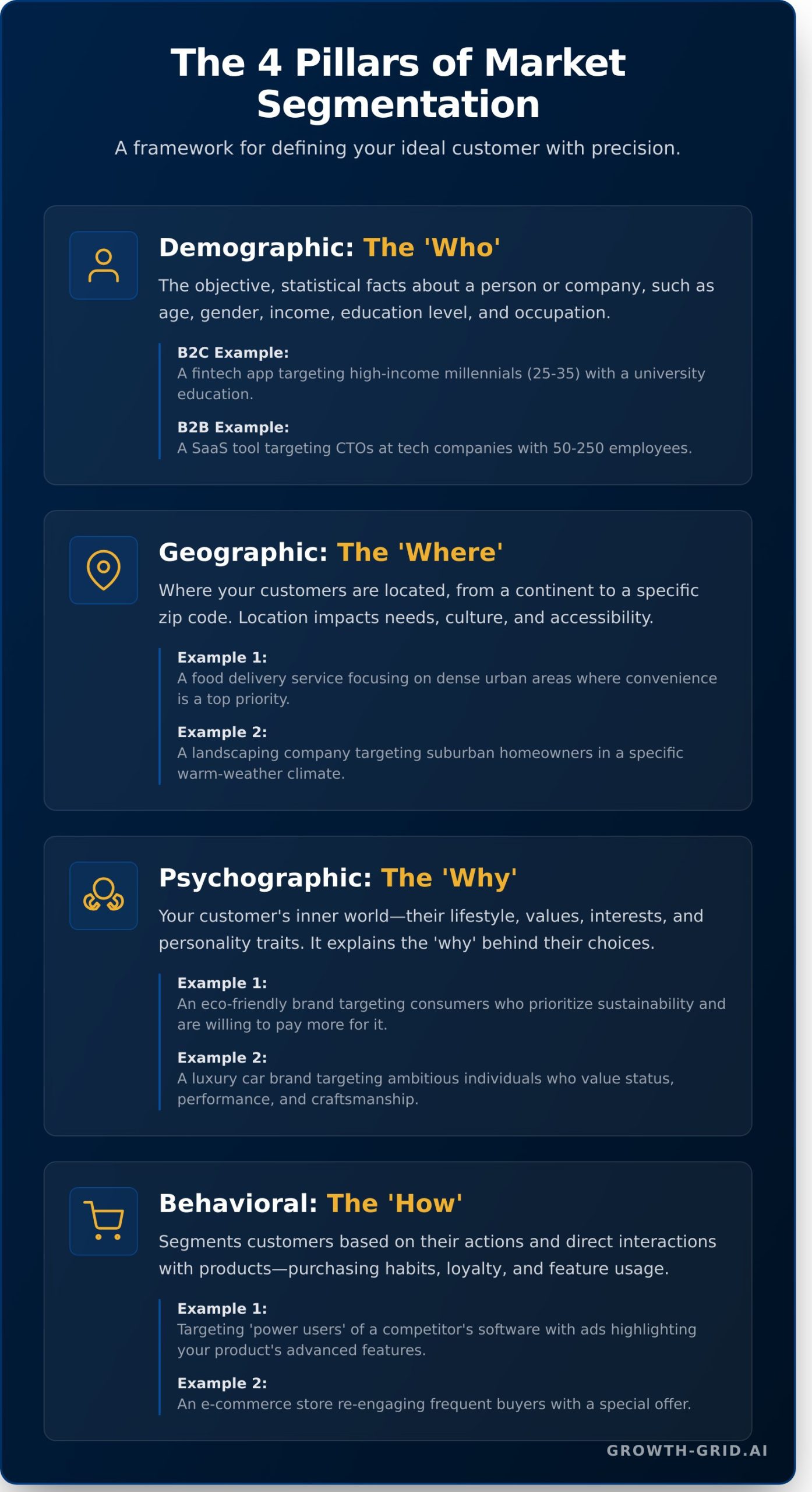
For small to mid-sized businesses, every marketing dollar and hour counts. This guide cuts through the noise to show you how defining your ideal customer isn’t just a theoretical exercise, but a critical step to stop wasting resources and start seeing real returns. You’ll learn practical methods to identify who truly benefits from your offering, allowing you to focus your efforts where they’ll have the most impact.
By the end, you’ll have a clear framework for precision targeting that helps you make smarter decisions about where to invest your limited budget and headcount, leading to more efficient campaigns and sustainable business growth.
Why Precision Targeting Isn’t Optional Anymore
In today’s competitive landscape, broad-brush marketing is a luxury most small to mid-sized businesses can’t afford. Without a clear understanding of your ideal customer, you’re essentially throwing darts in the dark. This leads to wasted ad spend, diluted messaging, and a sales team chasing unqualified leads. For teams with limited budgets and headcount, this inefficiency isn’t just suboptimal; it’s a direct drain on profitability and growth potential. Precision targeting ensures your resources are directed towards the audience most likely to convert, maximizing your ROI and freeing up capacity for other critical tasks.
Beyond Demographics: Understanding Psychographics and Behavior
While basic demographics (age, location, industry) provide a starting point, they rarely offer enough insight for effective targeting. To truly understand your ideal customer, you need to delve into their psychographics and behaviors. This means understanding their pain points, aspirations, values, challenges, and how they make purchasing decisions. It’s about getting inside their head to grasp what truly motivates them.
- Pain Points: What specific problems does your product or service solve for them?
- Aspirations & Goals: What are they trying to achieve, and how does your offering help them get there?
- Values: What principles guide their decisions, both personally and professionally?
- Behavioral Triggers: What events or situations prompt them to seek a solution like yours?
- Information Sources: Where do they go for information and advice? (e.g., specific blogs, forums, social media platforms, industry events)
Practical methods to uncover these insights include direct customer interviews, analyzing website analytics for user behavior patterns, reviewing customer support inquiries, and monitoring social media conversations.
What often gets overlooked in practice is that these insights aren’t static. Customer motivations, pain points, and information sources evolve. Treating psychographic understanding as a one-time project, rather than an ongoing feedback loop, is a common pitfall. Teams invest upfront, but then fail to revisit or validate their assumptions, leading to strategies based on outdated information. Another common trap for lean teams is the urge to over-segment. While detailed personas seem appealing in theory, creating too many distinct profiles can dilute focus and strain limited resources, making it harder to craft truly resonant messaging for any single group.
This lack of ongoing validation or over-segmentation often leads to a more insidious, second-order problem: internal misalignment. When marketing, sales, and product teams operate on different, unstated, or outdated assumptions about the customer, the result is fragmented messaging and inconsistent experiences. Sales might be pitching benefits that marketing isn’t highlighting, or product might be building features for a perceived need that no longer exists. This friction wastes effort, frustrates internal teams, and ultimately confuses the customer, eroding trust and conversion rates.
Furthermore, simply knowing these psychographic details isn’t enough. The real challenge lies in translating these insights into tangible, actionable strategies across every customer touchpoint. It’s easy to document a customer’s values, but much harder to consistently reflect those values in ad copy, website design, sales conversations, and product development. This gap between insight and execution is where many efforts falter, often due to the daily pressures of ‘getting things done’ that push deeper strategic integration to the back burner.
Practical Steps to Define Your Ideal Customer
Defining your ideal customer doesn’t require an expensive market research firm. You can start with resources you already have.
Start with Your Best Customers
Look at your existing customer base. Who are your most profitable clients? Who are the easiest to work with? Who refers new business? Analyze their common characteristics. This data, often found in your CRM or sales records, is gold. It tells you who already values your solution the most.
Interview and Observe
Nothing beats direct conversation. Schedule short, informal interviews with 3-5 of your best customers. Ask open-ended questions about their challenges before using your product, what they like most, and how it helps them achieve their goals. Pay attention to the language they use and the problems they articulate. This qualitative data provides depth that numbers alone cannot.
Create Persona Sketches (Not Novel-Length Documents)
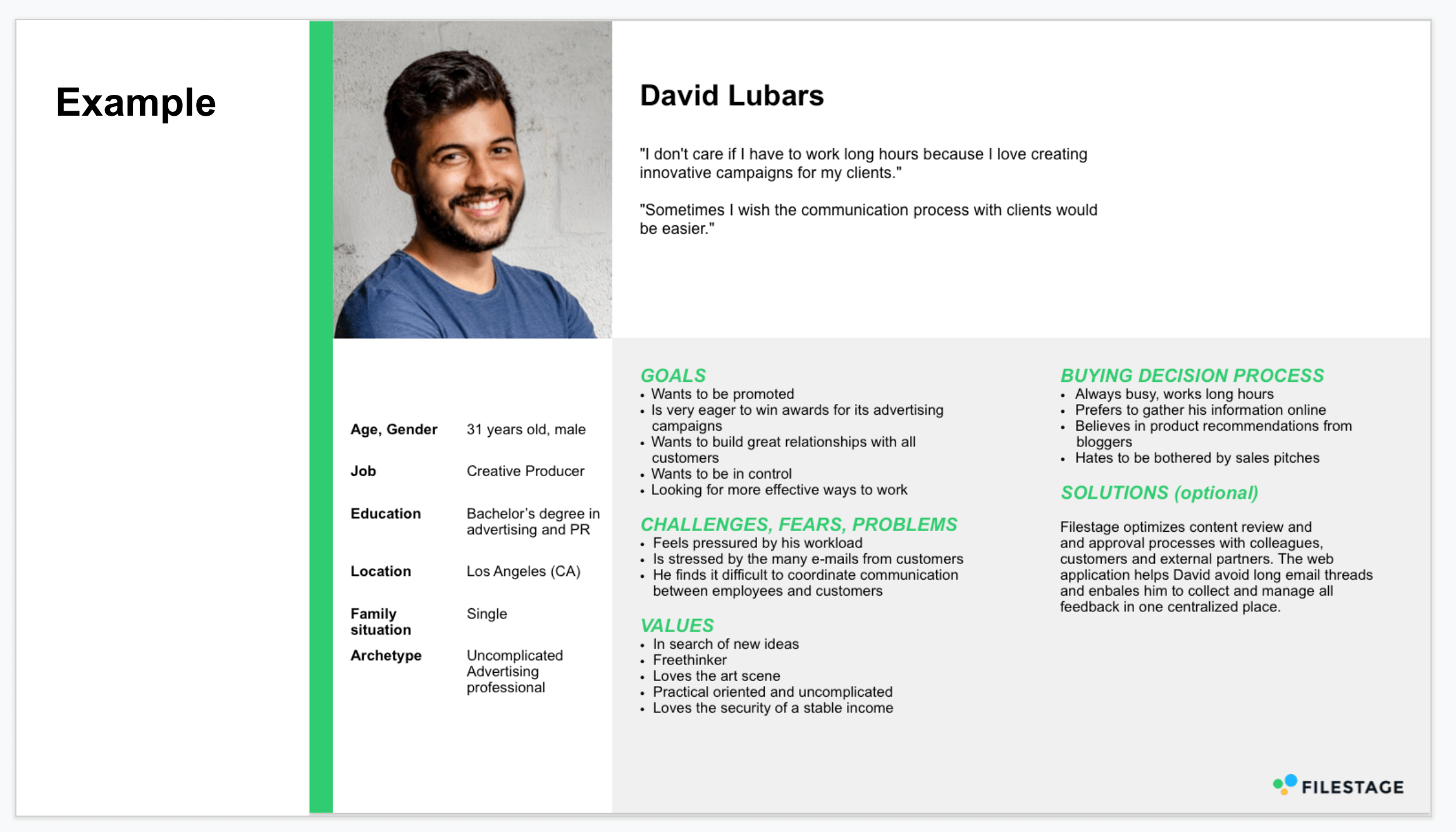
Based on your analysis and interviews, create a concise ideal customer persona. This isn’t a fictional character with a full backstory; it’s a practical tool. Focus on key decision drivers: their primary pain point, their main goal, how they typically search for solutions, and what objections they might have. Keep it to one page, maximum.
Map Their Journey
Understand the typical path your ideal customer takes from realizing they have a problem to becoming a loyal customer. What are the key touchpoints? What information do they need at each stage? This helps you align your marketing and sales efforts to their natural decision-making process.
While these steps seem straightforward, the hidden cost of a poorly defined ideal customer often surfaces much later. Without a clear focus, marketing budgets get spread thin, attracting a wider, less qualified audience. This doesn’t just mean wasted ad spend; it translates to longer sales cycles, higher customer acquisition costs, and ultimately, a higher churn rate as you onboard customers who aren’t truly a good fit for your solution. The team feels the pressure of chasing too many disparate leads, leading to burnout and a perception of underperformance, even when the core product is strong.
A common pitfall is treating the persona as a one-time exercise or a static document. The real value comes from its consistent application across all customer-facing functions. It’s easy to create a persona and then revert to gut instinct or chase every lead that comes in. To avoid this, deprioritize exhaustive demographic profiles that don’t directly inform buying behavior. Instead, focus on the core pain points and motivations. For small teams, the goal is actionable insight, not academic completeness. Spending too much time on irrelevant details delays implementation and dilutes the practical utility of the persona.
Mapping the customer journey is crucial, but the second-order challenge is ensuring internal alignment to that map. It’s one thing to understand the ideal path; it’s another to get sales, marketing, and customer service to consistently deliver a cohesive experience at each touchpoint. When internal teams aren’t synchronized with the documented journey, customers experience friction, mixed messages, and a disjointed experience. This not only frustrates the customer but also creates internal finger-pointing and undermines the strategic intent of the journey mapping exercise.
Prioritizing Your Efforts: What to Do First, What to Delay
For small to mid-sized teams, the key is to prioritize actionable insights over comprehensive academic exercises. Here’s how to approach it:
- Do First:
- Analyze existing customer data: Start with your CRM, sales records, and even email lists. Identify common traits among your most valuable customers. This is low-cost and immediately actionable.
- Conduct 3-5 in-depth interviews: Talk to your best customers. Their direct feedback is invaluable and often reveals insights you wouldn’t find in data alone.
- Draft a single, primary ideal customer persona: Focus on one core segment first. Get it right, validate it, and build momentum.
- Delay or Deprioritize Today:
- Extensive, multi-segment market research reports: These are often expensive and provide broad, generalized data that may not be specific enough for your niche. For SMBs, the cost-benefit rarely justifies the investment early on.
- Developing multiple, highly detailed personas: While tempting, creating five or ten elaborate personas at once can dilute your focus and spread your limited resources too thin. Start with your primary ideal customer, then expand as you gain clarity and resources.
- Investing in complex AI-driven segmentation tools: Without clear data and a well-defined initial understanding of your customer, these tools can be overkill and lead to analysis paralysis. Build your foundational understanding first.
The rationale for deprioritization is simple: for small to mid-sized businesses, resources are finite. Over-analysis or premature complexity diverts focus from execution. Start lean, validate your assumptions with real-world interactions and data, then expand your efforts. An imperfect but actionable persona is far more valuable than a perfectly detailed one that never gets used.
Integrating Your Ideal Customer into Marketing Actions
Once you have a clear picture of your ideal customer, every marketing and sales activity should be filtered through that lens.
- Content Strategy: Create content that directly addresses their pain points, answers their questions, and helps them achieve their goals. Tailor the tone and format to their preferred consumption methods. content strategy for small business
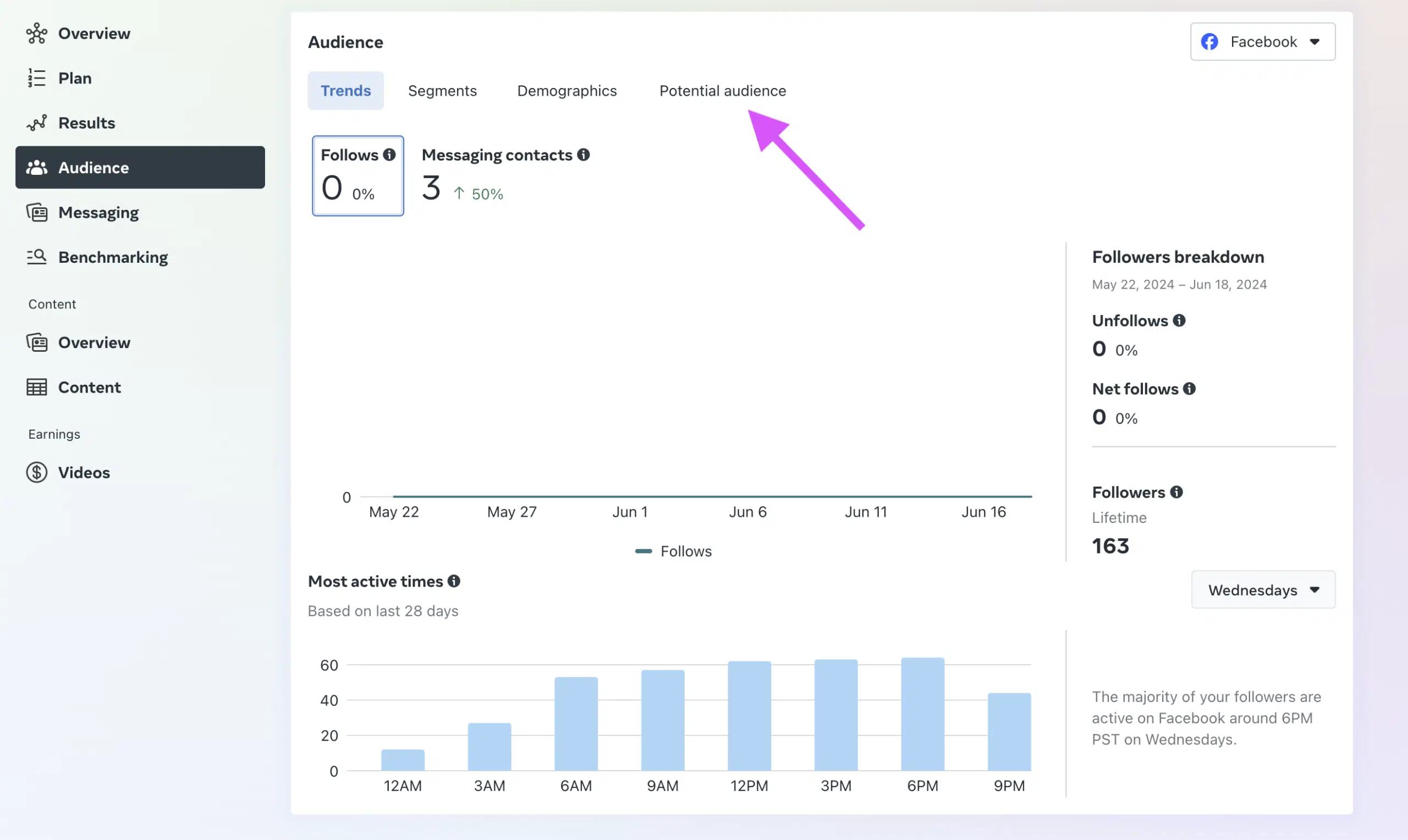
- Ad Targeting: Use specific demographic, psychographic, and behavioral targeting options available on platforms like Google Ads and social media. Create custom audiences based on your existing customer data.

Ad targeting options dashboard - Sales Messaging: Equip your sales team with persona insights. They should understand the customer’s challenges and be able to articulate how your solution specifically addresses them, using language that resonates.
- Product Development: Use ideal customer insights to inform your product roadmap. Prioritize features that solve their most pressing problems or help them achieve their most important goals.
Iteration and Refinement: It’s Not a One-Time Task
Your ideal customer is not static. Markets evolve, customer needs change, and your business grows. Treat your ideal customer definition as a living document. Regularly review and update your personas based on new data, customer feedback, and the performance of your marketing campaigns. Set a reminder to revisit your primary persona every six to twelve months to ensure it remains relevant and effective. This iterative approach ensures your targeting remains precise and your business continues to grow sustainably.


Leave a Comment