


Why AI-Powered Audits Matter for Lean Teams
For small to mid-sized businesses, a comprehensive content audit often feels like an insurmountable task. The sheer volume of content, coupled with limited headcount and budget, makes traditional manual audits impractical. This is where AI-powered tools fundamentally shift the equation. They automate the tedious data collection and initial analysis, freeing your team to focus on strategic decision-making rather than data entry.
AI doesn’t replace human judgment; it augments it. It acts as a force multiplier, allowing lean marketing teams to identify high-impact opportunities in their existing content much faster. The trade-off is clear: while AI isn’t perfect, its ability to process vast amounts of data and flag potential issues or opportunities far outweighs the time and resource drain of a purely manual approach. It’s about efficiency and getting actionable insights quickly, even with imperfect data.
Prioritizing Your Content Audit with AI
The biggest mistake a small team can make is trying to audit every piece of content they’ve ever published. With AI, the focus shifts to strategic prioritization. Your primary goal should be to identify content that has the highest potential for improved performance with the least effort.
What to do first: Target high-traffic pages that are underperforming. This includes content that ranks on the second or third page of search results for valuable keywords, or pages with high bounce rates despite decent organic visibility. AI-driven SEO tools can quickly flag these ‘low-hanging fruit’ opportunities. Also, prioritize content that aligns with your current business goals and product offerings. If you’ve launched a new service, audit related content first.
What to delay: Content that is already performing exceptionally well, or content that receives very little traffic and is not strategically important. While there might be minor optimizations, the return on investment for these pieces is lower compared to underperforming, high-potential assets. Delay auditing content that requires significant subject matter expert input if those experts are currently tied up on higher-priority projects.
What to avoid: Don’t get bogged down in auditing every single blog post from five years ago that has zero traffic and no strategic relevance. These are candidates for immediate archiving or deletion, not extensive analysis. Similarly, avoid trying to achieve perfect data completeness for every single content piece; it’s a time sink that yields diminishing returns. Focus on the 80/20 rule: identify the twenty percent of content that will deliver eighty percent of the impact.
While the advice to archive or delete old, irrelevant content is sound, the practical challenge often lies in the sheer volume and the organizational inertia. What seems like a simple cleanup task can quickly become a significant undertaking, especially if content ownership is unclear or if there’s an emotional attachment to old pieces. Overlooking this cleanup creates a hidden drag: it can subtly dilute your site’s overall authority in the eyes of search engines by presenting a vast, undifferentiated content pool. More practically, it makes internal content management harder, clutters analytics, and can even confuse users who stumble upon outdated information, eroding trust over time.
The promise of “least effort” through AI is compelling, but it’s easy to overlook the critical human layer required. AI tools excel at identifying patterns and flagging opportunities, but their recommendations are only as good as the data they’re trained on and the parameters you set. A common pitfall is to blindly accept AI suggestions for content rewrites or optimizations without a human editor’s critical eye. This can lead to content that is technically optimized but lacks nuance, brand voice, or a deep understanding of the audience’s true intent, ultimately failing to convert or engage. The “least effort” approach can quickly become a “more effort later” scenario if you’re constantly re-editing AI-generated content that misses the mark.
This brings us to a crucial point often missed: the decision pressure on small teams. When AI flags dozens or hundreds of “opportunities,” the initial excitement can quickly turn into overwhelm. Deciding which of those low-hanging fruits to tackle first, and how deeply to engage with the AI’s suggestions, requires more than just a tool; it demands a clear strategic filter and a realistic assessment of internal capacity. The second-order effect here is often decision paralysis or, conversely, a scattergun approach where teams try to do too much, too superficially. This dilutes impact and can lead to burnout, rather than the focused, high-ROI improvements the audit was intended to deliver.
The AI-Assisted Audit Workflow
Implementing an AI-powered content audit isn’t about pressing a single button; it’s about integrating AI into a structured workflow that still relies on human oversight and strategic thinking.
Data Collection & Initial Scoring: Start by using your existing SEO tools (many now incorporate AI features) to pull performance data. This includes organic traffic, keyword rankings, backlinks, and engagement metrics. AI can help identify content decay, where a piece of content’s performance has steadily declined over time, or highlight pages with high potential based on keyword difficulty and search volume. content audit features
Content Categorization & Clustering: This is where AI truly shines for efficiency. AI tools can analyze your content for topical relevance, identify clusters of similar articles, and flag potential keyword cannibalization issues where multiple pages compete for the same search terms. This helps you see your content landscape clearly and identify consolidation opportunities.
Opportunity Identification: Based on the data and categorization, AI can suggest specific actions. This might include flagging content for a freshness update (e.g., outdated statistics), identifying keyword gaps where your content could rank, or recommending consolidation of similar articles. It can also highlight low-quality or irrelevant content that should be pruned.
Human Review & Decision-Making: AI provides insights, but human judgment is non-negotiable. Review the AI’s suggestions critically. Does a suggested update align with your brand voice? Is a consolidation truly beneficial, or does each piece serve a distinct audience? Your team’s understanding of your business, audience, and market context is crucial for making the final, informed decisions.
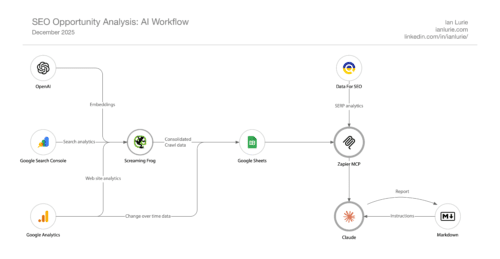
While AI undeniably streamlines the initial analysis and flags potential issues, it’s easy for teams to fall into the trap of treating its outputs as directives rather than data points. The “human review” step, critical as it is, often becomes a bottleneck or a superficial check if practitioners lack the bandwidth, confidence, or deep subject matter expertise to truly interrogate the suggestions. This isn’t just about the time commitment; it’s about the cognitive load of challenging an algorithm that presents itself as objective and efficient. The pressure to “move fast” or demonstrate quick wins from new tech can inadvertently lead to rubber-stamping AI recommendations, especially when the underlying logic isn’t transparent.
A common downstream consequence of this superficial review is the unintended dilution of content strategy. For example, AI might flag multiple articles for consolidation based purely on keyword overlap, overlooking subtle but important distinctions in audience intent, sales funnel stage, or unique value proposition. Consolidating these without careful human judgment can result in a single, generic piece that serves no one particularly well, ultimately reducing overall conversion effectiveness or alienating specific user segments. This perceived “efficiency” then comes at the cost of precision and strategic alignment, leading to a slow erosion of content quality and purpose over time.
Furthermore, the perceived “automation” of data collection and initial scoring can mask fundamental issues with the input data itself. AI models are only as good as the data they’re trained on and the data they process. If your existing SEO tools have blind spots, or if your analytics setup is incomplete or misconfigured, the AI’s insights will inherit these flaws. This creates a hidden cost: teams might spend significant resources optimizing content based on incomplete or skewed data, only to discover much later that the foundational assumptions were incorrect. This often necessitates a costly re-audit and rework, highlighting that “garbage in, garbage out” remains a critical concern, even with an AI layer making initial flaws harder to detect.
Actionable Strategies Post-Audit
Once your AI-assisted audit has identified opportunities, the next step is execution. Focus on strategies that deliver tangible results without requiring a complete overhaul of your content strategy.
Refresh & Optimize: For content flagged for updates, use AI writing tools to quickly generate fresh introductions, update statistics, or expand sections with new information. Focus on improving on-page SEO elements like title tags, meta descriptions, and internal linking. A quick refresh can often bring an older piece of content back to life.
Consolidate & Redirect: If AI identified multiple articles covering very similar topics, merge them into one comprehensive, authoritative piece. This strengthens your topical authority and reduces cannibalization. Always implement 301 redirects from the old URLs to the new consolidated URL to preserve any existing link equity and prevent broken links.
Repurpose for Reach: High-performing content identified in the audit can be repurposed across different channels. Use AI to quickly extract key points for social media posts, generate email newsletter snippets, or even draft short video scripts. This extends the life and reach of your best content without creating entirely new assets.
Pruning Low-Value Content: Don’t be afraid to remove content that truly offers no value, receives no traffic, and isn’t strategically important. This improves your site’s overall quality, potentially frees up crawl budget for more important pages, and reduces clutter. Ensure you understand the implications of removal, especially for indexed pages, and use 301 redirects if any external links point to them.
Measuring Success and Iterating
An AI-powered content audit isn’t a one-and-done project; it’s an ongoing process. To ensure your efforts are paying off, you need to track the right metrics and be prepared to iterate.
Focus on key performance indicators directly related to your audit goals: organic traffic to updated pages, keyword ranking improvements, changes in engagement rates (e.g., time on page, bounce rate), and ultimately, conversion rates if applicable. Many AI-driven analytics platforms can help you monitor these changes post-update and even suggest further optimizations based on new data. Regularly revisit your content performance, perhaps quarterly or bi-annually, to identify new opportunities and maintain your digital assets in an evergreen state. This iterative approach ensures your content remains relevant and continues to drive value for your business.

Leave a Comment