


For small to mid-sized businesses, content creation often feels like an uphill battle against limited time, budget, and headcount. This playbook cuts through the noise, showing you how to leverage AI tools to build an effective content strategy that genuinely drives engagement and organic growth. We’ll focus on practical applications, helping you make smart trade-offs and prioritize actions that deliver real results.
You’ll learn how to integrate AI into your workflow, from ideation to optimization, ensuring your efforts are directed towards what truly moves the needle for your business, even with imperfect execution.
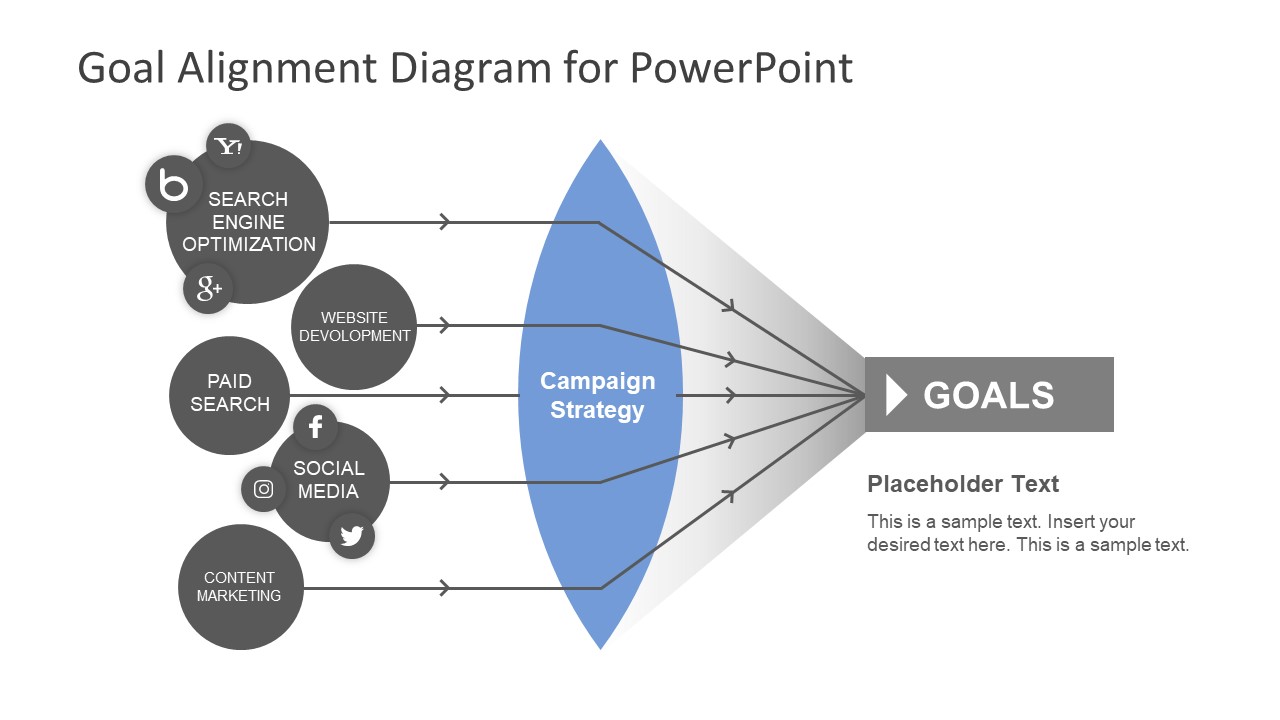
Setting Your AI Content North Star: Prioritizing Impact
Before diving into tools, clarify your content’s purpose. AI amplifies strategy; it doesn’t replace it. For small teams, this means focusing AI efforts on content that directly supports your core business objectives, not just generating more volume. Avoid the trap of creating content for content’s sake.
- Identify 2-3 Core Business Objectives: Are you aiming for lead generation, brand awareness, customer support deflection, or sales enablement? Your AI-assisted content should directly contribute to these.
- Map Content Types to Objectives: For example, long-form blog posts and guides often serve SEO and lead generation, while short-form social content builds awareness.
- Define Success Metrics: Establish clear, measurable key performance indicators (KPIs) before you start. This could be organic traffic growth, qualified leads, time on page, or conversion rates.
Practical AI for Content Ideation and Research
AI excels at processing vast amounts of data to identify trends, common questions, and keyword opportunities that align with your audience’s intent. This capability saves significant manual research time, allowing your team to focus on strategic refinement.
- Audience Insights: Use AI to analyze customer reviews, social media comments, and support tickets to uncover prevalent pain points, questions, and language used by your target audience.
- Topic Generation: Feed your AI model existing high-performing content, competitor content, or industry news to generate new topic clusters and content ideas that resonate. This can be a powerful starting point for brainstorming. AI content ideation
- Keyword Research Support: While AI can suggest keywords, always cross-reference with dedicated SEO tools. Use AI to expand on long-tail variations or cluster related terms, but rely on human judgment for final keyword selection based on search volume and competition.
While AI significantly reduces the initial legwork in content ideation, it introduces its own set of practical challenges that often go unaddressed. One common pitfall is the subtle pressure to over-rely on AI for the “what” without adequately investing in the “why.” AI can tell you what questions are being asked, but it struggles to grasp the underlying motivations, emotional context, or specific nuances of your audience’s pain points. Content derived solely from AI-identified trends can become technically accurate but emotionally sterile, failing to build genuine connection or differentiate your brand in a crowded market.
This over-reliance also carries a hidden cost: content homogenization. If every business feeds similar data into similar AI models, the resulting topic suggestions and insights will inevitably converge. This makes it increasingly difficult to produce truly unique or distinctive content, forcing teams to expend more effort later in the production cycle to inject originality and a unique voice. The initial time savings can be offset by the increased effort required to stand out from a sea of AI-generated sameness.
Furthermore, the sheer volume of ideas AI can generate, while theoretically a benefit, often becomes a practical bottleneck for small to mid-sized teams. Sifting through hundreds of AI-suggested topics, many of which are redundant, off-brand, or simply not viable given limited resources, can consume significant time. Without a robust human filtering process and clear strategic guardrails in place before extensive generation, teams risk drowning in options rather than efficiently identifying actionable insights. The goal isn’t maximum output, but rather a curated set of high-potential ideas that align with your strategic objectives and operational capacity.
Streamlining Content Creation with AI
This is where AI offers the most immediate efficiency gains for lean teams. It can rapidly generate outlines, first drafts, and even entire sections, freeing your team to focus on editing, fact-checking, and adding unique value that only a human can provide.
- Outline Generation: Provide a topic and target keywords; AI can structure a comprehensive, logical outline, ensuring all critical points are covered.
- First Drafts: Use AI to generate initial paragraphs or sections. Crucially, treat these as starting points, not final copy. Your team’s role shifts from drafting to curating, enhancing, and fact-checking.
- Repurposing Content: Transform a single piece of content (e.g., a blog post) into multiple formats like social media snippets, email copy, or video scripts with AI assistance, maximizing your content’s reach.
- Grammar and Style Checks: Leverage AI-powered tools to refine language, improve readability, and ensure consistency in tone and style across your content.
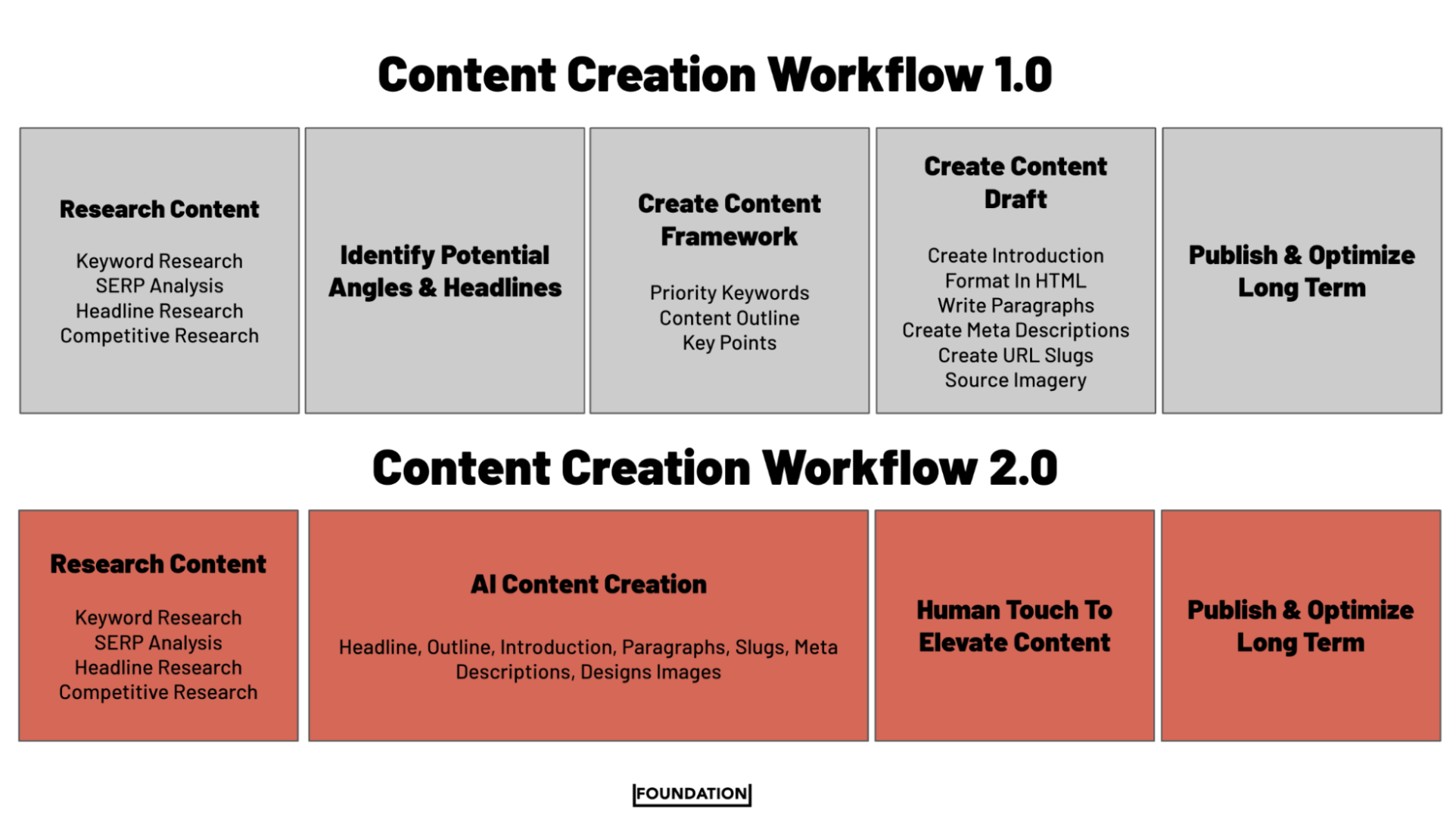
While the promise of AI-generated first drafts sounds like a significant time-saver, the reality of ‘editing’ often proves more demanding than anticipated. It’s easy to assume editing means minor tweaks, but AI output frequently requires substantial restructuring, fact-checking, and injecting the specific nuance or tone that defines your brand. This isn’t just polishing; it’s often a heavy revision, which can lead to human teams feeling less ‘freed up’ and more like they’re wrestling with a machine’s interpretation rather than building from a solid foundation. The initial time saved in generation can quickly be consumed by the deeper work required to make the content truly usable and on-brand, creating a hidden cost in human effort and potential frustration.
A more insidious, downstream effect is the potential erosion of a unique brand voice. Over-reliance on AI for initial drafts, especially without a robust human editorial filter, can lead to content that is technically correct but lacks distinctiveness. AI models, by design, tend towards generalized language, which can dilute your brand’s personality over time, making your content blend into the noise rather than stand out. Furthermore, consistently working from AI-generated starting points can inadvertently stunt the development of critical thinking and original writing skills within your team. This creates a dependency where the team becomes less capable of producing truly unique and impactful narratives independently, posing a long-term vulnerability for content quality and strategic differentiation.
Optimizing for Engagement and SEO with AI
Beyond creation, AI can assist in optimizing content for both search engines and human readers, ensuring your efforts translate into visibility and interaction. This is about making your content work harder once it’s published.
- SEO Enhancements: Use AI to suggest meta descriptions, title tags, and internal linking opportunities based on target keywords and content analysis. This helps improve organic search visibility. AI for SEO best practices
- Readability Scores: AI tools can analyze text for complexity, suggesting simpler phrasing or better sentence structures to improve readability for your target audience, leading to higher engagement.
- Engagement Hooks: Experiment with AI to generate compelling headlines, introductions, and calls-to-action that resonate with user intent and encourage clicks and further interaction.
- Personalization (Limited Scope): For email or on-site content, AI can help segment audiences and suggest tailored content variations. For small teams, focus on simpler segmentation rather than complex, dynamic personalization which requires significant data infrastructure.
What to Deprioritize and Why
In a resource-constrained environment, knowing what not to do is as critical as knowing what to do. Your limited resources are better spent on quality control and strategic human input rather than trying to fully automate content from end-to-end.
You should deprioritize the following:
- Fully Automated Content Generation without Human Oversight: While tempting, publishing AI-generated content without thorough human review, fact-checking, and brand voice integration is a fast track to low-quality, unengaging, and potentially inaccurate output. This damages credibility, wastes indexing budget, and ultimately harms your brand.
- Chasing Every AI Trend: The AI landscape is evolving rapidly. Resist the urge to adopt every new tool or feature immediately. Focus on stable, proven applications that solve specific pain points in your existing workflow and deliver tangible ROI.
- Complex AI Personalization for Small Teams: While powerful, advanced AI-driven content personalization often requires significant data infrastructure, ongoing management, and a deep understanding of customer journeys. For most small to mid-sized businesses, the ROI on this level of complexity is low compared to foundational content strategy and creation. Stick to simpler segmentation and A/B testing.
Measuring and Adapting Your AI Content Strategy
The real value of any content strategy lies in its ability to adapt. AI tools can also assist in analyzing performance data, providing insights for continuous improvement. This feedback loop is essential for optimizing your efforts.
- Performance Dashboards: Set up dashboards to track key metrics (organic traffic, conversions, engagement rates, bounce rate) for your AI-assisted content. Focus on metrics that directly tie back to your initial business objectives.
- A/B Testing Support: Use AI to generate variations of headlines, calls-to-action, or even entire content sections for A/B testing. Analyze which performs better and apply those learnings.
- Content Audits: Periodically use AI to help identify underperforming content that needs updating, repurposing, or removal. This ensures your content library remains fresh and relevant.


Leave a Comment