

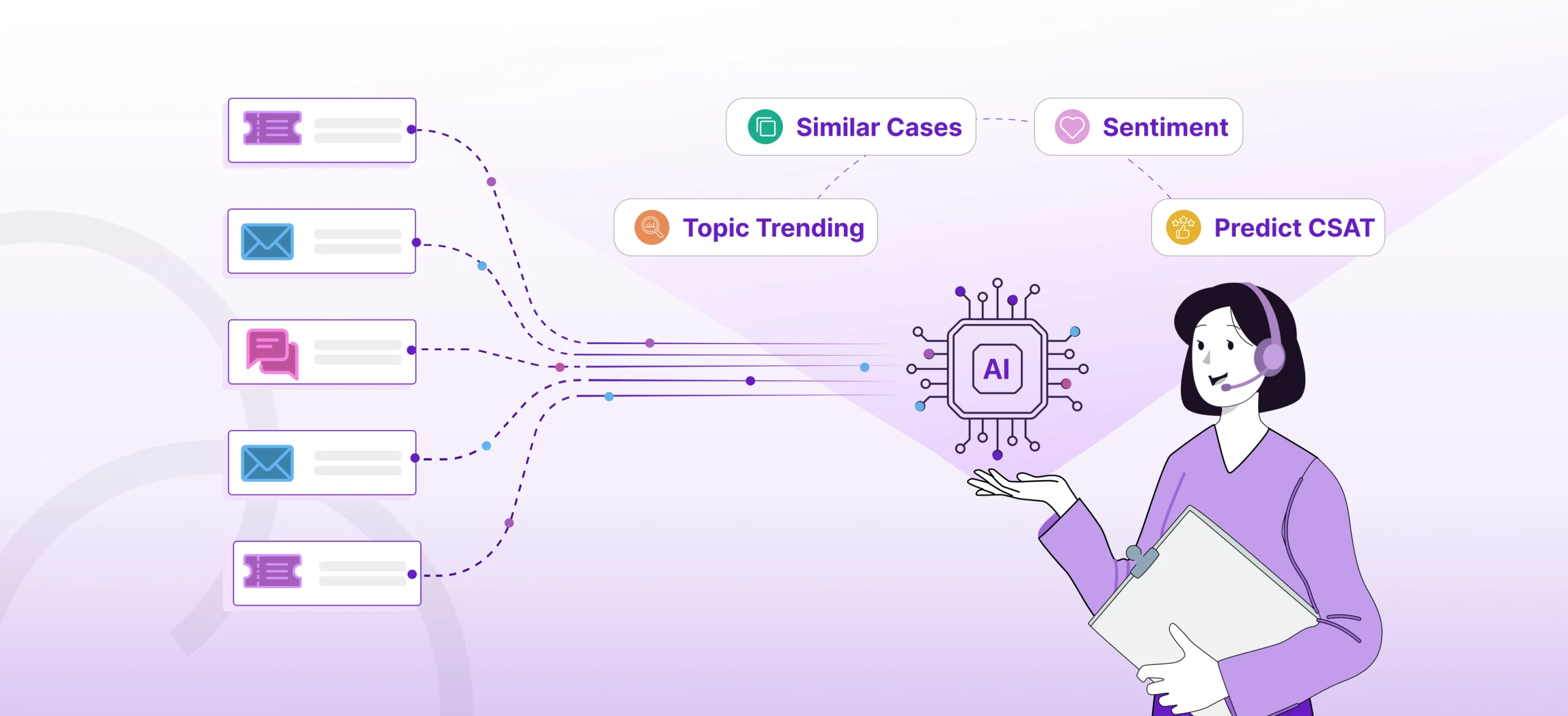
In today’s competitive landscape, small to mid-sized businesses often grapple with strategic decisions under tight constraints. This guide cuts through the noise, showing you how to effectively integrate AI co-pilots into your strategic planning and daily operations. You’ll gain actionable insights on leveraging these tools to make smarter, data-informed choices, optimize resource allocation, and drive growth without overextending your team or budget.
We’ll focus on practical applications that deliver tangible value, helping you prioritize where to invest your limited time and capital for maximum impact. Expect clear guidance on what truly moves the needle, what can wait, and what common pitfalls to avoid.
Understanding the AI Co-Pilot: Beyond Automation
An AI co-pilot isn’t just another automation tool; it’s a strategic partner designed to augment human intelligence, not replace it. For SMBs, this means leveraging AI to extend the capabilities of your existing team, providing data analysis, content generation, market research, and strategic insights that would otherwise require significant time or specialized headcount. Think of it as an intelligent assistant that helps your marketing manager analyze campaign performance, your sales lead identify high-potential prospects, or your operations team streamline workflows by surfacing critical data patterns.
The real value lies in its ability to process vast amounts of information quickly, identify trends, and generate hypotheses, freeing up your team to focus on higher-level strategic thinking, creative problem-solving, and direct customer engagement. It’s about enhancing decision velocity and quality, especially when resources are scarce.
Prioritizing Strategic Applications for SMBs
Given limited resources, SMBs must be highly selective about where they deploy AI co-pilots. The focus should be on areas that directly impact revenue, efficiency, or competitive advantage with a clear, measurable ROI. Here are the top priorities:
- Market Research & Competitive Analysis: Use AI co-pilots to rapidly synthesize market trends, analyze competitor strategies, and identify unmet customer needs. This informs product development, messaging, and market entry strategies. For example, an AI can quickly summarize hundreds of competitor reviews to pinpoint their weaknesses and your potential advantages.
- Content Strategy & Creation: From blog post outlines and social media captions to email subject lines and ad copy, AI co-pilots can significantly accelerate content generation. This allows your small marketing team to produce more targeted, high-quality content consistently, improving SEO and engagement.
- Data Analysis & Reporting: Connect AI co-pilots to your CRM, analytics platforms, and sales data. They can identify patterns in customer behavior, predict churn risks, or highlight underperforming segments, providing actionable insights for sales and marketing optimization. This is crucial for making data-driven decisions without needing a dedicated data scientist.
- Personalized Customer Engagement: AI can help segment audiences more effectively and even draft personalized email responses or sales outreach messages, improving conversion rates and customer satisfaction. This scales the impact of your customer-facing teams.
What’s often overlooked in the rush to adopt AI co-pilots is the hidden cost of human oversight and refinement. While an AI can draft a blog post outline or a social media caption in seconds, the output rarely arrives perfectly aligned with your brand voice, specific campaign nuances, or strategic intent. Teams often find themselves spending significant time editing, fact-checking, and injecting the necessary human touch to make the content truly effective and authentic. This isn’t just an extra step; it’s a critical quality control gate that, if skipped, can lead to a gradual dilution of your brand’s unique voice and a loss of audience trust over time – a delayed consequence that’s hard to measure until it’s too late.
Another common pitfall lies in the assumption that AI inherently provides “correct” insights. Especially in market research and data analysis, an AI co-pilot will process the data it’s given and present patterns or summaries with unwavering confidence. However, if the underlying data is incomplete, biased, or misinterpreted by the human user, the AI will simply amplify those flaws. The non-obvious failure mode here is not the AI making a mistake, but rather the human team blindly trusting the output without applying critical domain expertise to validate its relevance and accuracy. This requires a shift in mindset: AI isn’t a replacement for strategic thinking; it’s a powerful assistant that demands a more rigorous human review process to prevent confident errors from becoming costly decisions.
For SMBs, it’s crucial to deprioritize chasing every new AI feature or trend without a clear, existing problem it solves. The temptation to experiment broadly can lead to fragmented efforts, tool sprawl, and a significant drain on limited team bandwidth for setup and learning, without delivering measurable value. Instead, focus on integrating AI where it directly addresses a bottleneck or a repetitive task that currently consumes disproportionate human effort. If you don’t have a specific, high-impact use case in mind, hold off. The real value comes from targeted application, not from simply having AI in your tech stack.
Implementing AI Co-Pilots: A Phased Approach
Successful integration isn’t about a big bang; it’s about iterative, controlled deployment. Start small, prove value, and then scale. This minimizes risk and ensures your team adopts the tools effectively.
- Identify a High-Impact, Low-Complexity Pilot Project: Choose one specific strategic area (e.g., generating initial drafts for blog posts, analyzing customer feedback from reviews) where an AI co-pilot can deliver immediate, measurable value without disrupting core operations. This builds internal confidence and demonstrates ROI quickly.
- Select the Right Tool(s): Focus on user-friendly platforms that integrate with your existing tech stack where possible. Prioritize tools with clear use cases for SMBs, rather than enterprise-grade solutions with unnecessary features. Many general-purpose AI assistants can be adapted for various tasks.
- Train Your Team on Specific Workflows: Don’t just hand over the tool. Provide clear guidelines, best practices, and examples of how the AI co-pilot should be used within specific workflows. Emphasize the “co-pilot” aspect – the AI provides a draft or analysis, but human judgment and refinement are always required.
- Establish Clear Metrics for Success: Before deployment, define what success looks like. Is it a twenty percent reduction in content creation time? A ten percent increase in lead qualification speed? Track these metrics to justify further investment and identify areas for improvement.
The initial success of a pilot project, while crucial for internal buy-in, can sometimes mask deeper issues that emerge at scale. What feels like a quick win with a small, well-defined task often relies on relatively clean inputs or a narrow scope. When you attempt to expand, you inevitably hit the wall of inconsistent data, edge cases the AI wasn’t trained for, or the sheer volume of diverse content that requires more nuanced prompting. This isn’t a failure of the AI, but a practical reality of scaling, where the “low-complexity” aspect of the pilot gives way to significant data preparation or prompt engineering overhead that wasn’t budgeted for.
A more insidious, second-order effect is the subtle erosion of critical thinking and domain expertise within the team. While we stress human judgment, the sheer efficiency of AI in generating initial drafts can lead to a passive acceptance of its output. Teams might spend less time deeply researching or critically evaluating information, instead defaulting to editing AI-generated content. This risks diluting the unique insights and specialized knowledge that human practitioners bring, turning a co-pilot into a crutch rather than an accelerator. The pressure to hit speed metrics can inadvertently encourage this shortcut, leading to a decline in the quality of the final output, even if the quantity increases.
Finally, it’s easy to overlook that AI co-pilots are not “set it and forget it” tools. The effectiveness of these systems is heavily dependent on the quality and specificity of prompts, which themselves require continuous refinement. What constitutes a “best practice” for prompting can shift as models evolve or as your team’s needs change. This means ongoing investment in training, experimentation, and sharing prompt strategies, rather than a one-time onboarding. Failing to account for this continuous learning curve can lead to diminishing returns and team frustration as the AI’s output becomes less useful over time.
What to Deprioritize and Why
For SMBs, the temptation to chase every new AI trend is strong, but it’s a trap. Today, in early 2026, you should actively deprioritize or completely avoid:
- Building Custom AI Models from Scratch: Unless your core business is AI development, investing in custom model training is an enormous drain on resources (time, money, specialized talent) that most SMBs cannot justify. Off-the-shelf, adaptable co-pilot solutions are more than sufficient for ninety-five percent of strategic needs. Focus on leveraging existing, proven tools.
- Over-automating Complex Customer Interactions: While AI can assist with initial customer support or personalized outreach, fully automating complex or sensitive customer interactions can backfire. Customers still value human connection for nuanced issues. Use AI to empower your human agents, not replace them entirely in critical areas.
- Adopting Too Many Niche AI Tools Simultaneously: Resist the urge to subscribe to a dozen different AI tools for every conceivable micro-task. This leads to tool sprawl, integration headaches, and fragmented data. Start with one or two versatile co-pilots and expand only when a clear, unmet need arises that a new tool uniquely addresses.
- Ignoring Data Privacy and Security: Do not rush into using AI co-pilots without understanding their data handling policies. Deprioritize any tool that doesn’t offer robust data privacy and security features, especially if you’re dealing with sensitive customer or business information. A data breach due to negligence can be far more costly than any efficiency gain.
The rationale here is simple: resource optimization. Every hour and dollar spent on a low-ROI or high-risk AI initiative is an hour and dollar not spent on a guaranteed value driver. Focus on practical, proven applications that directly support your immediate strategic goals.
Measuring Impact and Iterating
Once your AI co-pilots are in use, continuous measurement and iteration are vital. This isn’t a set-it-and-forget-it deployment. Regularly review the performance against your defined metrics. Are content creation times actually down? Has lead qualification improved? Are your market insights more robust?
Gather feedback from your team. What’s working well? What are the pain points? Are there new opportunities for the co-pilot to assist? Use this feedback to refine workflows, adjust prompts, or explore additional features of your chosen tools. This iterative process ensures the AI co-pilot remains a valuable asset and adapts as your business needs evolve. Consider A/B testing different AI-generated content variations against human-generated ones to fine-tune effectiveness. AI content optimization strategies
Navigating the Future of AI in Business
The landscape of AI is constantly evolving, but the core principles for SMBs remain consistent: focus on augmentation, not replacement; prioritize practical, measurable value; and maintain human oversight. As AI capabilities advance, expect co-pilots to become even more sophisticated in areas like predictive analytics, hyper-personalized marketing, and complex strategic scenario planning. Staying informed about these developments is important, but always filter new trends through the lens of your specific business needs and resource constraints. Your goal isn’t to adopt every new feature, but to strategically leverage AI to make better decisions and grow your business sustainably. future of AI in small business


Leave a Comment