

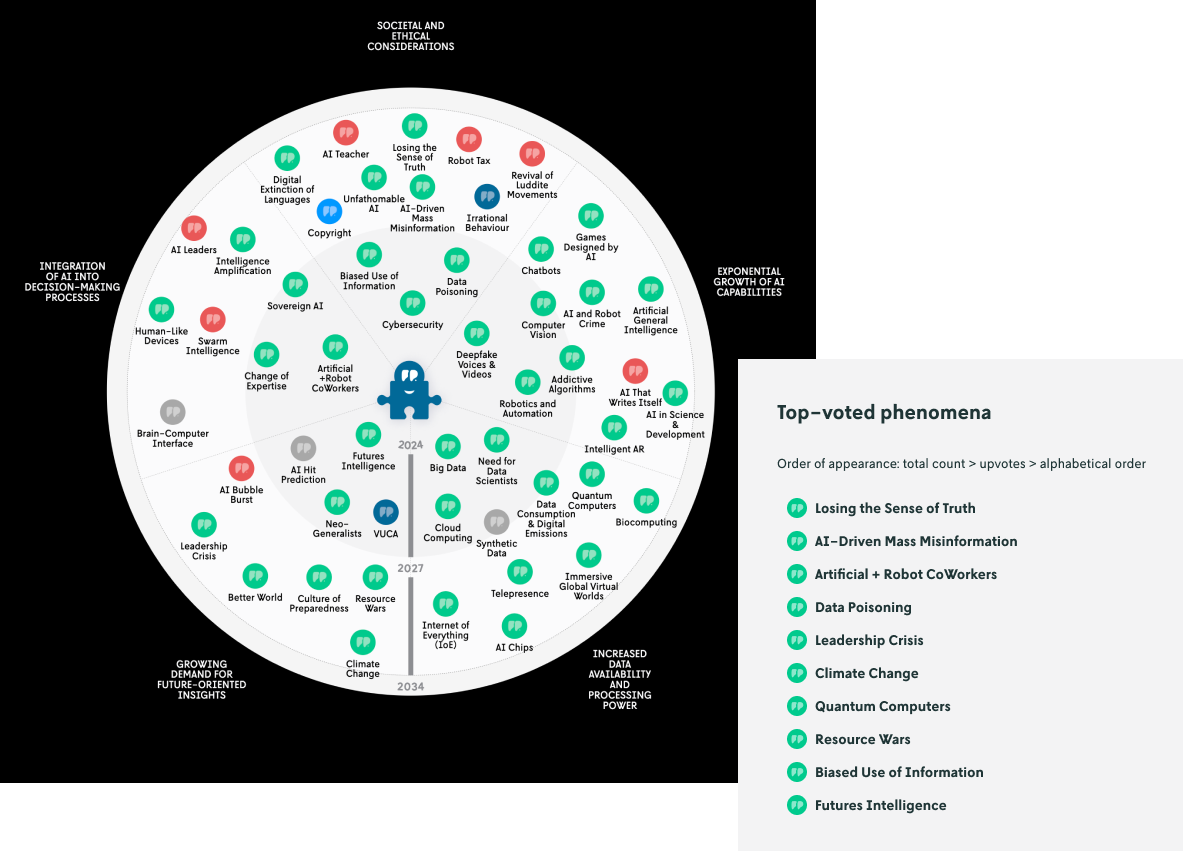
Why Strategic Foresight Matters for SMBs Today
For small to mid-sized businesses, the market isn’t just changing; it’s accelerating. Consumer behaviors shift rapidly, new technologies emerge constantly, and the competitive landscape evolves almost daily. Relying solely on historical data or reacting to events after they happen is a losing strategy. Strategic foresight, powered by AI, isn’t about predicting the future with perfect accuracy, but about identifying early signals, understanding probabilities, and making proactive decisions. This capability allows your business to move from a reactive stance to an anticipatory one, spotting emerging product categories, shifts in search intent, or early signs of competitor moves before they become obvious to everyone else.
Practical AI Applications for Market Foresight
Leveraging AI for foresight doesn’t require a data science team. Many practical applications are now integrated into tools SMBs already use or can easily adopt:
- Trend Analysis with Natural Language Processing (NLP): AI can analyze vast amounts of unstructured text data from social media, customer reviews, news articles, and forums. This helps identify emerging themes, sentiment shifts, and new keywords that indicate evolving customer needs or market interests.
- Benefit: Understand what customers are discussing, their pain points, and the solutions they seek, informing your content and product strategy.
- Predictive Customer Behavior: Modern CRM and analytics platforms increasingly use AI to forecast customer churn, identify high-value customer segments, or predict future purchase patterns.
- Tools: Features within platforms like HubSpot or Google Analytics 4’s predictive metrics can offer these insights. Google Analytics 4 predictive metrics
- Benefit: Optimize marketing spend, personalize offers, and improve customer retention by acting before issues arise.
- Competitive Intelligence: AI-powered tools can continuously monitor competitor activities—pricing changes, content strategies, advertising spend, and product launches.
- Tools: Platforms like SEMrush or Ahrefs offer robust competitive analysis features that leverage AI to process and present this data.
- Benefit: Identify market gaps, capitalize on opportunities, and mitigate potential threats by understanding competitor movements early.
- Simplified Demand Forecasting: By analyzing historical sales data alongside external factors, AI can help predict future demand for products or services.
- Benefit: Optimize inventory levels, improve resource planning, and reduce waste, ensuring you meet customer needs efficiently.
While these AI applications offer clear advantages, it’s easy to overlook the hidden costs and practical challenges that emerge in real-world execution. For instance, AI excels at identifying patterns and anomalies in data, but it doesn’t inherently provide strategic context or explain the ‘why’ behind a trend or a competitor’s move. Relying solely on AI-generated insights without deep human interpretation can lead to misallocated resources, as teams might chase superficial trends or react to competitor actions without understanding their underlying strategic intent. This often results in a reactive posture rather than a proactive, differentiated market approach.
Another common pitfall lies in the data itself. Predictive models, whether for customer behavior or demand forecasting, are only as robust as the data they are trained on. Biased, incomplete, or outdated historical data will inevitably lead to flawed predictions, creating a false sense of security or misguiding critical decisions. Furthermore, the ‘black box’ nature of many AI models means they can tell you what is likely to happen (e.g., a customer is likely to churn) but not always why. This lack of causal insight can be a significant source of frustration for marketing and sales teams, who receive a prediction but struggle to formulate an effective, targeted intervention.
In practice, the ease of continuous monitoring can also become a trap. AI-powered competitive intelligence, for example, can flood teams with a constant stream of competitor updates. While valuable, an overemphasis on tracking every minor competitor change can divert focus and resources from internal strategic development. It fosters a ‘keeping up with the Joneses’ mentality that drains energy and prevents teams from doubling down on their unique value proposition. Therefore, while AI streamlines data collection, the critical judgment of what to ignore and what to prioritize remains firmly with the human team.
For small to mid-sized businesses with limited bandwidth, it’s crucial to deprioritize the exhaustive, real-time tracking of every competitor’s micro-update. Instead, focus on using AI to identify significant market shifts or strategic moves that genuinely impact your core business. Chasing every fleeting trend or minor competitor adjustment can quickly lead to operational fatigue and dilute your strategic focus, yielding diminishing returns for the effort invested.
Prioritizing AI for Foresight: What to Do First
For small to mid-sized businesses, the path to leveraging AI for strategic foresight should be pragmatic and focused:
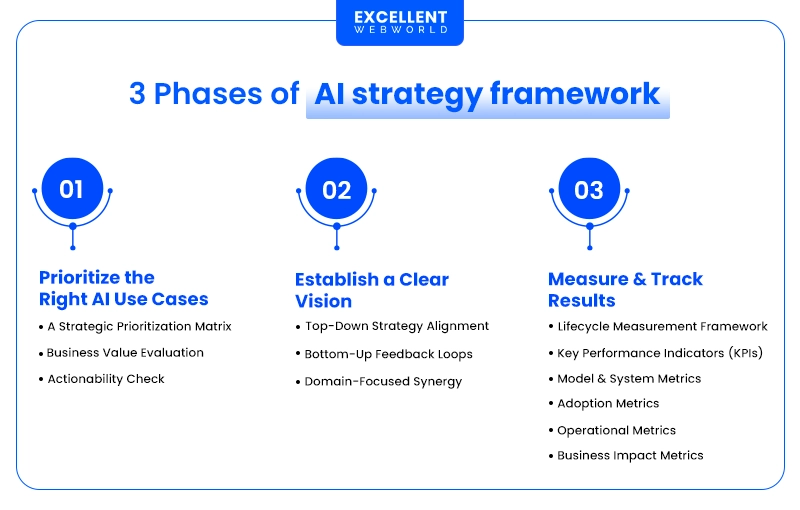
- Start with existing data: Before investing in new tools, maximize the insights from the data you already collect in your CRM, analytics platforms, and sales systems. Many of these platforms now have built-in AI features that are often underutilized.
- Define specific, high-impact questions: Don’t just “do AI.” Instead, ask targeted questions like, “Can AI help us predict which customers are most likely to churn in the next three months?” or “Can AI identify emerging product features our customers are asking for based on support tickets and reviews?”
- Focus on accessible tools: Begin with AI capabilities integrated into platforms you already use or those that are relatively easy to adopt and implement. This minimizes setup time, technical expertise requirements, and initial investment.
- Embrace small, iterative projects: Avoid trying to build a comprehensive AI system from day one. Start with a small, manageable project, learn from the results, and then gradually expand. For example, use an AI-powered tool to analyze customer review sentiment for a single product line to gauge initial impact.
What to Deprioritize and Avoid Today
For small to mid-sized teams, the allure of cutting-edge AI can be a significant distraction. Deprioritize building custom, complex AI models from scratch or investing in large-scale data lake infrastructure. These initiatives demand significant capital, specialized data science talent, and a long development cycle that most SMBs cannot afford or sustain. The return on investment for such bespoke solutions is often too distant and uncertain given operational constraints. Instead, focus on leveraging off-the-shelf AI capabilities that solve immediate, practical problems. Avoid chasing every new AI trend without a clear, measurable business objective. Many “AI solutions” are overhyped and deliver little practical value for businesses operating with limited resources. Stick to proven applications that integrate with your existing workflows and provide actionable insights, not just data.
Integrating Foresight into Your Digital Strategy
Once you begin generating AI-driven insights, the next step is to embed them into your core digital strategies:
- Data-driven content strategy: Use AI insights to identify trending topics, keywords with rising search volume, and content gaps your competitors aren’t addressing. This ensures your content resonates with current and future customer needs.
- Proactive marketing campaigns: Launch targeted campaigns based on predicted customer behavior, such as offering retention incentives to customers identified as high-churn risks or promoting new products to segments predicted to be most receptive.
- Inform product and service development: Feed insights about unmet customer needs, emerging demands, or competitor feature sets directly into your product roadmap. This ensures your offerings remain relevant and competitive.
- Optimize resource allocation: Adjust marketing budgets, sales efforts, or customer support staffing based on predicted opportunities or risks. For example, allocate more resources to a product line with predicted high growth.
- Continuous learning and adaptation: Treat AI insights as hypotheses to test and refine, rather than absolute truths. The market is dynamic, and your models should evolve with it.
The Practitioner’s Edge: Human Judgment with AI
AI provides powerful analytical capabilities, but it doesn’t replace human judgment. For SMBs, the real edge comes from combining AI-driven insights with your team’s deep understanding of your customers and market. AI can flag a potential trend, but your team needs to interpret its significance, assess its relevance to your specific business, and decide on the appropriate action. This involves asking critical questions: Is this trend sustainable? Do we have the resources to capitalize on it? What are the potential risks? Use AI to augment your strategic thinking, not to automate it entirely. Your practical experience and intuition, when informed by AI, become a formidable advantage. AI for marketing strategy


Leave a Comment