

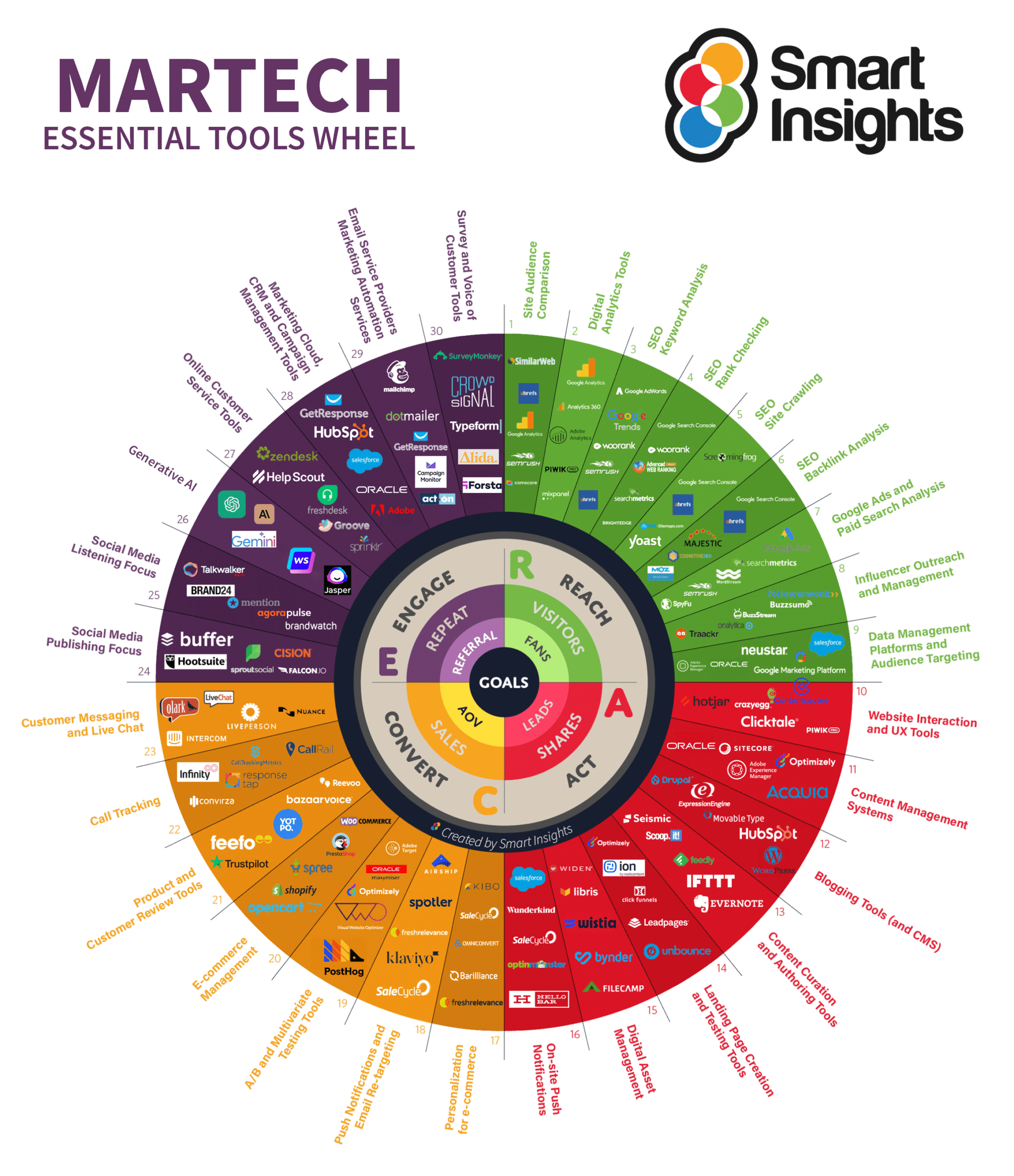
Unlock Efficiency with an Integrated AI Marketing Ecosystem
For small to mid-sized businesses, the promise of AI in marketing isn’t just about individual tools; it’s about building a cohesive ecosystem. This article cuts through the noise, showing you how to strategically integrate AI tools to make better decisions, automate repetitive tasks, and ultimately improve your campaign performance and revenue. You’ll gain practical insights on what to prioritize, what to delay, and what to avoid, ensuring your limited budget and headcount are invested wisely.
We’ll focus on creating a system where your AI tools work together, providing a unified view of your marketing efforts and customer journey. This isn’t about chasing every new AI feature, but about building a robust, interconnected stack that delivers real, measurable value under real-world constraints.
Why an Integrated AI Ecosystem Matters for SMBs
Many small to mid-sized teams fall into the trap of adopting AI tools piecemeal. A separate AI writer here, a standalone analytics tool there. The result? Fragmented data, duplicated efforts, and a lack of holistic insights. Your team spends more time trying to stitch systems together than actually executing strategy. An integrated AI ecosystem solves this by ensuring your tools communicate, share data, and provide a single source of truth.
This approach is critical for businesses with limited resources. It maximizes the impact of each tool, reduces operational friction, and allows your team to focus on strategic thinking rather than manual data reconciliation. It’s about making your marketing efforts smarter and more efficient, turning disparate tools into a powerful, unified engine.
While the promise of a single source of truth is compelling, its practical realization often hits a snag. When integrations are shallow or data models aren’t truly aligned, minor discrepancies inevitably surface. A lead score might differ slightly between the CRM and the marketing automation platform, or campaign attribution might be interpreted differently by the analytics tool versus the ad platform. These small inconsistencies, while seemingly minor, quickly erode team confidence in the ‘unified’ data. The immediate consequence is a return to manual cross-referencing and verification, which nullifies the very efficiency gains the integration was meant to provide. Over time, this breeds skepticism, making teams less likely to trust any AI-driven insight.
Furthermore, merely connecting tools doesn’t automatically translate into smarter decision-making. The initial friction of technical integration might be solved, but it often gives way to a new, more subtle form of friction: cognitive overload. Teams are now presented with a deluge of interconnected data points, but without clear frameworks for interpretation or defined workflows for acting on these insights, the sheer volume can be overwhelming. The challenge shifts from ‘how do I get the data?’ to ‘what does all this data mean for my specific business goal, and what should I do next?’ This requires a different kind of skill set – data literacy and strategic synthesis – which is often assumed rather than actively cultivated within smaller teams.
Given these realities, a common pitfall is to chase ‘perfect’ integration from the outset. For many SMBs, the immediate priority should not be a fully seamless, real-time data flow across every single tool. Instead, focus on integrating the two or three most critical systems that drive your core marketing and sales processes. Attempting to connect every peripheral tool simultaneously often leads to scope creep, delayed implementation, and a diluted focus. Prioritize integrations that solve your most painful data fragmentation points first, even if it means accepting a few manual exports or less-than-perfect alignment elsewhere for a period. The goal is actionable insight, not architectural purity.
Core Pillars of Your AI Marketing Stack
Building an effective AI marketing ecosystem starts with identifying the foundational areas where AI can deliver the most impact. Think of these as the core pillars:
- AI-Enhanced Customer Relationship Management (CRM): Your CRM should be the central nervous system. Modern CRMs now integrate AI for lead scoring, predictive analytics, personalized email sequencing, and even basic chatbot support. Prioritize a CRM that offers robust AI features or seamless integrations with AI tools. This is where your customer data lives, and AI can make that data actionable.
- Content Generation & Optimization: AI writing assistants are no longer novelties; they’re productivity multipliers. Use them for drafting blog posts, social media updates, ad copy variations, and email subject lines. Pair these with AI-powered SEO tools that analyze content gaps and suggest optimizations. The goal isn’t to replace human writers, but to accelerate content production and improve its search visibility.
- Advertising & Campaign Optimization: Platforms like Google Ads and Meta Ads already leverage sophisticated AI for targeting, bidding, and creative optimization. Beyond these, consider AI tools that help analyze ad performance across channels, identify underperforming creatives, and suggest budget reallocations. This pillar is about getting more mileage from your ad spend.
- Analytics & Reporting with AI Insights: Moving beyond raw data, AI-driven analytics tools can identify trends, anomalies, and actionable insights that might be missed by manual review. Look for tools that provide natural language explanations of performance, predict future outcomes, and recommend specific actions to improve campaigns.
While the promise of AI integration across these pillars is compelling, practitioners often encounter hidden costs and non-obvious failure modes. For instance, the effectiveness of AI-enhanced CRM and analytics hinges entirely on data quality. Poorly maintained customer data – incomplete records, duplicates, or inconsistent formatting – will inevitably lead to flawed AI outputs, whether it’s inaccurate lead scoring or misleading performance insights. The initial investment in AI features can quickly become a sunk cost if the underlying data hygiene isn’t rigorously managed, turning predictive analytics into mere guesswork and eroding trust in the system’s recommendations.
Similarly, the allure of content generation tools can mask a critical human element: oversight. While AI can accelerate drafting, it rarely captures the nuanced brand voice or strategic intent without significant human refinement. Over-reliance can lead to a proliferation of generic content, diluting brand identity and failing to resonate with the target audience. This isn’t just about editing; it’s about maintaining a consistent, authentic voice. Furthermore, AI-driven analytics, while powerful, can generate an overwhelming volume of “actionable” insights. For small teams, the challenge quickly shifts from identifying insights to prioritizing which few can realistically be acted upon given limited time and resources. The theoretical ideal of acting on every micro-optimization often clashes with the practical reality of operational constraints.
The real friction point often lies in the gap between what AI can do and what a lean team can practically implement. It’s easy to overlook that integrating AI isn’t a set-it-and-forget-it solution; it demands ongoing human judgment, strategic prioritization, and a willingness to deprioritize seemingly valuable but resource-intensive recommendations. The pressure to leverage every AI capability can lead to fragmented efforts or analysis paralysis, rather than focused, impactful action. Therefore, a critical judgment call for any practitioner is to identify where AI truly amplifies existing efforts without creating new, unmanageable operational burdens.
Prioritizing Your AI Tool Investments
Given limited budgets and time, strategic prioritization is non-negotiable. Here’s how to approach it:
- Do First: Start with an AI-enhanced CRM. It’s the hub for customer data and often integrates with other marketing tools. Simultaneously, invest in AI content generation and SEO optimization tools. These offer immediate productivity gains and directly impact organic visibility, a long-term asset. Focus on tools that solve your most pressing pain points and integrate easily with your existing tech stack.
- Delay: Highly specialized AI tools that address very niche problems, unless that niche is your absolute biggest bottleneck. Also, delay complex, standalone AI analytics platforms that require significant data engineering or custom setup. These often demand more resources than an SMB can realistically allocate in the early stages.
- Avoid: Over-investing in too many single-purpose AI tools that don’t communicate with each other. This creates data silos and negates the benefits of an ecosystem. Avoid tools with opaque pricing models or those requiring extensive custom development without a clear, immediate ROI. Chasing every new AI trend without a clear strategy for integration and business impact is a recipe for wasted resources.
For today, small to mid-sized teams should deprioritize standalone, highly specialized AI tools that don’t offer immediate integration benefits or require significant custom development. The overhead of managing disparate systems and the potential for data silos often outweighs the marginal gains from a hyper-specialized tool. Instead, focus on platforms that offer broader AI capabilities within an existing ecosystem or provide clear API access for future integration, even if their AI features aren’t ‘bleeding edge’ in every single aspect. Practicality and integration trump theoretical perfection.
Building Integration, Not Just Stacking Tools
The true power of an AI marketing ecosystem lies in its integration. This means your tools aren’t just coexisting; they’re actively exchanging data and insights. Think about how your AI content tool can feed into your social media scheduler, or how your CRM’s AI-driven lead scores can inform your ad targeting. AI marketing strategy
Look for tools with robust APIs or native integrations. Your CRM, for instance, should ideally connect seamlessly with your email marketing platform, advertising channels, and analytics dashboards. This creates a unified view of your customer journey and campaign performance, allowing AI to identify patterns and make recommendations across the entire marketing funnel. The goal is to eliminate manual data transfers and ensure a consistent flow of information, enabling more intelligent automation and decision-making. CRM AI features
The Practitioner’s Edge: Making AI Work for You
Implementing an AI marketing ecosystem is an ongoing process, not a one-time setup. As a practitioner, your role is crucial. AI tools are co-pilots, not replacements for human judgment. You need to:
- Provide Context: AI thrives on data, but it needs human context. Guide your AI content tools with clear prompts and brand guidelines.
- Evaluate Outputs Critically: Don’t blindly accept AI-generated content or insights. Review, refine, and apply your industry knowledge.
- Iterate and Refine: Monitor performance, adjust your tool usage, and refine your integration strategy based on real-world results. What works today might need tweaking tomorrow.
- Focus on Business Metrics: Always tie your AI investments back to tangible business outcomes: increased leads, higher conversion rates, reduced customer acquisition cost, or improved customer lifetime value.
By taking a pragmatic, integrated approach, small to mid-sized businesses can leverage AI to punch above their weight, making smarter marketing decisions and achieving sustainable growth.


1 Comment