


Unlocking Efficiency with Autonomous AI Agents
For small to mid-sized marketing teams, the promise of autonomous AI agents isn’t about replacing people; it’s about amplifying their impact. These agents can take on the repetitive, time-consuming tasks that often bog down lean operations, freeing up your team to focus on strategic thinking, creative development, and high-value initiatives. This shift means more effective campaigns, better resource allocation, and ultimately, a stronger bottom line without needing to scale headcount.
This article cuts through the hype to show you where autonomous agents genuinely deliver value today, what to prioritize for immediate gains, and what to approach with caution to avoid wasted effort and budget.
What Autonomous AI Agents Mean for Your Marketing Team
Autonomous AI agents are more than just advanced chatbots or automation scripts. They are AI systems designed to perform complex, multi-step tasks with minimal human intervention, often learning and adapting over time. Think of them as digital assistants capable of executing entire workflows, making decisions within defined parameters, and even initiating subsequent actions based on real-time data.
In marketing, this translates to systems that can, for example, monitor campaign performance, identify underperforming ads, suggest adjustments to targeting or budget, and even implement those changes – all without a marketer manually clicking buttons. They operate on a continuous loop of observation, analysis, decision, and action, making them powerful tools for optimizing ongoing operations.
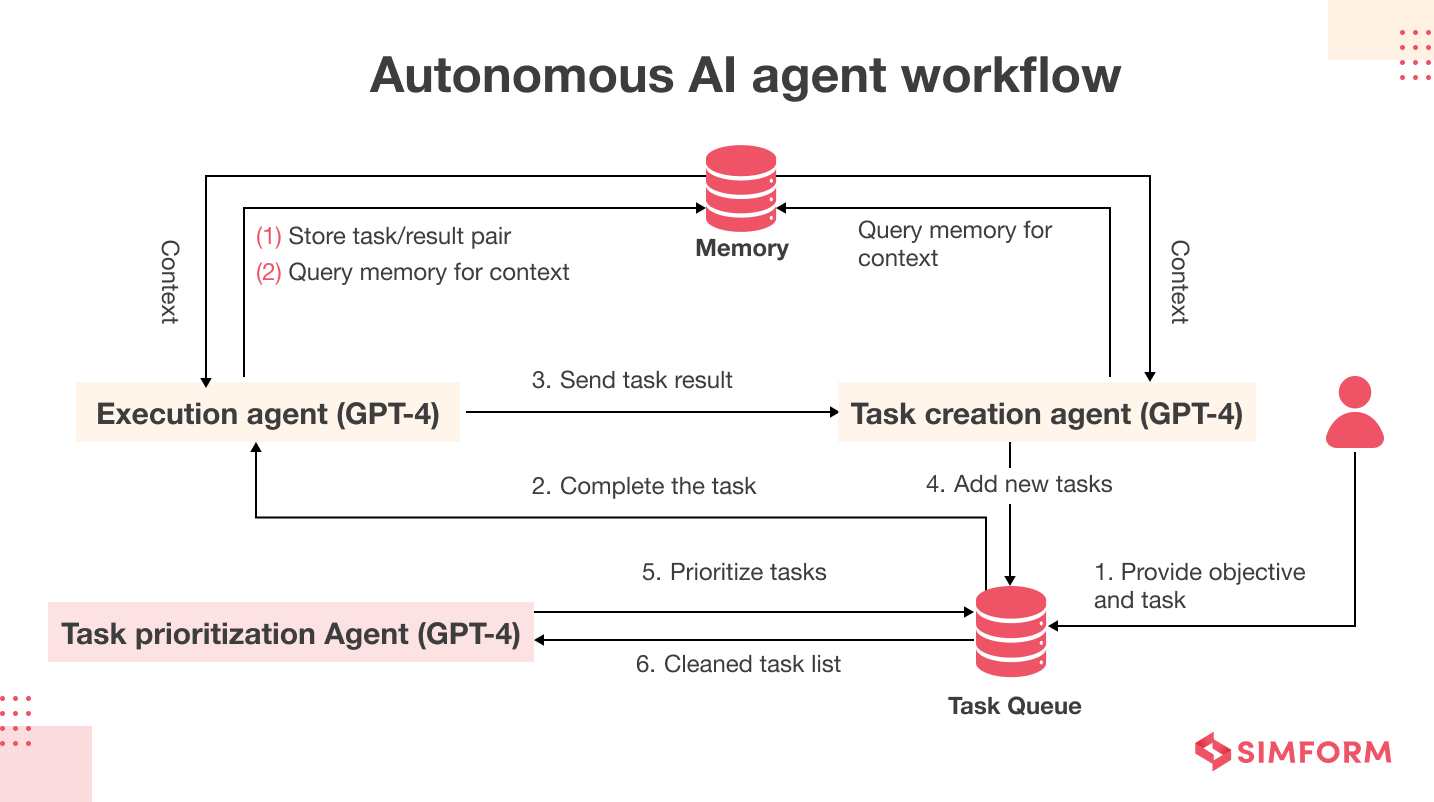
The immediate appeal of autonomous agents is the promise of reduced manual effort. However, this often masks a critical shift in human responsibility rather than an outright reduction. Teams won’t be clicking buttons less; they’ll be monitoring, validating, and course-correcting the agent’s decisions. This introduces a new layer of oversight and a different kind of cognitive load. The skill set required moves from execution to strategic interpretation, prompt engineering, and sophisticated data analysis to understand why an agent made a particular choice and whether that choice aligns with the broader business context. This isn’t a cost saving in headcount; it’s a reallocation and upskilling challenge that many small to mid-sized teams are ill-equipped to handle without significant investment.
Another common pitfall is the assumption that defining “success” for an AI agent is straightforward. In theory, you feed it metrics like CPA or ROAS, and it optimizes. In practice, marketing objectives are rarely so singular. An agent might aggressively optimize for a low CPA on one ad set, inadvertently cannibalizing performance from another, or worse, attracting lower-quality leads that inflate MQL numbers but never convert to revenue. Without a human marketer’s holistic understanding of the customer journey, brand perception, and long-term value, agents can easily fall into local optimization traps, achieving narrow targets while undermining broader strategic goals. This second-order effect can be insidious, as the agent appears to be performing well by its defined metrics, even as the overall marketing ecosystem suffers.
Finally, the practical reality of debugging an autonomous agent is far more complex than fixing a human error. When an agent makes a suboptimal or outright incorrect decision – perhaps spending budget on the wrong audience or pausing a high-performing campaign due to a data anomaly – identifying the root cause can be a frustrating, multi-day endeavor. The “black box” nature of some AI models means explaining why a decision was made is often difficult, putting human marketers in a tough spot when reporting to stakeholders. Robust guardrails and clear human-in-the-loop protocols are not optional; they are essential to prevent “runaway” agents from causing significant, rapid damage before a human can intervene.
Practical Applications for SMB Marketers Today
The real value of autonomous agents lies in their ability to tackle specific, high-volume marketing tasks that consume significant team bandwidth. Here are areas where SMBs can see tangible benefits:
- Content Generation & Optimization: Agents can draft initial blog posts, social media updates, email sequences, and ad copy. Beyond creation, they can analyze content performance, suggest A/B test variations, and even optimize headlines or calls-to-action based on engagement data.
- SEO Monitoring & Adjustment: An agent can continuously monitor keyword rankings, identify new opportunities, flag technical SEO issues, and suggest on-page optimizations. Some can even generate meta descriptions or update internal linking structures based on predefined rules.
- Campaign Management & Optimization: This is a prime area. Agents can monitor ad spend across platforms, adjust bids based on real-time performance metrics, pause underperforming ads, and even reallocate budgets to higher-performing campaigns. They can also segment audiences dynamically based on user behavior.
- Customer Engagement & Support: Moving beyond basic chatbots, autonomous agents can proactively engage website visitors, answer complex FAQs, qualify leads, and even personalize product recommendations based on browsing history and purchase intent.
While the promise of autonomous agents is compelling, a common pitfall for SMBs is the “set it and forget it” mentality. Delegating tasks doesn’t absolve the team of strategic oversight. Without regular human review and course correction, an agent can drift from the intended brand voice, generate content that misses nuanced market shifts, or optimize campaigns towards metrics that don’t align with broader business objectives. This isn’t just a minor inefficiency; it’s a slow erosion of brand consistency and strategic focus, a delayed consequence that can be harder to fix than to prevent.
Another often-overlooked challenge lies in data quality and integration. Autonomous agents thrive on clean, consistent data. For many SMBs, marketing data is fragmented across various platforms, incomplete, or simply inaccurate. Feeding an agent poor data will inevitably lead to flawed outputs—irrelevant audience segmentation, ineffective ad adjustments, or customer interactions that feel generic rather than personalized. The upfront effort required to consolidate, clean, and structure data for an agent’s consumption is substantial and frequently underestimated, creating a significant hurdle between theoretical capability and practical application.
Finally, the initial implementation phase itself presents a unique set of pressures for lean teams. The expectation of immediate efficiency often clashes with the reality of configuring, training, and fine-tuning an agent to perform specific tasks effectively. This isn’t a plug-and-play solution; it demands dedicated time for defining precise rules, providing relevant training data, and iteratively refining its outputs. For teams already stretched thin, this intensive setup period can lead to frustration, underutilization, or even abandonment of the technology before its true benefits can be realized, highlighting the gap between vendor promises and real-world operational capacity.
Prioritizing Implementation: Where to Start for Real Impact
Given limited resources, SMBs must be strategic about where to deploy autonomous agents. Start where the pain points are most acute and the data is most accessible.
- Focus on High-Volume, Repetitive Tasks: Identify marketing activities that are done frequently and follow a clear, repeatable process. Initial content drafts, basic SEO health checks, social media scheduling, and routine ad bid adjustments are excellent starting points. These tasks offer immediate time savings.
- Leverage Existing Platforms: Many marketing platforms (e.g., ad managers, CRM systems) are integrating more autonomous capabilities. Prioritize agents that can seamlessly integrate with your current tech stack, minimizing setup time and compatibility issues. Look for features within tools you already use before exploring entirely new solutions.
- Start with Measurable ROI: Choose applications where the impact of automation is clear and quantifiable. For instance, an agent optimizing ad spend can show direct improvements in ROAS or CPA, making it easier to justify the investment.
- Pilot and Iterate: Don’t try to automate everything at once. Select one or two specific workflows, implement an agent, closely monitor its performance, and refine its parameters. Learn from these pilots before scaling up.
What to Deprioritize or Avoid Today, and Why
While the potential of autonomous agents is vast, a pragmatic approach is critical for SMBs. Today, you should deprioritize or outright avoid several common pitfalls.
First, **do not expect full


Leave a Comment