

For small to mid-sized businesses, every marketing dollar and hour counts. Predictive AI isn’t about futuristic speculation; it’s about making smarter, more efficient decisions today to stretch those resources further. This article cuts through the hype to show you how to practically apply AI to anticipate customer needs and market shifts, helping you focus your efforts where they’ll have the most impact.
You’ll gain actionable insights on prioritizing predictive marketing initiatives, understanding which AI applications deliver real value under real-world constraints, and what to deprioritize to avoid wasting precious time and budget. Our focus is on tangible benefits for teams operating with limited headcount and imperfect data.
Why Predictive Marketing Matters for SMBs Today
In a competitive landscape, being reactive is a losing strategy. Small to mid-sized businesses, often with leaner teams and tighter budgets, simply cannot afford to guess. Predictive marketing, powered by AI, offers a critical advantage: it allows you to move from reacting to market changes and customer behavior to anticipating them. This isn’t about replacing human judgment but augmenting it, enabling your team to allocate resources more effectively.
For instance, instead of broadly targeting an entire customer segment, AI can pinpoint which specific customers are most likely to churn next month, or which product a particular customer is most likely to buy. This precision means less wasted ad spend, more relevant communications, and ultimately, a higher return on your marketing investment. It’s about making your limited resources work harder by focusing them on the highest probability outcomes.
Core Applications of AI in Predictive Marketing
While AI can do many things, for SMBs, certain predictive applications offer more immediate and tangible value. Prioritizing these can accelerate your path to ROI.
- Customer Churn Prediction: Identifying customers at risk of leaving before they actually do. This allows for proactive retention efforts, which are often far more cost-effective than acquiring new customers. Many CRM and marketing automation platforms now offer this as a built-in feature.
- Next Best Offer/Product Recommendation: Predicting what a customer is most likely to purchase next. This powers personalized product recommendations on your website, in emails, or during sales interactions, significantly boosting conversion rates and average order value.

Customer journey prediction flow - Lead Scoring and Prioritization: Moving beyond basic demographic scoring, AI can analyze behavioral data to predict which leads are most likely to convert into paying customers. This ensures your sales team focuses their limited time on the hottest prospects.
- Content Performance Forecasting: Predicting which content topics, formats, or headlines will resonate best with your target audience. This helps content teams prioritize creation efforts and optimize for engagement before publication.
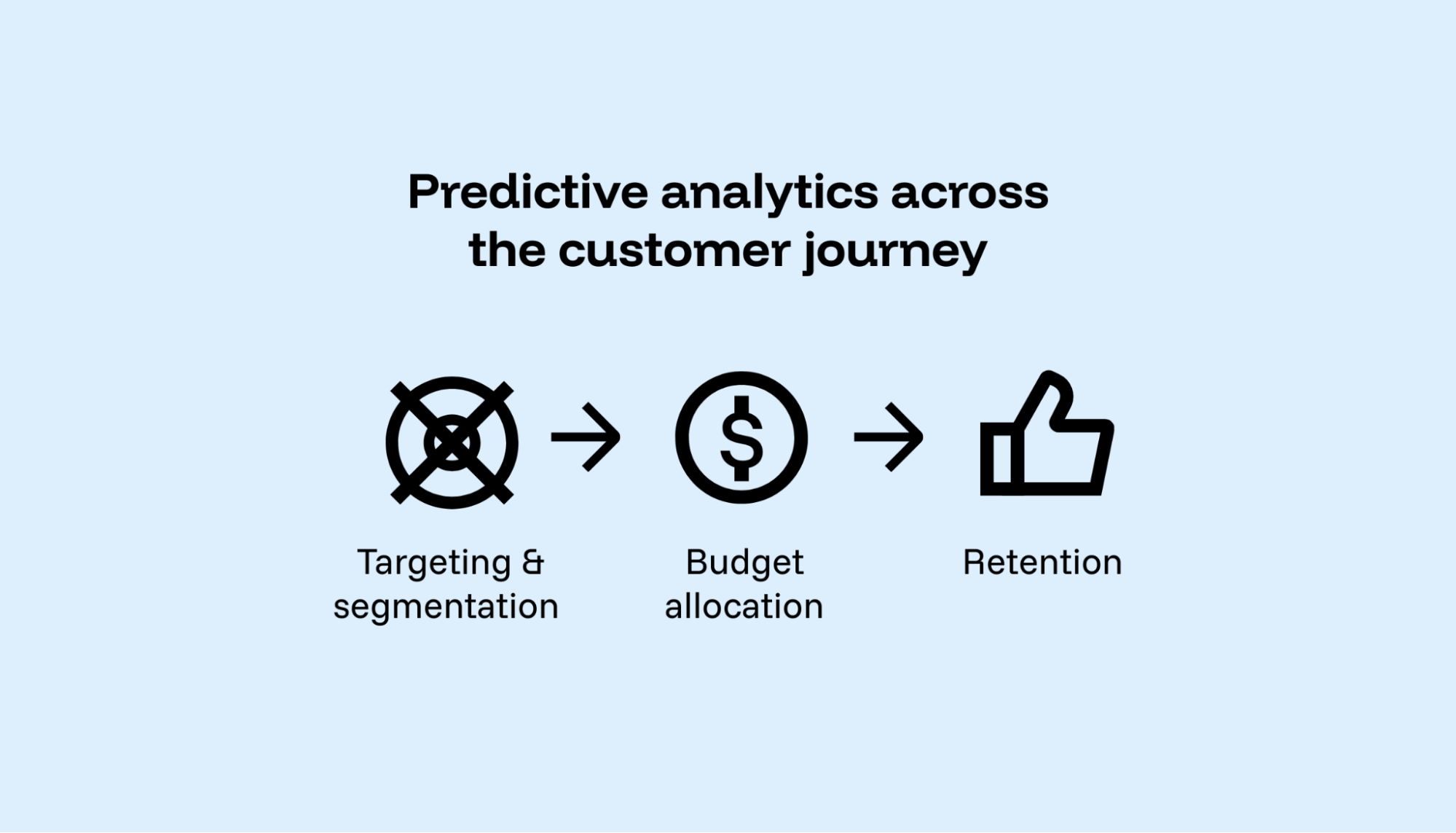
These applications directly address common SMB challenges: customer retention, increasing sales efficiency, and optimizing content creation. They leverage data you likely already collect, making implementation more straightforward.
While the initial setup for these AI applications can feel straightforward, especially with platform-native features, the real challenge often lies in sustaining their value. The models are only as good as the data feeding them. What’s easy to overlook is the ongoing, often tedious, work of data hygiene and consistency. Inconsistent tagging, incomplete customer profiles, or delayed updates mean the AI’s predictions will degrade over time, leading to inaccurate churn risks, irrelevant recommendations, or misprioritized leads. This isn’t a one-time fix; it’s a continuous operational burden that, if neglected, can erode trust in the system and lead teams to revert to gut feelings.
Another common pitfall is the subtle shift from using AI as a guide to treating its outputs as infallible truth. When a lead is scored low, or a content piece is forecasted poorly, the immediate human reaction can be to deprioritize it entirely without further investigation. This over-reliance can inadvertently lead to missed opportunities, especially for edge cases or emerging trends that current models haven’t been trained to recognize. It stifles the very human intuition and experimental mindset that often drives breakthrough results in SMBs, creating a frustrating dynamic where teams feel constrained by the “machine” rather than empowered by it.
Furthermore, the true ROI isn’t just in the prediction itself, but in the team’s ability to act on it. A precise churn prediction is meaningless if the customer success team lacks the bandwidth or a clear, integrated workflow to intervene effectively. Operationalizing these insights—embedding them seamlessly into sales cadences, marketing automation, or customer service protocols—is a distinct and often more complex challenge than the model building itself. This gap between insight and action is where many promising AI initiatives falter, turning a powerful predictive capability into just another data point that doesn’t move the needle.
Prioritizing Your Predictive AI Initiatives
Given limited resources, strategic prioritization is non-negotiable. Start with initiatives that have a clear business problem, accessible data, and a high likelihood of measurable impact within your existing tech stack.
Do This First: Focus on customer-centric predictions that leverage your internal CRM, sales, and marketing data.
- Customer Churn Prediction: This is often the lowest-hanging fruit. The data (purchase history, engagement, support interactions) is usually well-contained, and the ROI of retaining a customer is clear. Many platforms like HubSpot or Shopify have features or integrations that can help with this.
- Next Best Offer/Product Recommendations: If you’re an e-commerce business, this is critical. Platforms like Shopify have built-in AI-driven recommendation engines. For service businesses, it translates to predicting relevant upsell or cross-sell opportunities.
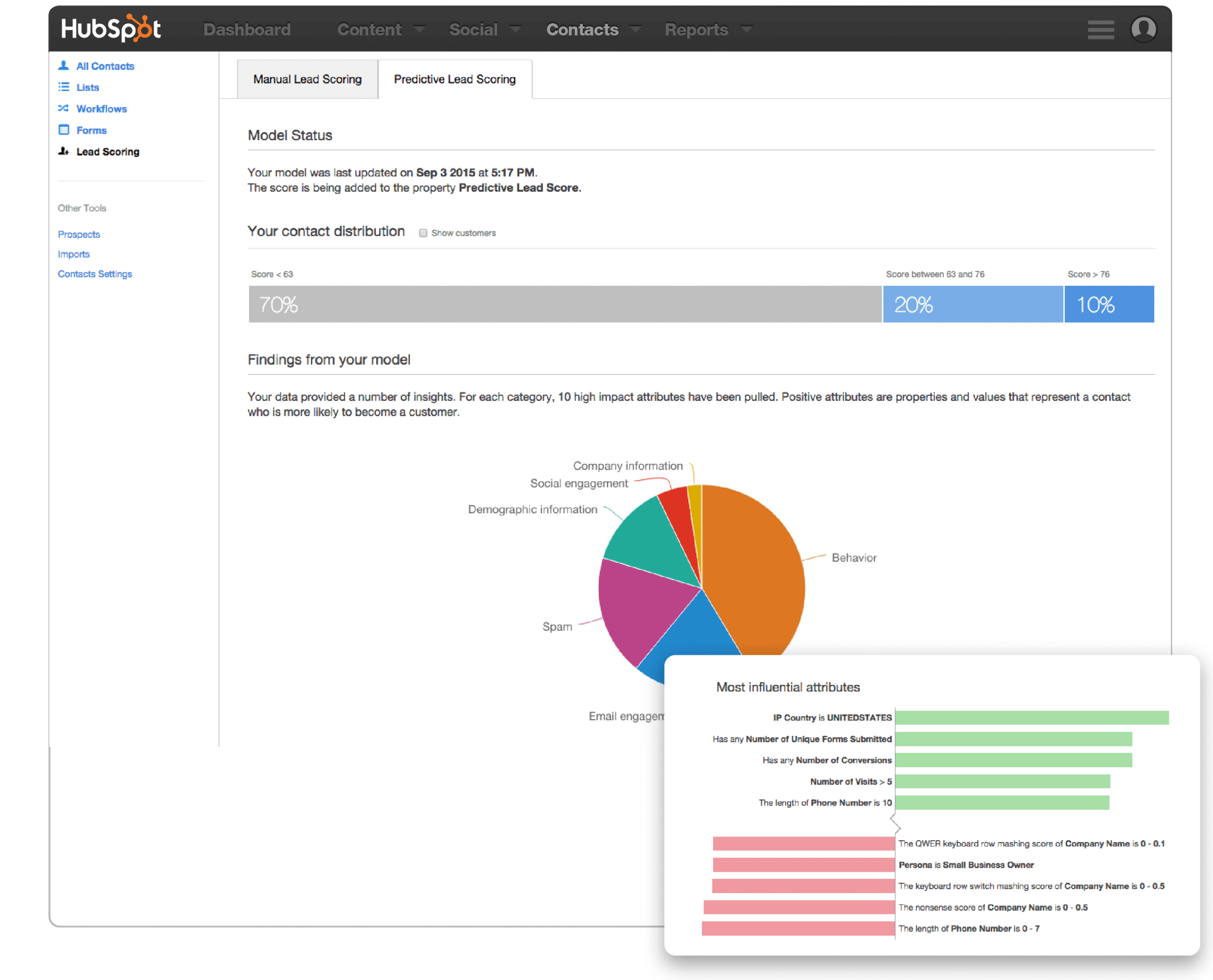
- Lead Scoring: If your sales team is overwhelmed, AI-driven lead scoring can dramatically improve their efficiency by directing them to the most promising leads. This often integrates with your CRM.

Predictive lead scoring dashboard
What to Deprioritize or Skip Today: Avoid complex market shift models that require extensive external data integration, custom machine learning development, or highly specialized data science expertise. While fascinating, these projects are typically resource-intensive, have longer time-to-value, and demand a level of data maturity and technical skill that most SMBs don’t possess. Trying to build a bespoke AI solution for broad market forecasting will likely drain your budget and time without delivering immediate, actionable insights. Stick to leveraging AI features embedded within your existing, trusted marketing and sales platforms first. The goal is practical application, not bleeding-edge research.
However, even with these prioritized initiatives, several hidden costs and non-obvious failure modes often emerge. One common trap is assuming “accessible data” automatically means “clean data.” Many SMBs have years of inconsistent, incomplete, or outdated records within their CRM or sales platforms. While the AI can technically ingest this data, its predictions will only be as reliable as the input. This leads to a downstream effect where initial enthusiasm for AI-driven insights gives way to frustration when recommendations are off the mark, forcing a costly and time-consuming data cleanup effort *after* the investment has already been made.
Another overlooked aspect is the human adoption curve. Even if a predictive model is technically sound and accurate, its value is zero if the frontline sales or marketing teams don’t trust its recommendations or find them cumbersome to integrate into their daily workflows. This often manifests as internal friction or a quiet reversion to manual processes, effectively nullifying the AI’s potential impact and wasting the resources invested. The pressure to hit targets can make teams wary of new, unproven methods, especially if early predictions aren’t perfectly aligned with their intuition.
Finally, the notion that predictive AI is a “set it and forget it” solution is a significant misconception. Models degrade over time as customer behaviors shift, market dynamics evolve, and your own business offerings change. Without a clear strategy for continuous monitoring, retraining, and refinement, the accuracy and utility of your AI initiatives will inevitably decline. This ongoing maintenance requires dedicated attention and resources, which are often scarce in small to mid-sized teams, leading to diminishing returns and a perception that the AI “stopped working” when, in reality, it simply wasn’t maintained.
Practical Steps to Implement Predictive AI
Implementing predictive AI doesn’t require a data science degree, but it does demand a structured approach.
- 1. Data Foundation is Paramount: AI is only as good as the data it’s fed. Ensure your customer data (CRM, sales, marketing automation, website analytics) is clean, consistent, and integrated. This is often the biggest hurdle, but also the most critical step. Without reliable data, any predictive model will produce unreliable results.
- 2. Leverage Existing Tools: Don’t reinvent the wheel. Many marketing automation platforms, CRMs, and e-commerce platforms (e.g., HubSpot, Shopify, Mailchimp) now offer embedded AI features for lead scoring, customer segmentation, and product recommendations. Start by exploring and activating these. AI features for marketing automation
- 3. Define Clear Business Questions: Before you even look at a tool, identify the specific business problem you’re trying to solve.



Leave a Comment