

Unlock Smarter Customer Journeys with AI
For small to mid-sized businesses, leveraging AI for hyper-personalization isn’t about building complex systems from scratch. It’s about strategically applying accessible tools to make your marketing more relevant, efficient, and effective. This guide cuts through the noise to show you how to use AI to craft tailored customer journeys, boosting engagement and conversions without overstretching your limited budget or team.
You’ll gain practical insights into prioritizing your efforts, identifying high-impact areas, and understanding what to deprioritize. The goal is to equip you with the judgment needed to implement AI personalization that genuinely moves the needle for your business today.
What Hyper-Personalization Means for SMBs (and What It Doesn’t)
For an SMB, hyper-personalization isn’t about creating a unique, bespoke experience for every single customer across every touchpoint simultaneously. That’s an enterprise-level ideal. Instead, it means using data and AI-powered tools to deliver highly relevant content, offers, and interactions at key moments in the customer journey.
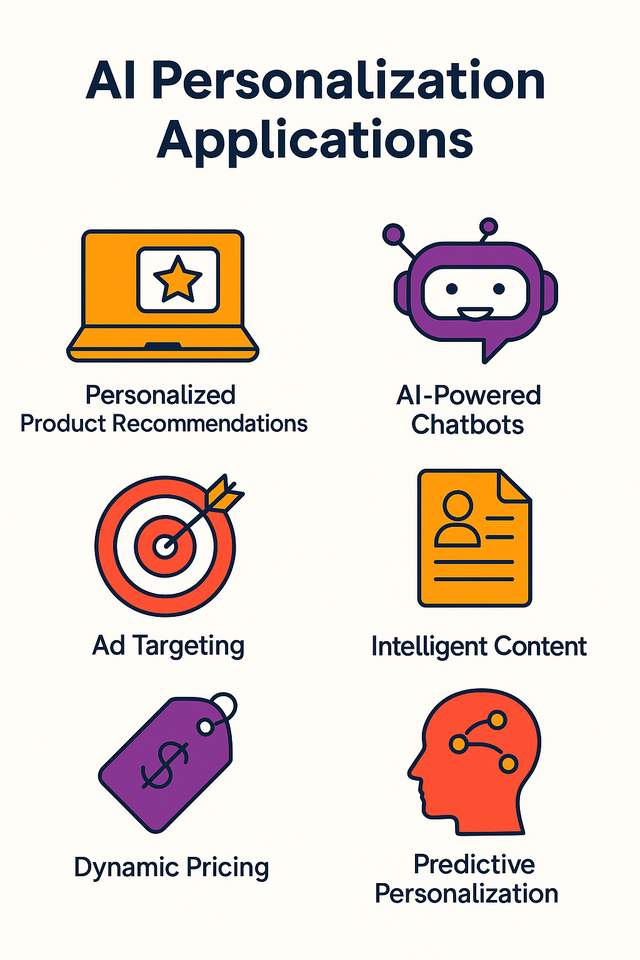
It means: Dynamic product recommendations on your e-commerce site, personalized email subject lines and content blocks, segmented ad targeting based on behavior, and intelligent chatbot responses that guide users efficiently.
It doesn’t mean: Developing custom machine learning models, integrating dozens of disparate systems for real-time, cross-channel orchestration, or hiring a dedicated data science team. Focus on leveraging the AI capabilities already embedded within your existing marketing and sales platforms.
Even when leveraging the AI capabilities embedded in your existing platforms, the quality of your underlying data remains a critical, often overlooked, prerequisite. Many SMBs assume the AI will magically compensate for messy, incomplete, or inconsistent customer profiles. In practice, poor data leads directly to irrelevant recommendations, generic email content, or mis-targeted ads. This isn’t just ineffective; it actively erodes trust and can make customers feel misunderstood, which is arguably worse than no personalization at all. The hidden cost here is the ongoing, often underestimated, effort required to cleanse, standardize, and enrich your data—a task frequently deprioritized until personalization efforts visibly underperform.
Furthermore, the theory of hyper-personalization often suggests that more relevance is always better. However, in the real world, there’s a fine line between helpful and intrusive. Over-personalization, especially when it feels like the system knows too much or relentlessly re-targets based on a single interaction, can trigger a “creepiness” reaction. This isn’t just a minor annoyance; it’s a second-order effect that leads to customer fatigue, increased opt-outs, and a negative perception of your brand’s data practices. It’s a clear example where good intentions, poorly executed or without sufficient guardrails, can backfire and damage the very customer relationship you’re trying to enhance.
For SMBs, the biggest practical trap is attempting to personalize every conceivable customer journey or segment simultaneously. Resist the urge to build out intricate personalization flows for edge cases that represent a tiny fraction of your audience or revenue. The operational overhead and technical complexity required to maintain such a system will quickly outweigh any marginal gains. Instead, focus your limited resources on high-impact, high-volume touchpoints where existing platform features can deliver meaningful relevance with minimal ongoing maintenance.
Prioritize areas like dynamic product recommendations for active shoppers, targeted cart abandonment emails, or personalized welcome sequences for new leads. Trying to do too much too soon often results in fragmented, half-baked efforts that yield no measurable return and only add to team frustration. Deprioritize chasing obscure segments or attempting real-time, cross-channel orchestration across every single touchpoint; the effort-to-impact ratio for these initiatives is typically too low for resource-constrained teams.
Prioritizing Your AI Personalization Efforts
With limited resources, prioritization is everything. Here’s a pragmatic approach to getting started with AI-driven personalization:
1. Solidify Your Data Foundation
Before any AI can work its magic, you need clean, organized, and accessible customer data. This is non-negotiable. AI models are only as good as the data they’re fed. Focus on:
CRM Hygiene: Ensure your customer relationship management system (CRM) is up-to-date with accurate contact information, purchase history, and interaction logs.
Segmentation: Start segmenting your audience based on clear criteria like demographics, purchase behavior, website activity, or engagement levels. This provides the initial buckets for AI to refine.
Consent Management: Ensure you have proper consent for data collection and usage, especially with evolving privacy regulations.
2. Start with High-Impact, Low-Effort Areas
Don’t try to personalize everything at once. Pick areas where AI can deliver significant value with minimal setup:
Email Marketing: This is often the easiest win. Use AI features in your email platform for:
Dynamic Content: Show different product blocks or offers based on subscriber segments or past behavior.
Send Time Optimization: AI can predict the best time to send emails to individual subscribers for higher open rates.
Subject Line Optimization: AI tools can suggest or test subject lines for better engagement.
E-commerce Product Recommendations: If you run an online store, leverage the built-in AI of platforms like Shopify to display


Leave a Comment