

Empowering Your Team with AI: A Practical Guide to Upskilling and Adoption
As a small or mid-sized business, you’re constantly seeking leverage to compete. AI isn’t just a buzzword; it’s a practical set of tools that can significantly boost your team’s efficiency and impact, even with limited resources. This guide cuts through the noise to show you how to strategically upskill your team in AI, ensuring real-world benefits like optimized marketing campaigns, faster content creation, and improved customer engagement.
You’ll gain clear direction on where to focus your efforts, what tools offer the best return, and how to integrate AI without disrupting your core operations.
Why AI Upskilling Isn’t Optional Anymore
The landscape has shifted. By April 2026, AI capabilities are mature enough that businesses not leveraging them are simply leaving efficiency and competitive advantage on the table. For SMBs, this isn’t about replacing jobs; it’s about augmenting your existing team, allowing them to do more with less. Think of it as providing your team with powerful co-pilots for tasks that used to consume valuable time. The goal is to free up human creativity and strategic thinking by automating or assisting with repetitive, data-heavy, or initial-draft work.
However, the concept of an AI “co-pilot” often glosses over a critical detail: a co-pilot is only as effective as the pilot guiding it. Simply providing access to AI tools doesn’t automatically translate into productivity gains. Without proper upskilling, teams often struggle with effective prompting, discerning quality outputs from superficial ones, and integrating AI-assisted work into their existing workflows. This isn’t a passive adoption; it demands active learning to truly leverage the technology, otherwise, it becomes another underutilized software license.
The hidden cost of delaying this upskilling isn’t just missed opportunities; it’s the compounding frustration and widening productivity gaps within teams. As some early adopters within an organization naturally gravitate towards and master these tools, their output can dramatically outpace those who don’t. This creates internal friction, potential resentment, and an uneven distribution of workload, where the less skilled are left to handle tasks that could be significantly streamlined. Managers then face the pressure of addressing these disparities, often without a clear roadmap for universal adoption.
For SMBs, the immediate priority shouldn’t be chasing bespoke AI solutions or attempting to automate every single process from day one. That path is resource-intensive and often leads to analysis paralysis. Instead, deprioritize complex, custom integrations and focus on empowering your team with practical skills for readily available, off-the-shelf AI tools that can address immediate, high-volume, low-complexity tasks. The goal is to build competence and confidence incrementally, rather than attempting a grand, all-encompassing transformation that most small teams simply cannot sustain.
Prioritizing High-Impact AI Applications for SMBs
With countless AI tools emerging daily, the critical first step is identifying where AI can deliver the most immediate and tangible value for your specific business. For small to mid-sized teams, the focus should be on applications that directly address common pain points and offer clear, measurable improvements without requiring deep technical expertise.
- Content Generation & Optimization: Tools that assist with writing blog posts, social media updates, ad copy, or even email subject lines. This dramatically reduces the time spent on initial drafts and brainstorming.
- Basic Data Analysis & Reporting: AI-powered dashboards or tools that can quickly surface insights from your marketing data, helping you understand campaign performance without needing a dedicated data analyst.
- Customer Service & Support: Chatbots or AI assistants that handle common customer queries, freeing up your human support team for more complex issues.
- Marketing Automation Enhancement: Integrating AI into existing marketing automation platforms to personalize emails, segment audiences more effectively, or predict customer behavior.
While AI tools promise efficiency, it’s crucial to recognize where the effort merely shifts rather than disappears. For instance, content generation tools excel at producing initial drafts quickly. However, the real work often begins after the AI delivers its output. Ensuring the content aligns with your brand voice, maintains factual accuracy, and offers genuine differentiation from competitors requires significant human editing and oversight. What seems like a time-saver upfront can become a hidden time sink if your team lacks a clear brand style guide or the discipline to critically review AI-generated text, leading to generic content that fails to resonate or worse, damages credibility.
Similarly, AI-powered data analysis dashboards can indeed surface patterns, but they don’t inherently provide strategic context or judgment. The risk here isn’t a lack of data, but an over-reliance on easily digestible metrics without understanding their underlying limitations or potential biases. Teams can fall into the trap of chasing minor fluctuations or misinterpreting correlations as causation, diverting precious resources towards actions that lack real impact. The tool provides the “what,” but the “why” and “what next” still demand a human strategist’s critical thinking and business acumen.
In customer service, while chatbots can offload common queries, this often means human agents are left to handle a higher proportion of complex, escalated, or emotionally charged interactions. This shift can increase the stress and skill requirements for your human support team, demanding more empathy and problem-solving ability per interaction. If the chatbot experience is frustrating or inefficient, it can also lead to customer dissatisfaction before a human even gets involved, turning a simple query into a loyalty risk. The initial promise of freeing up staff can inadvertently create a more challenging environment for the remaining human team and a poorer experience for customers.
These examples underscore a common pitfall: AI doesn’t eliminate the need for human effort; it redefines it. The focus shifts from repetitive task execution to strategic oversight, quality control, and the nuanced application of human judgment. Deprioritize any AI implementation that promises to completely automate a function without clearly defining the new human role in quality assurance, strategic interpretation, or exception handling. Without this clarity, you risk merely trading one set of operational challenges for another, often more subtle and harder to diagnose, set of problems.
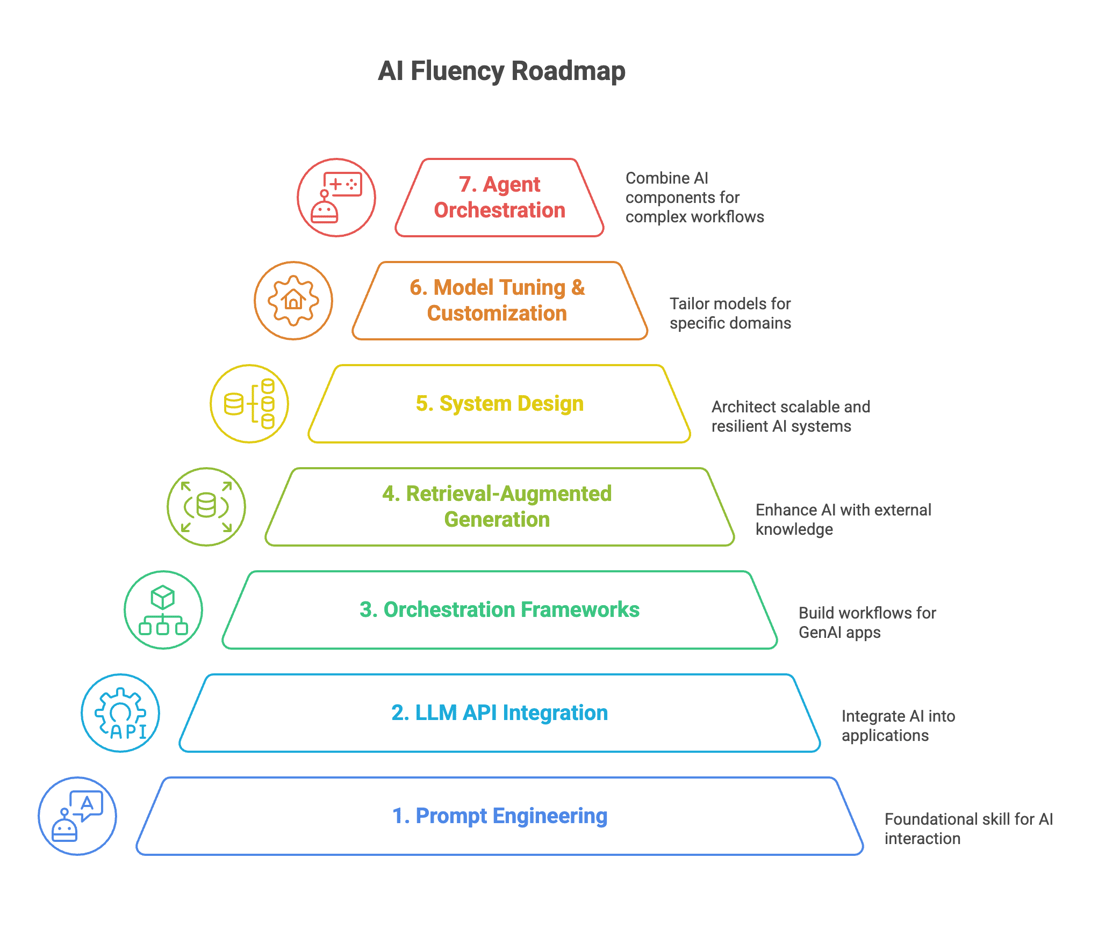
Building a Practical AI Upskilling Roadmap
Don’t aim for your team to become AI scientists. Instead, focus on practical, task-specific training that empowers them to use AI tools effectively within their daily roles. This isn’t about broad certifications; it’s about hands-on application.
- Identify Internal Champions: Find team members who are naturally curious and willing to experiment. Empower them to learn specific tools and then share their knowledge internally.
- Start with Small, Defined Projects: Instead of a company-wide rollout, pick one or two specific tasks where AI can make an an immediate difference (e.g., using a generative AI tool for blog post outlines, or an AI-powered email subject line generator).
- Provide Hands-On Training & Resources: Offer short, focused workshops or access to online tutorials for the specific tools you’re adopting. Emphasize ‘learning by doing’ over theoretical lectures. Many platforms offer free or low-cost training modules.
- Foster a Culture of Experimentation: Encourage team members to try new AI features and share their successes and challenges. Create a safe space for learning and iteration.
What to Deprioritize and Avoid Today
For small to mid-sized businesses, resource allocation is paramount. It’s easy to get sidetracked by the latest AI hype. Here’s what you should actively deprioritize or avoid in April 2026:
- Custom AI Model Development: Unless you have a dedicated data science team and a very specific, unique problem that off-the-shelf solutions cannot address, avoid investing in building custom AI models. The cost, complexity, and maintenance burden are simply too high for most SMBs. Focus on leveraging existing, proven tools.
- Broad, Theoretical AI Certifications: While valuable for specialists, sending your marketing team for a six-month AI ethics or machine learning theory course is likely an inefficient use of budget and time. Prioritize practical training on specific tools that directly impact their day-to-day tasks.
- Trying to Automate Everything at Once: This leads to overwhelm and failed initiatives. Start small, prove value, and then expand. A phased approach is always more effective.
- Ignoring Data Privacy & Security: Don’t rush into using AI tools without understanding their data handling policies. Ensure any tool you adopt complies with relevant privacy regulations and your company’s security standards. This isn’t a ‘delay’ but a ‘must-do-first’ before adoption.
Overcoming Adoption Hurdles and Measuring Success
Even with a clear plan, integrating new technology comes with challenges. Address these proactively to ensure smooth adoption.
- Address Fear and Resistance: Clearly communicate that AI is a tool to empower, not replace. Show how it can eliminate tedious tasks, allowing team members to focus on more strategic, rewarding work.
- Integrate with Existing Workflows: The less disruption to current processes, the better. Look for AI tools that integrate seamlessly with your existing CRM, marketing automation platform, or project management software. AI marketing integrations
- Set Clear Metrics for Success: Before implementing an AI tool, define what success looks like. Is it a twenty percent reduction in content creation time? A ten percent increase in email open rates due to better personalization? Measurable goals drive adoption and justify investment.
- Iterate and Optimize: AI is not a ‘set it and forget it’ solution. Regularly review the performance of your AI tools, gather feedback from your team, and make adjustments. The market and tools evolve rapidly, so your strategy should too.
Sustaining AI Integration for Long-Term Growth
Successful AI adoption isn’t a one-time project; it’s an ongoing commitment to continuous learning and strategic integration. As your team becomes more proficient, you can explore more advanced applications.
Encourage cross-functional sharing of AI insights. What works for the marketing team in content generation might inspire the sales team to use AI for lead qualification. Stay informed about new, practical AI tools that emerge, but always filter them through the lens of your specific business needs and resource constraints. The goal is to build an agile, AI-augmented team that consistently finds smarter ways to operate and grow. smart marketing strategies AI


Leave a Comment