


For small to mid-sized businesses, social media engagement often feels like a constant uphill battle against limited time and resources. This article cuts through the hype to show you how AI tools, when applied strategically, can genuinely enhance your audience engagement without demanding a full-time data scientist or an unlimited budget.
You’ll gain practical insights into where AI offers the most immediate and impactful gains, what tactical steps to prioritize, and critically, what to deprioritize or avoid to ensure your efforts translate into smarter interactions and tangible business growth.
Prioritizing AI for Content Creation and Curation
The most immediate win for many SMBs using AI in social media is in content creation and curation. Instead of staring at a blank screen, AI can kickstart your process, saving valuable time and ensuring a consistent flow of relevant content.
- What to do first: Use AI tools to generate initial drafts for social media posts, headlines, and ad copy. Focus on tools that can repurpose existing long-form content (like blog posts or FAQs) into bite-sized social updates. This dramatically reduces the time spent on ideation and first-pass writing.
- Why it works for SMBs: It addresses the core challenge of content volume and consistency. A small team can maintain a more active presence across platforms without burning out. AI can also help identify trending topics or keywords relevant to your niche, ensuring your content resonates with current audience interests.
- What to delay: Don’t immediately invest in complex AI-driven video or image generation tools unless visual content is your absolute primary driver and you have a clear strategy for its use. These often require more refinement and human oversight to align with brand aesthetics, which can negate the time-saving benefits for a lean team. Start with text-based content and simple image suggestions.
Enhancing Audience Understanding with AI Analytics
Understanding your audience is fundamental, but manual analysis is time-consuming. AI-powered analytics can quickly surface insights that would otherwise remain hidden, allowing for more targeted engagement.
- What to do first: Implement AI-driven sentiment analysis to gauge how your audience perceives your brand and specific campaigns. Focus on tools that can segment your audience based on engagement patterns, demographics, or interests. This allows you to tailor messages to specific groups rather than a generic audience.
- Why it works for SMBs: It moves you beyond guesswork. Knowing which content performs best, which topics spark positive sentiment, and who your most engaged segments are enables you to allocate resources more effectively. This precision is invaluable when budgets are tight. For example, identifying optimal posting times through AI analysis can significantly boost reach without additional ad spend.

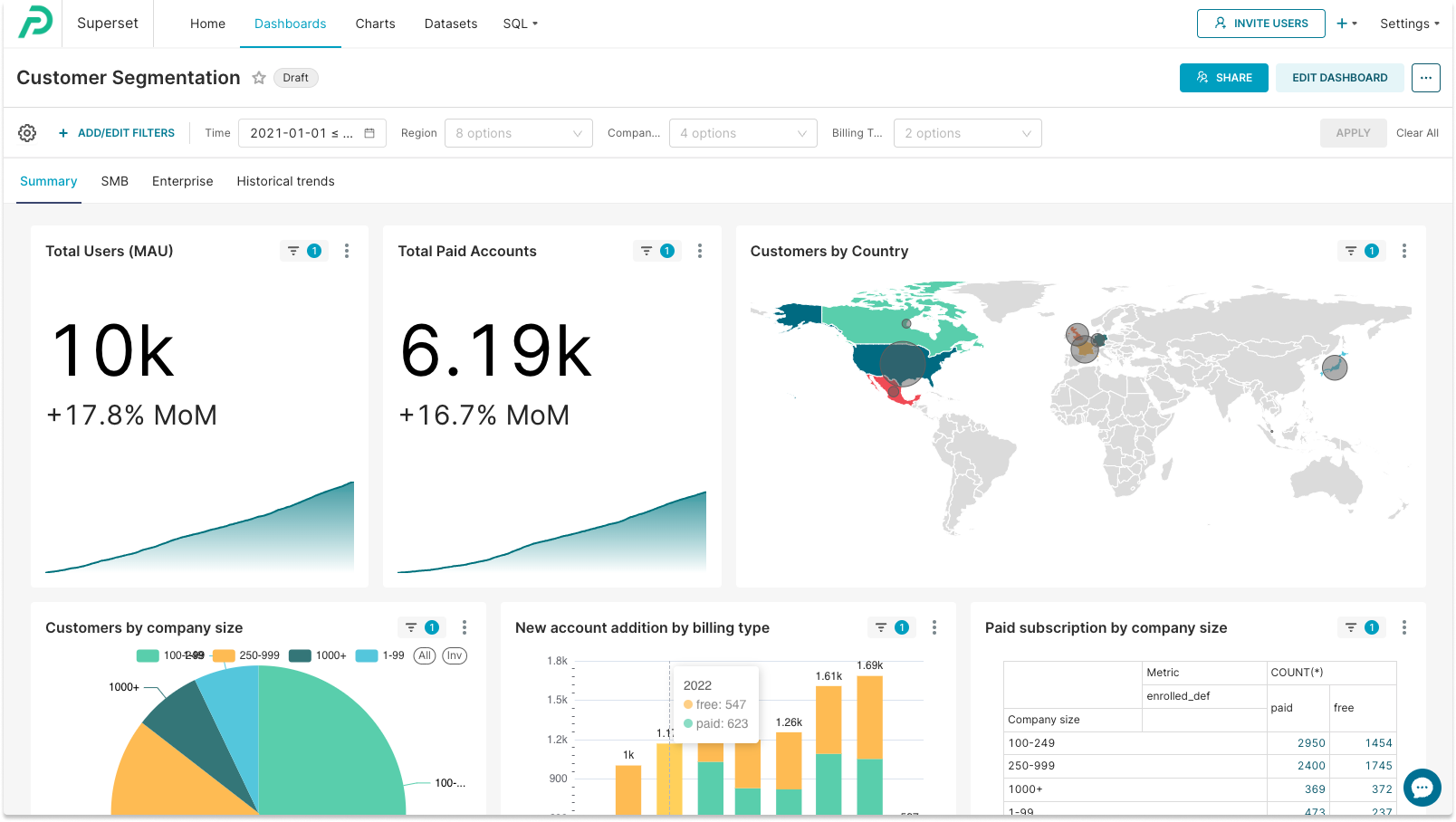
Social media audience segmentation dashboard - What to avoid: Resist the urge to chase every micro-trend or data point. While AI can provide granular insights, a small team needs to focus on actionable intelligence. Over-analyzing can lead to analysis paralysis, diverting attention from execution. Prioritize insights that directly inform your content calendar or engagement strategy, not just interesting statistics.
While AI excels at pattern recognition, it’s crucial to remember that its insights are only as good as the data it’s fed and the human interpretation applied. A common pitfall is assuming the AI will not only surface the “what” but also the “how” and “why” in a way that directly translates to creative execution. The truth is, translating a sentiment score or an engagement pattern into a compelling headline or a new campaign angle still demands significant human judgment and creative effort. This translation layer is where many teams get stuck, turning “actionable insights” into unacted-upon data points.
Another overlooked consequence is the potential for AI to inadvertently narrow your strategic vision. By constantly optimizing for what has worked in the past, based on existing audience segments, you risk missing emerging audience shifts or entirely new opportunities. The AI is designed to find efficiencies within known parameters, not necessarily to identify paradigm shifts or entirely new market segments that don’t yet show up in historical data. Relying solely on its output can lead to incremental improvements while larger, more disruptive trends pass you by.
Furthermore, the initial setup and ongoing refinement of AI analytics aren’t “set it and forget it.” While the promise is automation, the reality for small teams often involves a significant upfront investment in defining relevant metrics, cleaning data, and continuously validating the AI’s output against real-world results. Without this human oversight, you might find yourself optimizing for vanity metrics or misinterpreting trends, leading to resource misallocation rather than efficiency. The “cost” isn’t just the tool; it’s the ongoing human effort to make it truly useful and prevent it from becoming a sophisticated distraction.
Streamlining Engagement and Interaction
Direct interaction is where engagement truly happens. AI can help manage the volume of interactions, ensuring timely and relevant responses.
- What to do first: Utilize AI for drafting initial responses to common customer inquiries or comments. Many social media management platforms now integrate AI to suggest replies, saving your team from typing out repetitive answers. Employ AI to flag high-priority mentions or comments that require immediate human attention, ensuring critical interactions aren’t missed.
- Why it works for SMBs: It improves response times and consistency, which are key drivers of positive customer experience and brand perception. By automating the mundane, your team can focus on complex issues and personalized outreach, scaling your ability to engage without scaling headcount.
- What to deprioritize today: Fully automated customer service bots that handle complex queries without human oversight. While tempting, these often lead to frustrating experiences for customers when the bot can’t understand nuance or deviates from brand voice. For SMBs, a hybrid approach where AI assists human agents is far more effective and less risky than full automation.
However, the immediate efficiency gains from AI-drafted responses can mask some downstream challenges. The temptation to simply approve and send AI-generated text, especially under pressure, can lead to a subtle but significant drift in your brand’s authentic voice over time. What starts as a helpful assistant can, without careful oversight, dilute the distinctiveness of your communication, making interactions feel less human and more generic. This isn’t just about grammar; it’s about the nuanced tone, empathy, and specific phrasing that truly differentiates your business.
Another overlooked aspect is the potential for human agents to become less adept at crafting nuanced responses themselves. If the primary mode of operation shifts to editing AI output rather than originating thoughtful replies, the critical thinking and empathetic communication skills of your team can atrophy. When a truly complex or sensitive customer issue arises—the very kind AI is supposed to free up agents for—the human touch might be less refined than it once was, creating a new bottleneck or even escalating customer frustration.
Furthermore, while AI promises to save time, the initial investment in training the AI to truly understand your brand’s specific context, common customer issues, and desired tone is often underestimated. What looks like a quick win can become a continuous refinement project. Teams might find themselves spending significant time correcting AI inaccuracies or fine-tuning prompts, effectively shifting the workload rather than eliminating it. This can lead to internal frustration when the promised time savings don’t materialize as quickly or comprehensively as expected, forcing teams to make difficult trade-offs between speed and quality.
The Critical Role of Human Oversight in AI Social Media
AI is a powerful assistant, but it’s not a replacement for human judgment, creativity, or empathy. Especially for SMBs, maintaining an authentic brand voice and genuine connection is paramount.
Your team’s role shifts from purely manual execution to strategic oversight and refinement. This means reviewing AI-generated content for accuracy, brand alignment, and tone. It involves interpreting AI-driven insights to make strategic decisions, not just blindly following recommendations. Crisis management, nuanced customer interactions, and truly creative campaigns still demand human intellect and emotional intelligence.
What should be skipped today is fully delegating strategic decision-making or sensitive customer interactions to AI. While AI can inform strategy, the ultimate responsibility for brand reputation and customer relationships rests with your human team. Relying solely on AI for these critical areas can lead to missteps that are costly to rectify for a small business.
Implementing AI: A Phased Approach for SMBs
Adopting AI in social media doesn’t require an overhaul. Start small, measure impact, and scale what works.
- Phase 1: Content Augmentation. Begin by using AI for drafting social media posts, headlines, and content repurposing. Focus on one or two platforms where your audience is most active.
- Phase 2: Insight Generation. Once comfortable with content, integrate AI for basic sentiment analysis and audience segmentation. Use these insights to refine your content strategy.
- Phase 3: Engagement Support. Introduce AI for suggesting responses to common queries or flagging priority mentions. Always maintain human review for critical interactions.
This phased approach allows your team to learn and adapt without overwhelming your limited resources. The goal is to leverage AI to amplify your existing efforts, not to replace the human touch that defines your brand.


Leave a Comment