

For small to mid-sized marketing teams, AI is no longer just about automating repetitive tasks. The real leverage today comes from using AI to sharpen your strategic decision-making. This article will cut through the noise, showing you how to prioritize AI applications that genuinely inform your choices, optimize your limited budget, and drive tangible growth, rather than just adding complexity.
You’ll gain practical insights into where to focus your AI efforts for maximum impact, what to hold off on, and how to integrate AI insights into your existing workflows without needing a data science degree. Our goal is to equip you with the judgment to make smarter marketing decisions under real-world constraints.
Shifting from AI Automation to AI-Informed Strategy
The initial wave of AI in marketing focused heavily on automation: scheduling social posts, sending personalized emails, or generating basic content drafts. While valuable, this often felt like an efficiency play. Today, the conversation has moved. AI’s true power for practitioners lies in its ability to process vast datasets and surface insights that directly inform strategic choices.
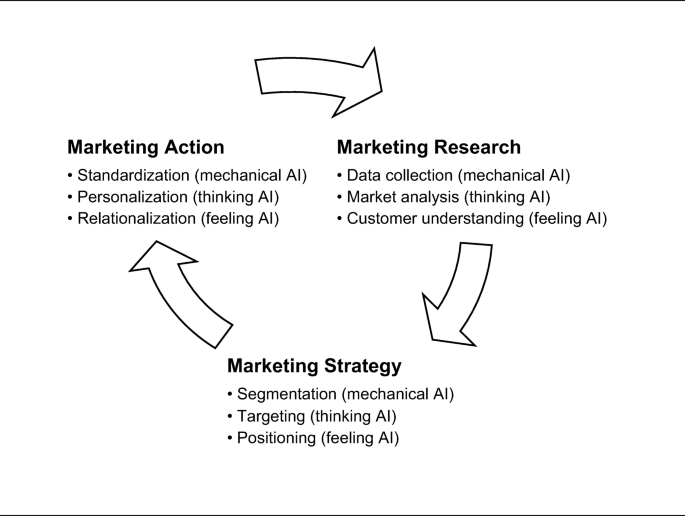
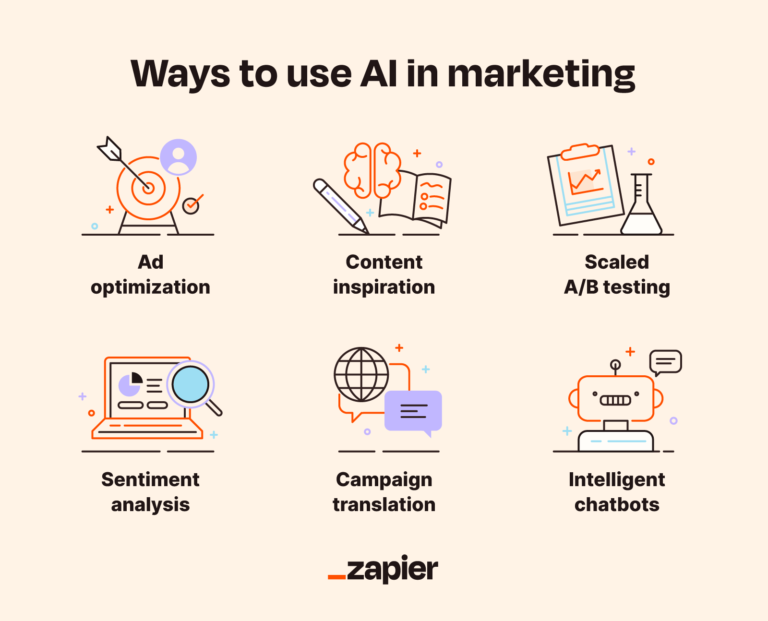
- Audience Segmentation: AI can identify nuanced customer segments based on behavior, demographics, and purchase history, far beyond what manual analysis can achieve.
- Budget Allocation: Predictive AI models can forecast campaign performance across channels, helping you allocate your limited ad spend for optimal return.
- Content Strategy: AI tools analyze market trends, competitor content, and search intent to pinpoint high-potential topics and formats.
This isn’t about AI making decisions *for* you. It’s about AI providing a clearer, data-backed foundation for *your* strategic judgment, enabling you to make more confident trade-offs.
Prioritizing AI for Impactful Marketing Decisions
With limited resources, choosing where to apply AI first is critical. Focus on areas where AI can provide unique insights that directly influence your strategic direction and budget allocation.
- Audience Segmentation and Personalization: Start here. Use AI-powered analytics within your CRM or marketing automation platform to identify your most valuable customer segments. This informs everything from messaging to channel selection. Understanding who to target more effectively is a foundational decision.
- Content Performance and Gap Analysis: Leverage AI in SEO tools (like AI content gap analysis or AI content ideas) to analyze what content performs best, identify gaps in your current strategy, and discover emerging topics your audience is searching for. This directly informs your content calendar and resource allocation.
- Campaign Budget Optimization: For paid media, AI can analyze historical campaign data to predict the most effective allocation of your budget across different platforms and ad sets. This is a high-impact area for SMBs, as every dollar counts.
These areas offer a clear path to demonstrating ROI and provide actionable insights that directly impact your marketing strategy, rather than just speeding up existing tasks.
However, the initial success of AI in these areas often masks downstream challenges. For instance, while AI excels at identifying granular audience segments, the operational reality for small teams means you can only realistically activate a handful of these. Over-segmentation can lead to ‘analysis paralysis’ or a superficial attempt at personalization that dilutes impact and wastes resources, rather than focusing effort where it truly matters. The insight is there, but the capacity to act on it at scale is not.
Similarly, AI-driven content gap analysis can highlight numerous opportunities, but it doesn’t inherently prioritize based on your team’s unique expertise or competitive advantage. Chasing every identified gap can spread your content efforts too thin, resulting in a proliferation of mediocre content that fails to rank or resonate. It’s easy to overlook the human element of content creation – the need for authentic voice and deep subject matter authority – which AI cannot provide.
When it comes to campaign budget optimization, the ‘black box’ nature of some AI models can create significant trust issues within a team. If the AI recommends a drastic shift in budget allocation that contradicts a practitioner’s intuition or historical understanding, there’s often pressure to override it. This can negate the AI’s potential benefits or, worse, lead to a lack of understanding when results deviate, making it difficult to learn and adapt. The theoretical efficiency of AI can clash with the practical need for transparency and human oversight.
What to Deprioritize (or Avoid) Today
In the rapidly evolving AI landscape, it’s easy to get sidetracked. For small to mid-sized teams, certain AI applications, while appealing, should be deprioritized or avoided for now due to resource constraints, complexity, or a lack of immediate, tangible impact.
Specifically, avoid over-reliance on fully autonomous campaign management systems that promise to run your entire marketing without human oversight. While tempting, these often lack the nuanced understanding of your brand voice, specific market conditions, or the ability to react to unexpected events that a human marketer provides. For SMBs, the risk of misaligned messaging or wasted spend without direct human judgment is too high. Similarly, deprioritize investing in bespoke, custom AI model development unless you have dedicated data science expertise and a clear, unique problem that off-the-shelf tools cannot solve. The cost and complexity outweigh the benefits for most teams. Focus on leveraging existing, proven AI features within your current marketing stack instead of chasing every new, unproven AI trend.
Even when these “autonomous” systems appear to function, the true cost often lies in the human effort required to supervise, correct, and interpret their outputs. What seems like automation can quickly devolve into a new form of manual labor: debugging AI decisions, manually overriding poor targeting, or trying to reverse-engineer why a campaign went off-brand. This isn’t “hands-off”; it’s a different kind of hands-on, often more frustrating because the underlying logic is opaque and difficult to influence directly.
A more insidious, second-order consequence of over-relying on “set-and-forget” AI is the erosion of critical marketing judgment within the team. When an algorithm handles optimization, human marketers can become detached from the nuances of campaign performance, audience response, and market shifts. This creates a dependency where the team’s ability to strategize, adapt, and innovate independently diminishes, leaving them vulnerable when the AI inevitably encounters an edge case it can’t handle, or when business objectives shift beyond its programmed parameters.
Regarding bespoke, custom AI model development, the most common oversight isn’t just the initial development cost, but the often-invisible burden of data readiness and ongoing maintenance. Many small to mid-sized businesses simply lack the volume, cleanliness, or consistent structure of data required to train a truly effective custom model. The effort to collect, cleanse, and continuously maintain high-quality data pipelines can easily dwarf the resources allocated for the AI project itself, turning an ambitious initiative into a perpetual data management headache with little tangible return.
Practical AI Applications for Strategic Choices
Once you’ve prioritized, here’s how AI can be practically applied to inform specific strategic decisions:
- Predictive Lead Scoring: AI analyzes lead behavior and demographic data to assign a score, indicating their likelihood to convert. This helps sales and marketing prioritize follow-up efforts on the most promising leads.
- Dynamic Pricing and Promotions: For e-commerce, AI can analyze market demand, competitor pricing, and inventory levels to recommend optimal pricing or personalized promotional offers.
- Customer Journey Mapping and Optimization: AI can track customer interactions across touchpoints, identifying common paths, friction points, and opportunities for personalized engagement.
- Competitive Intelligence Monitoring: AI tools can monitor competitor ad spend, content strategy, and social sentiment, providing insights to adjust your own market positioning.
Integrating AI Insights into Your Workflow
Integrating AI into your decision-making isn’t about overhauling everything; it’s about augmenting your existing processes.
- Start Small and Focused: Pick one high-priority area, like optimizing ad budget allocation or refining audience segments, and integrate an AI tool or feature. Don’t try to implement everything at once.
- Define Clear Metrics: Before you start, establish what success looks like. How will you measure the impact of AI-informed decisions on your KPIs? This helps justify the investment and refine your approach.
- Maintain Human Oversight: AI provides insights, but human marketers make the final strategic calls. Use AI to inform your judgment, not replace it. Your experience and understanding of your brand and market are irreplaceable.
- Iterate and Learn: The AI landscape is dynamic. Continuously evaluate the effectiveness of your AI-driven decisions, learn from the outcomes, and adjust your strategy accordingly.
The Future of AI-Driven Marketing Judgment
The role of the marketer isn’t disappearing; it’s evolving. As AI handles more data analysis and insight generation, the premium will be on human judgment, creativity, and strategic thinking. Marketers who excel will be those who can effectively interpret AI outputs, ask the right questions, and translate data-driven insights into compelling, human-centric strategies. Your ability to leverage AI as a strategic partner, rather than just an automation engine, will be a key differentiator in the coming years.

1 Comment