

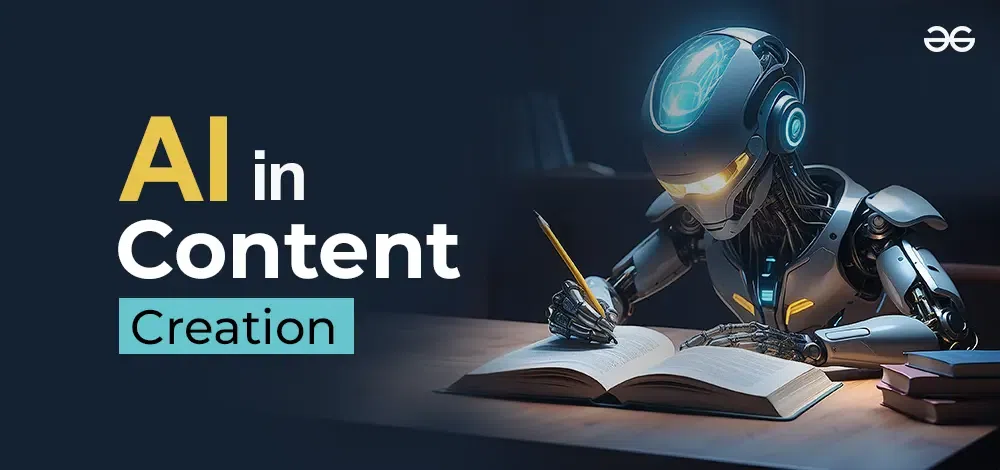
For small to mid-sized businesses, crafting compelling marketing stories consistently feels like an uphill battle against limited time, budget, and headcount. This article cuts through the noise to show you how AI tools, when applied strategically, can significantly amplify your content creation efforts. You’ll learn where to focus your resources for the biggest impact, which tools offer the most practical value today, and critically, what common pitfalls to avoid to ensure your brand’s authentic voice shines through.
Our focus isn’t on theoretical possibilities, but on actionable steps that allow lean teams to produce higher-quality, more engaging content, faster. This means making smart trade-offs and prioritizing AI applications that deliver tangible results under real-world constraints.
The Pragmatic Case for AI in Marketing Storytelling
AI isn’t a magic bullet, nor is it a replacement for human creativity. For SMBs, its value lies in augmenting your existing team and streamlining repetitive tasks, freeing up your marketers to focus on strategy, empathy, and unique insights. Think of AI as a powerful assistant that can accelerate research, generate initial drafts, and help refine your message, allowing you to tell more stories, more effectively, across more channels.
The core benefit is efficiency. With AI, you can explore more content angles, personalize messages at scale, and maintain a consistent publishing cadence without burning out your team. This directly translates to better engagement and, ultimately, stronger business growth.
Prioritizing AI for Content Ideation and Outlines
The most immediate and impactful application of AI for lean marketing teams is in the early stages of content creation: ideation and outlining. Instead of staring at a blank page, AI tools can quickly generate a wealth of topic ideas, relevant keywords, and structural outlines based on your input.
- Topic Generation: Feed AI your target audience, industry, and business goals. It can suggest blog post ideas, social media themes, or video scripts that resonate. This saves hours of brainstorming.
- Keyword Integration: AI can help identify high-potential keywords and naturally weave them into content outlines, improving SEO potential from the start without feeling forced.
- Structural Outlines: For articles, emails, or landing pages, AI can provide a logical flow with suggested headings and sub-points. This gives your human writer a strong foundation to build upon, ensuring comprehensive coverage and clear messaging.
While the speed of AI for ideation is undeniable, it’s easy to overlook the critical role of human input quality. AI is a powerful amplifier, but it amplifies whatever you feed it. Vague prompts or a lack of strategic direction will inevitably result in generic, uninspired outputs that still require significant human effort to salvage. The initial time saved can quickly be offset by the time spent sifting through irrelevant suggestions or trying to inject originality into a bland framework.
A more subtle pitfall is the potential for content homogenization. When multiple teams lean heavily on AI for ideation without a strong, unique brand voice or strategic filter, the output can become indistinguishable from competitors. The efficiency gain in generating ideas can lead to a delayed consequence: content that fails to differentiate, struggles to capture attention, and ultimately underperforms. The bottleneck doesn’t disappear; it merely shifts from “what should we write?” to “how do we make this AI-generated idea uniquely ours and truly valuable?” This demands a different kind of strategic thinking and editorial rigor from the team.
Furthermore, the sheer volume of AI-generated ideas can create its own form of decision pressure. Instead of a blank page, teams might now face a deluge of options, leading to analysis paralysis. The temptation to simply pick the “most complete” or “easiest” outline can override the pursuit of a truly compelling angle, resulting in content that is technically sound but lacks the spark and depth that only human insight and experience can provide. It’s a trade-off between speed and distinctiveness that practitioners must consciously manage.
Leveraging AI for Draft Generation and Refinement
Once you have a solid outline, AI can assist in generating initial drafts. This is where many teams either over-rely or under-utilize the technology. The goal isn’t to produce a final piece of content, but to create a strong starting point that a human editor can then elevate.
- First Draft Acceleration: Use AI to expand on outline points, generating paragraphs or sections of text. This can significantly reduce the time spent on initial writing, especially for evergreen content or topics where factual accuracy is paramount.
- Tone and Style Adjustments: AI tools can help adapt content for different platforms (e.g., formal for a whitepaper, conversational for social media) or adjust the tone to match your brand voice.
- Grammar and Clarity Enhancements: Beyond basic spell-checking, AI can suggest improvements for sentence structure, conciseness, and overall readability, making your content more impactful.
Remember, the human touch is non-negotiable here. AI-generated drafts are a foundation, not the finished product. Your team’s expertise is crucial for adding nuance, brand personality, and genuine storytelling.
While the promise of accelerated drafting is compelling, it’s easy to fall into the “editing trap.” Correcting an AI-generated draft that’s fundamentally off-brand, misses crucial nuance, or contains subtle inaccuracies often demands more cognitive effort and time than crafting a strong draft from scratch. The effort doesn’t disappear; it merely shifts from initial creation to intensive refinement and often, outright correction. This can lead to significant human frustration, especially when deadlines loom and the “quick draft” turns into a major rewrite.
A more insidious, long-term consequence is the gradual erosion of a distinct brand voice. If teams consistently rely on AI for initial content generation without rigorous human oversight and a strong editorial filter, the output can become generic and indistinguishable. The unique personality, specific phrasing, and subtle storytelling elements that differentiate a business are often the first casualties. Over time, this can dilute brand identity and make content less memorable or impactful, even if it’s technically correct.
Furthermore, the initial speed of AI generation can create an illusion of productivity. What’s often overlooked in practice is the hidden cost of rigorous fact-checking and bias mitigation. AI models, while powerful, can “hallucinate” information or inadvertently propagate biases present in their training data. Uncritically accepting these outputs can lead to factual errors or insensitive messaging, requiring extensive post-generation validation that can easily negate any initial time savings. The decision pressure then becomes whether to ship “good enough” or invest the necessary human hours to ensure accuracy and alignment.
For teams operating under tight constraints, it’s crucial to deprioritize the notion of simply “filling the page” with AI-generated text. Instead, focus on using AI as a targeted assistant for specific, well-defined tasks where its strengths truly shine, such as summarizing data points or rephrasing existing content for clarity. Blindly generating full drafts without a clear human editorial strategy and robust quality control mechanisms will likely lead to more work, not less, and a decline in overall content quality.
What to Deprioritize: Blind Trust in Fully Automated Content
While AI offers immense efficiency, a critical mistake for SMBs is to fully automate content creation, particularly for core marketing storytelling. Deprioritize the idea that AI can autonomously produce high-quality, authentic, and engaging content from start to finish without significant human oversight. Relying solely on AI for entire articles, social media campaigns, or email sequences risks bland, generic, or even factually incorrect output that lacks your brand’s unique voice and perspective. This approach often leads to content that fails to connect with your audience, damages credibility, and ultimately wastes resources on ineffective marketing. Your limited budget and headcount are better spent on using AI as a co-pilot, not an autopilot, ensuring every piece of content reflects your brand’s true value and resonates deeply with your target customers.
Integrating AI into Your Existing Workflow
Adopting AI doesn’t require a complete overhaul of your marketing operations. Start small and integrate tools where they provide the most immediate value. Consider a phased approach:
- Identify Pain Points: Where does your content creation process slow down? Is it ideation, drafting, or editing?
- Pilot a Single Tool: Choose one AI tool that addresses a specific pain point. For instance, an AI writing assistant for blog post outlines.
- Train Your Team: Ensure your team understands how to use the tool effectively and, more importantly, how to critically review and refine AI-generated content.
- Measure and Adapt: Track the time saved, content quality improvements, and audience engagement. Adjust your approach based on real-world results.
Focus on tools that integrate well with your existing platforms or offer standalone value without complex setup. Many AI writing tools now offer browser extensions or API access that can fit seamlessly into your current content management system or project management tools.
Optimizing Your Storytelling with AI Insights
Beyond creation, AI can also provide insights to optimize your storytelling. Tools are emerging that analyze content performance, audience sentiment, and engagement patterns. While advanced analytics might be a later-stage investment for many SMBs, even basic AI-powered feedback on readability or emotional tone can guide your content strategy. Use these insights to refine your narratives, understand what resonates most with your audience, and continuously improve your marketing stories. This iterative process, combining AI’s analytical power with human creative judgment, is where true storytelling excellence is achieved.


Leave a Comment