

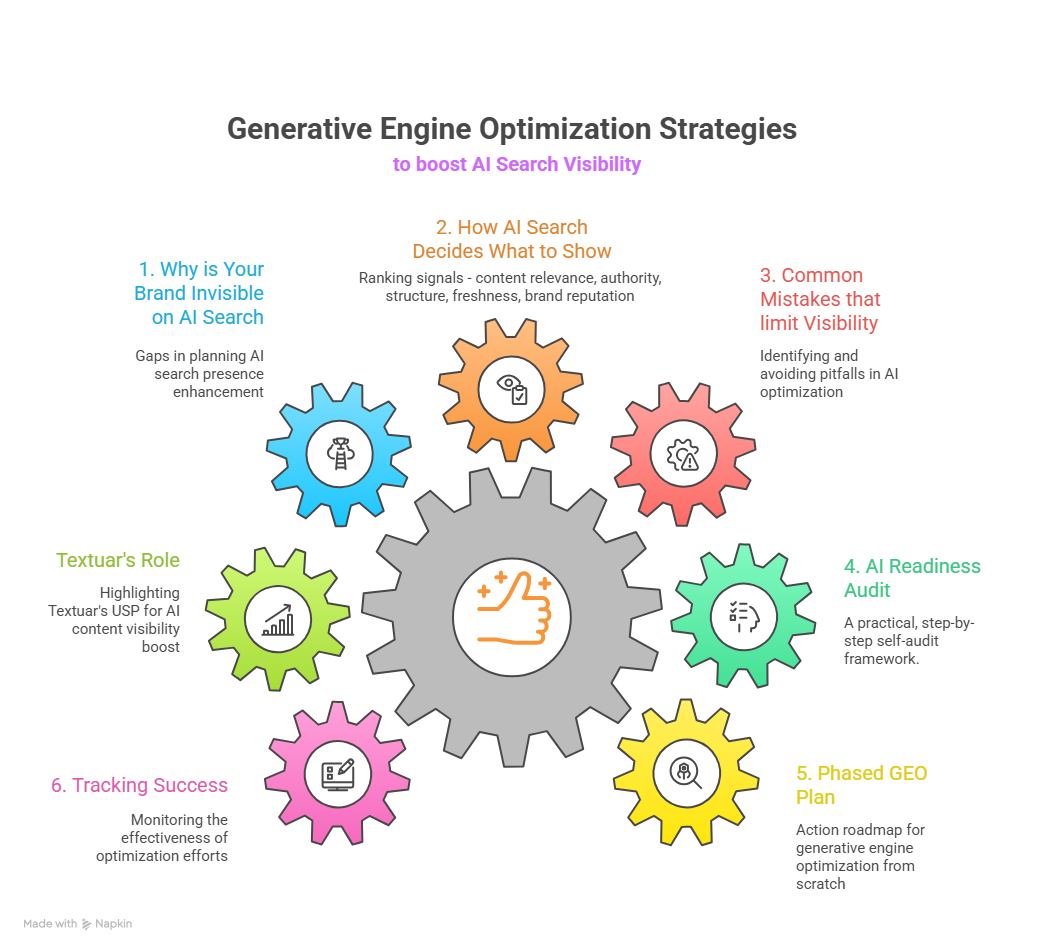
In today’s dynamic search landscape, simply having content isn’t enough. This guide will walk you through a pragmatic approach to content auditing, specifically tailored for small to mid-sized businesses. You’ll learn how to prioritize your efforts, identify underperforming assets, and strategically update your content to improve organic visibility and align with the evolving demands of AI-driven search.
By focusing on what truly matters, you can make informed decisions that maximize your limited resources, ensuring your content works harder for your business without getting bogged down in exhaustive, low-impact tasks.
Why a Strategic Content Audit Matters Now More Than Ever
A content audit isn’t just about cataloging what you have; it’s a critical strategic exercise. For SMBs, it’s about ensuring every piece of content earns its keep. With search engines increasingly leveraging AI to understand and present information, the quality, relevance, and authority of your content are paramount. Generic, thin, or outdated content not only fails to rank but also struggles to be recognized as a valuable source by AI models.
This isn’t about chasing every new AI feature; it’s about reinforcing the fundamentals of excellent content that AI can confidently surface. It’s about making sure your content directly answers user queries, demonstrates clear expertise, and provides unique value that can’t be easily replicated.
Prioritizing Your Audit: Where SMBs Should Start
Given limited resources, attempting a full site audit for hundreds or thousands of pages is often impractical and inefficient. The key is to focus your efforts where they will yield the greatest return.
- Start with Your Money Pages: Prioritize product pages, service pages, and key landing pages that directly contribute to revenue. These are your most critical assets.
- High-Traffic, Declining Performance: Identify pages that once performed well but are now seeing a drop in organic traffic or rankings. These often represent quick wins with targeted updates.
- High-Value Keyword Targets: Focus on content that targets keywords with significant search volume and high commercial intent, even if current rankings are moderate. There’s clear upside here.
- Competitor Gaps: Analyze what your top competitors rank for that you don’t, especially for core topics. This can reveal immediate content opportunities or areas for improvement.
What to delay: Blog posts with very low traffic, outdated news announcements, or content targeting extremely niche, low-volume keywords should be deprioritized in initial audit phases. While they might have some long-tail value, the effort required to update them often outweighs the potential immediate gain for an SMB with limited bandwidth. Focus on the 20 percent of content that drives eighty percent of your value first.
While the immediate gains from addressing high-traffic, declining pages are appealing, it’s easy to fall into a reactive cycle. A page’s decline might be a symptom of a deeper shift in user intent, a new competitive entrant, or an evolving algorithm. Simply patching a title tag or adding a few keywords might offer a temporary bump, but without understanding the underlying strategic issue, you’ll find yourself re-auditing the same pages repeatedly. This consumes valuable time and resources that could be better spent on proactive content development or structural improvements.
Another common pitfall for SMBs is underestimating the implementation phase. An audit generates findings, but its true value lies in the *action* taken. Even a focused audit can unearth a significant number of issues across your priority pages. The sheer volume of recommended changes, from technical fixes to content rewrites, can quickly overwhelm a small team. This often leads to decision paralysis, where the audit report becomes a shelved document rather than a living action plan, creating frustration and a sense of wasted effort.
Finally, while deprioritizing low-traffic blog posts is a sound tactical decision for immediate impact, it’s important to acknowledge a potential downstream effect: the erosion of content authority. Over time, neglecting the broader content ecosystem can weaken the internal linking structure and topical depth that implicitly supports your high-value “money pages.” This isn’t an argument for auditing every single piece of content, but rather a reminder that the performance ceiling of your critical pages can eventually be limited by the health and interconnectedness of your entire site, even the less glamorous parts.
The Core Pillars of Your Audit Strategy
Your audit needs to evaluate content through several critical lenses to ensure it’s fit for purpose in 2026.
Relevance & User Intent Alignment
Does your content still accurately and comprehensively address the primary user intent behind its target keywords? Search engines, powered by AI, are increasingly sophisticated at understanding nuance. Content that provides direct, clear answers and anticipates follow-up questions will perform better. Evaluate if your content is still the best answer available for its intended audience.
Organic Performance Metrics
Dive into your data. Use tools like Google Analytics 4 (GA4) and Google Search Console (GSC) to assess:
- Traffic Trends: Is organic traffic increasing, stable, or declining?
- Keyword Rankings: What keywords is the page ranking for? Are they relevant?
- Engagement Metrics: Bounce rate, time on page, conversion rates. High bounce rates or low time on page can signal content that isn’t meeting user expectations.
- Backlinks: While not a direct content quality metric, a lack of quality backlinks can indicate content that isn’t authoritative or shareable.

AI Readiness and Authority
This pillar is about ensuring your content is structured and written in a way that AI models can easily understand, summarize, and trust. Consider:
- Clarity and Conciseness: Is the information presented clearly, without jargon or excessive fluff?
- Direct Answers: Does the content provide direct answers to common questions related to the topic?
- E-E-A-T (Experience, Expertise, Authoritativeness, Trustworthiness): Does the content demonstrate genuine expertise? Is it backed by verifiable facts or real-world experience? Who is the author, and are they credible? This is crucial for AI to confidently recommend your content. Google Search Essentials
- Originality: Does your content offer unique insights, data, or perspectives, or is it merely a rehash of what’s already out there? AI values original, high-quality information.
What often gets overlooked in the audit process, especially for lean teams, is the “good enough” trap. It’s tempting to make superficial updates to a large volume of content to show progress, rather than dedicating significant resources to a few critical pieces. This approach, while understandable given budget and headcount limitations, often leads to content that is technically updated but still fails to truly excel in relevance or AI readiness. The content might pass a basic check, but it won’t stand out or capture significant market share.
The downstream effect of this “good enough” strategy is content debt. Each piece of content that receives only a minimal refresh or is left untouched continues to decay in performance and relevance. Over time, this accumulates into a massive backlog, making future audits and updates exponentially more challenging and resource-intensive. What started as a manageable task becomes an overwhelming project, leading to decision paralysis and further delays, effectively cementing underperformance across a significant portion of your digital footprint.
Another common pitfall is the human tendency to prioritize quantity of updates over quality, especially under pressure to demonstrate activity. While the theory suggests a holistic approach to E-E-A-T and user intent, the practical reality for many teams is a constant trade-off. Deciding whether to deeply re-engineer a handful of high-value pages or apply minor tweaks to dozens of mid-tier assets is a difficult call. Often, the path of least resistance – making many small, less impactful changes – is chosen, which rarely yields the breakthrough performance needed in a competitive landscape. This can lead to frustration when significant effort doesn’t translate into proportional gains.
Executing the Audit: A Pragmatic Workflow
Here’s a streamlined process for SMBs to conduct an effective content audit.
Step 1: Lean Inventory & Data Collection
Export a list of your URLs from your CMS or a crawling tool. For each URL, pull key data points:
- URL
- Content Title
- Date Published/Last Updated
- Organic Traffic (past 6-12 months, GA4)
- Impressions & Clicks (past 6-12 months, GSC)
- Primary Keywords (GSC, Ahrefs/Semrush if available)
- Conversion Rate (if applicable, GA4)
Don’t overcomplicate this. A simple spreadsheet is sufficient. The goal is to gather enough data to make informed decisions, not to create a perfect database.
Step 2: Categorization and Evaluation (KUCD Framework)
For each piece of content, assign one of four actions:
- Keep & Optimize: Content that is performing well or has high potential. Focus on minor updates, internal linking, or adding more depth.
- Update & Improve: Content with good potential but declining performance, or content that needs significant updates for AI relevance, E-E-A-T, or user intent. This is where most of your effort will go.
- Consolidate: Multiple pieces of thin or similar content that can be merged into one comprehensive, authoritative resource. This reduces keyword cannibalization and creates stronger assets.
- Delete & Redirect: Outdated, irrelevant, or low-quality content that offers no value. Ensure you implement 301 redirects to a relevant page to preserve any link equity.

Step 3: Action & Prioritization
Based on your KUCD categorization, create an actionable plan. Prioritize updates for pages that align with your business goals and have the highest potential for impact. For example, updating a core service page that targets high-value keywords and has seen a traffic dip should take precedence over consolidating two low-traffic blog posts.
Sustaining Content Health in an AI-Driven World
A content audit is not a one-time event. To maintain organic visibility and relevance, integrate smaller, ongoing content reviews into your marketing calendar. Focus on creating truly valuable, unique content that demonstrates genuine expertise and answers user questions comprehensively. This approach ensures your content remains a trusted resource, both for human users and the AI systems that increasingly shape search results.



Leave a Comment