

For digital businesses, the path to sustainable growth often hinges on smart monetization. This article cuts through the hype to offer practical, AI-driven strategies that small to mid-sized teams can actually implement.
You’ll gain clear guidance on where to focus your limited resources to unlock new revenue streams, understand which AI applications deliver real-world returns, and learn what to deprioritize to avoid costly distractions.
Prioritizing AI for Immediate Revenue Impact
Focus on AI applications that directly influence purchase decisions or increase customer lifetime value with minimal setup.
- Personalized Product Recommendations: For e-commerce, this is often the most accessible starting point. AI algorithms analyze browsing history, purchase patterns, and similar customer behavior to suggest relevant products. Many e-commerce platforms now offer this built-in or via affordable plugins.
- Action: Integrate a recommendation engine into product pages, cart pages, and email marketing. Start with “customers who bought this also bought” or “related items.”
- Dynamic Content Optimization for Publishers/Content Sites: If your business relies on advertising or subscriptions, AI can optimize content delivery and ad placement. This means showing the right content to the right user at the right time, increasing engagement and ad impressions, or nudging users towards subscription offers.
- Action: Experiment with AI-powered A/B testing tools for headlines, calls-to-action, and content layouts to see what drives higher conversions or engagement.
- Targeted Upselling and Cross-selling: Beyond product recommendations, AI can identify optimal moments and offers for upselling premium versions or cross-selling complementary services. This is particularly effective for SaaS businesses or service providers.
- Action: Use AI to segment your customer base and predict which customers are most likely to upgrade or purchase additional services based on their usage patterns or engagement.
Strategic AI Applications for Longer-Term Growth
These strategies require more data, integration, or a slightly longer ramp-up but offer significant revenue potential.
- Dynamic Pricing Models: AI can adjust product or service prices in real-time based on demand, competitor pricing, inventory levels, and individual customer segments. This maximizes revenue per transaction.
- Judgment Call: While powerful, implementing true dynamic pricing requires robust data infrastructure and careful A/B testing to avoid alienating customers. For SMBs, start with simpler rule-based dynamic pricing (e.g., price changes based on inventory thresholds) before moving to complex AI models.
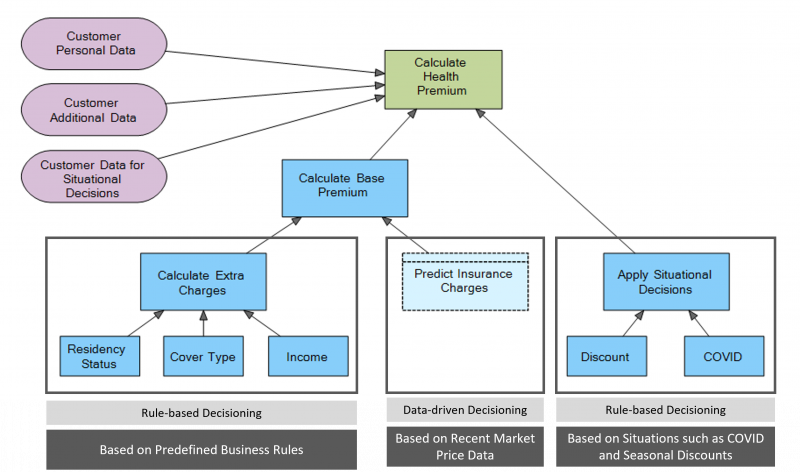
- Churn Prediction and Retention: AI models can predict which customers are at risk of churning by analyzing usage patterns, support interactions, and engagement metrics. Proactive retention efforts are often more cost-effective than acquiring new customers.
- Action: Integrate AI-driven churn prediction into your CRM. Use these insights to trigger personalized outreach, special offers, or improved support for at-risk customers.
- AI-Powered Lead Scoring and Nurturing: For businesses with longer sales cycles, AI can refine lead scoring, identifying the most promising leads and personalizing nurturing sequences. This improves sales team efficiency and conversion rates.
- Action: Leverage AI features within CRM or marketing automation platforms to score leads and automate personalized email sequences. AI lead scoring
What often gets overlooked with these longer-term AI applications is the sustained operational burden, not just the initial setup. Dynamic pricing, for instance, isn’t a ‘set it and forget it’ system. It demands continuous monitoring of market reactions, competitor shifts, and customer sentiment. The hidden cost here is the ongoing analytical horsepower and the potential for pricing errors to erode customer trust if not carefully managed. A poorly tuned dynamic pricing model can lead to a race to the bottom, or worse, create a perception of unfairness that drives customers away over time, even if individual transactions are optimized.
Similarly, churn prediction models are only as valuable as the actions they trigger. The non-obvious failure mode here is the ‘action gap’ – identifying at-risk customers but lacking the capacity or the right strategy to intervene effectively. Teams often struggle with what specific, personalized offer or support action to deploy at scale. If the intervention is generic or poorly timed, it can exacerbate frustration rather than alleviate it, turning a predicted churn risk into a confirmed one. The human element of crafting empathetic, relevant responses remains critical, and it’s a resource constraint AI doesn’t solve.
For AI-powered lead scoring, the primary pitfall lies in data quality and the risk of over-reliance. AI will optimize based on the data it’s fed, meaning ‘garbage in, garbage out’ is a very real and costly problem. If your CRM data is incomplete, outdated, or inconsistent, AI will simply amplify those flaws, leading sales teams to chase misprioritized leads or ignore genuinely promising ones. This creates significant friction between marketing and sales, as the theoretical efficiency gains from AI clash with the practical realities of wasted effort and missed opportunities on the ground.
What to Deprioritize and Avoid Today
For small to mid-sized teams, resource allocation is critical. Not every AI trend is worth pursuing immediately.
Avoid building custom, complex AI models from scratch unless it’s your core business. The cost, expertise, and time required are typically prohibitive. Instead, leverage off-the-shelf solutions or AI features embedded in existing platforms.
Deprioritize speculative AI applications without a clear, measurable path to revenue. This includes highly experimental generative AI applications for content creation if your primary goal is direct monetization, rather than content volume. While generative AI is powerful, its direct impact on new revenue streams for many SMBs is often indirect (e.g., efficiency gains) rather than direct monetization. Focus on proven methods first.
Don’t chase every “AI tool of the week.” The market is flooded. Stick to tools that integrate well with your existing stack and solve a specific, high-impact problem. Over-investing in fragmented tools leads to data silos and operational overhead.
Delay full-scale AI-driven customer service automation if your customer base values human interaction highly or if your product/service is complex. Start with AI for FAQ resolution or routing, but maintain human oversight.
It’s easy to get drawn into the allure of ‘free’ or low-cost AI tools, especially when budgets are tight. What often goes uncalculated is the internal cost of making these tools truly useful. This isn’t just about the subscription fee; it’s the hidden labor involved in data preparation, cleaning, and formatting to feed the AI, or the time spent manually integrating outputs into your existing workflows. These seemingly small efforts accumulate, creating significant operational drag and frustrating teams who end up spending more time on data wrangling than on strategic work.
Another common pitfall is the ‘successful pilot’ that never scales. Many teams can demonstrate a proof-of-concept with AI, but the real challenge lies in operationalizing it across the business. This involves not just technical integration, but also significant change management, training, and adapting existing processes. What looks promising in a controlled environment often falters when confronted with the messy realities of daily operations, limited headcount, and the need for consistent execution. The initial excitement gives way to a realization that the effort required to embed the solution permanently far outweighs the perceived benefit, leading to abandoned projects and a loss of team morale for future initiatives.
Finally, be wary of over-relying on AI for truly strategic decisions without robust human oversight and contextual understanding. While AI can process vast amounts of data and identify patterns, it operates without the nuanced understanding of your brand’s unique market position, customer relationships, or the specific human dynamics within your team. Blindly trusting AI-generated recommendations for critical strategic shifts can lead to decisions that are technically sound but strategically misaligned, missing crucial qualitative factors that only experienced human judgment can provide. This isn’t about distrusting the technology, but recognizing its limitations in areas requiring deep, contextual human insight.
Implementing AI: A Pragmatic Approach
Success with AI isn’t about having the most advanced algorithms, but about smart application.
- Start Small, Iterate Fast: Identify one or two high-impact areas where AI can directly boost revenue. Implement a pilot program, measure results, and iterate. Don’t try to overhaul everything at once.
- Leverage Existing Data: Your existing customer data, sales data, and website analytics are goldmines for AI. Ensure your data is clean and accessible. AI is only as good as the data it’s trained on.
- Focus on Integration: Choose AI tools that integrate seamlessly with your current CRM, e-commerce platform, or marketing automation system. This minimizes friction and maximizes data flow.
- Measure ROI Rigorously: Treat AI initiatives like any other marketing or business investment. Track key metrics like average order value, customer lifetime value, conversion rates, and churn reduction to prove impact.
- Human Oversight is Key: AI is a tool, not a replacement for human judgment. Always maintain oversight, especially in areas like dynamic pricing or personalized offers, to ensure customer satisfaction and brand consistency.
The Future is Now: Sustaining AI-Driven Growth
The landscape of AI is evolving rapidly, but the core principles of smart monetization remain.
- Continuously monitor new AI capabilities within your existing platforms. Vendors are integrating more sophisticated AI features regularly.
- Invest in understanding your customer data better. The deeper your insights, the more effectively AI can be applied.
- Stay agile. Be prepared to adapt your AI strategies as market conditions, customer behavior, and technological capabilities change. The goal isn’t just to implement AI, but to build a system that continuously learns and optimizes your revenue streams. AI marketing trends 2026



Leave a Comment