

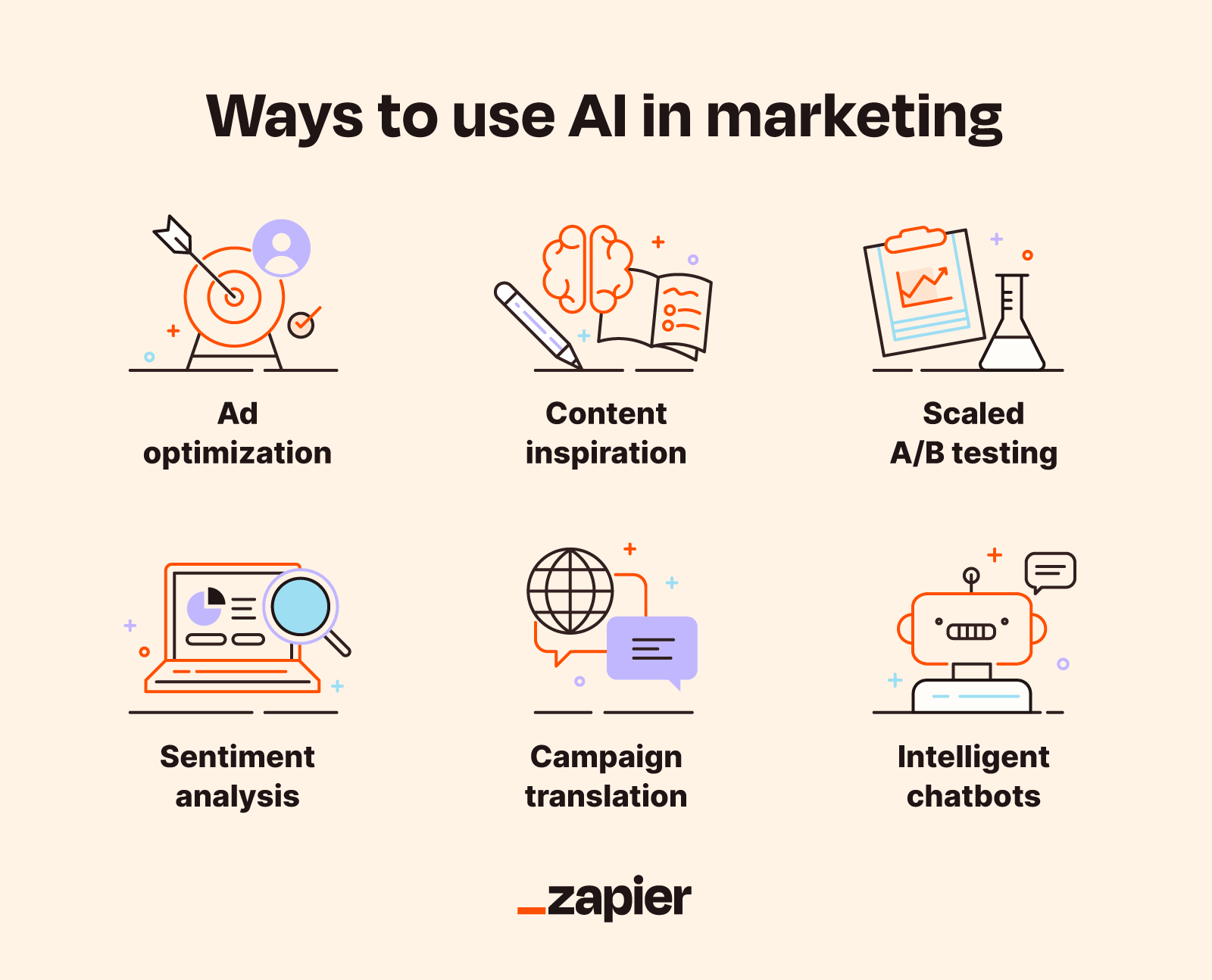
As a small to mid-sized business, navigating the rapid evolution of AI tools in marketing can feel overwhelming. This article cuts through the noise, offering a pragmatic guide to integrating AI into your strategy. You’ll gain clear insights on where to focus your limited resources, which AI applications deliver real value today, and what to confidently deprioritize to avoid wasted effort and budget.
Our goal is to equip you with the practitioner’s judgment needed to leverage AI for tangible business growth, optimizing campaigns, and increasing revenue, even with imperfect execution and tight constraints. We’ll focus on actionable steps that work in the real world, not just in theory.
Prioritizing AI for Immediate Impact
For businesses with limited bandwidth, the key isn’t adopting every AI tool, but strategically applying those that solve critical pain points and offer a clear return on investment. Focus on areas where AI can significantly amplify your existing efforts without demanding excessive setup or maintenance.
- Data Analysis & Insight Generation: This is often the lowest-hanging fruit. AI-powered analytics platforms can process vast amounts of data from your website, CRM, and ad campaigns much faster than manual methods. They can identify trends, customer segments, and performance anomalies that might otherwise be missed. This frees up your team to focus on acting on insights, rather than just gathering them. Prioritize tools that integrate with your existing data sources.
- Content Ideation & Optimization: AI excels at generating ideas, outlines, and optimizing existing content. Use it for keyword research, topic cluster identification, drafting blog post outlines, or suggesting improvements for SEO and readability. This accelerates content creation workflows, allowing your team to produce more high-quality, targeted content with less effort.
- Personalized Communication at Scale: Even basic AI-driven personalization in email marketing or website experiences can significantly boost engagement. Tools that segment audiences based on behavior and deliver tailored messages can improve conversion rates without requiring a massive team. Start with simple automation rules based on user actions.
- Automated Reporting & Performance Monitoring: Automating routine report generation is a huge time-saver. AI can consolidate data from various platforms into digestible dashboards, highlighting key metrics and potential issues. This allows marketers to shift from data compilation to strategic analysis and decision-making.

What to Deprioritize or Delay Today
Not all AI applications are equally beneficial for small to mid-sized businesses, especially given budget and headcount constraints. It’s crucial to understand what to hold off on to prevent resource drain and maintain focus on high-impact activities.
Deprioritize fully autonomous content generation for primary, brand-critical content. While AI writing tools have advanced rapidly, relying on them to produce entire blog posts, landing page copy, or email campaigns without significant human oversight is a misstep for most SMBs today. The output often lacks a distinct brand voice, can be generic, or even contain factual inaccuracies. The time saved in initial generation is frequently offset by the extensive editing, fact-checking, and humanization required to make it truly effective and on-brand. Instead, leverage AI for outlines, research, brainstorming, or refining specific paragraphs, keeping human marketers firmly in the driver’s seat for strategic messaging and brand integrity.
- Complex AI-driven Ad Bidding & Optimization Platforms: For smaller ad budgets, the native smart bidding features within platforms like Google Ads or Meta Ads are often sufficient and more cost-effective. Third-party AI bidding tools can add layers of complexity, cost, and a steep learning curve without guaranteeing a proportional increase in ROI for budgets under a certain threshold. Master the platform’s built-in AI first.
- Over-engineered AI Chatbots for Customer Service: While basic AI chatbots for FAQs are useful, deploying a highly sophisticated, multi-turn AI chatbot requires substantial training data, ongoing maintenance, and integration with backend systems. This level of complexity is often beyond the operational capacity of most SMBs and can lead to frustrating customer experiences if not executed flawlessly. Start with simpler, human-assisted chat solutions or focus on improving self-service knowledge bases.
The initial allure of AI for content generation often masks a critical shift in workload, not an elimination of it. What seems like time saved in drafting can quickly become time spent in extensive editing, fact-checking, and injecting the necessary brand voice and nuance that AI still struggles with. This isn’t just about efficiency; it’s about the subtle degradation of human writing and critical thinking skills within the team. When practitioners lean too heavily on AI for the core creative process, they risk losing the muscle memory for crafting original, compelling narratives. Over time, this can make the team more reliant on AI, less capable of independent strategic messaging, and more vulnerable to the generic outputs that dilute brand distinctiveness.
Another often-overlooked pitfall, particularly for SMBs, involves the implicit data privacy and security risks. Feeding proprietary business data, customer insights, or internal strategies into public-facing AI models, even for seemingly innocuous tasks like summarization or brainstorming, can expose sensitive information. Without a clear understanding of how these models use or retain input data, businesses inadvertently risk intellectual property leakage or compliance breaches. The immediate convenience can easily outweigh the long-term, hard-to-quantify security implications, creating a delayed consequence that’s difficult to unwind.
Even seemingly “simpler” AI integrations, like basic chatbots or automated reporting, carry hidden maintenance and integration costs. The initial setup might appear straightforward, but ensuring these systems remain accurate, relevant, and integrated with evolving business processes requires ongoing attention. For teams already stretched thin, this can quickly become an unmanaged technical debt, leading to outdated information, broken workflows, and ultimately, a worse user or customer experience than manual processes. The promise of “set it and forget it” rarely materializes in practice, especially when the underlying business logic or data sources change.
Avoiding Common AI Pitfalls
The allure of new technology can sometimes lead to missteps. As a practitioner, your role is to guide your team away from these common traps.
- Chasing Every Shiny New Tool: The AI landscape is evolving daily. Resist the urge to adopt every new tool that emerges. This leads to tool fatigue, fragmented data, and wasted subscriptions. Instead, identify your core marketing challenges and seek out AI solutions specifically designed to address them. A focused tech stack is more effective than a sprawling one.
- Treating AI as a Magic Bullet: AI is a powerful amplifier, not a replacement for sound marketing strategy. It can optimize, automate, and analyze, but it cannot define your brand, understand your customer’s deepest desires, or craft truly innovative campaigns without human direction. Your strategic judgment remains paramount.
- Ignoring Data Privacy and Ethics: As you integrate AI, be acutely aware of data privacy regulations (e.g., GDPR, CCPA) and ethical considerations. Ensure the AI tools you use are compliant and that your data practices are transparent. Missteps here can lead to significant reputational and legal consequences. AI ethics in marketing
- Underestimating the Data Readiness Challenge: AI models are only as effective as the data they’re trained on. Many teams rush to adopt AI without first assessing the quality, completeness, and structure of their existing marketing data. This isn’t just about having data; it’s about having clean, relevant, and well-organized data. Overlooking this crucial step means the AI will operate on flawed inputs, leading to inaccurate insights, ineffective automations, or generic content. The hidden cost here isn’t just the AI tool itself, but the significant, often unexpected, effort required to prepare and maintain a usable data foundation.
- Sacrificing Brand Voice for AI Efficiency: While AI can generate content at scale, an over-reliance on it for core messaging or creative output can inadvertently dilute your brand’s unique voice. The temptation to leverage AI for speed can lead to generic, formulaic copy that lacks the distinct personality, nuance, and emotional resonance that only human insight can provide. This isn’t immediately obvious, but over time, a consistent stream of AI-generated content can make your brand indistinguishable from competitors, eroding customer connection and long-term brand equity. Practitioners must actively guide AI to amplify their brand voice, not replace it.
What often gets overlooked in the rush to implement AI is the human element of oversight and refinement. Teams, already stretched thin, can feel immense pressure to “set and forget” AI tools, assuming they will autonomously deliver perfect results. This leads to a downstream effect where the team spends more time correcting AI outputs or dealing with the fallout of misinterpretations than they would have spent on the task manually, creating frustration and a perception that AI is more trouble than it’s worth. Prioritize integrating AI where human judgment can easily review and course-correct, rather than in areas demanding high-stakes, unmonitored autonomy.
Essential Skills for the Evolving Marketer
The rise of AI doesn’t diminish the marketer’s role; it transforms it. Future-proofing your career and your team’s capabilities means developing new proficiencies.
- Prompt Engineering: Learning how to effectively communicate with AI models to get the desired output is a critical skill. It’s about crafting clear, specific, and contextual prompts that guide the AI towards useful results. This isn’t just for content generation; it applies to data analysis queries, creative brainstorming, and more.
- Data Interpretation & Critical Thinking: AI provides insights, but humans must interpret them, question assumptions, and understand their implications. Develop the ability to critically evaluate AI outputs, identify biases, and connect data points to broader business objectives.
- Strategic Oversight & Integration: The marketer’s role shifts towards orchestrating AI tools within a larger strategy. This involves understanding how different AI components fit together, managing workflows, and ensuring AI efforts align with overall business goals.
- Ethical AI Use: Beyond compliance, understanding the ethical implications of AI in marketing—such as bias in algorithms or potential misuse of data—is becoming increasingly important. Marketers must advocate for responsible AI practices within their organizations. AI principles
Building an Adaptable AI Strategy
The marketing landscape will continue to evolve, driven by AI advancements. Your strategy must be built for adaptability, not just for today’s tools.
Start small, experiment, and measure. Identify one or two high-impact areas where AI can genuinely improve efficiency or effectiveness for your team. Implement a pilot project, rigorously measure its impact, and iterate. This iterative approach allows you to learn what works for your specific business context without overcommitting resources. Focus on building internal expertise and a culture of continuous learning around AI, rather than simply buying new software. The goal is to integrate AI as a strategic partner, enhancing human creativity and decision-making, not replacing it.

Leave a Comment