

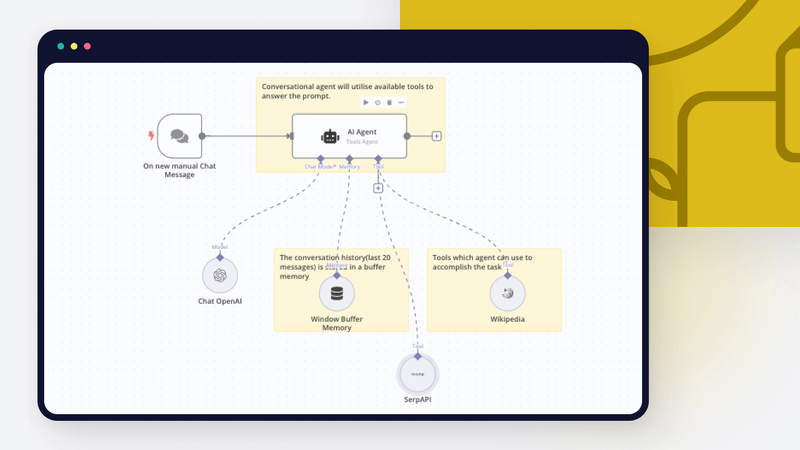
Understanding the Shift: AI Beyond Basic Automation
As a marketer in a small to mid-sized business, you’re constantly balancing ambitious goals with limited resources. This guide cuts through the noise surrounding AI to show you exactly how emerging tools can streamline your marketing workflows, freeing up valuable time and improving campaign performance. We’ll focus on practical applications available today, helping you make informed decisions about what AI to adopt first, what to delay, and what to avoid entirely to maximize your impact.
The conversation around AI in marketing has matured. It’s no longer just about basic content generation or simple chatbots. Today, emerging AI tools are moving towards more sophisticated workflow automation, offering capabilities that truly augment a marketer’s strategic output. This isn’t about replacing human judgment but enhancing it, allowing teams to operate with greater efficiency and precision, even under tight constraints. The focus is shifting from merely automating tasks to automating entire segments of a workflow, often with predictive insights.
Key Emerging AI Tools for Marketers (April 2026)
In early 2026, several categories of AI tools are proving their worth in real-world marketing scenarios for SMBs:
Hyper-Personalized Content Engines: Beyond generating blog posts, these tools now dynamically adapt content variations across channels for specific audience segments based on real-time behavioral data. Think email subject lines, ad copy, and landing page elements that self-optimize for individual user profiles. This moves beyond simple A/B testing to continuous, multi-variant optimization at scale.
Predictive Analytics for Campaign Optimization: AI is increasingly moving from descriptive reporting to prescriptive recommendations. Tools can now analyze historical campaign data, market trends, and even competitor activity to suggest optimal budget allocations, channel mixes, and timing for future campaigns. This helps small teams make data-driven decisions without needing a dedicated data scientist.

Predictive analytics dashboard Intelligent Conversational AI & Lead Qualification: Modern chatbots and virtual assistants are far more capable than their predecessors. They can handle complex customer queries, qualify leads with greater accuracy, and even personalize product recommendations, integrating seamlessly with CRM systems. This offloads significant customer service and initial sales qualification burdens from lean teams.
Automated SEO Audits & Content Gap Analysis: AI-powered platforms are providing real-time, actionable insights into SEO performance, identifying content gaps, suggesting keyword opportunities, and even recommending on-page optimizations. This allows marketers to maintain strong organic visibility without constant manual analysis. AI SEO tools
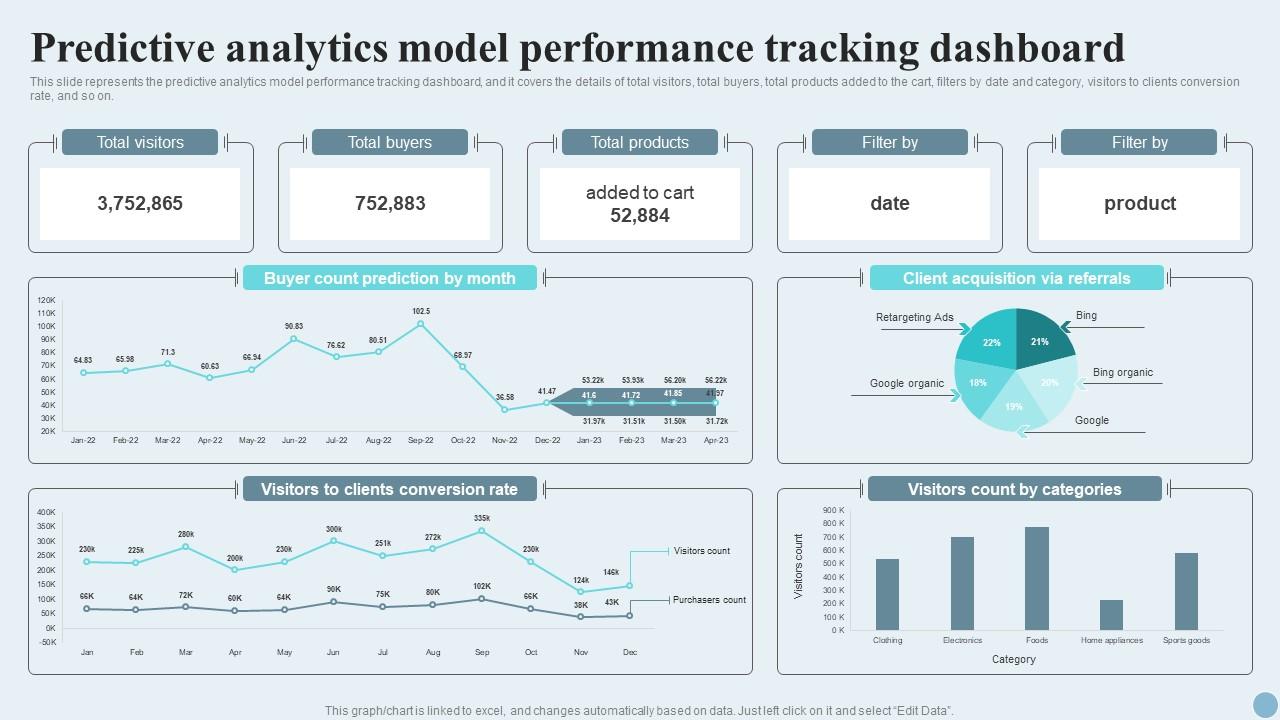
While these tools offer significant leverage, their practical implementation often reveals hidden complexities. For instance, the promise of predictive analytics can lead teams to over-rely on algorithmic recommendations without fully understanding the underlying data or the model’s limitations. This creates a “black box” scenario where strategic intuition can erode, making it harder for practitioners to course-correct when market dynamics shift unexpectedly or when the AI’s historical data proves insufficient for novel situations. The pressure to trust the machine, even when gut feelings suggest otherwise, can be a significant source of internal friction and delayed consequences if a campaign underperforms due to an unexamined AI directive.
Similarly, hyper-personalized content engines and intelligent conversational AI demand a level of data governance and content maintenance that small teams often underestimate. The initial setup and integration are just the beginning; ensuring data quality, continuously refining AI responses, and maintaining brand voice across countless personalized variations requires ongoing human oversight. Without this, personalization can quickly devolve into generic or even jarring experiences, leading to customer frustration and a perception of being “handled” by a bot rather than genuinely engaged. The operational overhead of managing these systems can quickly consume the very time savings they promise, especially when dealing with the inevitable edge cases and system quirks.
Finally, automated SEO audits, while powerful, can foster a dangerous “optimization for optimization’s sake” mindset. It’s easy to chase every suggested keyword or technical fix without stepping back to consider the broader content strategy or user intent. This can lead to fragmented content, a diluted brand message, or even a focus on low-value optimizations that consume resources without moving the needle on actual business goals. The real work remains in interpreting these insights through a strategic lens and making judgment calls about what truly matters for the audience and the business, rather than blindly executing a checklist generated by an algorithm.
Prioritizing AI Adoption: What to Do First
For small to mid-sized teams, the key to successful AI adoption lies in strategic prioritization. Don’t try to do everything at once.
Start by identifying your most time-consuming, repetitive tasks that have a clear, measurable impact on your marketing goals. These are often excellent candidates for initial AI integration. For example, if your team spends hours repurposing long-form content into social media snippets, an AI content repurposing tool offers immediate, tangible time savings. Similarly, if lead qualification is a bottleneck, an intelligent chatbot can provide quick ROI.
Prioritize tools that offer straightforward integration with your existing marketing stack (e.g., CRM, email platform, ad managers). The less friction in implementation, the faster you’ll see value. Focus on solutions that provide actionable insights rather than just raw data, simplifying the decision-making process for your team.
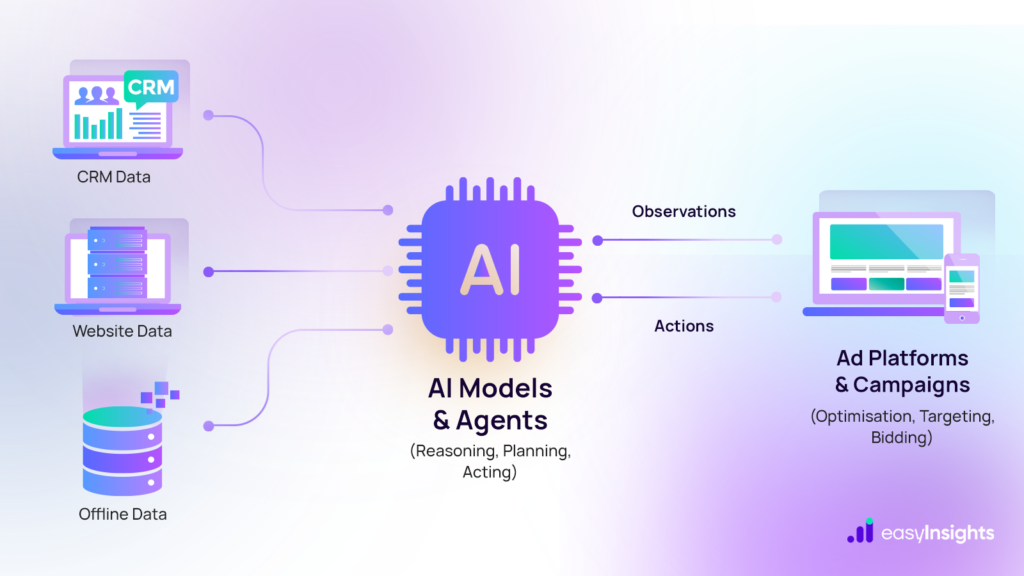
While the immediate time savings from AI content generation are appealing, there’s a downstream risk: the erosion of a distinct brand voice. When AI tools are used extensively without careful human oversight, the output can become generic, blending into the noise of competitors using similar technologies. This isn’t a failure of the tool itself, but a consequence of treating AI as a complete replacement for human creativity and brand stewardship. The hidden cost emerges later, requiring more effort to differentiate or re-establish unique messaging.
Similarly, while integration might seem straightforward on paper, the practical reality often involves significant pre-work. AI tools are only as good as the data they’re fed. Overlooking the need for clean, consistent, and properly formatted data can turn a seemingly simple integration into a time sink. Teams frequently underestimate the effort required to prepare existing data for AI consumption, leading to initial frustration and delayed ROI. This isn’t just about connecting APIs; it’s about the quality of the fuel you’re putting into the engine.
For smaller teams, it’s critical to deprioritize AI initiatives that demand extensive custom model training, require deep, bespoke integrations across multiple legacy systems, or promise to automate highly subjective, strategic tasks. These projects often consume disproportionate resources without a clear, immediate path to measurable ROI. The theory suggests AI can do anything, but in practice, the complexity and resource drain can lead to project abandonment and team burnout. Instead of chasing ambitious, ill-defined AI “transformations,” focus on contained, well-defined problems where AI acts as an augmentation, not a replacement for human strategic thinking. The goal is to free up human capacity for higher-value work, not to eliminate it entirely.
What to Deprioritize or Avoid Today
For most small to mid-sized teams, investing heavily in bespoke AI model development or integrating highly experimental AI research projects should be deprioritized today. These initiatives demand significant capital, specialized data science talent, and a tolerance for high risk that typically exceeds the operational capacity and budget of an SMB. The return on investment is often too distant and uncertain.
Similarly, be wary of ‘all-in-one’ AI solutions that promise to solve every marketing problem. While appealing on the surface, these often deliver shallow functionality across many areas rather than deep, effective solutions for specific pain points. It’s usually more effective to adopt best-of-breed tools for specific, high-impact tasks. Avoid chasing every new AI trend; instead, evaluate tools based on their proven practical impact and how well they fit your team’s current capabilities and resource availability. Focus on solving real problems, not just adopting new tech for its own sake. Choosing AI tools for marketing
Integrating AI for Real-World Impact
Adopting AI isn’t a one-time event; it’s an ongoing process of integration and optimization. Begin with small pilot projects to test tools, measure their impact, and refine your workflows. Ensure your team receives adequate training to effectively use new AI tools and understand their outputs. Remember, AI is a co-pilot, not an autopilot. Human oversight and strategic direction remain critical. Focus on maintaining clean, structured data, as the quality of your AI’s output is directly tied to the quality of its input. By taking a pragmatic, phased approach, you can leverage emerging AI to significantly enhance your marketing capabilities without overstretching your limited resources.


Leave a Comment