


For small to mid-sized businesses, uncovering deep customer insights and validating market opportunities often feels like a luxury. Limited budgets and lean teams mean resources are stretched thin, making comprehensive research a challenge.
This article cuts through the noise around AI, focusing on how you can practically leverage these tools today to gain a competitive edge, make smarter decisions, and allocate your marketing spend more effectively.
The Pragmatic Case for AI in Customer Understanding
Forget the futuristic visions; today’s AI tools are about efficiency and pattern recognition. For SMBs, this means automating the tedious parts of data analysis and surfacing insights that human teams might miss due to volume or bias. Instead of spending days manually sifting through customer feedback or market reports, AI can process vast datasets in minutes, highlighting trends, sentiments, and emerging needs. This isn’t about replacing your team; it’s about empowering them to focus on strategy and execution, not just data collection and basic aggregation.
Prioritizing AI for Actionable Customer Insights
When resources are tight, prioritization is key. Start by applying AI where you already have data.
- Sentiment Analysis of Existing Feedback: Use AI to analyze customer reviews, support tickets, social media comments, and survey responses. Tools can quickly identify recurring themes, positive and negative sentiment, and pinpoint specific pain points or delights. This provides a real-time pulse on customer satisfaction and product performance.
- Customer Segmentation and Behavior Prediction: Leverage AI to segment your customer base beyond basic demographics. Identify groups with similar purchasing behaviors, engagement patterns, or churn risks. This allows for more targeted marketing campaigns and proactive retention efforts.
- Content Performance and Topic Identification: Analyze your website content, blog posts, and social media engagement data. AI can reveal which topics resonate most with your audience, what questions they’re asking, and what content formats drive the most value. This directly informs your content strategy and SEO efforts.
Focusing on these areas first provides immediate, tangible value by optimizing existing operations and improving customer experience with minimal additional data collection.
While the promise of “using AI where you already have data” sounds straightforward, the reality of data preparation is often a hidden cost. Raw customer feedback from various sources—support tickets, social media, survey open-ends—is rarely clean or uniformly structured. Before any AI tool can deliver reliable sentiment analysis or segmentation, a significant amount of manual effort is typically required to clean, de-duplicate, categorize, and standardize this data. Overlooking this initial data hygiene phase can lead to “garbage in, garbage out” scenarios, eroding trust in the AI’s output and delaying actionable insights.
Furthermore, generating sophisticated customer segments is only half the battle. A common pitfall is creating highly granular segments that the team lacks the operational capacity to address individually. For small to mid-sized businesses, the insight that “Segment A prefers X, while Segment B prefers Y” becomes a source of frustration if the marketing or product team can only realistically execute one campaign or develop one feature. The theoretical precision of AI-driven segmentation can quickly clash with the practical constraints of limited headcount and budget, forcing difficult trade-offs on which segments to prioritize and which to effectively ignore, at least for now.
The true value of AI-driven insights isn’t in the reports themselves, but in how they inform and change daily operations. It’s easy to fall into the trap of treating AI analysis as a one-off project rather than an ongoing feedback loop. Without a clear process for integrating these insights into product development, marketing campaign planning, or customer service training, the initial investment can yield diminishing returns. The second-order effect here is a failure to build organizational muscle around continuous learning. Teams might generate brilliant insights but struggle to translate them into consistent, measurable actions, leading to a perception that the AI isn’t “working” when the real issue lies in the operationalization of its output.
AI-Driven Market Validation Without the Guesswork
Market validation is critical for new product launches, service expansions, or even refining your core offering. AI offers a more data-driven approach than traditional methods.
- Competitor Analysis and Gap Identification: AI tools can monitor competitor websites, social media, and news mentions to identify their strategies, product updates, and customer reactions. More importantly, they can highlight market gaps or underserved customer needs that your competitors aren’t addressing.
- Trend Spotting and Demand Forecasting: By analyzing search trends, social media discussions, and industry reports, AI can help predict emerging market trends and shifts in consumer demand. This allows you to pivot your offerings or marketing messages proactively, rather than reactively.
- Product-Market Fit Assessment: Before a full launch, use AI to analyze early adopter feedback, A/B test results, and even public data related to similar products. This helps refine your value proposition and target audience, reducing the risk of a costly misstep.
The goal here is to reduce the inherent risk in market entry or expansion by grounding decisions in data, not just intuition.
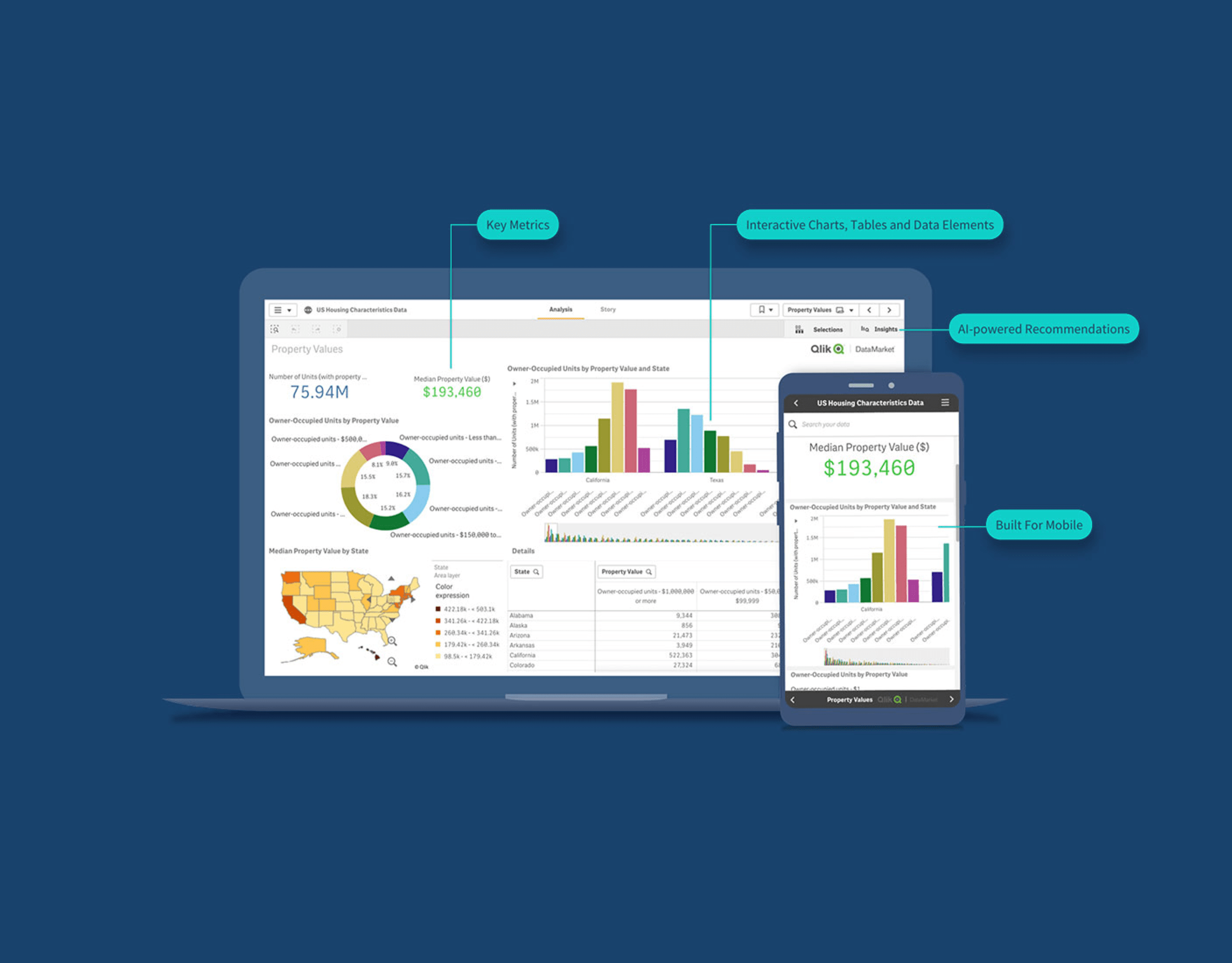
What often gets overlooked, however, is the quality of the data feeding these AI systems. Garbage in, garbage out remains a fundamental truth. If the underlying data sources are biased, incomplete, or simply irrelevant to your specific market niche, the AI’s insights will be flawed. Relying solely on these outputs without critical human review can lead to chasing phantom opportunities or misinterpreting market sentiment, wasting precious resources on initiatives that were doomed from the start.
Furthermore, the promise of AI-driven speed can sometimes backfire. Small teams, already stretched thin, can fall into the trap of analysis paralysis. The sheer volume of data and potential insights generated by AI can overwhelm decision-makers, leading to endless debates over nuances rather than decisive action. This isn’t just a time sink; it’s a significant hidden cost. The delay in making a move, even a small one, can mean missing a critical market window or allowing a competitor to establish a foothold you could have claimed.
The real challenge isn’t just getting the data, but knowing which data points truly matter for your specific context and then having the conviction to act. AI provides a powerful lens, but it doesn’t replace the need for experienced judgment and the willingness to make trade-offs under imperfect conditions.
What to Deprioritize and Why
For SMBs, the biggest trap with AI is chasing every shiny new tool or attempting to build custom, enterprise-grade AI solutions. Today, you should absolutely deprioritize:
Developing bespoke AI models or complex data science projects from scratch. Unless you have a dedicated data science team and significant capital, this is a resource black hole. The cost, time, and expertise required far outweigh the potential benefits for most small to mid-sized businesses. Instead, leverage off-the-shelf AI-powered platforms that integrate with your existing marketing and sales tools. These solutions are designed for ease of use, offer robust capabilities, and come with ongoing support, making them far more practical.
Investing in niche, unproven AI tools without clear ROI. The AI landscape is evolving rapidly, with new tools emerging daily. Resist the urge to adopt every new solution. Focus on tools that solve a specific, high-impact problem for your business and have a proven track record or strong integration capabilities with your current stack. A scattered approach leads to tool fatigue, data silos, and wasted budget. Prioritize integration and utility over novelty.
Building Your AI-Powered Insight Workflow
Integrating AI into your operations doesn’t require a complete overhaul. Start small and iterate.
- Audit Your Data Sources: Identify where your customer and market data currently resides (CRM, analytics, social media, email marketing platforms). Ensure data quality is as high as possible.
- Select the Right Tools: Look for AI-powered features within your existing platforms (e.g., CRM with AI insights, marketing automation with predictive analytics) or choose specialized, user-friendly AI tools that integrate well. Consider platforms that offer natural language processing (NLP) for text analysis or predictive modeling for trend spotting.
- Define Clear Objectives: What specific questions do you want AI to answer? “Improve customer satisfaction” is too broad. “Identify the top three product features customers complain about in support tickets” is actionable.
- Integrate and Automate: Connect your data sources to your chosen AI tools. Set up automated reports and alerts for key insights. This ensures you’re consistently receiving actionable intelligence without manual effort.
- Act and Refine: The value of AI is in the action it enables. Use the insights to adjust campaigns, refine products, or improve customer service. Continuously evaluate the effectiveness of your AI tools and refine your objectives.
This iterative approach ensures you gain value quickly and adapt as your needs and the technology evolve. AI tools for small business marketing
Practical Steps for Immediate Implementation
To move beyond theory, here’s how to start today:
- Start with a Single Data Stream: Don’t try to analyze everything at once. Pick one rich data source, like customer reviews or social media comments, and apply an AI sentiment analysis tool.
- Leverage Free or Freemium Tools: Many platforms offer free tiers or trials. Experiment with these to understand the capabilities before committing to a paid subscription.
- Focus on One Key Question: Instead of broad exploration, ask a specific question: “What are the primary reasons customers churn?” or “Which product feature is most frequently requested?”
- Train Your Team: Ensure your marketing and product teams understand how to interpret and act on AI-generated insights. The tools are only as good as the people using them.
By taking these focused steps, you can begin to harness the power of AI to gain deeper insights and validate your market strategies, driving tangible growth for your business.


Leave a Comment