


In 2026, the discussion around AI’s impact on search ranking factors often feels abstract. For small to mid-sized businesses, this isn’t about theoretical shifts; it’s about making smart, actionable decisions with limited resources. This article cuts through the noise to clarify what truly matters for your SEO strategy today.
You’ll gain a pragmatic understanding of how AI-driven algorithms are influencing what ranks, enabling you to prioritize your efforts effectively. We’ll focus on practical adjustments to your content, technical SEO, and user experience, ensuring your team invests in strategies that deliver real-world visibility and growth, rather than chasing fleeting trends.
AI’s Core Impact: The E-E-A-T Imperative
AI-driven search algorithms are increasingly sophisticated at discerning genuine content quality and authoritativeness. This isn’t just about keywords anymore; it’s about the depth, accuracy, and trustworthiness of your information. Generic, AI-generated content without significant human oversight and value addition will struggle to gain traction. Your focus must shift to demonstrating real-world experience, unique insights, and verifiable expertise. This means investing in subject matter experts, original research, and content that solves specific user problems with practical solutions. The emphasis on E-E-A-T (Experience, Expertise, Authoritativeness, Trustworthiness) is not new, but AI’s ability to evaluate these signals has amplified its importance. E-E-A-T guidelines
For your team, this translates to a critical content strategy decision: prioritize quality over quantity. A single, well-researched, expert-backed article that genuinely helps your audience will outperform ten generic pieces churned out by an AI tool without human refinement. Show your audience, and by extension, search engines, that you are a credible source in your niche.
User Experience: The Amplified Signal
While AI is transforming how content is created and evaluated, the fundamental role of user experience (UX) remains paramount—and is arguably amplified. AI models within search engines are designed to understand and predict user satisfaction. This means that signals indicating a positive user experience, such as low bounce rates, longer dwell times, and high engagement, are interpreted as strong indicators of content value.
Practically, this means your site’s performance metrics like Core Web Vitals (loading speed, interactivity, visual stability), mobile responsiveness, and intuitive navigation are not just ‘nice-to-haves.’ They are critical ranking factors. A technically sound, fast-loading, and easy-to-use website tells AI that your content is valuable and serves user intent effectively. Don’t let a poor user experience undermine your high-quality content; ensure your site provides a seamless journey for every visitor.
What’s easy to overlook is the cumulative decay effect of minor UX friction points. A slightly slow image load, a confusing call-to-action placement, or inconsistent mobile layouts might seem insignificant in isolation. Yet, these small frustrations add up, creating a progressively negative experience that users internalize and AI models detect. This isn’t about a single metric; it’s about the holistic journey. The “amplified signal” works both ways: positive experiences are rewarded, but a collection of minor annoyances can collectively degrade your site’s perceived value, even if your content itself is stellar.
This leads to a common, yet often unacknowledged, failure mode: investing heavily in content creation without adequately shoring up the user experience foundation. Many teams prioritize churning out more articles or landing pages, believing that volume alone will drive results. In practice, if the underlying site experience is frustrating, that additional content might never achieve the engagement or dwell time necessary to signal its value to search engines. It’s a diminishing return on content investment, where excellent writing is effectively hidden behind a suboptimal delivery mechanism.
For small to mid-sized teams, the temptation to defer UX improvements is strong. These efforts often feel like “maintenance” rather than “growth,” and the immediate gratification of publishing new content or launching a new campaign can easily overshadow the less glamorous, but more impactful, work of refining the user journey. However, a strategic judgment call here is to sometimes *pause* on new content initiatives. Instead, redirect those resources to address critical UX bottlenecks. This isn’t about perfection, but about ensuring your existing and future content has the best possible stage to perform, rather than continuously building on a shaky foundation.
Technical SEO: The Unchanging Foundation AI Still Needs
Despite the advancements in AI, the foundational principles of technical SEO remain non-negotiable. AI-driven search engines still need to crawl, index, and understand your website’s structure and content efficiently. Without a solid technical foundation, even the most insightful content might struggle to be discovered.
Key technical elements like a clean site architecture, proper use of schema markup, canonicalization, and XML sitemaps are crucial. These elements provide AI with the necessary context and clarity to accurately interpret your content and its relevance. Think of technical SEO as the language AI uses to understand your website; if the language is broken or unclear, the message gets lost. Regularly audit your site for technical issues and address them promptly. This isn’t about chasing new AI features; it’s about ensuring the basic plumbing of your website is robust.
Prioritizing Your SEO Efforts in an AI-Driven Landscape
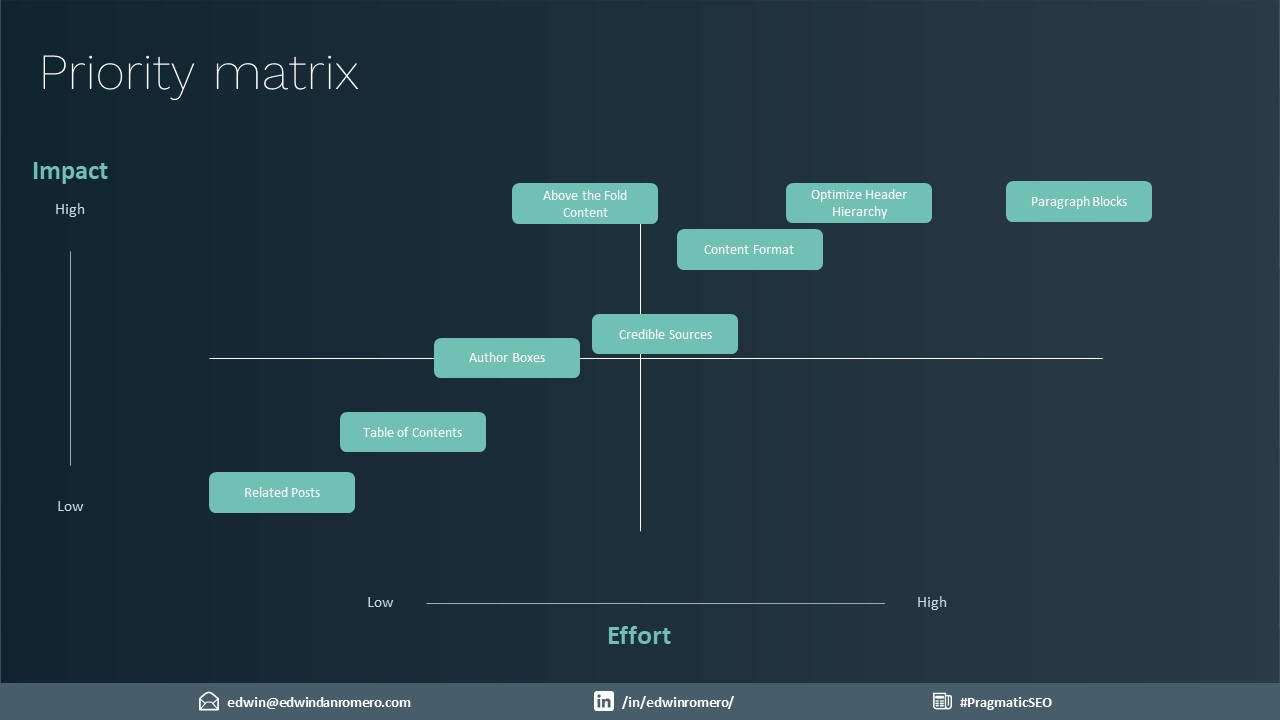
Given these shifts, small to mid-sized teams must make strategic choices about where to allocate their limited time and budget. Here’s a pragmatic prioritization framework:
- Prioritize Genuine, Expert-Driven Content: Invest in content that showcases unique insights, real-world experience, and solves specific problems for your audience. This is your primary differentiator against generic AI output. Focus on demonstrating E-E-A-T.
- Optimize for User Experience Relentlessly: Ensure your website is fast, mobile-friendly, and easy to navigate. Address Core Web Vitals and any friction points in the user journey. A positive user experience is a direct signal of value to AI algorithms.
- Maintain Impeccable Technical SEO: Regularly audit and fix technical issues. Ensure your site is easily crawlable, indexable, and that schema markup is correctly implemented to provide maximum context to search engines.
What should be deprioritized or skipped today? Avoid the temptation to mass-produce low-quality, generic AI-generated content without substantial human oversight and value addition. This approach is a fast track to irrelevance and will likely result in wasted resources and diminished search visibility. Similarly, deprioritize chasing every new, niche AI-driven SEO tool or tactic if your core E-E-A-T, user experience, and technical foundations are not yet robust. These advanced tactics offer minimal returns if the fundamentals are weak; they won’t compensate for a lack of genuine value or a broken website. Focus on mastering the basics that AI algorithms demonstrably value, rather than getting distracted by speculative trends.


Leave a Comment